
For most 12-volt car batteries, the ideal charging voltage typically ranges between 13.8 volts and 14.7 volts. This specific voltage ensures a thorough charge, preventing both overcharging that can harm the battery and undercharging that leaves it underperforming. Understanding this range is crucial for maintaining your car battery’s health and extending its lifespan effectively.
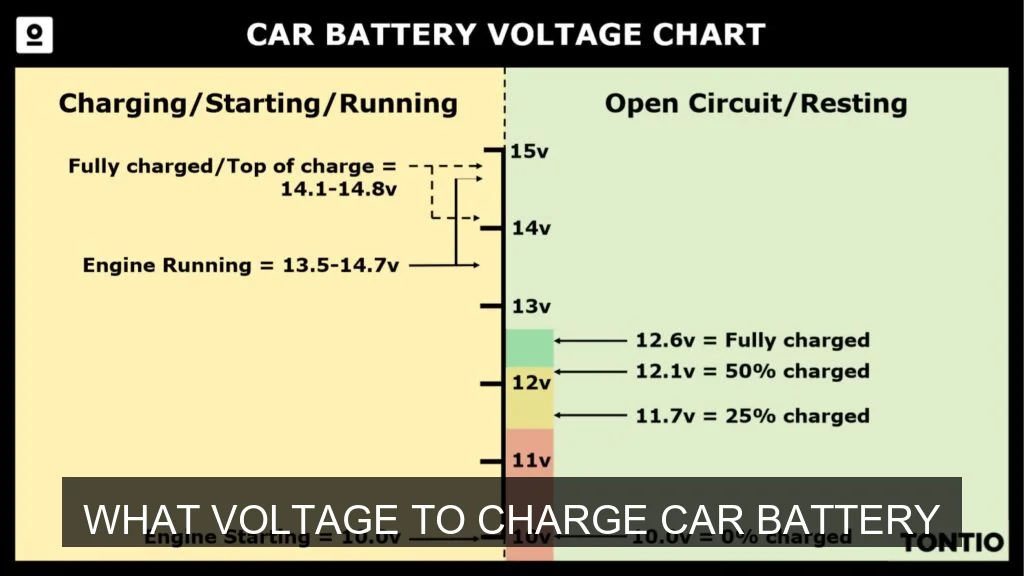
Image source: Tontio
📋 Table of Contents
- 🔹 Understanding Car Battery Charging Voltage
- 🔹 What Voltage to Charge a Car Battery: The Ideal Range
- 🔹 Why Understanding Charging Voltage Matters So Much
- 🔹 How Car Battery Charging Works (A Simple Explanation)
- 🔹 Different Battery Types and Their Voltage Needs
- 🔹 The Magic of Smart Chargers: Why They’re So Helpful
- 🔹 Common Mistakes to Avoid When Charging Your Car Battery
- 🔹 Practical Tips for Safe and Effective Battery Charging
- 🔹 Real-Life Scenarios: When and How to Charge
- 🔹 People Also Ask (FAQ)
- 🔹 Conclusion: Keeping Your Battery Healthy with the Right Voltage
Understanding Car Battery Charging Voltage
Ever wondered why your car battery sometimes gives up the ghost? Often, it’s not just about how long you charge it, but what voltage to charge a car battery at. It might sound a bit technical, but getting the voltage right is absolutely key to keeping your battery happy and ensuring your car starts every time you turn the key.
In this guide, we’re going to dive deep into the world of car battery charging. We’ll explore the ideal voltage, why it matters so much, and what happens if you get it wrong. Think of this as your friendly, easy-to-understand manual for mastering car battery care. By the end, you’ll feel confident knowing how to properly charge your battery and keep it in top shape, avoiding common mistakes along the way.
What Voltage to Charge a Car Battery: The Ideal Range
So, let’s get right to the heart of it. What voltage do you actually need to charge a car battery?
For most standard 12-volt lead-acid car batteries, the recommended charging voltage generally falls between 13.8 volts and 14.7 volts. This isn’t a single magic number, but rather a narrow window that ensures effective and safe charging.
- 13.8 Volts (Float Charge): This lower end of the range is often used for “float charging.” Once your battery is fully charged, a smart charger might drop to this voltage to maintain it without overcharging. It’s like keeping the battery topped off without continuously pushing more energy into it.
- 14.4 to 14.7 Volts (Bulk/Absorption Charge): When your battery is deeply discharged, it needs a higher voltage to quickly bring it up to full capacity. This is known as the “bulk” or “absorption” phase. During this stage, the charger is actively pushing current into the battery. Once it reaches near full capacity, the charger will typically reduce the voltage.
Why this specific range? It’s all about the chemistry inside the battery. Too little voltage, and the battery won’t fully charge, leading to sulfation and reduced capacity. Too much voltage, and you risk overcharging, which can boil the electrolyte, damage the battery plates, and shorten its lifespan significantly.
Why Understanding Charging Voltage Matters So Much
You might be thinking, “It’s just a battery, why all the fuss about voltage?” Well, getting the voltage right isn’t just a recommendation; it’s critical for several reasons:
- Battery Lifespan: Charging at the correct voltage dramatically extends your battery’s life. Consistent overcharging or undercharging can damage the battery internally, leading to premature failure.
- Optimal Performance: A correctly charged battery delivers its full power, ensuring your car starts reliably and all electrical systems operate as they should. An undercharged battery means weaker starts and potential issues for sensitive electronics.
- Safety: Incorrect charging voltage, especially too high, can lead to dangerous conditions. Overcharging can cause the battery to overheat, swell, or even vent explosive hydrogen gas. Safety first, always!
- Preventing Damage: The wrong voltage can cause irreversible damage. Overcharging can lead to grid corrosion and electrolyte loss. Undercharging can cause sulfation, where sulfate crystals build up on the battery plates, hindering their ability to store energy.
Think of it like watering a plant. Too little water, and it wilts. Too much, and its roots rot. Just the right amount keeps it healthy and thriving. Your car battery is very similar.
How Car Battery Charging Works (A Simple Explanation)
To really grasp why voltage is important, it helps to understand a little about how car batteries get charged. Essentially, a car battery converts chemical energy into electrical energy, and charging reverses that process.
Here’s a simplified breakdown:
- The Battery’s Job: A 12-volt car battery is actually made up of six individual cells, each producing about 2.1 volts when fully charged, totaling around 12.6 volts.
- The Charger’s Role: A battery charger works by supplying a higher voltage than the battery’s current voltage. This voltage difference pushes electrical current into the battery.
- Chemical Reaction: Inside the lead-acid battery, this current reverses the chemical reaction that occurs during discharge. It converts lead sulfate back into lead dioxide on the positive plates and lead on the negative plates, regenerating the sulfuric acid electrolyte.
- Voltage Regulation: As the battery charges, its internal voltage slowly rises. A good charger monitors this and adjusts its output voltage and current to ensure efficient charging without damage. Modern “smart” chargers do this automatically through multiple charging stages.
Without the correct voltage to drive this chemical process, the battery won’t fully recover or could suffer damage.
Different Battery Types and Their Voltage Needs
While the 13.8V-14.7V range is a good general guideline, it’s worth noting that specific battery types can have slightly different optimal charging voltages. Knowing your battery type is helpful.
| Battery Type | Typical Charging Voltage Range (Approx.) | Key Considerations |
|---|---|---|
| Flooded Lead-Acid (Conventional) | 14.4 – 14.7 Volts (Absorption) | Most common type. Can handle a bit higher voltage without immediate damage, but still requires care to prevent gassing and water loss. |
| AGM (Absorbed Glass Mat) | 14.4 – 14.7 Volts (Absorption) | Very sensitive to overcharging. Requires precise voltage regulation. Often prefers slightly lower float voltages (13.6-13.8V). |
| Gel Cell | 14.1 – 14.4 Volts (Absorption) | Even more sensitive to overcharging than AGM. Requires a lower absorption and float voltage. Incorrect charging can permanently damage them. |
Always check your battery’s specific recommendations, often printed on the battery itself or in its manual. If you’re using a modern smart charger, it will often have settings for different battery types, making your job much easier.
The Magic of Smart Chargers: Why They’re So Helpful
Unless you’re a seasoned electrical engineer, precisely monitoring and adjusting charging voltage and current manually can be tricky. This is where modern “smart chargers” or “multi-stage chargers” truly shine.
These chargers aren’t just simple power sources; they’re sophisticated devices that automatically manage the charging process through several stages:
- Desulfation (Optional Initial Stage): Some advanced chargers can use high-frequency pulses to break down sulfate crystals that might have formed on battery plates if the battery has been deeply discharged or left unused for a long time.
- Bulk Charge: This is the initial stage where the charger delivers maximum current at a constant voltage (e.g., 14.4V-14.7V) to rapidly bring the battery to about 80% of its capacity.
- Absorption Charge: As the battery’s voltage rises, the charger holds the voltage constant while the current gradually decreases. This carefully brings the battery to 100% full without overcharging.
- Float Charge: Once the battery is fully charged, the charger reduces the voltage to a lower “maintenance” level (e.g., 13.6V-13.8V). This safely compensates for any self-discharge and keeps the battery topped off without damaging it.
By using a smart charger, you take the guesswork out of what voltage to charge a car battery at, letting the technology do the hard work for you. Many smart chargers also have features like reverse polarity protection and spark-proof connections, adding an extra layer of safety.
Common Mistakes to Avoid When Charging Your Car Battery
Even with the best intentions, it’s easy to make mistakes that can harm your battery. Here are some common pitfalls to steer clear of:
- Using the Wrong Voltage: This is the most crucial point we’ve covered. Too high voltage means overcharging and damage; too low means undercharging and sulfation.
- Ignoring Battery Type: As discussed, AGM and Gel batteries are more sensitive. Using a charger set for a flooded battery on an AGM or Gel battery can quickly ruin it.
- Overcharging: Leaving a non-smart charger connected for too long can boil the electrolyte, corrode plates, and significantly shorten battery life.
- Undercharging: Not charging the battery fully, especially repeatedly, leads to sulfation, which hardens the lead plates and reduces the battery’s capacity over time.
- Charging Too Quickly (High Amperage): While it might seem faster, pushing too many amps into a battery can generate excessive heat and stress, damaging its internal components.
- Skipping Safety Precautions: Working with batteries involves electricity and sometimes corrosive chemicals. Failing to wear eye protection, gloves, or charge in a well-ventilated area can be dangerous.
- Connecting Cables Incorrectly: Always connect the positive (+) charger cable to the positive (+) battery terminal, and the negative (-) charger cable to a good ground point away from the battery itself (or the negative (-) battery terminal if specified by your charger). Reversing polarity can cause sparks, damage the battery, or harm your charger.
Practical Tips for Safe and Effective Battery Charging
Now that you know what voltage to charge a car battery at and what to avoid, here are some practical tips to make your charging experience safe and effective:
- Read Your Charger’s Manual: Every charger is a bit different. Understand its features, settings, and safety warnings.
- Know Your Battery Type: Check your car battery for its type (flooded, AGM, Gel). If your charger has different settings, choose the correct one.
- Ensure Ventilation: Car batteries can release hydrogen gas, which is highly flammable. Always charge in a well-ventilated area, away from sparks or open flames.
- Wear Safety Gear: Eye protection and gloves are highly recommended. Battery acid can cause severe burns.
- Clean Terminals: Ensure battery terminals are clean and free of corrosion. A good connection is essential for efficient charging.
- Connect Correctly:
- Connect the positive (+) charger clamp to the positive (+) battery terminal.
- Connect the negative (-) charger clamp to a metal part of the car chassis, away from the battery and fuel lines. For some chargers and situations, connecting directly to the negative (-) battery terminal is acceptable – always follow your charger’s specific instructions.
- Only plug the charger into the wall outlet AFTER connecting to the battery/car.
- Monitor the Battery: If you’re not using a smart charger, periodically check the battery’s temperature. If it feels hot to the touch, disconnect the charger and let it cool.
- Don’t Leave it Unattended (with basic chargers): If you’re using a simple “dumb” charger, don’t leave it charging indefinitely, as it can overcharge. Smart chargers are designed to be left connected for maintenance.
Real-Life Scenarios: When and How to Charge
Understanding the theory is great, but when would you actually need to worry about what voltage to charge a car battery?
- After Leaving Lights On: Oops! We’ve all done it. If your battery is too flat to start the car, a slow charge at the correct voltage is much better than repeated jump starts.
- During Long-Term Storage: If you’re storing your car for weeks or months, a “float” or “maintenance” charge from a smart charger is ideal. This keeps the battery topped off at around 13.8V, preventing self-discharge and sulfation.
- In Cold Weather: Batteries are less efficient in cold temperatures. Regular charging, especially during winter, ensures your battery is always ready for the extra strain of cold starts.
- Infrequent Driving: If you only drive short distances or infrequently, your alternator might not fully recharge the battery. A periodic top-up charge (once a month or every few weeks) can help maintain its health.
- After Heavy Accessory Use: Running accessories like heated seats, powerful stereos, or even camping fridges for extended periods when the engine isn’t running can drain your battery. A proper charge will restore it.
In all these situations, using a multi-stage smart charger that adjusts to the optimal voltage range for your battery type is the simplest and safest approach.
People Also Ask (FAQ)
What is the ideal voltage for a 12V car battery charger?
The ideal charging voltage for most 12-volt car batteries is typically between 13.8 volts and 14.7 volts. Smart chargers will usually cycle through different voltages within this range, starting higher for bulk charging and reducing to a lower float voltage once the battery is full.
Can you overcharge a car battery with too much voltage?
Yes, absolutely. Using too high a voltage to charge a car battery can lead to severe overcharging. This causes the electrolyte to boil, generates excessive heat, corrodes the internal plates, and significantly shortens the battery’s lifespan, potentially creating dangerous conditions.
What happens if you charge a car battery with too low a voltage?
Charging a car battery with too low a voltage means it won’t ever reach a full charge. This condition, known as undercharging, can lead to sulfation, where hard sulfate crystals build up on the battery plates. Sulfation reduces the battery’s capacity to hold a charge and permanently damages it over time.
Does temperature affect car battery charging voltage?
Yes, temperature significantly affects ideal charging voltage. Colder temperatures generally require a slightly higher charging voltage to achieve a full charge, while hotter temperatures require a slightly lower voltage. Many advanced smart chargers have temperature compensation features that automatically adjust the voltage for optimal charging.
How long does it take to charge a car battery at the correct voltage?
The charging time depends on several factors: the battery’s state of discharge, its capacity (Ah rating), and the charger’s amperage output. For a moderately discharged 12V car battery, it could take anywhere from 4-8 hours with a standard 10-amp smart charger to achieve a full charge at the correct voltage. A deeply discharged battery will take longer.
Conclusion: Keeping Your Battery Healthy with the Right Voltage
Understanding what voltage to charge a car battery at is more than just a piece of technical information; it’s fundamental to the health and longevity of your car’s power source. By sticking to the recommended 13.8V to 14.7V range, you ensure your battery gets the optimal care it needs, avoiding the pitfalls of over or undercharging.
The right voltage means your battery lasts longer, performs better, and keeps you safely on the road. Remember to always prioritize safety, know your battery type, and consider investing in a multi-stage smart charger to take the guesswork out of the process. Your car battery will thank you for it!