
A fully charged 12-volt car battery typically measures between 12.6 and 12.8 volts when resting, meaning it’s been disconnected from a charger or any electrical load for several hours. This “open-circuit voltage” is the most accurate indicator of a battery’s state of charge, reflecting its readiness to power your vehicle.
Ever wonder what a healthy car battery looks like on a multimeter? This guide clearly explains that a fully charged 12-volt car battery rests at 12.6 to 12.8 volts. We’ll explore why this specific voltage is important, how to accurately check it, and practical tips for maintaining your battery’s optimal charge for reliable performance.
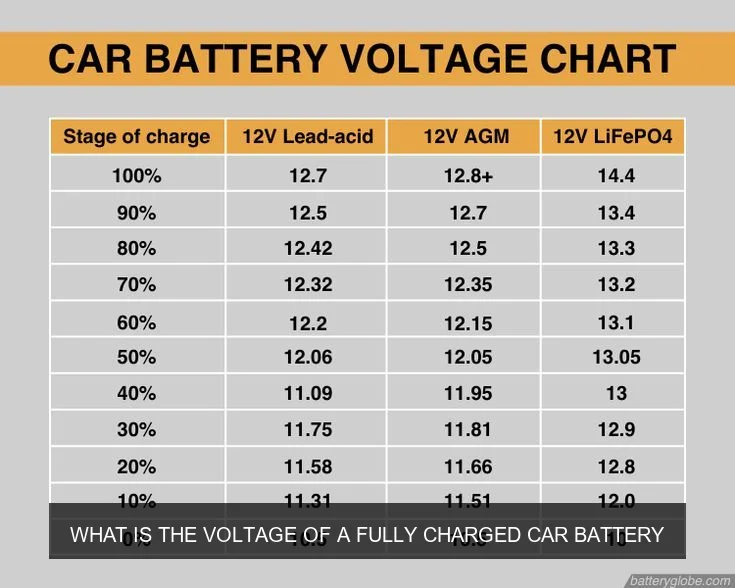
Image source: Pinimg
📋 Table of Contents
- 🔹 Understanding Your Car Battery’s True Charge
- 🔹 What is the Voltage of a Fully Charged Car Battery?
- 🔹 Why Understanding Car Battery Voltage Matters
- 🔹 How Car Battery Voltage Works: The Basics
- 🔹 Benefits of Keeping Your Car Battery Fully Charged
- 🔹 Common Misconceptions About Car Battery Voltage
- 🔹 Practical Tips for Checking and Maintaining Car Battery Voltage
- 🔹 Real-Life Scenarios: Understanding Voltage Readings
- 🔹 Frequently Asked Questions (FAQ)
- 🔹 Conclusion: Powering Your Peace of Mind
Understanding Your Car Battery’s True Charge
Have you ever wondered if your car battery is truly ready for the road? We often hear about “12-volt batteries,” but what does that really mean for its charge level? Knowing the actual voltage of a fully charged car battery is super important for understanding its health and making sure your vehicle starts reliably every time.
In this guide, we’re going to dive deep into what constitutes a fully charged car battery. We’ll explore the specific voltage readings you should look for, explain why these numbers matter, and give you practical insights into keeping your battery in top shape. Get ready to understand your car’s power source like never before!
What is the Voltage of a Fully Charged Car Battery?
When we talk about a “12-volt” car battery, it’s actually a bit of a simplification. The nominal, or advertised, voltage is 12 volts, but this isn’t its true fully charged resting voltage. For a standard lead-acid car battery (which is what most vehicles use), a healthy, fully charged state means a voltage reading of between 12.6 and 12.8 volts.
This reading is known as the open-circuit voltage. It’s crucial that you take this measurement after the battery has been resting for at least several hours, ideally 12 to 24 hours, without any charge input or electrical load. This allows the chemical reactions inside the battery to stabilize, giving you the most accurate snapshot of its true charge.
Here’s a simple breakdown of what different voltages typically indicate for a 12-volt car battery’s state of charge:
| Voltage Reading (at rest) | Approximate State of Charge |
|---|---|
| 12.6 – 12.8 volts | 100% (Fully Charged) |
| 12.4 volts | 75% Charged |
| 12.2 volts | 50% Charged |
| 12.0 volts | 25% Charged |
| Below 12.0 volts | Discharged / Potentially Damaged |
As you can see, even a small drop in voltage means a significant drop in the battery’s charge level. This table clearly shows that 12.0 volts, often mistakenly thought of as “full” because of the “12-volt” label, actually indicates a very low charge.
Why Understanding Car Battery Voltage Matters
Knowing what is the voltage of a fully charged car battery isn’t just a fun fact for mechanics; it’s vital for every car owner. Here’s why:
- Reliable Starting: A fully charged battery provides the strong surge of power needed to crank your engine. If your battery is only 50% charged, it might still start your car on a warm day, but it will struggle or fail when temperatures drop or if it’s been sitting for a while.
- Battery Longevity: Consistently allowing your battery to drop below a 75% charge (around 12.4 volts) can actually shorten its lifespan. Lead-acid batteries prefer to stay near a full charge. Deep discharges can cause sulfation, a build-up of lead sulfate crystals that makes the battery less efficient and eventually kills it.
- Detecting Problems Early: Regular voltage checks can alert you to issues before they leave you stranded. A battery that consistently struggles to reach 12.6 volts or drops quickly after charging might be nearing the end of its life or indicating a problem with your vehicle’s charging system (like a faulty alternator).
- Optimal Performance of Electronics: Modern cars have lots of electronics. A healthy, fully charged battery ensures all these systems get the stable power they need to function correctly, from your stereo to your engine control unit.
In essence, understanding battery voltage is like knowing your body temperature; it’s a simple indicator of overall health and helps you take preventative measures.
How Car Battery Voltage Works: The Basics
To really grasp what is the voltage of a fully charged car battery, it helps to understand a little about how these batteries generate electricity.
The Chemistry Behind the Charge
Most car batteries are lead-acid batteries. They work by a chemical reaction involving lead plates and sulfuric acid. When the battery is discharging (like when you’re starting your car), lead and lead dioxide react with sulfuric acid to produce lead sulfate and water, releasing electrons and creating an electrical current.
When the battery is charging (either from your car’s alternator or an external charger), this process reverses. Electrical energy converts the lead sulfate and water back into lead, lead dioxide, and sulfuric acid, storing energy for later use. The voltage you measure is essentially a reflection of the concentration of sulfuric acid and the chemical potential energy stored within the battery cells.
Why “Resting Voltage” is Key
When a battery is under load (like during starting) or actively being charged, its voltage reading will be different from its true resting state. For example:
- During charging: A battery connected to a charger might show voltages well above 13 or even 14 volts. This higher voltage is necessary to push current into the battery and reverse the chemical reaction.
- While cranking: The voltage can temporarily drop significantly, sometimes to 10 volts or even lower, as the battery delivers a massive current to the starter motor.
- Immediately after charging or driving: Even after disconnecting a charger or turning off the engine, the battery’s surface charge can temporarily inflate the voltage reading. This is why you need to let it rest for several hours for an accurate open-circuit voltage measurement.
So, always remember: the true indicator of a fully charged car battery is its open-circuit voltage after it has rested.
Benefits of Keeping Your Car Battery Fully Charged
Maintaining a fully charged car battery goes beyond just being able to start your car. There are several significant advantages:
- Maximum Lifespan: As mentioned, regularly allowing a battery to discharge deeply shortens its life. Keeping it fully charged minimizes harmful sulfation and maintains its capacity for longer. Think of it like a muscle; regular, proper use and rest are key to its health.
- Peak Performance: A fully charged battery delivers consistent, strong current. This means your starter motor gets ample power, your lights are bright, and all your vehicle’s electrical components operate as intended.
- Improved Cold Weather Starting: Cold weather significantly reduces a battery’s capacity and increases the engine’s resistance to cranking. A battery that’s only partially charged in warm weather might barely start your car, but in freezing temperatures, it will almost certainly fail. A full charge gives you the best chance.
- Reduced Risk of Electrical Issues: A weak battery can cause a cascading effect on your car’s electrical system. The alternator might have to work harder, which can lead to premature wear. Low voltage can also sometimes cause glitches in sensitive electronic systems.
- Peace of Mind: Simply knowing your car is ready to go whenever you are is a huge benefit. No one wants to be stuck with a dead battery when they’re in a hurry.
Common Misconceptions About Car Battery Voltage
It’s easy to get confused about battery voltage, especially with so much information out there. Let’s clear up some common misunderstandings:
“My Car Battery is 12 Volts, So 12.0 Volts Means It’s Full.”
This is probably the most common mistake. As we’ve discussed, 12 volts is the nominal voltage. A reading of 12.0 volts on a resting battery actually means it’s only about 25% charged. This level is far too low and indicates a discharged battery that will struggle to start your car and is likely experiencing damage from sulfation.
“My Alternator Charges My Battery, So I Don’t Need to Worry.”
While your car’s alternator does charge the battery while the engine is running, it’s designed to *maintain* a charge, not fully recover a deeply discharged battery. If your battery is consistently low, the alternator might struggle to bring it back up to a full 12.6-12.8 volts, especially on short drives. This puts extra strain on your alternator and can lead to premature battery failure.
“Voltage is the Only Thing That Matters.”
While voltage is a key indicator, it’s not the only factor in battery health. A battery can show a good resting voltage but still be weak if its “cold cranking amps” (CCA) capacity is degraded. This usually happens as batteries age. CCA measures the battery’s ability to deliver a high current for starting in cold weather. Voltage tells you the state of charge; CCA tells you its ability to perform under stress. Ideally, both should be good.
“A Quick Drive Will Fully Charge My Battery.”
A short drive (15-20 minutes) will replace some of the energy used to start the car, but it’s often not enough to fully recharge a significantly discharged battery. It can take several hours of driving or a dedicated charger to bring a low battery back to a full 12.6-12.8 volts.
Practical Tips for Checking and Maintaining Car Battery Voltage
Monitoring and maintaining your car battery’s voltage is a simple task that can save you a lot of hassle. Here’s how to do it effectively:
How to Check Battery Voltage
- Gather Your Tools: You’ll need a digital multimeter. These are inexpensive and easy to use.
- Ensure Battery is at Rest: The most important step! Make sure your car has been off for at least 4-8 hours, ideally 12-24 hours. No charging, no starting, no accessories left on.
- Set Your Multimeter: Turn the dial to the DC (direct current) voltage setting, usually marked with a “V” and a straight line or “DCV” or “VDC”. Set it to the 20V range if it has multiple options.
- Connect the Probes:
- Connect the red (positive) lead from the multimeter to the positive (+) terminal of your car battery.
- Connect the black (negative) lead from the multimeter to the negative (-) terminal of your car battery.
- Read the Display: The number on the multimeter screen is your battery’s open-circuit voltage. Compare it to the chart above.
It’s a good practice to check your battery’s voltage every few months, especially before winter or if you notice any slow starting issues.
Maintaining Optimal Voltage
- Drive Regularly: Short, frequent trips don’t fully charge your battery. If you mostly do short drives, consider taking a longer drive (at least 30 minutes) once a week.
- Use a Smart Charger: If your car sits for long periods (e.g., a week or more), connect it to a “smart” or “trickle” charger. These chargers provide a low, continuous charge and automatically monitor the battery to prevent overcharging, keeping it at an optimal 12.6-12.8 volts.
- Clean Terminals: Corroded battery terminals (a fuzzy blue or white substance) can impede charging and discharge. Clean them regularly with a wire brush and a battery terminal cleaner.
- Check Electrolyte Levels (if applicable): Some older or maintenance-free batteries are sealed, but if yours has removable caps, check the fluid levels. If low, top up with distilled water (never tap water).
- Limit Accessory Use with Engine Off: Running lights, radio, or charging devices with the engine off can quickly drain your battery.
Real-Life Scenarios: Understanding Voltage Readings
Let’s put those voltage numbers into practical context:
- Scenario 1: You check your battery after it’s sat overnight and get a reading of 12.7V.
Meaning: Fantastic! Your battery is fully charged and in excellent health. You should have no trouble starting your car.
- Scenario 2: You check your battery in the morning and it reads 12.3V.
Meaning: Your battery is only about 60% charged. It might start your car, especially in warm weather, but it’s undercharged. You should consider charging it with an external charger or taking a long drive. If it consistently reads this low, investigate why it’s not holding a full charge.
- Scenario 3: You try to start your car, and it just clicks, then you get a voltage reading of 11.8V.
Meaning: Your battery is significantly discharged, likely below 25% charge. It doesn’t have enough power to crank the engine. It needs a jump start and then a thorough recharge. A voltage this low for an extended period can also cause permanent damage to the battery.
- Scenario 4: Your car starts fine, and while the engine is running, you measure the battery at 14.2V.
Meaning: This is a normal reading while the engine is running! It indicates your alternator is working correctly and charging the battery. Don’t mistake this for the battery’s resting voltage.
Frequently Asked Questions (FAQ)
What voltage indicates a dead car battery?
A car battery is generally considered “dead” or severely discharged if its resting voltage drops significantly below 12.0 volts, typically around 10.5 to 11.5 volts. At these levels, the battery won’t have enough power to crank the engine, and prolonged discharge can lead to permanent damage.
Can I overcharge my car battery?
Yes, you can overcharge a car battery, especially with an older, unregulated charger. Overcharging causes excessive gassing and can damage the internal plates, boiling away the electrolyte and shortening the battery’s lifespan. Modern “smart” chargers are designed to prevent overcharging by monitoring the battery and switching to a maintenance mode once fully charged.
How long does it take to fully charge a car battery?
The time it takes to fully charge a car battery depends on its size (Amp-hour rating), its current state of discharge, and the output current of the charger. A deeply discharged battery with a 10-amp charger might take 4-12 hours or more to reach a full 12.6-12.8 volts. A small trickle charger (1-2 amps) could take days. Your car’s alternator typically takes several hours of driving to fully recover a significantly depleted battery.
Does temperature affect battery voltage?
Yes, temperature significantly affects battery performance and voltage readings. In cold weather, a battery’s chemical reactions slow down, reducing its ability to deliver current and temporarily lowering its measured voltage. The actual capacity drops. In very hot weather, chemical reactions accelerate, which can sometimes lead to slight increases in voltage readings but also shortens overall battery life if not properly managed.
Conclusion: Powering Your Peace of Mind
Understanding what is the voltage of a fully charged car battery is a fundamental piece of knowledge for any vehicle owner. It’s not just about a numerical value; it’s about comprehending your car’s power source and taking proactive steps to ensure its reliability and longevity.
Remember, a truly fully charged 12-volt car battery will display between 12.6 and 12.8 volts when it’s had plenty of time to rest. By regularly checking this voltage and following simple maintenance practices, you can avoid unexpected breakdowns, extend the life of your battery, and enjoy the peace of mind that comes with a well-maintained vehicle. Keep those volts up, and your car will thank you!