
A fully charged car battery typically registers around 12.6 to 12.8 volts when measured after resting. Understanding this ideal voltage is key to knowing your battery’s health, preventing unexpected breakdowns, and ensuring your vehicle starts reliably. This guide will help you easily grasp what these numbers mean for your car.
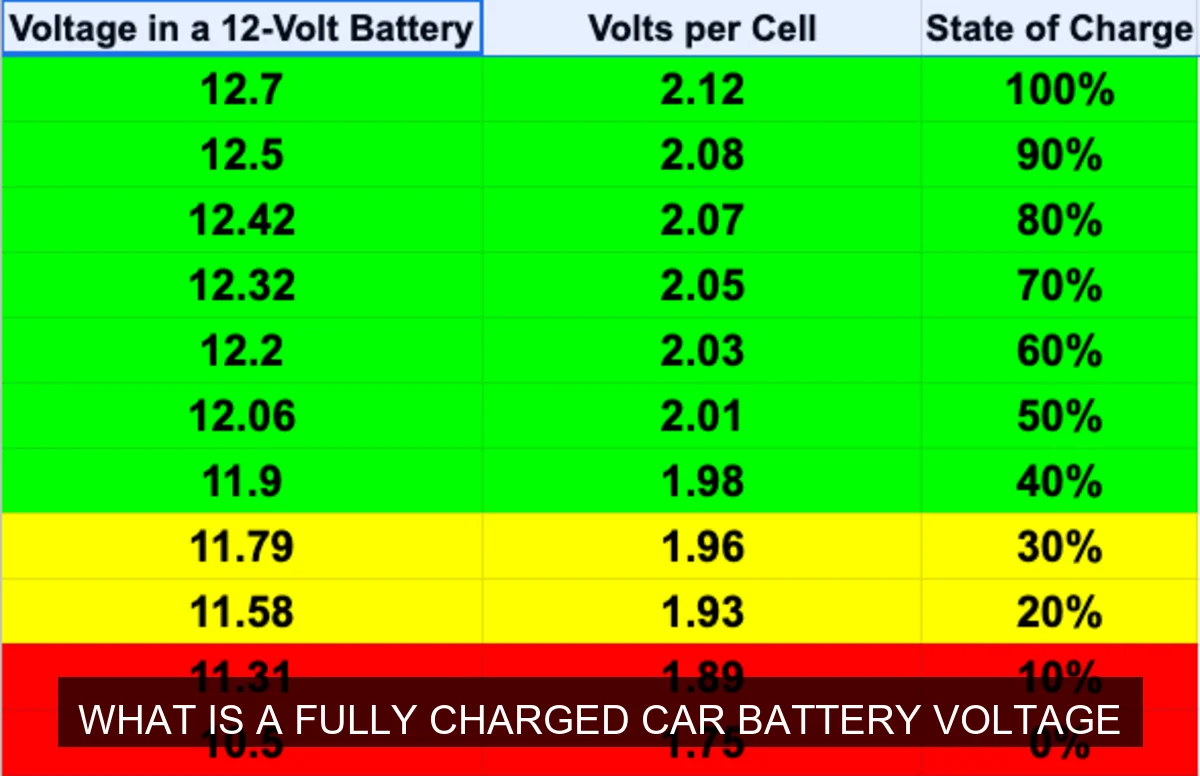
Image source: Saymedia-content
A fully charged 12-volt car battery, when measured at rest (engine off, no load for several hours), will typically show a voltage of 12.6 to 12.8 volts. This reading indicates optimal health and sufficient power to start your vehicle reliably, reflecting the battery’s chemical potential energy.
📋 Table of Contents
- 🔹 What Exactly is a Fully Charged Car Battery Voltage?
- 🔹 Why Understanding Battery Voltage Matters
- 🔹 The Science Behind Battery Voltage Readings
- 🔹 How to Accurately Check Your Car Battery Voltage
- 🔹 Interpreting Your Voltage Readings
- 🔹 Factors That Influence Car Battery Voltage
- 🔹 Benefits of Maintaining Proper Battery Voltage
- 🔹 Common Misconceptions About Car Battery Voltage
- 🔹 Practical Tips for Optimal Battery Health
- 🔹 People Also Ask About Car Battery Voltage
- 🔹 Conclusion: Powering Your Drive with Knowledge
What Exactly is a Fully Charged Car Battery Voltage?
When we talk about a fully charged car battery voltage, we’re generally referring to the open-circuit voltage of a standard 12-volt lead-acid battery. This is the voltage you read across the battery terminals when the battery isn’t connected to anything or isn’t under any load. For a healthy, fully charged battery, this reading should be between 12.6 and 12.8 volts. Think of it as the battery’s happy, full state, ready to power your car.
Why this specific range? It comes down to the chemistry inside. Each cell in a lead-acid battery produces about 2.1 volts. A typical 12-volt car battery has six of these cells connected in a series. So, 6 cells x 2.1 volts/cell = 12.6 volts. Some advanced batteries might creep a little higher, but 12.6V is the baseline for 100% charge.
Why Understanding Battery Voltage Matters
Knowing what a fully charged car battery voltage means is incredibly important for any car owner. It’s like checking the fuel gauge in your car, but for your battery’s power level. If your battery isn’t holding enough voltage, you might face:
- Starting Issues: A low voltage means less cranking power, leading to slow starts or no start at all.
- Reduced Lifespan: Letting a battery repeatedly dip below optimal charge can shorten its overall life.
- Electrical Problems: Modern cars rely heavily on stable voltage for all their complex electronics.
- Unexpected Breakdowns: Nobody wants to be stranded because of a dead battery. Regular checks can prevent this.
Basically, understanding your battery’s voltage helps you keep an eye on its health, allowing you to catch problems early before they become bigger, more inconvenient issues.
The Science Behind Battery Voltage Readings
Car batteries don’t just magically produce 12 volts; it’s a result of careful design and electrochemistry. Let’s break it down a bit.
Anatomy of a 12-Volt Battery
Most car batteries are lead-acid batteries. Inside, they’re made up of several individual cells. Each cell contains lead plates and an electrolyte solution (a mix of sulfuric acid and water). When the battery discharges, a chemical reaction occurs, generating an electrical current. When it charges, the reaction reverses. Each cell, when fully charged, produces approximately 2.1 volts.
Since a typical car battery needs 12 volts to operate, it’s designed with six of these 2.1-volt cells connected in a series. So, 6 cells x 2.1 volts = 12.6 volts. That’s why 12.6V is often cited as the magic number for a fully charged 12-volt battery.
Open-Circuit Voltage vs. Charging Voltage
It’s important to distinguish between these two terms:
- Open-Circuit Voltage: This is the voltage reading when the battery is completely disconnected from any load and hasn’t been charged or discharged for several hours (ideally 12-24 hours). This “resting” voltage gives the most accurate indication of its state of charge. A healthy, fully charged open-circuit voltage is 12.6V to 12.8V.
- Charging Voltage: When your car’s engine is running, the alternator charges the battery. During this process, you’ll see a higher voltage reading at the battery terminals, typically between 13.7 and 14.7 volts. This higher voltage is necessary to push current into the battery and recharge it effectively. Once the engine is off and the battery rests, its voltage will settle back down to its open-circuit voltage.
For determining if your battery is fully charged, you always want to check the open-circuit voltage.
How to Accurately Check Your Car Battery Voltage
Checking your car battery’s voltage is a simple task that can provide valuable insights into its health. You don’t need to be a mechanic to do it!
Tools You’ll Need
The main tool you’ll need is a digital multimeter. These are readily available and simple to use. Make sure it’s set to read DC (Direct Current) voltage.
Step-by-Step Measurement Guide
- Ensure the Battery is at Rest: This is crucial for an accurate reading. Your car should be off, and ideally, not have been driven or charged for at least 3-4 hours. Even better, let it sit overnight (12-24 hours). This allows the surface charge to dissipate and the battery’s true voltage to stabilize.
- Open Your Car’s Hood: Locate your car battery.
- Set Your Multimeter: Turn your multimeter to the DC voltage setting. This is usually marked with a “V” followed by a straight line and a dashed line (V—). Set the range to 20V if it’s not auto-ranging.
- Connect the Leads:
- Attach the red (positive) lead of the multimeter to the positive (+) terminal of the battery.
- Attach the black (negative) lead of the multimeter to the negative (-) terminal of the battery.
- Read the Display: The number shown on the multimeter display is your battery’s open-circuit voltage.
- Disconnect Safely: Remove the black lead first, then the red lead.
Always take care when working around car batteries. Avoid touching both terminals with metal objects, and ensure good ventilation.
Interpreting Your Voltage Readings
Once you have a voltage reading, what does it actually mean? Here’s a simple guide to help you understand your battery’s state of charge.
What Different Voltages Indicate
- 12.6 to 12.8 Volts: This is the ideal range for a fully charged, healthy 12-volt car battery. You’re good to go!
- 12.4 to 12.6 Volts: Your battery is still in good shape, but perhaps not at 100% charge. It might be around 75% charged.
- 12.2 to 12.4 Volts: This indicates a partially discharged battery, possibly around 50% charge. While it might still start your car, it’s a good idea to charge it soon.
- Below 12.0 Volts: A battery reading this low (e.g., 11.9V, 11.7V) suggests a significantly discharged battery, possibly less than 25% charged. This battery will likely struggle to start your car, especially in cold weather, and prolonged low charge can cause damage.
- Below 10.0 Volts: If your battery dips this low, it’s very deeply discharged, possibly beyond recovery, and likely has internal damage or a dead cell. It will almost certainly not start your car.
Voltage Levels and Battery Health Table
Here’s a quick reference table to make interpretation even easier:
| Resting Voltage (DC) | Approximate State of Charge | Meaning / Action |
|---|---|---|
| 12.6V – 12.8V | 100% | Fully charged and healthy. |
| 12.4V – 12.5V | 75% | Good charge, but consider a top-up charge if regularly below 12.6V. |
| 12.2V – 12.3V | 50% | Partially discharged. Recharge soon to prevent damage. |
| 12.0V – 12.1V | 25% | Significantly discharged. Will struggle to start. Recharge immediately. |
| Below 12.0V | 0% – 25% (or damaged) | Deeply discharged or damaged. May not hold a charge. |
Factors That Influence Car Battery Voltage
While a fully charged car battery voltage aims for 12.6-12.8V, several factors can affect the actual reading you get.
Temperature
Battery chemistry is sensitive to temperature. In cold weather, a battery’s voltage might appear slightly lower even if it’s otherwise healthy, and its cranking power significantly reduces. Conversely, very hot temperatures can also impact battery life and performance.
Battery Age and Condition
As batteries age, their ability to hold a full charge diminishes. An older battery, even when “fully charged,” might only reach 12.4V or 12.5V and will discharge more quickly than a new one. Internal resistance increases with age, making it harder for the battery to deliver current.
Parasitic Drains and Loads
Even when your car is off, some systems (like the clock, alarm, or computer memory) draw a tiny amount of power. This is called a “parasitic drain.” If there’s an abnormal drain, it can slowly reduce your battery’s voltage over time, leading to a dead battery even if it was fully charged initially.
Also, checking the voltage immediately after turning off your engine or accessories might give you a slightly inflated reading (surface charge) or a temporarily depressed one if you’ve just used high-draw components.
Benefits of Maintaining Proper Battery Voltage
Keeping your car battery at its optimal, fully charged voltage offers several advantages:
- Reliable Starting: Your engine will crank strong every time, especially important in cold weather.
- Extended Battery Lifespan: Batteries prefer to stay fully charged. Repeated deep discharges can cause sulfation, where sulfate crystals build up on the lead plates, reducing capacity and shortening life.
- Optimal Vehicle Performance: A healthy battery supports all your car’s electrical systems, from the infotainment to critical engine management units, ensuring they function as designed.
- Reduced Risk of Breakdowns: Regular voltage checks help you identify a weakening battery before it leaves you stranded.
- Better Fuel Efficiency (indirectly): While not a direct link, a struggling electrical system can indirectly impact engine performance, which could slightly affect efficiency.
Common Misconceptions About Car Battery Voltage
There are a few myths out there about car battery voltage. Let’s clear some up:
- “My battery is 12V, so anything over 12V is fine.” Not true. As discussed, a fully charged 12V battery should be at least 12.6V. Anything below 12.4V means it’s partially discharged and needs attention.
- “The voltage is high when the car is running, so my battery is fine.” The 13.7-14.7V you see when the engine is on is the alternator charging the battery. It doesn’t tell you the battery’s actual state of charge or health when it’s at rest. Always check open-circuit voltage.
- “If my car starts, my battery must be good.” While your car might start, a battery operating at a lower voltage (e.g., 12.2V) is working harder and has less reserve capacity. It might start today but fail tomorrow, especially with a temperature drop.
Practical Tips for Optimal Battery Health
To keep your battery happy and maximize its life, consider these practical tips:
- Regular Voltage Checks: Make it a habit to check your battery’s open-circuit voltage every few months, especially before winter.
- Drive Regularly: Short trips don’t allow the alternator enough time to fully recharge the battery. Take longer drives periodically.
- Use a Battery Maintainer: If your car sits for extended periods (weeks or months), a smart battery maintainer (or trickle charger) can keep it at an optimal charge without overcharging.
- Clean Terminals: Corroded battery terminals can impede current flow and affect charging. Keep them clean and tight.
- Insulate in Extreme Cold: In very cold climates, a battery blanket or cover can help maintain a warmer temperature, improving performance.
- Turn Off Accessories: Always ensure headlights, interior lights, and other accessories are off before leaving your car to prevent unnecessary drain.
People Also Ask About Car Battery Voltage
How long does it take to fully charge a car battery?
The time it takes to fully charge a car battery depends on its size (Amp-hour rating), how discharged it is, and the output of the charger. A deeply discharged battery could take 4-24 hours using a standard 10-amp charger. Smaller, trickle chargers will take significantly longer, while professional high-output chargers can be quicker. Always follow the charger’s instructions.
Can a car battery be overcharged?
Yes, a car battery can absolutely be overcharged. Overcharging can lead to several problems:
- Water Loss: It causes the electrolyte to gas off, reducing the water level.
- Plate Corrosion: Excessive heat and current can damage the internal lead plates.
- Reduced Lifespan: Repeated overcharging significantly shortens the battery’s overall life.
Modern smart chargers and car alternators have built-in regulation to prevent severe overcharging, but using an unregulated charger for too long can be harmful.
What is the difference between open-circuit and charging voltage?
Open-circuit voltage is the reading you get from a battery that has been disconnected from any load and rested for several hours, typically 12.6V to 12.8V for a fully charged battery. It reflects the battery’s true state of charge. Charging voltage is the higher voltage (typically 13.7V to 14.7V) supplied by the alternator or a battery charger when the battery is being recharged. This higher voltage is necessary to push current into the battery.
Why does my car battery voltage drop after turning off the engine?
When you turn off your engine, the alternator stops providing charging voltage to the battery. The battery’s voltage will then naturally settle back down from the higher charging voltage (13.7-14.7V) to its open-circuit voltage, which should be between 12.6V and 12.8V if fully charged. This settling is normal. If it drops significantly below 12.6V after resting for a few hours, it means the battery wasn’t fully charged or is losing its charge due to age or a parasitic drain.
Conclusion: Powering Your Drive with Knowledge
Understanding what is a fully charged car battery voltage is a fundamental piece of knowledge for any car owner. It empowers you to monitor your battery’s health, anticipate potential issues, and take proactive steps to extend its life. Remember, a resting voltage of 12.6 to 12.8 volts is your target for a healthy, fully charged 12-volt car battery.
By regularly checking your battery’s voltage and following simple maintenance tips, you can ensure reliable starts, prevent frustrating breakdowns, and keep your vehicle’s electrical system running smoothly. It’s a small effort that pays off big in peace of mind on the road.