
The car battery is primarily charged by the alternator while the engine is running, converting mechanical energy into electrical energy. When the car is off or if the battery is completely flat, an external battery charger is used, which plugs into an AC power outlet to deliver a controlled charge. Both are essential for keeping your vehicle powered and ready to go.
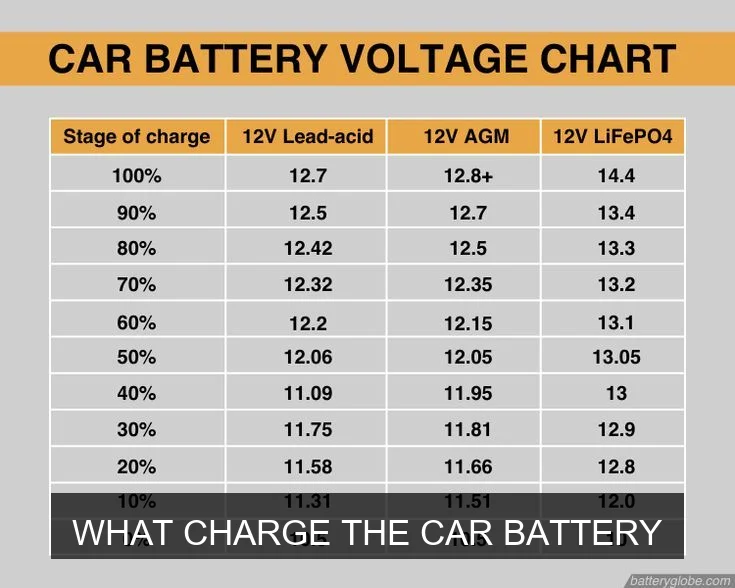
Image source: Pinimg
📋 Table of Contents
- 🔹 Introduction: Keeping Your Car Powered
- 🔹 The Primary Charger: Your Car’s Alternator
- 🔹 How the Alternator Works to Charge Your Battery
- 🔹 The Role of the Voltage Regulator
- 🔹 Secondary Charging Methods: External Battery Chargers
- 🔹 Different Types of External Battery Chargers
- 🔹 Why a Fully Charged Battery Matters
- 🔹 Common Signs of a Charging System Problem
- 🔹 Tips for Maintaining Your Car Battery and Charging System
- 🔹 Frequently Asked Questions About Car Battery Charging
- 🔹 Conclusion: The Power Behind Your Drive
Introduction: Keeping Your Car Powered
Ever wondered what actually charges your car battery? It’s a common question, and understanding the answer is key to keeping your vehicle running reliably. Your car battery doesn’t just power your starter; it’s also responsible for running all your electrical accessories when the engine is off. But it can’t do that forever without getting a refresh.
In this article, we’ll take a deep dive into the fascinating world of car battery charging. We’ll explore the main components that keep your battery topped up and discuss why a healthy charging system is so crucial for your daily drives. You’ll learn about the magical device that charges your car battery while you’re driving and what you can do if your battery needs a boost when the engine isn’t running.
The Primary Charger: Your Car’s Alternator
When you’re driving down the road, the primary component that charges your car battery is the alternator. This clever device is like a miniature power plant under your hood. It’s belt-driven by the engine, meaning it starts working as soon as your engine turns over and spins.
What is an Alternator?
An alternator is an electrical generator. Its main job is to convert mechanical energy from the spinning engine into electrical energy. This electrical energy then does two very important things:
- It powers all the car’s electrical systems while the engine is running (like your lights, radio, wipers, and air conditioning).
- It recharges the car battery, replacing the power used during starting and supplementing any drain from accessories.
Think of it as the car’s built-in recharger, constantly working to keep the battery ready for its next job: starting the engine.
How the Alternator Works to Charge Your Battery
The process of how an alternator charges your car battery is quite ingenious. It’s all about electromagnetism and converting motion into electricity.
The Basics of Electrical Generation
Inside the alternator, there are a few key parts: a stator, a rotor, and a rectifier. When the engine runs, a belt connected to the crankshaft spins the rotor inside the alternator. This rotor has a series of electromagnets. As the rotor spins, its magnetic field induces an alternating current (AC) in the surrounding stator windings.
Car electrical systems, however, run on direct current (DC). So, the alternator has another crucial component called a rectifier. This rectifier acts like a one-way valve for electricity, converting the AC electricity generated by the stator into usable DC electricity.
The Cycle of Power
Once converted to DC, this electricity is then sent out to power the car’s various electrical components. Any excess electrical energy that isn’t immediately used by the car’s systems is then directed to the battery. This is how the battery gets charged while you drive. It’s a continuous cycle: the battery provides power to start the car, and then the alternator takes over, powering everything and recharging the battery for the next start.
The Role of the Voltage Regulator
An equally important part of the charging system is the voltage regulator. You wouldn’t want the alternator to just pump out electricity without any control; that could overcharge and damage your battery and other electrical components.
The voltage regulator acts as a guardian, ensuring that the alternator produces a consistent and safe voltage, typically between 13.5 and 14.5 volts for a 12-volt battery system. It monitors the battery’s charge level and the electrical demands of the car. If the battery is low or the car needs more power, the regulator tells the alternator to produce more electricity. If the battery is fully charged or power demand is low, it tells the alternator to ease up.
This careful regulation is vital for the longevity of your battery and the health of your car’s entire electrical system. Without it, your battery would either never fully charge or, worse, become severely damaged from overcharging.
Secondary Charging Methods: External Battery Chargers
What if your car isn’t running? Or what if your battery is completely dead and can’t even start the engine to get the alternator going? That’s where an external battery charger comes in.
When to Use an External Charger
You’d typically use an external battery charger in a few situations:
- Dead battery: When your car won’t start because the battery is completely discharged.
- Slow drain: If your car sits for long periods, systems like the clock or alarm can slowly drain the battery.
- Maintenance: For vehicles stored over winter or used infrequently, a charger can keep the battery in optimal condition.
- Pre-emptive charging: Before a long trip, ensuring your battery is fully topped up can offer peace of mind.
How They Work
External battery chargers plug into a standard wall outlet (AC power). They then convert this AC power into DC power, which is what your car battery needs. Unlike the alternator, which is integrated into your car’s engine, these chargers are standalone devices that you connect directly to your battery terminals.
They deliver a controlled amount of current to the battery, slowly bringing its charge level back up. The charging process usually takes several hours, depending on the charger’s power and how discharged the battery is.
Different Types of External Battery Chargers
There isn’t just one type of external battery charger; they come in various forms, each designed for specific needs.
Trickle Chargers
These are low-amperage chargers, often just a few amps. They deliver a slow, continuous charge. They’re great for maintaining a battery over long periods of inactivity, like during winter storage. However, they can take a very long time to fully recharge a dead battery, and if not carefully monitored, they could potentially overcharge older batteries that don’t regulate themselves.
Smart/Automatic Chargers
Modern chargers are often “smart” or “automatic.” They include microprocessors that monitor the battery’s condition throughout the charging process. They can detect the battery’s voltage and adjust the current and voltage accordingly. Many have multi-stage charging cycles (bulk, absorption, float) to optimize charging and prevent overcharging. They’re very safe and efficient for regular use and maintenance.
Jump Starters vs. Chargers
It’s important to differentiate between a battery charger and a jump starter. A jump starter provides a quick, high burst of power to get a dead engine running immediately. It doesn’t actually “charge” the battery in the traditional sense; it just provides enough juice for starting. Once the car is running, the alternator takes over. A battery charger, on the other hand, slowly replenishes the battery’s charge over time.
Some devices combine both functions, offering a jump-start mode and a charging mode.
Why a Fully Charged Battery Matters
Having a properly charged car battery isn’t just about starting your car. It impacts the overall health and performance of your vehicle in several ways.
Vehicle Reliability
A fully charged battery ensures reliable starting every time you turn the key. A weak or undercharged battery can lead to slow cranking, difficulty starting, and eventually, a breakdown. Nobody wants to be stranded because their battery couldn’t deliver the power needed.
System Health
Your car’s electrical systems, from the fuel injectors to the infotainment system, rely on a stable voltage provided by the battery and alternator. An undercharged battery can cause stress on other components, potentially leading to premature wear or malfunctions. For instance, the alternator might have to work harder to compensate for a perpetually low battery, shortening its lifespan.
Furthermore, an undercharged battery can lead to sulfation, a process where lead sulfate crystals build up on the battery plates, reducing its capacity and overall lifespan. Keeping it charged properly helps prevent this.
Common Signs of a Charging System Problem
It’s helpful to know when your car’s charging system might be having trouble. Catching these signs early can save you from a breakdown.
- Battery Warning Light: The most obvious sign is the battery-shaped warning light illuminating on your dashboard. This usually indicates an issue with the charging system, often the alternator.
- Dim Lights or Electrical Malfunctions: If your headlights seem dimmer than usual, your interior lights flicker, or electrical accessories (like the radio or power windows) are acting up, it could mean the alternator isn’t supplying enough power.
- Slow Cranking: When you turn the key, if the engine struggles to turn over slowly, it’s often a sign of a weak battery that isn’t getting enough charge.
- Strange Noises: A failing alternator might produce whining or grinding noises. This could indicate worn bearings or other internal issues within the unit.
- Frequent Jump Starts: If you find yourself needing to jump-start your car regularly, it’s a strong indicator that your battery isn’t holding a charge, or the charging system isn’t replenishing it adequately.
Tips for Maintaining Your Car Battery and Charging System
Taking a few simple steps can significantly extend the life of your car battery and ensure your charging system works efficiently.
- Regular Inspections: Periodically check your battery terminals for corrosion (a fuzzy, white, or green substance). If you see it, clean it off safely. Also, ensure the battery cables are tightly connected.
- Check Battery Voltage: If you have a multimeter, you can check your battery’s voltage. A healthy, fully charged 12-volt battery should read around 12.6 volts when the engine is off and around 13.5-14.5 volts when the engine is running (indicating the alternator is charging).
- Avoid Short Trips: Frequent very short trips (less than 20 minutes) don’t give your alternator enough time to fully recharge the battery after starting. This can lead to a gradual discharge over time.
- Limit Accessory Use When Engine is Off: Avoid running your radio, lights, or other accessories for extended periods when the engine isn’t running. This drains the battery without the alternator there to replenish it.
- Secure Battery: Make sure your battery is properly secured in its tray. Vibrations from driving can damage the internal components of the battery.
- Consider a Battery Tender: If you store your car for long periods, a smart battery tender (a type of trickle charger) can keep the battery at an optimal charge level without overcharging.
Frequently Asked Questions About Car Battery Charging
What is the main component that charges a car battery?
The main component that charges a car battery while the engine is running is the alternator. It generates electricity to power the car and recharge the battery.
Can my car battery charge if the engine isn’t running?
No, your car battery cannot charge from the car’s internal system if the engine isn’t running because the alternator isn’t operating. It can only be charged by an external battery charger connected to a power outlet.
How long does it take for an alternator to charge a car battery?
The time it takes for an alternator to charge a car battery varies depending on how discharged the battery is and the alternator’s output. A car that’s been driven for 30 minutes to an hour after a mild discharge should have its battery sufficiently recharged. However, a completely dead battery might require a much longer drive or, more effectively, an external charger.
Is it bad to let my car battery fully discharge?
Yes, it’s generally bad to let your car battery fully discharge. Deep discharges can cause irreversible damage to the battery’s internal plates, reducing its overall capacity and lifespan. It’s best to keep your battery above a certain charge level and recharge it promptly if it runs low.
What are the signs of a failing alternator?
Common signs of a failing alternator include the battery warning light illuminating on your dashboard, dim or flickering headlights, electrical accessories malfunctioning, a slow-cranking engine, and sometimes a whining or grinding noise coming from under the hood.
Conclusion: The Power Behind Your Drive
Understanding what charges your car battery is really about appreciating the ingenious engineering that keeps your vehicle moving. The alternator is the unsung hero, constantly working behind the scenes to power your car and ensure your battery is ready for every start. And for those times when the alternator can’t do the job, external battery chargers provide a vital backup.
By keeping an eye on your car’s charging system and following a few simple maintenance tips, you can extend the life of your battery, avoid unexpected breakdowns, and enjoy reliable driving. It’s all about making sure that crucial flow of electricity is always there when you need it.