
Understanding the correct amperage to charge a car battery is crucial for its longevity and your safety. This comprehensive guide will demystify charging amps, explain why they matter, and provide practical advice on choosing the right amperage for a safe and effective charge every time. Learn the ideal range, common mistakes, and essential tips to keep your car battery healthy.
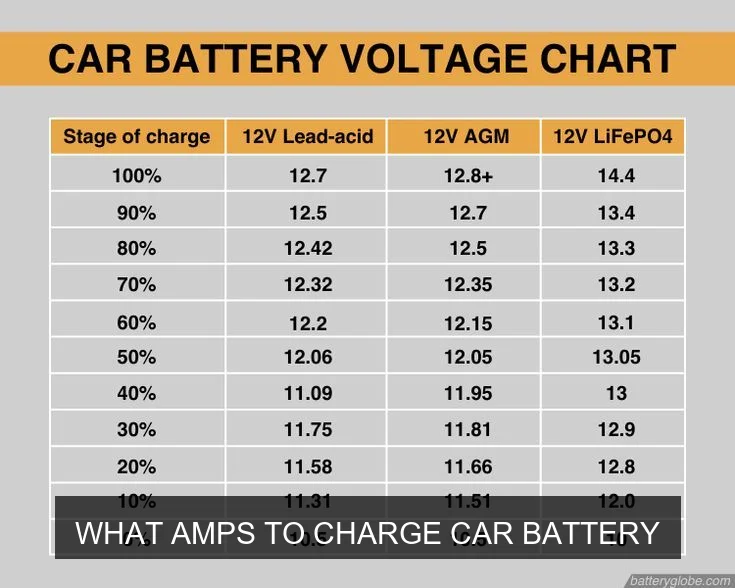
Image source: Pinimg
📋 Table of Contents
- 🔹 What Amps to Charge a Car Battery: The Direct Answer
- 🔹 Introduction: Why Proper Charging Matters
- 🔹 What Does “Amps” Mean When Charging a Car Battery?
- 🔹 Why is Amperage Important for Car Battery Health?
- 🔹 Recommended Amperage for Different Charging Scenarios
- 🔹 How Does Amperage Affect Charging Time?
- 🔹 Factors Influencing the Ideal Charging Amperage
- 🔹 Practical Steps: How to Choose the Right Amps
- 🔹 Common Mistakes to Avoid When Charging
- 🔹 Tips for Safe and Effective Car Battery Charging
- 🔹 People Also Ask (FAQ) About Charging Amps
- 🔹 Conclusion
What Amps to Charge a Car Battery: The Direct Answer
The ideal amperage to charge a car battery typically ranges from 2 to 10 amps. For a standard 12-volt car battery, a slow charge at 2-4 amps is generally safest and most effective for a full, healthy charge, especially if you have ample time. A faster charge around 10 amps can be used when time is limited, but it requires more careful monitoring to prevent overheating and potential damage to the battery.
Introduction: Why Proper Charging Matters
Picture this: you’re ready to start your day, hop in your car, turn the key, and… nothing. A dead car battery is a frustrating experience many of us know well. While a jump start can get you going, properly charging your battery is key to preventing future issues and extending its lifespan.
But when you look at a battery charger, you see numbers like “2A,” “10A,” or “20A.” What do these “amps” really mean? And which one should you choose? Charging a car battery isn’t just about plugging it in; it’s about understanding the “amps” (amperes) to ensure a safe and effective charge. Too few amps might take forever, while too many could actually harm your battery. Let’s break down what amps to charge a car battery and why this knowledge is so important.
What Does “Amps” Mean When Charging a Car Battery?
When we talk about “amps” (short for amperes) in battery charging, we’re referring to the rate of electrical current flow. Think of electricity like water flowing through a hose. The voltage (volts) is like the water pressure, and the amperage (amps) is like the volume or flow rate of the water. A higher amperage means more electrical current is flowing into the battery at any given time.
Car batteries store energy, and when you charge them, you’re essentially forcing electrical current back into them. The charger provides this current, and its amperage setting determines how quickly that current is delivered. It’s a fundamental concept in electrical systems, and understanding it is the first step toward proper battery care.
Why is Amperage Important for Car Battery Health?
Choosing the right amperage is crucial because it directly impacts your battery’s health and longevity. Here’s why:
- Preventing Overheating: Pumping too many amps into a battery too quickly can cause it to heat up excessively. Heat is a battery’s worst enemy, accelerating internal corrosion and shortening its lifespan. In extreme cases, it can even cause the battery to swell or leak.
- Avoiding Sulfation: If you use too low an amperage for a deeply discharged battery, or don’t charge it fully, it can lead to sulfation. This is when lead sulfate crystals build up on the battery plates, reducing its capacity to hold a charge.
- Ensuring a Full Charge: While a faster charge might seem appealing, a slower, steady charge often allows the battery to accept a more complete charge throughout all its cells. This is generally healthier for the battery in the long run.
- Safety: Incorrect amperage can lead to dangerous situations, including battery damage, fire, or even explosion. Always prioritize safety when dealing with car batteries and electrical currents.
Recommended Amperage for Different Charging Scenarios
The “best” amperage isn’t a single number; it depends on the situation. Here’s a breakdown:
Maintenance/Trickle Charging (1-2 Amps)
This is a very low-amp charge, perfect for keeping a fully charged battery topped off during long periods of storage, like over winter. These chargers often automatically monitor the battery and only provide current when needed. They’re excellent for maintaining battery health without overcharging.
- Use case: Stored vehicles (RVs, classic cars, motorcycles), extending battery life.
- Benefit: Prevents self-discharge and sulfation.
Slow/Standard Charging (2-4 Amps)
This is the most recommended approach for a regular car battery that’s discharged but not completely dead. It’s a gentle method that allows the battery to accept the charge efficiently and thoroughly, minimizing stress and heat. Most battery manufacturers recommend charging at about 10% of the battery’s Amp-hour (Ah) rating. So, a 40Ah battery would ideally charge at 4 amps.
- Use case: Moderately discharged batteries, general charging for optimal battery health.
- Benefit: Prolongs battery life, ensures a full and healthy charge.
Fast Charging (10-15 Amps)
If you’re in a hurry and your battery is only moderately discharged, a 10-amp setting can significantly cut down charging time. Some chargers even offer higher settings like 15 amps or more. However, fast charging should be used with caution. It generates more heat and can stress the battery, potentially shortening its lifespan if done frequently or improperly.
- Use case: When time is critical and the battery isn’t deeply discharged.
- Caveat: Requires careful monitoring to prevent overheating. Not ideal for deeply discharged or old batteries.
Jump Starting vs. Charging
It’s important to differentiate. A jump starter delivers a very high burst of amperage (hundreds of amps) for a very short time to get your engine cranking. This is not the same as charging. A battery charger provides a sustained, lower amperage to replenish the battery’s energy stores over several hours.
How Does Amperage Affect Charging Time?
Generally, a higher amperage will charge your battery faster. However, it’s not a perfectly linear relationship. Here’s a rough idea:
| Charging Amperage | Approximate Charging Time (for a typical 40-60Ah battery from 50% charge) | Notes |
|---|---|---|
| 2 Amps | 12-24 hours | Slow, gentle, best for battery health. |
| 4 Amps | 6-12 hours | Standard, good balance of speed and battery care. |
| 10 Amps | 2-5 hours | Faster, but requires monitoring for heat. |
Keep in mind that these are just estimates. The actual time will vary based on the battery’s state of discharge, its age, type, and ambient temperature.
Factors Influencing the Ideal Charging Amperage
Several things play a role in deciding what amps to charge a car battery:
- Battery Size (Ah Rating): The Amp-hour (Ah) rating of your battery indicates its capacity. A larger battery (higher Ah) can generally handle a slightly higher charging amperage without overheating compared to a smaller one. A good rule of thumb is to charge at 10-20% of the Ah rating. So, a 60Ah battery could ideally be charged at 6-12 amps.
- Battery Type:
- Flooded (Wet Cell) Batteries: These are the most common and are generally more tolerant of varying charge rates.
- AGM (Absorbed Glass Mat) Batteries: These require precise charging voltages and often prefer slightly lower, more controlled amperages to prevent damage.
- Gel Cell Batteries: Very sensitive to overcharging and heat. They require specific chargers and lower amperage settings to avoid damage.
Check your battery’s specific type before charging.
- Battery’s State of Discharge: A deeply discharged battery might initially accept a lower current before gradually increasing, or a smart charger might start low and ramp up.
- Charger Type:
- Manual Chargers: You set the amperage. Requires careful monitoring.
- Smart/Automatic Chargers: These are highly recommended. They detect the battery’s condition and adjust the amperage and voltage throughout the charging cycle, preventing overcharging and optimizing the process. Many have “float” or “maintenance” modes.
- Temperature: Extremely cold temperatures slow down the chemical reactions within a battery, making it accept a charge less efficiently. Very hot temperatures increase the risk of overheating during charging. Always try to charge in a moderate environment.
Practical Steps: How to Choose the Right Amps
So, how do you put this knowledge into practice? Here’s a simple guide:
- Identify Your Battery’s Ah Rating: Look for a label on your battery for its Amp-hour (Ah) rating. If you can’t find it, a typical car battery is usually between 40-70 Ah.
- Consult Your Charger’s Manual: Your battery charger’s manual will have specific instructions and recommendations for its various amperage settings.
- Prioritize Slow and Steady: When in doubt, a 2-4 amp charge is generally the safest and best option for most standard car batteries. It minimizes heat and stress.
- Consider Your Time Frame: If you’re really pressed for time and your battery isn’t completely flat, a 10-amp charge can be an option. But remember to monitor it closely.
- Use a Smart Charger: If possible, invest in a smart charger. These devices take the guesswork out of it by automatically adjusting the charge rate and stopping when the battery is full. They’re excellent for battery health.
Common Mistakes to Avoid When Charging
Even with the right knowledge, it’s easy to make mistakes. Here are some common pitfalls:
- Using Too High Amperage Consistently: Regularly fast charging your battery at 10-20 amps can significantly reduce its lifespan due to excessive heat.
- Overcharging: Leaving a non-smart charger connected for too long, especially at higher amperages, can boil the electrolyte (in flooded batteries) and damage the battery plates.
- Undercharging: Not charging the battery fully, or frequently charging it only partially, can lead to sulfation and reduced capacity over time.
- Not Monitoring the Battery: Especially with manual chargers or higher amp settings, failing to check the battery for heat or swelling can be dangerous.
- Charging in Extreme Temperatures: Charging a very cold battery can be inefficient, while charging a very hot battery increases the risk of damage.
- Ignoring Battery Type: Using a standard charger on a gel or AGM battery without proper settings can damage these sensitive battery types.
Tips for Safe and Effective Car Battery Charging
Safety first! Always follow these guidelines:
- Work in a Well-Ventilated Area: Batteries can emit hydrogen gas, which is highly flammable. Good ventilation prevents gas buildup.
- Wear Safety Gear: Always wear safety glasses and gloves to protect your eyes and skin from potential acid splashes.
- Read the Manuals: Always read both your battery charger’s manual and your car’s owner’s manual for specific instructions.
- Connect Cables Properly: Connect the positive (+) charger cable to the positive (+) battery terminal first, then the negative (-) charger cable to the negative (-) battery terminal (or a good ground point on the car’s engine block, away from the battery, if recommended for safety).
- Ensure Proper Disconnection: Disconnect in the reverse order: negative first, then positive.
- Check for Damage: Before charging, inspect the battery for any cracks, leaks, or swelling. Do not charge a damaged battery.
- Keep an Eye on It: Especially with older or manual chargers, periodically check the battery for signs of overheating (it feels hot to the touch) or boiling.
People Also Ask (FAQ) About Charging Amps
Can I charge a car battery with 20 amps?
While some chargers offer a 20-amp setting, it’s generally not recommended for standard car battery charging, especially for an extended period. This high amperage can cause excessive heat, significantly shorten battery life, and poses a greater safety risk. It’s usually reserved for specific situations like quick boosts or larger commercial batteries. For typical car batteries, stick to 2-10 amps.
How long does it take to charge a car battery at 2 amps vs. 10 amps?
The charging time varies significantly. For a typical car battery (40-60 Ah) from a moderately discharged state:
- At 2 amps, it could take 12-24 hours for a full charge.
- At 10 amps, it might take 2-5 hours.
These are rough estimates; a deeply discharged battery will take longer, and a smart charger will adjust the time automatically based on battery condition.
Does a dead car battery need a specific amp to charge?
A completely dead car battery (very low voltage) actually benefits most from a slow, steady charge (2-4 amps). This allows the battery to gently recondition itself and accept a full charge without stress. Some smart chargers have a “recondition” or “desulfation” mode specifically for deeply discharged batteries, which uses low, pulsed amps.
Is it better to charge a car battery fast or slow?
In almost all cases, it’s better to charge a car battery slowly. A slow charge (2-4 amps) generates less heat, is gentler on the battery’s internal components, and allows for a more complete chemical reaction, leading to a healthier battery and a longer lifespan. Fast charging should be reserved for urgent situations and done with caution.
What’s the difference between a battery charger and a jump starter in terms of amps?
The key difference lies in their purpose and how they deliver amps:
- A battery charger delivers a relatively low, sustained amperage (2-15 amps) over several hours to fully replenish the battery’s stored energy.
- A jump starter delivers a very high burst of amperage (hundreds of amps) for a few seconds to provide enough power to crank the engine, but it doesn’t fully charge the battery.
Conclusion
Understanding what amps to charge a car battery is a fundamental part of responsible vehicle ownership. It’s not just about getting your car running again; it’s about preserving the life and health of a critical component. By opting for a slower, steady charge between 2-4 amps whenever possible, using a smart charger, and avoiding common mistakes, you can significantly extend your battery’s lifespan and ensure reliable starts for years to come.
Remember, safety is paramount. Always follow guidelines, use proper ventilation, and wear protective gear. With the right knowledge and a little care, you can confidently maintain your car battery and keep your vehicle ready for the road.