
Choosing the right amperage to charge a car battery is vital for its health and longevity. This guide explains what amperage means in the context of battery charging, helps you understand why it’s so important, and walks you through how to select the best charging rate to keep your car battery in top condition.
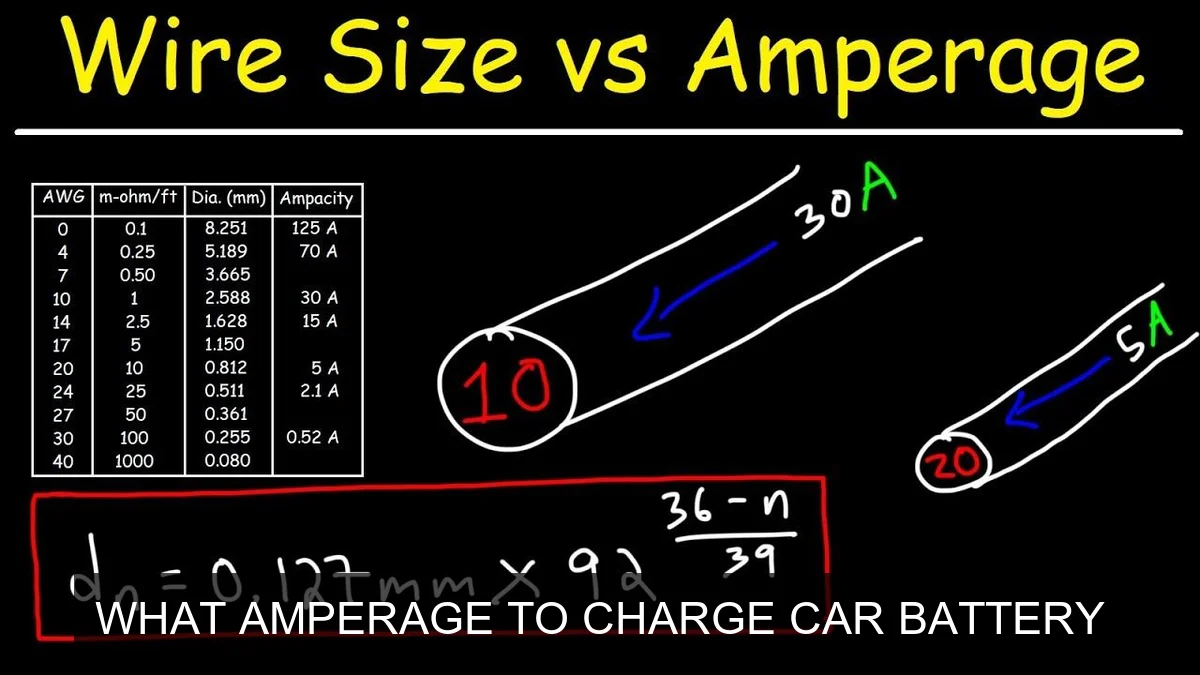
Image source: Pinimg
📋 Table of Contents
- 🔹 What Amperage to Charge a Car Battery
- 🔹 Introduction: Understanding Your Car Battery’s Needs
- 🔹 What Amperage Means When Charging a Car Battery
- 🔹 Why Amperage Matters for Car Battery Charging
- 🔹 How to Determine the Right Amperage for Your Car Battery
- 🔹 Types of Battery Chargers and Their Amperage Output
- 🔹 The Car Battery Charging Process Explained
- 🔹 Common Mistakes to Avoid When Charging Your Car Battery
- 🔹 Best Practices for Safe and Effective Car Battery Charging
- 🔹 People Also Ask (PAA)
- 🔹 Conclusion
What Amperage to Charge a Car Battery
For most 12-volt car batteries, a charging amperage between 2 and 10 amps is generally safe and effective. A slow charge around 2-4 amps is ideal for a deep, complete charge and optimal battery health, minimizing stress. A 10-amp charge can speed things up considerably without significant risk if your battery is in decent shape and you need quicker results. Always prioritize checking your specific battery and charger manufacturer’s recommendations for the most accurate guidance.
Introduction: Understanding Your Car Battery’s Needs
Imagine your car battery as a thirsty friend. You wouldn’t want to give them water too fast, making them uncomfortable, or too slowly, keeping them dehydrated for too long. Charging a car battery is a lot like that! The “amperage” is simply how fast you’re pouring the energy in.
Understanding what amperage to charge a car battery at is super important for keeping it healthy and lasting a long time. Charge it wrong, and you could actually shorten its life or even damage it. Charge it right, and your battery will reliably power your car for years to come.
This article will guide you through everything you need to know about charging amperage. We’ll explore what amps mean, why they matter, how to pick the right setting for your battery, and common pitfalls to avoid. By the end, you’ll feel confident giving your car battery exactly what it needs.
What Amperage Means When Charging a Car Battery
When we talk about electricity, we often use three main terms: volts, amps, and watts. For charging a car battery, amps are particularly relevant. Think of it this way:
- Voltage (Volts): This is like the “pressure” of the electricity. Most car batteries are 12-volt batteries, so your charger will typically output slightly more than 12 volts to push the charge in.
- Amperage (Amps): This is the “flow rate” or the “volume” of electricity moving through the circuit per second. When you set your charger to 2 amps, it’s sending a small, steady stream. At 10 amps, it’s a much larger, faster stream.
- Wattage (Watts): This is the total power, a combination of volts and amps (Volts x Amps = Watts). It tells you the overall energy being delivered.
So, when you’re deciding what amperage to charge a car battery with, you’re essentially choosing how quickly to replenish the battery’s energy reserves. A higher amperage means a faster charge, while a lower amperage means a slower, more gentle charge.
Why Amperage Matters for Car Battery Charging
The amperage you use isn’t just about how quickly your battery charges; it significantly impacts the battery’s health and lifespan. Here’s why getting it right is so important:
- Battery Health: Car batteries generate heat during charging. Higher amperage means more current, which can lead to more heat. Excessive heat can damage the internal components of the battery, specifically the lead plates and electrolyte, reducing its capacity and overall lifespan.
- Charging Efficiency: A very slow charge might not be efficient enough to fully recover a deeply discharged battery in a reasonable timeframe, especially for modern vehicles with constant parasitic draws. Conversely, too fast a charge can lead to overcharging and gassing, which is detrimental.
- Safety: Incorrect amperage can pose safety risks. Overheating can sometimes lead to battery acid leaks or, in extreme cases, even an explosion dueishing. Always follow safety guidelines when working with batteries.
- Battery Type: Different battery types (like traditional lead-acid, AGM, or Gel) have varying tolerances for charging rates. Knowing your battery type helps in choosing the correct amperage.
It’s about finding that sweet spot: fast enough to be practical, but slow enough to be gentle on the battery. This balance is key to understanding what amperage to charge a car battery for optimal results.
How to Determine the Right Amperage for Your Car Battery
Choosing the correct amperage involves looking at a few factors. Don’t worry, it’s simpler than it sounds!
Understanding Your Battery’s Capacity
Your car battery has a specific capacity, usually measured in Amp-Hours (Ah). This number tells you how much energy it can store. You’ll often find it on a label on the battery itself. For instance, a typical car battery might be around 40-70 Ah.
A good rule of thumb for standard lead-acid batteries is to charge them at about 10% to 20% of their Ah capacity. For example:
- If your battery is 60 Ah, then 10% is 6 amps, and 20% is 12 amps. So, charging at 6-10 amps would be a good range.
- For a 40 Ah battery, 4-8 amps would be appropriate.
This “10% rule” helps ensure a safe, efficient charge without stressing the battery too much.
Considering the Charger Type
Not all chargers are created equal. Some smart chargers automatically adjust amperage based on the battery’s needs, while others have manual settings.
- Smart Chargers: These are often the best choice as they monitor the battery’s voltage and adjust the current accordingly, preventing overcharging. Many have different modes for various battery types (e.g., AGM, Gel).
- Manual Chargers: If your charger has a manual setting, you’ll need to choose the amperage yourself based on your battery’s capacity.
Assessing the Battery’s State of Charge
How dead is your battery? A completely flat battery might initially draw a bit more amperage, but it’s generally safer to start with a lower setting if you’re unsure, especially with a manual charger. Most modern smart chargers handle this initial draw safely.
If your battery is only slightly discharged (e.g., you left the lights on for a short time), a lower amperage will still work perfectly fine and probably reach full charge quicker than you think.
Types of Battery Chargers and Their Amperage Output
Understanding the different types of chargers will further clarify what amperage to charge a car battery. Chargers are generally categorized by their typical amperage output:
Trickle Chargers (Low Amperage)
Trickle chargers typically deliver a very low amperage, usually 1 to 2 amps. They are designed for maintaining a battery’s charge over long periods, like during winter storage or for vehicles not used often. They slowly top off the battery without the risk of overcharging or damaging it. Modern “smart” trickle chargers are often called “battery maintainers” because they switch to a float mode once the battery is full.
- Best for: Long-term maintenance, slow and gentle charging of slightly drained batteries.
- Timeframe: Very long, potentially days to fully charge a dead battery.
Standard Chargers (Medium Amperage)
These are the most common type for general car battery charging. They typically offer a range from 4 to 10 amps. Many standard chargers are “smart” and feature multiple stages, automatically adjusting the amperage as the battery charges. This range is often what people consider when asking what amperage to charge a car battery for a regular boost.
- Best for: Recharging a moderately drained battery, regular maintenance, and bringing a dead battery back to life.
- Timeframe: Several hours (e.g., 4-12 hours depending on battery size and discharge level).
Fast Chargers (High Amperage)
Fast chargers can deliver 10 amps or more, sometimes up to 20 or 30 amps for specific heavy-duty applications or jump-start functions. While they get the job done quickly, they must be used with caution. High amperage charging generates more heat, which can be detrimental to the battery if not managed properly by a smart charger.
- Best for: When you need a quick boost to start a vehicle, or for larger batteries in trucks or RVs that can handle higher currents.
- Timeframe: Can significantly reduce charging time, but usually not recommended for a full, gentle charge from completely flat.
Many chargers offer selectable amperage settings, allowing you to switch between these modes based on your needs.
The Car Battery Charging Process Explained
Modern smart chargers don’t just blast a constant stream of amps into your battery. They follow a multi-stage charging process to optimize battery health and achieve a full charge. Understanding these stages can help you grasp what amperage to charge a car battery at different points in its cycle.
Bulk Charge Phase
This is the first and most intensive stage. The charger delivers its maximum safe amperage (e.g., 10 amps if set to that) to rapidly bring the battery’s voltage up. During this phase, the battery accepts a high current. This stage usually brings the battery to about 80% of its capacity.
- Amperage: Highest (e.g., 10 amps or more, depending on charger setting).
- Voltage: Slowly rising.
Absorption Phase
Once the battery reaches about 80% charge and its voltage stabilizes at a certain point (around 14.4-14.7 volts for a 12V battery), the charger enters the absorption phase. Here, the amperage gradually decreases while the voltage remains constant. This slower charge allows the battery to absorb the remaining energy without overheating or causing excessive gassing. This phase brings the battery close to 100% full.
- Amperage: Decreasing slowly.
- Voltage: Constant at a higher level.
Float Charge Phase
After the battery is fully charged, a smart charger will enter the float stage. The voltage is reduced to a lower, maintenance level (around 13.2-13.8 volts), and the amperage drops to a very minimal trickle (often less than 1 amp). This keeps the battery topped off without overcharging, compensating for any natural self-discharge. This is where a “battery maintainer” shines.
- Amperage: Very low, just enough to maintain charge.
- Voltage: Reduced to a maintenance level.
This intelligent, multi-stage process ensures your battery gets charged effectively and safely, optimizing for longevity rather than just speed.
Common Mistakes to Avoid When Charging Your Car Battery
Even with a good understanding of what amperage to charge a car battery, it’s easy to make mistakes. Here are some common ones to watch out for:
- Using Too High Amperage: As discussed, this can cause excessive heat, warp battery plates, boil off electrolyte (water), and significantly shorten the battery’s lifespan. It’s especially risky for smaller batteries or older ones.
- Using Too Low Amperage for a Severely Dead Battery: While gentle, a very low amp setting might take an extremely long time to revive a dead battery, and in some cases, might not even be enough to overcome the internal resistance or parasitic draws of the car.
- Overcharging: Leaving a non-smart charger connected for too long, especially at a higher amperage, can severely damage the battery by causing it to gas excessively, lose electrolyte, and degrade its internal components.
- Undercharging: Consistently not fully charging your battery can lead to sulfation, where sulfate crystals build up on the lead plates, reducing the battery’s capacity and ability to hold a charge.
- Not Checking Electrolyte Levels (for serviceable batteries): If you have a traditional lead-acid battery with removable caps, charging can sometimes cause water loss. Always check levels and top up with distilled water *before* charging if they are low.
- Charging in Extreme Temperatures: Very hot or very cold temperatures can affect charging efficiency and battery health. Charge in a moderate environment whenever possible.
Avoiding these common errors will ensure your charging efforts are beneficial, not harmful.
Best Practices for Safe and Effective Car Battery Charging
To maximize your car battery’s life and ensure your safety, here are some practical tips and best practices for charging:
- Always Read Your Manuals: Both your battery’s manual and your charger’s manual will have specific recommendations on what amperage to charge a car battery and other important guidelines. This is your primary source of truth.
- Charge in a Well-Ventilated Area: Batteries can produce hydrogen gas, which is flammable, especially during charging. Good ventilation disperses these gases, preventing dangerous buildups.
- Wear Safety Gear: Always wear safety glasses and gloves when handling car batteries and chargers. Battery acid is corrosive.
- Connect Correctly:
- Turn off the charger before connecting or disconnecting clamps.
- Connect the red (positive, +) clamp to the positive terminal on the battery.
- Connect the black (negative, -) clamp to a clean, unpainted metal part of the car chassis, away from the battery and fuel lines. If charging the battery out of the car, connect the black clamp to the negative terminal.
- Avoid Sparking: Connect the negative clamp away from the battery to minimize the chance of a spark near potential hydrogen gas, especially if the battery is actively gassing.
- Monitor the Battery: If using a manual charger, periodically check the battery’s temperature. If it becomes hot to the touch, reduce the amperage or stop charging.
- Disconnect Safely: Turn off the charger, then disconnect the negative clamp first, followed by the positive clamp.
- Consider a Smart Charger: If you’re not confident in managing amperage settings, a smart charger that automatically adjusts through the charging stages is a fantastic investment for peace of mind and battery longevity.
Following these practices will make the process of deciding what amperage to charge a car battery much safer and more effective.
People Also Ask (PAA)
What happens if you charge a car battery with too many amps?
If you charge a car battery with too many amps, it can cause the battery to overheat, leading to several problems. This includes boiling off the electrolyte (the fluid inside the battery), warping the internal plates, and potentially damaging the battery permanently. Excessive gassing can also occur, which can be dangerous due to the release of flammable hydrogen gas.
Can you charge a 12V battery with 2 amps?
Yes, absolutely! Charging a 12V car battery with 2 amps is a common and often recommended practice, especially for a slow, gentle charge. It’s ideal for maintaining battery health over time or for a deep, complete charge from a moderately drained state. While it will take longer than a higher amperage, it’s very safe and minimizes stress on the battery.
How long does it take to charge a car battery at different amperages?
The charging time depends on the battery’s capacity (Amp-Hours), how discharged it is, and the amperage of the charger. As a rough guide, for a 60 Ah battery that is 50% discharged:
- At 2 amps: It could take approximately 15-20 hours.
- At 6 amps: It could take approximately 5-7 hours.
- At 10 amps: It could take approximately 3-4 hours.
These are estimates; a smart charger will adjust and might take longer to complete the absorption and float phases.
Is it better to charge a car battery fast or slow?
Generally, it is better to charge a car battery slowly, using a lower amperage. A slow charge (e.g., 2-4 amps) is gentler on the battery’s internal components, reduces heat buildup, and allows for a more complete and uniform charge. This helps extend the battery’s overall lifespan. Fast charging (10+ amps) should only be used when necessary for speed, and ideally with a smart charger that can manage the process.
Does a higher amp charger charge faster?
Yes, a higher amp charger will charge a battery faster in the initial “bulk” phase. More amps mean more current flowing into the battery per unit of time, reducing the overall time it takes to replenish its energy. However, this increased speed comes with the potential for more heat generation and stress on the battery if the amperage is excessively high or not properly regulated by a smart charger.
Conclusion
Understanding what amperage to charge a car battery at is a fundamental skill for any car owner. It’s not just about getting your car started; it’s about safeguarding your battery’s health and ensuring its longevity. By choosing an amperage that suits your battery’s capacity and condition, you’re taking a proactive step in vehicle maintenance.
Remember the “10% rule” as a good starting point, prioritize smart chargers for their automatic adjustment capabilities, and always follow safety precautions. With the right approach, you can keep your car battery in excellent shape, ensuring reliable starts and avoiding unexpected issues down the road.