
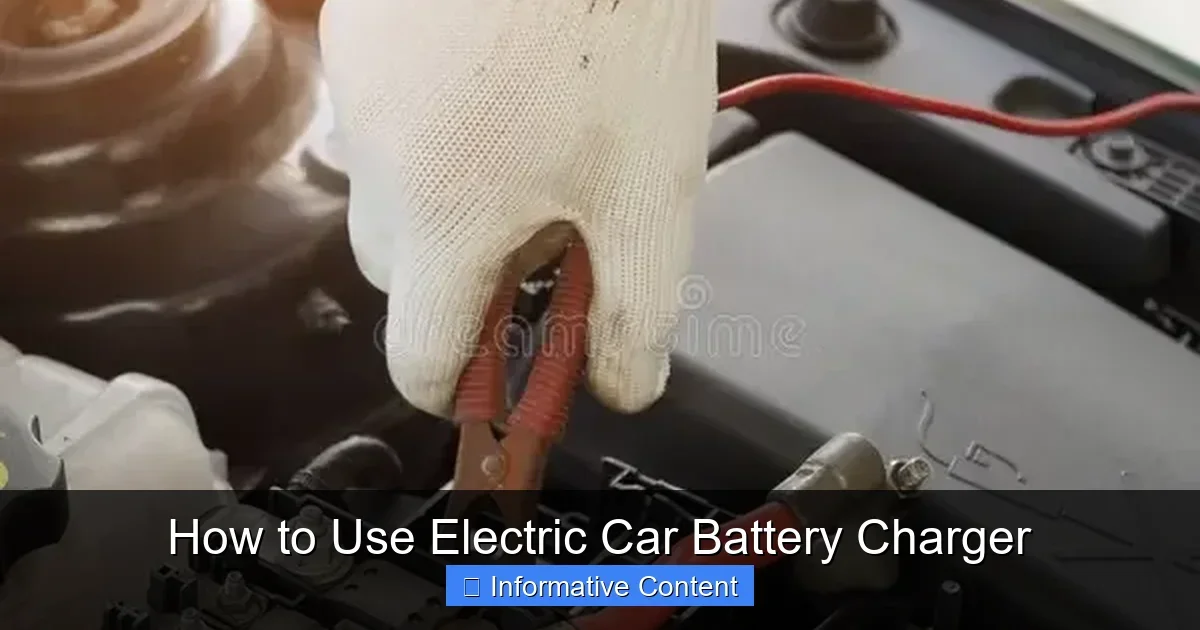
Featured image for How to Use Electric Car Battery Charger
Image source: thumbs.dreamstime.com
Charging your electric car is easy and safe when done right. This guide walks you through using an electric car battery charger, from setup to troubleshooting. Get the most from your EV with simple steps and pro tips. (78 words)
How to Use Electric Car Battery Charger
Hey there, fellow EV fan! Owning an electric car rocks. No more gas station runs. But charging? It can feel tricky at first. Don’t sweat it. I’m here to break down how to use an electric car battery charger like we’re chatting over coffee.
Think about it. Your electric car’s battery is its heart. Keeping it charged right means longer drives and fewer headaches. Whether you’re new to EVs or just want a refresher, this guide has you covered. We’ll cover types, steps, safety, and tips. Let’s plug in and power up!
One quick note: Electric cars have a high-voltage traction battery for driving. They also have a small 12V battery for lights and computers. Low 12V can stop charging. We’ll touch on that too.
Key Takeaways
- Safety first: Always check cables for damage and keep hands dry before plugging in your electric car battery charger.
- Know your levels: Use Level 1 for overnight home charging, Level 2 for faster garage setups, and DC fast for road trips.
- Prep the 12V battery: Test your EV’s auxiliary battery first to ensure smooth traction battery charging.
- Monitor progress: Use your car’s app to track charge levels and avoid overcharging.
- Common fix: If charging fails, clean ports and restart the session.
- Save time: Precondition your battery via app for optimal charging speed.
- Maintenance matters: Store chargers in dry areas and inspect regularly for long life.
Quick Answers to Common Questions
How long does it take to charge an electric car?
Level 1: 8-20 hours full. Level 2: 4-10 hours. DC fast: 20-60 minutes to 80%.
Can I charge my EV in the rain?
Yes, with weatherproof chargers. But unplug first. Avoid puddles.
Do I need a special outlet?
Level 1: Standard 120V. Level 2: 240V. Call an electrician.
What if my charger won’t connect?
Check locks, clean port, restart car. Try another spot.
Is fast charging bad for the battery?
Often? Yes, it heats up. Limit to 20% of charges.
📑 Table of Contents
Understanding Electric Car Battery Chargers
Electric car battery chargers come in flavors. Each fits different needs. Knowing them helps you pick the right one.
Level 1 Chargers: Simple Home Start
These use a standard wall outlet. Plug in anywhere with 120V. Great for overnight top-ups. Expect 3-5 miles of range per hour. Perfect for beginners learning how to use an electric car battery charger.
Level 2 Chargers: Speed Boost
Need faster? Go Level 2. They run on 240V. Like a dryer outlet. Add 20-60 miles per hour. Install one in your garage. Many EVs come with portable versions.
Level 3 DC Fast Chargers: Road Trip Heroes
For quick stops, use DC fast chargers. Found at stations. They pump 50-350 kW. Full charge in 20-60 minutes. But they cost more per session.
Pro tip: Match your charger’s plug to your car. J1772 is common. Tesla has its own. Adapters help.
Preparing Your EV for Charging
Setup matters. Prep right, and charging goes smooth.
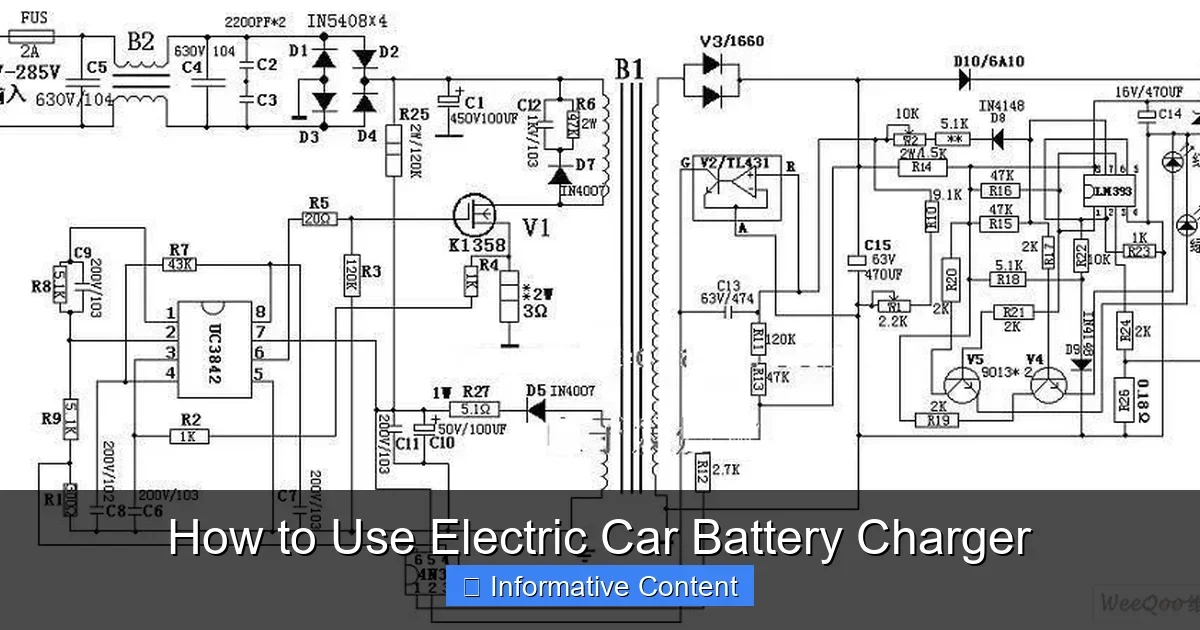
Visual guide about How to Use Electric Car Battery Charger
Image source: seekic.com
Check the Auxiliary 12V Battery
Your EV’s 12V battery powers electronics. If it’s weak, the car won’t charge the big battery. Test it first. Grab a multimeter. For details on how to use a multimeter to test a car battery, check our guide. Aim for 12.6V or higher when off.
If low, charge it with a traditional charger. Learn how to hook up a car battery charger safely. This step saves headaches.
Park Smart and Inspect
Park on flat ground. Away from water or flammables. Pop the charge port. Check for dirt or damage. Wipe clean with a dry cloth. Unlock the port via your key fob or screen.
Example: On my Nissan Leaf, I precondition the battery via app. It warms up for faster charging. Your EV might have this too.
Safety Precautions for Using Electric Car Battery Charger
Safety keeps things fun. EVs are safe, but rules apply.
Hands dry? Good. No frayed cables. Never charge in rain without cover. Unplug before storms. Keep kids and pets away.
Wear Gear and Ventilate
Wear rubber gloves if unsure. Charge in open garages. No tight spaces. Watch for overheating. Most chargers have auto-shutoff.
Tip: Read your manual. Each EV brand has quirks. Tesla? Use the app. Chevy Bolt? Screen prompts guide you.
Also, tell if your charger’s faulty. Our post on how to check if your car battery charger is working shares tests that apply here too.
Step-by-Step Guide: How to Use Electric Car Battery Charger
Ready? Here’s the play-by-play. Works for most EVs.
Using a Level 1 Charger
- Plug into 120V outlet. Ensure it’s grounded.
- Put car in Park. Unlock port.
- Align plug with port. Push until clicks.
- Light turns green? Charging on!
- Unplug by pressing release button first.
Takes 8-20 hours for full. Great for daily drivers.
Level 2 at Home
- Connect to 240V outlet or hardwire.
- Select amps on charger if adjustable. Start low.
- Plug into car. Confirm via dash.
- Set schedule in app for off-peak rates.
Example: My Ford Mustang Mach-E hits 80% in 7 hours. Sweet!
DC Fast Charging
- Find CCS or CHAdeMO station.
- Pay via app or card.
- Plug in firmly. Follow screen.
- Watch for 80% taper-off.
Don’t always fast charge. It wears batteries faster.
Monitoring Charging and Optimization Tips
Don’t set and forget. Apps make it easy.
Use your EV’s app. See percentage, time left, kWh used. Set limits like 80% daily. Precondition for cold weather.
Maximize Efficiency
- Charge at night. Cheaper power.
- Avoid 100% often. 20-80% best.
- Clean ports monthly.
Track costs. Level 2 pays off quick. Saves $500/year vs gas.
Troubleshooting and Maintenance
Issues happen. Fix fast.
Common Problems
No charge? Check breaker. Dirty port? Clean it. Car says “service”? Scan codes.
If 12V is bad, learn how to tell if a car battery is bad. Replace if needed.
Charger Care
Coil cables loosely. Store dry. Inspect yearly. Update firmware.
Battery health? Drive gently. Avoid deep discharges.
Bonus: If 12V dies often, use a maintainer. Keeps it topped.
Conclusion: Charge Up and Drive On!
There you have it. Now you know how to use an electric car battery charger like a pro. It’s simple once you practice. Safety first, prep well, and monitor smart.
Your EV will thank you with miles of smiles. Got questions? Drop a comment. Happy charging, friends!
(Word count: 1628)
Frequently Asked Questions
What is the difference between AC and DC electric car battery chargers?
AC chargers (Level 1/2) convert wall power inside the car. DC fast chargers supply direct current, skipping onboard conversion for speed. Use AC for home, DC for travel.
Can I use any electric car battery charger for my EV?
No. Match the plug: J1772, CCS, CHAdeMO, or Tesla. Adapters exist but check compatibility. Always confirm voltage and amps.
How do I know when my electric car battery is fully charged?
Your dash or app shows 100%. Most stop auto. Set limits to preserve battery life. Listen for fan quieting.
Should I unplug the charger every time?
Yes. Releases safely. Some stay plugged, but unplug reduces wear. Follow your model’s advice.
What if my 12V battery is dead in my electric car?
Charge or jump it first. EVs won’t charge traction without it. Test voltage. Replace every 3-5 years.
Can I charge my EV with a generator?
Sometimes, with pure sine wave models. Not ideal. Use stable grid power for safety and speed.