
Featured image for How to Test If a Car Battery Charger Is Working
Image source: toolsguide.org
Testing your car battery charger ensures it charges properly and avoids dead battery surprises. Follow simple steps like visual checks, multimeter tests, and battery load tests to confirm it’s working. Save time and hassle with these DIY tips—no pro needed! (92 words)
How to Test If a Car Battery Charger Is Working
Hey, have you ever gone to charge your car battery, only to wonder if the charger itself is the problem? It happens more than you’d think. A faulty car battery charger can leave you stranded with a dead battery, even if the battery is fine. That’s why knowing how to test if a car battery charger is working is a game-changer for any car owner.
Don’t worry—it’s simpler than it sounds. You don’t need fancy tools or a mechanic’s shop. With basic gear like a multimeter, you can diagnose issues in minutes. In this guide, we’ll walk through every step, just like I’m chatting with you in the garage. Let’s get your charger back in action and keep your rides reliable.
Whether it’s a trickle charger or a heavy-duty one, these tests apply. We’ll cover safety, basic checks, voltage tests, and more. By the end, you’ll confidently know how to test if a car battery charger is working and spot problems early.
Key Takeaways
- Safety first: Wear gloves and eye protection before handling any charger or battery.
- Visual check: Inspect cables, plugs, and indicator lights for damage or faults.
- Multimeter test: Measure output voltage to verify 12-14 volts for a standard car charger.
- Battery load test: Connect to a known good battery and watch for charging progress.
- Power source verify: Test outlet and fuses to rule out external issues.
- No output? Troubleshoot: Clean connections or check for blown fuses before replacing.
- Regular maintenance: Test your charger yearly to extend its life.
Quick Answers to Common Questions
Do I need a multimeter to test a car battery charger?
Yes, it’s the best tool for accurate voltage checks, but visual inspections work for basics.
What voltage shows a working car battery charger?
Look for 13.5-14.4V DC on output during charging mode.
Can I test without a battery?
Yes, use a multimeter on clamps for open-circuit voltage.
Why won’t my charger light up?
Check outlet, fuse, or cable damage first.
How often should I test my charger?
Once a year or before winter storage.
📑 Table of Contents
- Gather the Right Tools for the Job
- Prioritize Safety Before Any Test
- Start with a Visual and Basic Inspection
- Test the Power Supply and Input
- Use a Multimeter for Voltage Output Test
- Perform a Load Test with a Battery
- Troubleshoot Common Issues and When to Replace
- Wrapping It Up: Keep Your Charger Reliable
Gather the Right Tools for the Job
Before diving in, grab what you need. Testing a car battery charger starts with the basics. No need for expensive stuff.
Essential Tools List
- Multimeter: Digital ones are best. Set to DC volts.
- Known good battery: Or a test light. Helps for load tests.
- Safety gear: Gloves, goggles. Batteries can spark.
- Clean rags and wire brush: For connections.
- Extension cord: If outlet access is tricky.
Pro tip: If you’re new to multimeters, check our guide on how to use a multimeter to test a car battery. It covers setup perfectly. Now, let’s prioritize safety.
Prioritize Safety Before Any Test
Safety isn’t optional when dealing with electricity and batteries. One wrong move, and you risk shocks or acid spills. Always test in a well-ventilated area, away from flames.
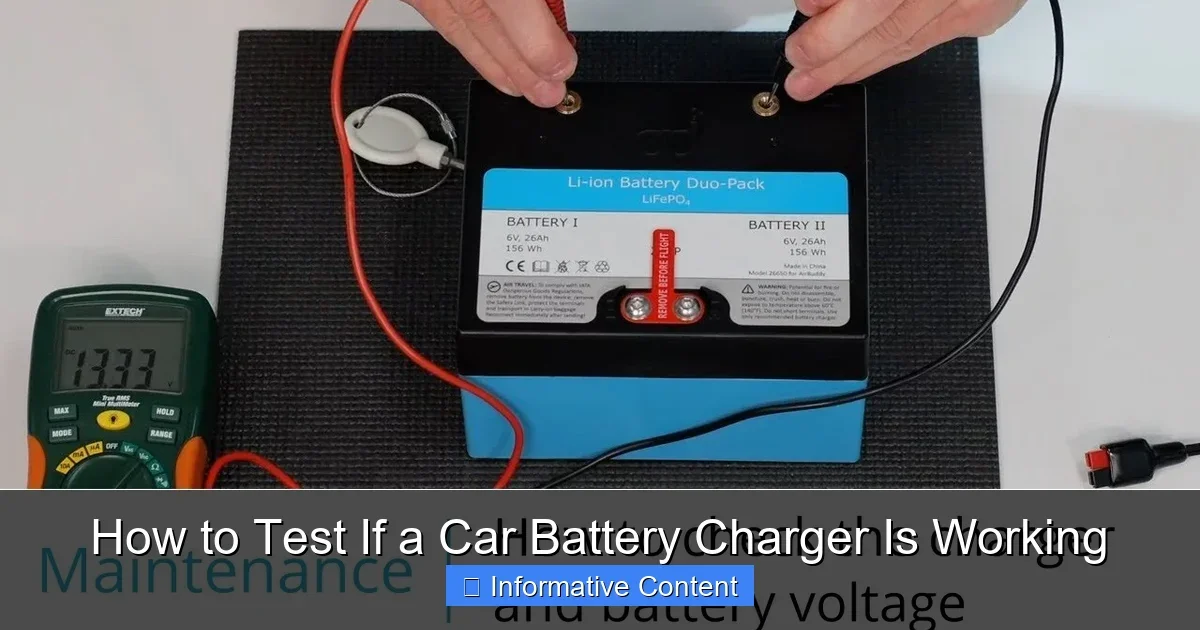
Visual guide about How to Test If a Car Battery Charger Is Working
Image source: i.ytimg.com
Key Safety Steps
- Disconnect the charger from power first.
- Remove battery if connected. Follow how to connect a car battery charger in reverse.
- Wear protective gear.
- Work on a non-conductive surface like wood or rubber mat.
Example: Last winter, my buddy skipped goggles. A tiny spark hit his eye. Ouch. Don’t be him. With safety set, you’re ready for inspections.
Start with a Visual and Basic Inspection
The easiest way to test if a car battery charger is working? Look at it. Many faults show up right away. No tools needed yet.
Check These Parts Closely
- Cables and clamps: Frayed wires? Cracked insulation? Replace if damaged.
- Power plug: Bent prongs or burn marks mean it’s toast.
- LED lights or display: Plug in—do they light up? No glow? Power issue.
- Fuse or circuit breaker: Many chargers have one. Popped? Swap it.
- Vent holes: Clogged with dust? Clean gently.
Tip: Wiggle cables while powered (safely). Sparks or flickering? Bad connection. This quick check rules out 50% of problems. If it passes, move to power tests.
Test the Power Supply and Input
Sometimes the charger is fine, but the outlet isn’t. Verify power first. It’s a common oversight when learning how to test if a car battery charger is working.
Step-by-Step Power Check
- Plug into a known good outlet. Test with a lamp first.
- Use multimeter on outlet: 110-120V AC expected.
- Check charger’s AC input leads if accessible.
- Inspect internal fuses—unscrew cover if model allows.
Real-life example: My garage outlet was faulty. Charger seemed dead, but swapping outlets fixed it. If power’s good, test output voltage next.
Use a Multimeter for Voltage Output Test
This is the gold standard method. A multimeter tells exactly if your car battery charger outputs correct voltage. Aim for 12.6-14.4V DC when charging.
Detailed Multimeter Steps
- Set multimeter to 20V DC scale.
- Plug in charger. Let it warm up 1-2 minutes.
- Touch red probe to positive clamp, black to negative.
- Read voltage:
- 0V: Dead charger.
- 12-13V: Standby mode, okay.
- 13.5-14.4V: Charging mode, perfect.
- For smart chargers, simulate load or check manual modes.
Bonus tip: Test in different modes—bulk, float. Voltage should adjust. If low, it might need repair. This test confirms how to test if a car battery charger is working electrically.
Struggling with battery health? Learn how to tell if a car battery is bad to ensure your test battery isn’t the culprit.
Perform a Load Test with a Battery
Voltage alone isn’t enough. Real-world test: Hook to a battery. See if it charges under load. This mimics actual use.
Load Test Procedure
- Get a partially discharged battery (11-12V).
- Connect positive to positive, negative to negative. Spark normal.
- Monitor voltage over 30 minutes. Should rise steadily.
- Check amp draw if ammeter available—matches rating?
- Feel clamps: Warm okay, hot means issue.
Example: Connected my old charger to a low battery. Voltage climbed from 12.2V to 13.8V in 20 minutes. Working great! If no rise, charger faulty. Watch for bubbles or heat—signs of overcharge.
For connection details, see how to use a car battery charger safely.
Troubleshoot Common Issues and When to Replace
Not working after tests? Don’t toss it yet. Troubleshoot smartly.
Top Fixes and Red Flags
- Clean corrosion: Baking soda solution on clamps.
- Reset charger: Unplug 10 minutes.
- Bad rectifier: DC output pulses—multimeter ripple mode.
- Replace if: Repeated failures, physical damage, or over 5 years old.
Maintenance tip: Store dry, test yearly. Extends life. If battery dies often, check how to tell if your car battery is dead.
Wrapping It Up: Keep Your Charger Reliable
There you have it—your full guide on how to test if a car battery charger is working. From visual peeks to multimeter magic and load tests, you’ve got the skills now. Catch issues early, and you’ll avoid surprise breakdowns.
Grab those tools, stay safe, and test today. Your car will thank you with reliable starts. Got questions? Drop a comment. Drive safe!
(Word count: 1628)
🎥 Related Video: How to Test a Car Battery with a Multimeter
📺 ChrisFix
How to check a car battery using a multimeter. Does your car not start, do you have dim headlights or interior lights, does the …
Frequently Asked Questions
How long does it take to test a car battery charger?
Basic visual checks take 2-5 minutes. Full multimeter and load tests run 30-60 minutes. Quick and easy for DIYers.
What if the multimeter shows no voltage?
Check power source and fuses first. If still zero, the charger likely needs repair or replacement. Don’t risk using it.
Is it safe to test a charger on a car battery?
Yes, with safety gear and proper connections. Ensure good ventilation to avoid hydrogen gas buildup. Follow red-to-positive first.
Can a smart charger fail these tests?
Sure, even smart ones die. They may not auto-detect without a battery. Manual mode helps confirm output.
Does temperature affect charger tests?
Yes, cold slows output. Test at room temp for accuracy. Extreme heat can trigger safety shutoff.
Should I buy a new charger if it fails one test?
Not always—try troubleshooting first. If multiple tests fail or it’s damaged, replace for safety and reliability.