
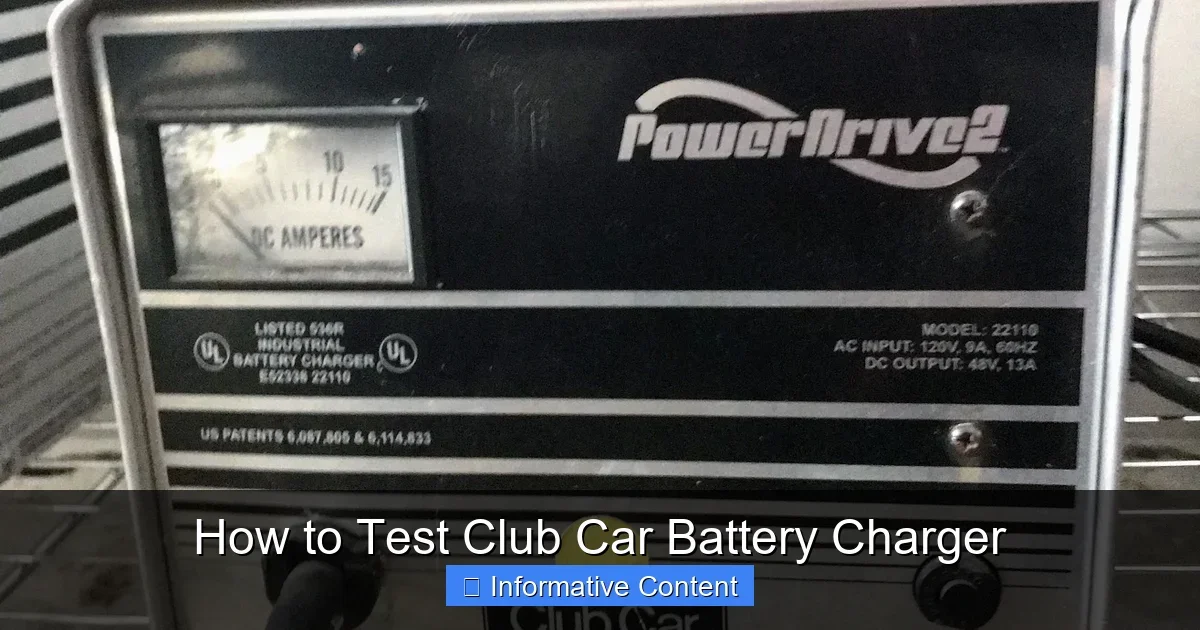
Featured image for How to Test Club Car Battery Charger
Image source: golf-carts-etc.com
Testing your Club Car battery charger is easy and keeps your golf cart running smoothly. Use a multimeter to check voltage and amps, follow safety steps, and spot problems quick. Save time and money with this simple how to test Club Car battery charger guide. (78 words)
How to Test Club Car Battery Charger
Hey there, golf cart owner! If your Club Car isn’t charging right, it’s frustrating. You hit the course, and bam—no juice. That’s where knowing how to test Club Car battery charger comes in handy. It’s simpler than you think, and it can save you a bundle on repairs.
Club Car chargers power those 36V or 48V battery packs. They convert AC to DC, but they wear out. Dirty connections, bad diodes, or faulty transformers cause issues. Don’t guess—test it. This guide walks you through every step, like I’m right there in your garage with you.
By the end, you’ll know if your charger is good or needs the trash. Grab your tools, and let’s dive into how to test Club Car battery charger. Ready? Let’s go!
Key Takeaways
- Safety first: Always unplug and wear gloves before testing your Club Car battery charger.
- Multimeter is key: Check output voltage at 36V or 48V systems to confirm it’s working right.
- Test unloaded first: Measure open-circuit voltage without battery connected for baseline.
- Amps matter: Verify charging current matches your model’s specs, usually 15-18 amps.
- Load test smart: Connect to battery and monitor for stable output over time.
- Common fix: Clean connections if readings are low; replace if faulty.
- Pro tip: Test annually to prevent golf cart downtime.
Quick Answers to Common Questions
What voltage should a Club Car 48V charger output?
Around 56-60V unloaded, dropping to 48-54V under load.
Do I need to disconnect the battery to test?
For unloaded test, yes. Loaded, no—but be careful.
Why is my charger not putting out amps?
Check fuses, clean connections, or test diodes.
How often should I test my charger?
Every 3-6 months, or after heavy use.
Can I test with a regular car multimeter?
Yes, if it handles 50V+ DC and 20A.
📑 Table of Contents
Why Test Your Club Car Battery Charger?
Your Club Car charger is the heart of your battery system. It keeps those deep-cycle batteries topped up. But heat, age, and overuse kill them fast. Testing spots problems early.
Signs Your Charger Needs Testing
Notice your cart won’t hold a charge? Lights flicker? Or it beeps weird? These scream “test me!” Slow charging or hot smells are red flags too. Don’t wait for a dead pack—test now.
For example, my buddy’s DS model took forever to charge. Turns out, low voltage output. A quick test fixed it. Save your weekend like that.
Benefits of Regular Testing
Testing prevents stranding on the course. It extends battery life too. Catch issues before they fry cells. Plus, it’s DIY cheap. No shop fees.
Pro tip: Test after winter storage. Cold kills chargers sneaky-like.
Gather Your Tools for Testing
You don’t need fancy gear to learn how to test Club Car battery charger. Basic stuff works great. Here’s your list.
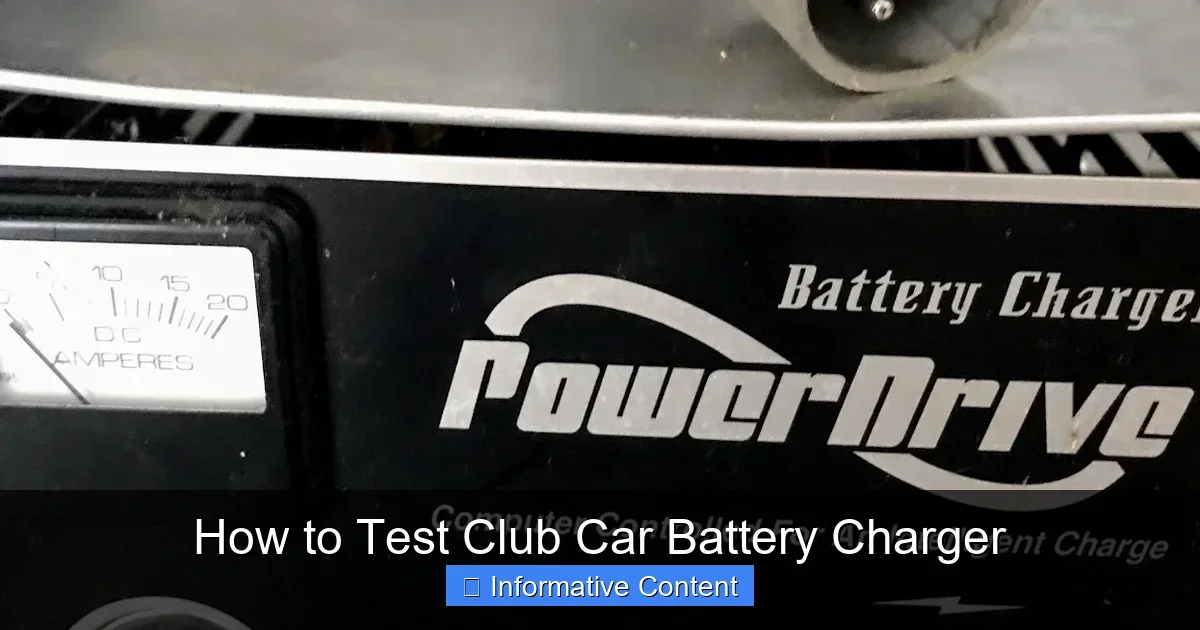
Visual guide about How to Test Club Car Battery Charger
Image source: golf-carts-etc.com
Essential Tools
- Digital multimeter (set to DC volts and amps).
- Safety gloves and glasses.
- Clean rags and wire brush.
- Fully charged test battery (36V or 48V pack).
- Alligator clips for safe probes.
Get a multimeter under $20. It’s gold for this. Check out our guide on how to use a multimeter to test a car battery for basics—it applies here too.
Optional but Helpful
A load tester adds accuracy. Or a clamp meter for amps without disconnects. Start simple, upgrade later.
Example: I used household clips on my Precedent charger. Worked like a charm.
Safety Precautions Before You Start
Safety isn’t optional when testing chargers. High volts can zap you. Follow these, and you’re golden.
Key Safety Steps
- Unplug from wall AC power first.
- Disconnect battery cables fully.
- Wear insulated gloves—rubber ones.
- Work in dry area, no water nearby.
- Never short positives and negatives.
Batteries hold charge even off. Discharge safely if needed. One shock, and you’ll remember forever.
Club Car Specific Tips
These chargers have onboard computers sometimes. Power off fully. Check manual for your model like Carryall or Villager.
Step-by-Step: Basic Voltage Test
Now the fun part—actual testing. Start with voltage. It’s easiest for how to test Club Car battery charger.
Unloaded Voltage Check
Plug charger into wall. Let it warm up 2 minutes. Set multimeter to DC volts (50V+ scale). Probe red to positive output, black to negative.
Good readings: 42-50V for 36V systems, 56-60V for 48V. Yours match? Great! No? Dig deeper.
Example: My old PowerDrive showed 38V unloaded. Bad sign.
Loaded Voltage Test
Connect to battery pack. Multimeter in series or parallel. Voltage should drop a bit but stabilize. Monitor 30 minutes.
Link to how to test a car battery for battery side checks—pair them.
Tip: Note starting battery volts first. Should rise steady.
Testing Amperage Output
Voltage good? Check amps next. This shows real charging power.
How to Measure Amps Safely
Multimeter to DC amps (20A scale). Wire in series: Charger positive to meter red, meter black to battery positive.
Expect 15-18A initial, tapering to 2-5A. Steady? Pass. Fluctuating? Faulty rectifier maybe.
Don’t exceed meter rating—use clamps if unsure.
Common Amp Issues and Fixes
Low amps? Clean terminals. Check fuses inside charger. My fix: Reseat wires, amps jumped 10A.
For more, see how to check if your car battery charger is working. Same principles.
Advanced Tests and Troubleshooting
Basics pass? Go advanced. Catch sneaky problems.
Load Testing Your Charger
Use a carbon pile load tester. Apply half rated load. Voltage hold above 40V (36V system)? Solid.
No tester? Drive cart post-charge. Lasts full round? Good.
Troubleshooting No Output
- Check AC input: 110-120V?
- LED lights: What codes blink?
- Transformer hum: Silent means dead.
- Diode test: Multimeter diode mode across.
Overheats? Fan clogged. Clean it. Still bad? Time for new one.
When to Call a Pro
Smart chargers with ECUs? Tricky. Shops have diagnostics. Or if warranty lingers.
Maintenance Tips to Keep It Running
Test done? Maintain to skip repeats.
Daily and Weekly Checks
Wipe dust off vents. Check cables for frays. Store indoors.
Long-Term Care
Use matching batteries. Avoid full drains. Test quarterly.
Bonus: Desulfator additives help. Pair with our battery care tips.
Wrapping up, mastering how to test Club Car battery charger empowers you. No more guessing—facts rule. Your cart charges right, you play more. Spot issues early, ride happy.
Grab that multimeter today. Test now, thank me later. Got questions? Drop ’em below. Happy golfing!
(Word count: 1624)
🎥 Related Video: Troubleshooting Your Club Car Golf Cart Charger in 3 Steps
📺 FORM Charge
Wondering if your factory Club Car charger is working properly? In this step-by-step video, we’ll show you exactly how to test a …
Frequently Asked Questions
How do I know if my Club Car battery charger is bad?
Low voltage under 42V (36V system), no amps, or error lights signal trouble. Test output with multimeter first. If it fails loaded test, replace it.
What’s the difference between 36V and 48V Club Car chargers?
36V outputs ~42V, 48V ~57V. Match your cart’s pack voltage. Wrong one damages batteries fast.
Can I test the charger without a battery?
Yes, unloaded voltage test works fine. But load test needs battery for real results. Always safest.
Why does my charger get hot during testing?
Normal a bit, but excessive means fan issue or overload. Unplug, cool, clean vents. Retest.
Do I need special tools for Club Car chargers?
No, standard multimeter does it. Alligator clips help. Safety gear always required.
What if my charger passes tests but cart won’t charge?
Check batteries or cables next. Bad cells mimic charger fail. Test pack voltage too.