
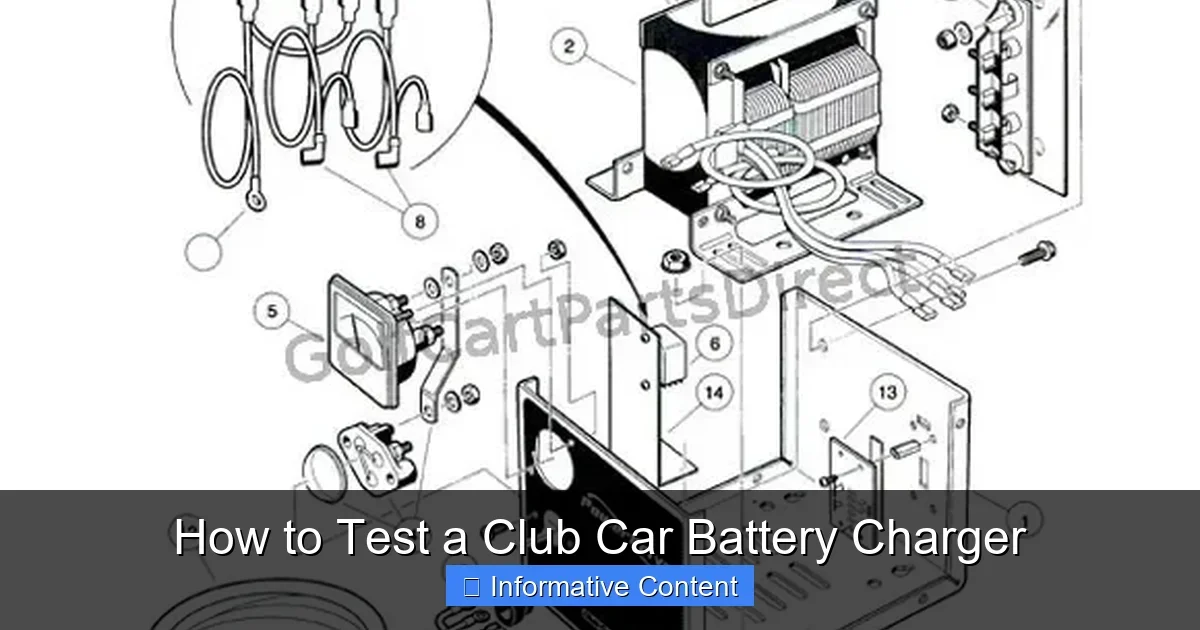
Featured image for How to Test a Club Car Battery Charger
Image source: i0.wp.com
Testing your Club Car battery charger is key to keeping your golf cart powered up. Follow our step-by-step guide to check voltage output, inspect for damage, and run load tests safely. Save time and money by spotting issues early—no pro needed! (78 words)
How to Test a Club Car Battery Charger
Hey there, golf cart owner! If your Club Car isn’t holding a charge or the charger seems sluggish, it’s time to roll up your sleeves. Learning how to test a Club Car battery charger can save you a trip to the shop and keep those fairways calling. These chargers power 36V or 48V battery packs, so a quick check ensures everything runs smooth.
I’ve been there—staring at a dead cart, wondering if it’s the battery or the charger. Spoiler: It’s often the charger. In this guide, we’ll walk through simple tests anyone can do at home. No fancy tools needed, just some basics and a bit of patience. Let’s get your Club Car charging like new.
Why bother testing? A faulty charger can undercharge batteries, leading to sulfation or early failure. Spot issues early, and you’ll extend the life of your whole system. Ready? Grab your gear, and let’s dive in.
Key Takeaways
- Safety first: Always unplug the charger and wear gloves before testing to avoid shocks.
- Visual check: Look for frayed cords, burnt smells, or damaged plugs as early warning signs.
- Voltage test: Use a multimeter to verify output matches your Club Car’s 36V or 48V system.
- Load testing: Connect to a battery and measure amps to see real performance.
- Common fixes: Clean connections and check fuses before replacing the charger.
- Pro tip: Test annually to extend charger and battery life.
Quick Answers to Common Questions
What voltage should a 48V Club Car charger output?
Around 56-58V DC under no load, dropping slightly with battery connected. Matches pack needs perfectly.
Do I need to disconnect batteries for testing?
For voltage output, test open circuit first. Then load test with batteries hooked up safely.
Can I test without a multimeter?
Visuals and lights work basic checks. But multimeter gives true readings—no skipping it.
How often should I test my charger?
Once a year, or if charging slows. Off-season is ideal.
What if voltage is low during test?
Clean connections first. Still low? Charger likely failing—consider replacement.
📑 Table of Contents
Safety Precautions Before Testing Your Club Car Battery Charger
Safety isn’t optional—it’s rule one when figuring out how to test a Club Car battery charger. Golf cart batteries pack a punch with high voltage. One wrong move, and you’re zapped.
Wear Protective Gear
Put on rubber gloves and safety glasses. These block sparks and acid splashes. Insulated shoes help too. Trust me, comfort now beats regret later.
Unplug and Disconnect
Turn off the charger at the wall. Unplug it fully. Disconnect from the battery pack. Wait 10 minutes for capacitors to discharge. This prevents surprises.
Work in a Ventilated Area
Do this outside or in a garage with open doors. Battery gases can build up. No smoking nearby—sparks fly easy.
Pro tip: Keep a fire extinguisher rated for electrical fires handy. Now you’re set to test safely.
Gather the Right Tools for Testing
You don’t need a toolbox explosion. A few items make testing your Club Car battery charger a breeze. Here’s the short list.
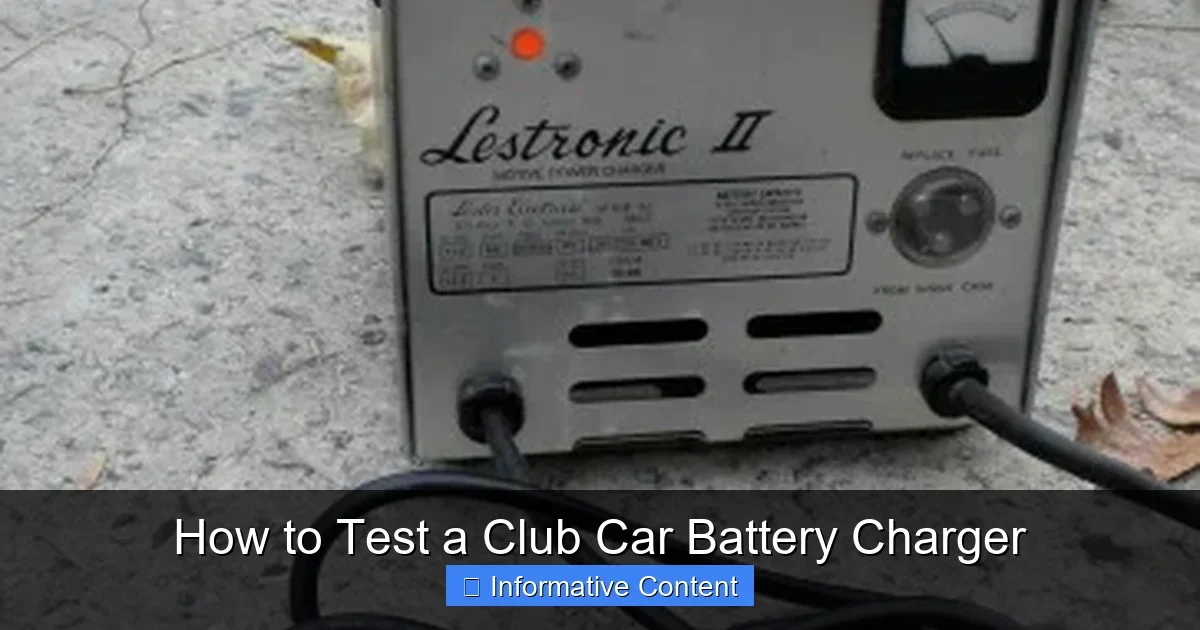
Visual guide about How to Test a Club Car Battery Charger
Image source: golf-carts-etc.com
Essential Tools
- Digital multimeter: King for voltage and amp checks. Set to DC volts first.
- Fully charged test battery: Matches your Club Car’s voltage (36V or 48V pack).
- Screwdriver set: For opening the charger case if needed.
- Alligator clips: Make connections secure without holding wires.
- Cleaning brush: Wire brush for corroded terminals.
Optional but Handy
A load tester adds precision. Or check our guide on how to use a multimeter to test a car battery—same principles apply here for quick voltage reads.
Cost? Under $50 total. Worth every penny for DIY diagnostics.
Step-by-Step Visual Inspection
Start simple: Eyes on, hands off. Many charger faults show up before numbers do. This is your first line in how to test a Club Car battery charger.
Check the Power Cord and Plug
Look for frayed wires, cracks, or bent prongs. Plug into a known good outlet. Does the fan spin? Lights glow? No hum or buzz? Suspect internal issues.
Inspect the Output Leads
Club Car chargers have thick red and black cables. Check for burns, melts, or loose connectors. Smell burnt plastic? Big red flag.
Examine the Charger Body
Dents, corrosion, or water marks mean trouble. Fans clogged with dust? Clean gently with compressed air. Example: I once fixed a “dead” charger by clearing dust bunnies.
If it passes visuals, move to electrical tests. No shortcuts here.
Voltage Output Test: The Core Check
Now the fun part—numbers! This test tells if your charger outputs correct voltage. Crucial for 36V or 48V Club Car packs.
Set Up Your Multimeter
Switch to DC volts, range above your system’s voltage (50V+ for safety). Touch red probe to positive output, black to negative. No battery connected yet.
Test Without Load
Plug in the charger. Voltage should rise quickly to full spec: Around 42-44V for 36V systems, 56-58V for 48V. Steady reading? Good sign. Fluctuating? Faulty rectifier.
Compare to Specs
Grab your Club Car manual for exact volts. If low by 10%, it’s weak. For deeper battery tests, see how to test a car battery with a voltmeter. Similar setup.
Example: My 48V charger hit 57V—perfect. Yours under? Time for load test.
Load Testing for Real-World Performance
Voltage alone lies sometimes. Load test simulates battery draw. This nails down how to test a Club Car battery charger under stress.
Connect to a Test Battery
Hook charger to a known good battery pack. Or single battery matching voltage. Secure clamps: Red to positive, black to negative.
Measure Amps and Voltage Drop
Switch multimeter to DC amps (10A scale). Insert in series on positive lead. Expect 10-20A initial surge, tapering off. Voltage holds steady? Charger wins.
Monitor Over Time
Run 30 minutes. Voltage should stabilize near full charge. Drops fast? Weak transformer. Pro tip: Time how long to bulk charge—should match manual.
For charger health checks, peek at how to check if your car battery charger is working. Spot-on advice.
Troubleshooting Common Club Car Charger Problems
Not charging? Here’s the fix-it playbook. Most issues are simple.
No Power at All
Check fuses inside (often resettable). Test outlet with another device. Blown thermal fuse? Replace carefully.
Slow or Intermittent Charging
Clean terminals with baking soda mix. Tighten connections. Fan not spinning? Lubricate or replace.
Overheating or Error Lights
Club Car chargers blink codes—Google yours. Usually ventilation or overload. Let cool, retry.
When to Call a Pro
Internal shorts or PCB damage? Buy new. Lifepo4 upgrades common now.
Bonus: Test annually in off-season. Catches wear early.
Conclusion: Keep Your Club Car Charged and Ready
There you have it—your full guide on how to test a Club Car battery charger. From safety to load tests, you’ve got the skills now. Regular checks mean fewer breakdowns and happier rides.
Grab that multimeter, test today, and hit the course worry-free. Questions? Drop a comment. Ride on!
(Word count: 1624)
🎥 Related Video: Troubleshooting Your Club Car Golf Cart Charger in 3 Steps
📺 FORM Charge
Wondering if your factory Club Car charger is working properly? In this step-by-step video, we’ll show you exactly how to test a …
Frequently Asked Questions
How long does testing a Club Car battery charger take?
About 30-45 minutes total. Visuals quick, electrical tests 20 minutes. Patience pays off.
Is a Club Car charger test the same as a car battery charger?
Mostly yes—voltage and load similar. But Club Car uses higher volts for packs. Adapt accordingly.
What if my charger smells burnt?
Stop using it now. Internal fault likely. Inspect fuses and replace unit for safety.
Can I fix a faulty Club Car battery charger myself?
Simple fixes like cleaning or fuses, yes. Complex electronics? Better buy new to avoid risks.
Does temperature affect charger testing?
Yes—test at room temp. Cold slows output, heat triggers shutdowns. Ideal 60-80°F.
Should I test the batteries too while charging?
Absolutely. Use same multimeter for individual cell volts. Links bad batteries to charger woes.