
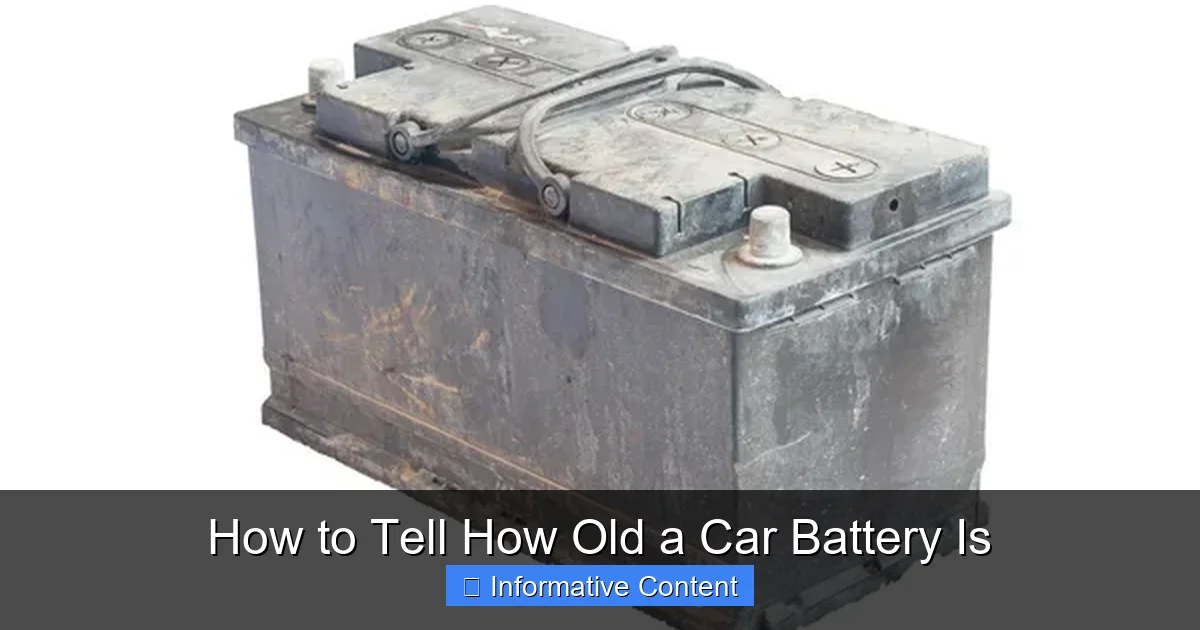
Knowing how to tell how old a car battery is is crucial for vehicle reliability. You can decode manufacturing date codes often found on the battery itself, look for visual signs of wear like corrosion or swelling, and pay attention to performance issues such as slow cranking or dimming lights. Proactive replacement based on age and condition saves you from unexpected breakdowns and helps ensure your car starts every time you need it to.
How to Tell How Old a Car Battery Is
Have you ever hopped into your car, turned the key, and… nothing? Or maybe just a slow, grinding groan instead of a powerful roar? It’s a frustrating experience, and often, an aging car battery is the culprit. Knowing how old your car battery is can be incredibly helpful. It allows you to anticipate problems before they leave you stranded. It helps you avoid those inconvenient moments when your car refuses to start.
Car batteries don’t last forever. They are designed to deliver a powerful burst of energy to start your engine. Over time, their internal components wear down. They lose their ability to hold a charge efficiently. Understanding how to tell how old a car battery is isn’t just about curiosity. It’s about smart car maintenance. It’s about ensuring reliability. It’s about saving yourself money and hassle in the long run. A quick check of its age can give you a clear picture of its remaining life expectancy.
This article will guide you through several straightforward methods. You will learn how to decipher confusing codes. You will discover what visual clues to look for. You will understand what performance issues mean. By the end, you’ll be a pro at figuring out the age of any car battery. You will be able to make informed decisions about when it’s time for a replacement. Let’s dive in and learn how to tell how old a car battery is.
Key Takeaways
- Decode the Date Code: The most accurate way to tell how old a car battery is involves finding and interpreting the manufacturing date code, usually stamped on the battery case or label.
- Look for Visual Clues: Physical signs like corrosion around terminals, a bulging or cracked case, or leaks can indicate an aging battery that might be nearing the end of its life.
- Monitor Performance: Slow engine cranking, dimming headlights, or needing frequent jump starts are strong indicators that your car battery is losing its ability to hold a charge and might be old.
- Check Service Records: Your car’s maintenance history or your own purchase receipts can provide a direct record of when the battery was installed or bought.
- Understand Average Lifespan: Car batteries typically last 3-5 years. Knowing this general timeframe helps you anticipate when to start looking for replacement signs.
- Consider Environmental Factors: Extreme heat or cold, frequent short trips, and lack of maintenance can significantly shorten a battery’s lifespan, regardless of its initial age.
Quick Answers to Common Questions
How long do car batteries typically last?
Car batteries generally last between 3 to 5 years, but this can vary significantly based on climate, driving habits, and maintenance.
Can extreme weather affect how old a car battery is?
Yes, extreme temperatures, especially heat, can drastically shorten a battery’s lifespan. Hot climates accelerate the internal chemical degradation of the battery.
What are some common visual signs of an old car battery?
Common visual signs include corrosion around the terminals, a bulging or cracked battery case, faded labels, and any signs of leaks or acid residue.
Is a slow-cranking engine always a sign of an old battery?
A slow-cranking engine is a very strong indicator of an old or weak battery, especially if it’s consistent. However, it can also sometimes point to issues with the starter motor or other electrical components.
Where is the date code usually located on a car battery?
The manufacturing date code is most often found stamped or printed on the top or side of the battery casing, or sometimes on a sticker or label attached to the battery.
📑 Table of Contents
Decoding the Battery’s Manufacturing Date Code: The Most Reliable Method
The most accurate way to tell how old a car battery is involves finding and understanding its manufacturing date code. Battery manufacturers are required to stamp or print a code on the battery. This code indicates when the battery was produced. This is like a birth certificate for your battery. It tells you exactly when it came into existence.
Locating the Date Code
Finding this code is usually the first step. Most often, you’ll find it on the top or side of the battery casing. Sometimes, it’s on a label. Other times, it’s stamped directly into the plastic. It might be a series of letters and numbers. It could also be a simple sticker. Take a good look around the entire battery. You might need a flashlight and to wipe off some dirt or dust to see it clearly. Always remember to be careful when handling a car battery. Wear gloves and eye protection if you are getting close to it.
Understanding Different Code Formats
There isn’t one universal date code format. Different manufacturers use slightly different systems. However, most follow a common pattern. They use a letter to represent the month and a number to represent the year.
* Common Format (Letter for Month, Number for Year): Many batteries use a single letter for the month. ‘A’ for January, ‘B’ for February, ‘C’ for March, and so on. The year is often represented by the last digit of the year. For example, ‘9’ for 2019, ‘0’ for 2020, ‘1’ for 2021. So, a code like ‘F2’ would mean June 2022. ‘G9’ would mean July 2019.
* Two-Digit Year: Some manufacturers use a two-digit year. For example, ’02’ for 2002, ’19’ for 2019, ’23’ for 2023. So, ‘F23’ would mean June 2023.
* Julian Date Code: Less common for consumer batteries, but some industrial batteries might use a Julian date code. This is a three-digit number representing the day of the year (1-365). This is followed by a two-digit year. For example, ‘04523’ would mean the 45th day of 2023 (February 14, 2023).
* Specific Manufacturer Codes:
* Johnson Controls (often found in EverStart, DieHard, Optima, Duralast): These often use an alphanumeric code. It might be a letter for the month and a single digit for the year. For example, A=Jan, B=Feb, etc. ‘F2’ means June 2022.
* Exide Batteries: They often use a two-digit code. The first digit represents the year, and the second digit represents the month. So, ‘903’ could mean the 9th year of the decade (2019) and the 3rd month (March). Or sometimes, it’s a letter for the month and a number for the year.
* East Penn (Deka, Bosch, NAPA): These typically use a letter for the month and a number for the year, similar to Johnson Controls.
Step-by-Step Decoding
1. Locate the Code: Find the stamped or printed code on your battery.
2. Identify the Format: Look for a pattern of letters and numbers. Is there a single letter followed by a single digit? Or a letter followed by two digits?
3. Match the Letter to a Month: If ‘A’ is January, ‘B’ is February, and so on, convert the letter. (Some might skip ‘I’ to avoid confusion with ‘1’).
4. Match the Number to a Year: If it’s a single digit, assume it’s the last digit of the manufacturing year (e.g., ‘2’ for 2022). If it’s two digits, it’s likely the full year (e.g., ’23’ for 2023).
5. Verify: If possible, cross-reference with the specific manufacturer’s coding system. A quick online search for “[Battery Brand Name] date code” can be very helpful.
Once you’ve decoded the date, you’ll know exactly how old a car battery is. This provides a solid baseline for its expected lifespan.
Beyond the Code: Visual Clues of Battery Age
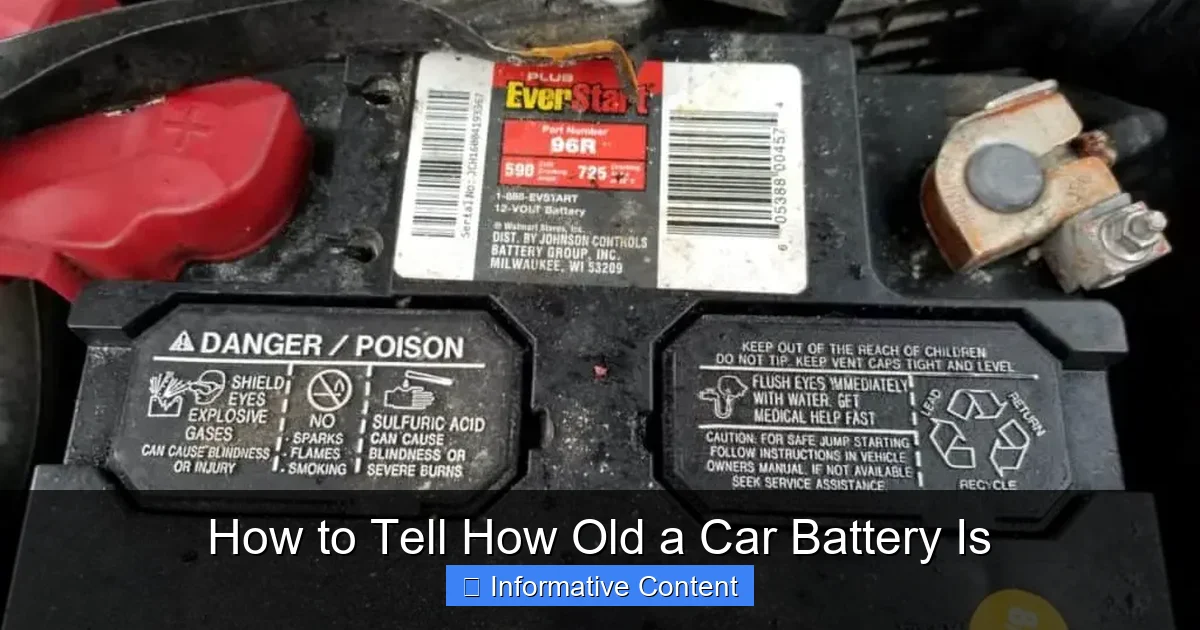
Visual guide about How to Tell How Old a Car Battery Is
Image source: homebatterybank.com
Even without deciphering a date code, you can often get a good idea of how old a car battery is by simply looking at it. An old battery often shows signs of wear and tear. These visual clues can signal that its time is running out.
Physical Condition of the Battery Case
Take a close look at the battery’s outer casing.
* Cleanliness and General Appearance: A battery that looks dirty, greasy, or uncared for might be older. New batteries usually look very clean.
* Cracks or Damage: Are there any cracks in the plastic case? Cracks can occur from impacts or from extreme temperature changes over time. They are a clear sign of an old or damaged battery.
* Faded Labels: If the labels are peeling, faded, or completely unreadable, it suggests the battery has been around for a while. Sunlight and general wear contribute to label degradation.
Terminal Corrosion
Corrosion around the battery terminals is a common sight. It looks like a fuzzy, blue, white, or green powder.
* Minor vs. Severe Corrosion: A little bit of corrosion can be normal. It happens over time. But heavy, crusty buildup indicates a problem. It suggests the battery has been venting gases for a long time. This is a sign of an older battery.
* Impact of Corrosion: Corrosion impedes the flow of electricity. This can lead to starting problems. It’s often worse on older batteries that have seen more chemical reactions.
Battery Swelling or Bulging
This is a very important visual clue. If the sides or top of your battery appear swollen or bulging outwards, it’s a serious red flag.
* Why it Happens: Swelling usually means the battery has been overcharged. It can also indicate internal damage or freezing. When a battery freezes, the electrolyte expands. This can crack the case or cause bulging.
* Danger: A bulging battery is dangerous. It can explode. If you see this, you should replace the battery immediately. This is a very strong indicator of how old a car battery is and that it’s at the end of its usable life.
Leaks or Acid Residue
Look for any wet spots or crusty residue on or around the battery. This could be battery acid.
* Acid Leaks: Leaks can come from cracks in the case or around the terminals. Battery acid is corrosive. It can damage other components in your engine bay.
* Sign of Trouble: Leaks are a clear sign of an old, failing, or damaged battery. They suggest that the internal components are no longer sealed properly. This is a definite sign that you need to consider replacement soon.
These visual signs might not give you an exact date. But they definitely tell you if your battery is well past its prime. They help you determine how old a car battery is by its general condition.
Performance Indicators: How the Battery Behaves
Sometimes, your car will tell you that the battery is old through its performance. These are practical signs that you can observe during your daily driving. These signs don’t directly tell you how old a car battery is in years. But they strongly suggest that its age is catching up to it.
Slow Cranking or Hesitation
This is perhaps the most common symptom of an aging battery.
* What it Sounds Like: When you turn the key, the engine cranks slowly. It sounds like it’s struggling to turn over. There might be a noticeable hesitation before it starts.
* Why it Happens: An old battery loses its ability to deliver the full current needed for a quick start. The cranking speed decreases. This often gets worse in cold weather, which puts extra strain on batteries.
Dimming Lights or Electrical Issues
Your battery powers more than just the starter motor. It also provides power for your car’s electrical systems.
* Headlights and Interior Lights: If your headlights seem dim when the engine isn’t running, or if interior lights flicker, it could be a sign. This shows the battery isn’t holding a charge well.
* Power Windows and Radio: If your power windows move slowly or your radio cuts out when starting the car, these are also indicators. These issues point to a weak battery that can’t supply enough consistent voltage.
Frequent Jumps or Charging Needs
A healthy battery should hold a charge for weeks, even months, without use.
* Needing Jumps: If you find yourself needing a jump start frequently, even after driving the car for a while, your battery is likely failing. It’s not recharging properly. Or it’s losing charge too quickly.
* Battery Charger Use: If you constantly have to hook up a battery charger to keep your car starting, this is a clear sign. It means the battery can no longer hold a charge on its own.
Battery Light on the Dashboard
Your car’s dashboard has a battery warning light.
* What it Means: When this light illuminates, it usually indicates a problem with the charging system. This could be the alternator, or it could be the battery itself.
* Don’t Ignore It: If this light comes on, it’s a sign that your battery isn’t receiving or holding charge correctly. It’s time to get your battery and charging system checked by a professional. This helps you understand how old a car battery is and if it’s contributing to the issue.
These performance issues give you practical feedback on your battery’s health. They might not tell you the exact age. But they certainly scream “old battery!” These signals are often the final warnings before a complete battery failure.
Maintenance Records and Purchase Receipts
Sometimes, the simplest method is the best. If you’ve been diligent with your car’s paperwork, you might already know how old a car battery is without even looking at the battery itself.
Checking Your Vehicle’s Service History
* Dealership Records: If you have your car serviced at a dealership or a specific repair shop, they likely keep detailed records. These records usually include when parts like batteries were replaced. A quick call or check of your online service portal can reveal this information.
* Independent Shop Records: Many independent mechanics also keep good records. If you’ve had a battery installed there, they should have the date on file.
* Owner’s Manual/Service Log: Some car owners keep a meticulous service log in their owner’s manual. Check for any handwritten notes about battery replacements.
Digging Up Your Own Receipts
If you bought and installed the battery yourself, your purchase receipt is a direct source of information.
* Paper Receipts: Look through your car-related receipts. Many battery purchases will clearly list the date of sale.
* Email Receipts: If you bought the battery online or received an e-receipt, search your email for “car battery” or the retailer’s name.
Knowing when the battery was purchased or installed gives you a very precise answer to how old a car battery is. This can be much easier than decoding obscure stamps on the battery itself. Always try to keep your maintenance records organized for this very reason.
The “Average Lifespan” Rule of Thumb
Even if you can’t find a date code, spot visual clues, or access records, there’s a general guideline. This rule of thumb helps you estimate how old a car battery is and when it might be time for a replacement.
Factors Affecting Battery Lifespan
Car batteries typically last between 3 to 5 years. However, this is just an average. Several factors can significantly impact this lifespan:
* Climate:
* Hot Climates: Extreme heat is the biggest killer of car batteries. High temperatures accelerate the chemical reactions inside the battery. This leads to faster degradation. Batteries in hot climates often last closer to 3 years.
* Cold Climates: While cold weather makes it harder for a battery to perform, it doesn’t degrade the battery as quickly as heat. However, a weak battery will show its struggles much more readily in the cold.
* Driving Habits:
* Short Trips: Frequent short trips (less than 20 minutes) don’t allow the alternator enough time to fully recharge the battery. This leads to a perpetually undercharged battery, which shortens its life.
* Infrequent Driving: Cars that sit unused for long periods also suffer. Batteries naturally discharge over time. If not kept charged, they can develop sulfation and lose capacity.
* Maintenance:
* Lack of Maintenance: Neglecting to clean corrosion from terminals or failing to check electrolyte levels (in conventional flooded batteries) can shorten life.
* Overcharging/Undercharging: Problems with the car’s charging system (alternator or voltage regulator) can lead to overcharging or undercharging, both detrimental to battery health.
* Accessory Use: Leaving lights on, using heavy electrical accessories while the engine is off, or having a parasitic draw (something continually draining power) can shorten battery life.
When to Consider Replacement
If your battery is approaching or past the 3-5 year mark, it’s wise to start thinking about replacement.
* Proactive Replacement: It’s better to replace a battery proactively. Do it before it fails completely. This avoids the stress and inconvenience of a breakdown.
* Testing: Most auto parts stores offer free battery testing. This test will tell you the battery’s health and cranking power. It can confirm if your old battery is on its last legs.
By understanding the average lifespan and the factors that influence it, you gain another valuable tool for how to tell how old a car battery is. It helps you anticipate when a replacement will be needed.
Conclusion
Knowing how to tell how old a car battery is is a vital skill for any car owner. It empowers you to take control of your vehicle’s maintenance. You no longer have to guess about your battery’s condition. You have learned several effective methods.
We’ve covered decoding complex manufacturing date codes. You can now look for specific visual clues like corrosion or bulging. You can also pay attention to crucial performance indicators such as slow cranking and dimming lights. Lastly, don’t forget the power of good old maintenance records and the general rule of thumb for battery lifespan.
By combining these approaches, you’ll always have a clear picture of your battery’s age and health. This knowledge isn’t just about preventing breakdowns. It’s about ensuring peace of mind. It’s about being prepared. A little proactive checking can save you a lot of trouble. Make it a habit to periodically assess your battery. This way, you can replace it before it leaves you stranded. Drive safely and confidently, knowing your car’s heart is strong and healthy.
Frequently Asked Questions
How can I find the manufacturing date on my car battery?
You can find the manufacturing date by locating the date code stamped or printed on the battery case or label. This code typically uses a letter for the month (A=Jan, B=Feb, etc.) and a single digit for the year (e.g., 2 for 2022).
What does it mean if my battery case is bulging?
A bulging battery case is a serious sign of internal damage, often caused by overcharging or freezing. It indicates that the battery is failing and could be dangerous, requiring immediate replacement.
Should I replace my car battery if it’s 4 years old but still working fine?
While a 4-year-old battery might still be working, it’s approaching the average end of its lifespan. It’s wise to have it tested by a professional, especially before winter or a long trip, and consider proactive replacement to avoid unexpected failure.
Can checking my car’s service records help determine battery age?
Absolutely. Your car’s service history, whether from a dealership or an independent mechanic, will often list the date a new battery was installed. Your own purchase receipts for a battery are also a direct source of this information.
My car often needs jump starts. Is this a sign of an old battery?
Yes, needing frequent jump starts is a strong indication that your car battery is old and can no longer hold a sufficient charge on its own. This suggests it’s time to have the battery tested and likely replaced.
Does how I drive my car impact battery life?
Definitely. Frequent short trips prevent the alternator from fully recharging the battery, shortening its life. Similarly, cars that sit unused for extended periods can also suffer from discharge and degradation.