
Learning how to take off your car battery is a valuable skill for any car owner, crucial for tasks like replacement, maintenance, or storage. This guide provides a detailed, step-by-step walkthrough, emphasizing safety precautions, the right tools, and proper disposal. Always prioritize safety by wearing protective gear and disconnecting the negative terminal first to avoid electrical hazards.
Hey there, fellow car enthusiast! Ever found yourself wondering, “How to take off my car battery?” Maybe your car’s been sluggish to start, you’re planning a long-term storage, or it’s simply time for a replacement. Whatever the reason, knowing how to safely and effectively remove a car battery is a fantastic skill that can save you time, money, and a trip to the mechanic.
Taking off a car battery might seem a bit intimidating at first, with all that electricity and corrosive acid involved. But don’t worry! With the right tools, a clear understanding of the steps, and a healthy dose of caution, you can easily tackle this task yourself. Think of this guide as your friendly mentor, walking you through every stage, ensuring you feel confident and stay safe throughout the entire process. We’ll cover everything from gathering your gear to the critical safety steps and the actual hands-on removal. So, let’s get ready to empower you with the knowledge of how to take off your car battery!
Key Takeaways
- Safety is Paramount: Always wear safety glasses and gloves. Ensure your car is off, in park, and the parking brake is engaged before you start working.
- Negative First, Positive Last: When learning how to take off your car battery, *always* disconnect the negative (-) terminal first and reconnect the positive (+) terminal first. This prevents accidental shorts and electrical damage.
- Gather the Right Tools: You’ll need an appropriately sized wrench (usually 10mm or 13mm), a wire brush, battery terminal cleaner, and possibly a battery puller and carrier for a smooth removal process.
- Cleanliness Matters: After removing the battery, thoroughly clean the battery tray and terminal clamps to prevent future corrosion and ensure a good connection for the new battery.
- Careful Handling: Car batteries are heavy. Use proper lifting techniques or a battery carrier to avoid injury. Old batteries should be recycled responsibly at an auto parts store or designated recycling center.
Quick Answers to Common Questions
Which battery terminal do I disconnect first?
Always disconnect the negative (-) terminal first. This prevents accidental short circuits and sparks, which can be dangerous and damage your car’s electrical system.
What tools do I need to take off a car battery?
You’ll primarily need an appropriately sized wrench (usually 10mm or 13mm), safety glasses, gloves, a wire brush for corrosion, and rags. A battery carrier and terminal puller are also highly recommended.
Can I get shocked taking off a car battery?
While the voltage (12V) isn’t high enough to deliver a fatal shock, you can get burned if you short the terminals or if a wrench touches both terminals simultaneously. Always remove metal jewelry and follow safety guidelines to prevent injury.
What should I do with my old car battery?
Car batteries contain lead and sulfuric acid, which are harmful to the environment. They must be recycled. Most auto parts stores will accept old batteries for recycling, often providing a core charge refund if you’re buying a new one.
How do I prevent corrosion on battery terminals?
After installing a new battery, clean the terminals thoroughly, then apply a thin layer of dielectric grease or an anti-corrosion spray or washer to the battery posts before connecting the cables. This creates a barrier against moisture and air.
📑 Table of Contents
Safety First: Your Essential Pre-Removal Checklist
Before we even think about touching a wrench, safety absolutely has to be our top priority. Working with car batteries involves electricity and corrosive chemicals, so proper precautions are non-negotiable. Skipping these steps isn’t worth the risk!
Always Gear Up Properly
Think of this as your superhero costume for battery removal. You’ll need:
- Safety Glasses or Goggles: Battery acid can splash, and sparks can fly. Protecting your eyes is crucial.
- Chemical-Resistant Gloves: Latex or nitrile gloves will shield your hands from battery acid and corrosion.
- Old Clothes: Accidents happen, and battery acid can ruin clothing. Wear something you don’t mind getting dirty or damaged.
- No Jewelry: Metal jewelry (rings, watches, bracelets) can conduct electricity, leading to burns or short circuits if it accidentally touches battery terminals. Remove them all!
Prepare Your Vehicle and Environment
Before you even open the hood, let’s set the stage for a safe operation.
- Turn Off the Engine: This might sound obvious, but ensure your car’s engine is completely off.
- Remove the Key: For modern cars, simply turning off the engine might not be enough. Remove the key from the ignition entirely, or if it’s a push-button start, make sure the car is fully powered down and the key fob is far from the vehicle. This prevents accidental power surges or activation of electrical systems.
- Engage the Parking Brake: Make sure your car is securely in “Park” (for automatics) or in a low gear (for manuals) and the parking brake is firmly engaged.
- Work in a Well-Ventilated Area: Batteries can emit hydrogen gas, which is highly flammable. Avoid enclosed spaces.
- No Open Flames or Sparks: This means no smoking, no grinding, and be mindful of static electricity.
- Have a Buddy (Optional, but Recommended): Especially if the battery is heavy or hard to reach, an extra pair of hands can be very helpful.
- Consult Your Owner’s Manual: Every car is a little different. Your manual might have specific instructions or warnings about how to take off your car battery, especially concerning electronic systems or alarm resets.
Gathering Your Tools: What You’ll Need
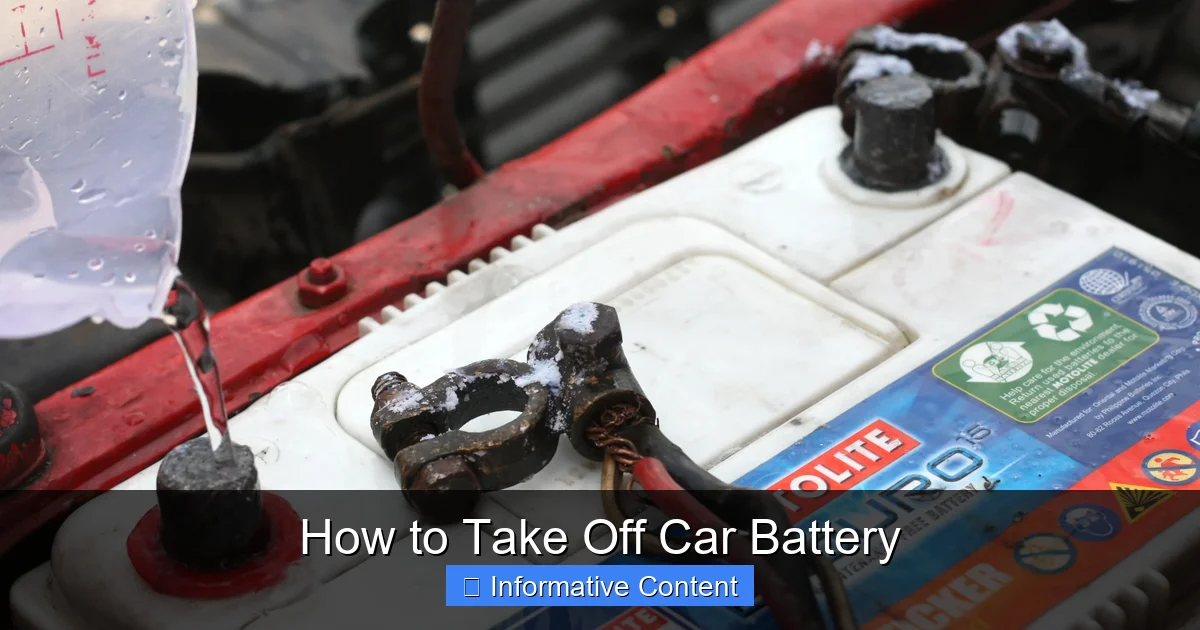
Visual guide about How to Take Off Car Battery
Image source: wikihow.com
Having the right tools ready before you start will make the job much smoother and safer. You don’t want to be scrambling mid-task!
The Essential Toolkit
- Wrench Set: You’ll likely need an open-end or box-end wrench, or a socket wrench, to loosen the battery terminal nuts and the hold-down clamp. A 10mm or 13mm wrench is common, but it’s good to have a few sizes handy. A ratcheting wrench can make the job much faster.
- Battery Terminal Cleaner/Wire Brush: Corrosion (that white, powdery or greenish stuff) often builds up on terminals. A wire brush (specifically a battery terminal brush with internal and external bristles) is perfect for scrubbing it away.
- Baking Soda and Water Mixture: This is your secret weapon against battery acid. A paste of baking soda and water can neutralize any spilled acid or stubborn corrosion. Keep it handy with a rag.
- Rags or Old Towels: For wiping up spills, drying surfaces, and cleaning.
- Battery Terminal Spreader/Puller (Optional, but Recommended): Sometimes, battery cables can be stuck firmly to the terminals. A special tool can help spread the clamp or pull it off without damaging the cable.
- Battery Carrier Strap or Handle (Optional, but Recommended): Car batteries are heavy, often weighing 30-60 pounds. A carrier makes lifting and transporting much safer and easier.
- Battery Post Cleaner (Optional): For cleaning the actual posts on the battery itself if you plan to reinstall or clean.
- Flashlight or Headlamp: If you’re working in a dimly lit garage or at night, a light source is invaluable.
Having these items readily available will ensure you’re well-equipped for how to take off your car battery with confidence.
The Step-by-Step Process: How to Take Off Your Car Battery
Alright, you’re geared up, your car is safe, and your tools are laid out. Now it’s time for the main event: learning how to take off your car battery. Follow these steps carefully, and remember, patience is key!
Step 1: Locate the Battery and Identify Terminals
First things first, find your battery. It’s usually under the hood, but some vehicles, especially those with smaller engines or for weight distribution, might have it in the trunk, under the rear seat, or even in the fender well. Once located, identify the positive (+) and negative (-) terminals.
- Positive Terminal (+): This terminal is usually larger, often covered with a red cap, and will have a “POS” or “+” symbol nearby. The cable connected to it is typically red.
- Negative Terminal (-): This terminal is usually smaller, often has a black cable, and will have a “NEG” or “-” symbol.
It’s absolutely critical to correctly identify these terminals. This is a non-negotiable part of how to take off your car battery safely.
Step 2: Disconnect the Negative Terminal First!
This is *the* most important rule when working with car batteries.
- Locate the Negative Terminal: Find the negative (-) terminal and the nut that secures the cable clamp to the battery post.
- Loosen the Nut: Use your wrench to loosen the nut on the negative terminal clamp. You typically only need to loosen it a few turns, enough for the clamp to slide freely. *Do not try to force it or strip the nut.*
- Remove the Negative Cable: Once loosened, gently twist and pull the negative cable clamp off the battery post. If it’s stuck, a battery terminal puller can help. Make sure the cable doesn’t accidentally spring back and touch the battery.
- Secure the Cable: Once removed, tuck the negative cable away from the battery. You can secure it with a bungee cord, tape it to a non-metallic part of the engine bay, or simply ensure it cannot accidentally come into contact with *any* part of the battery or metal surfaces. This prevents accidental short circuits, which can be dangerous and damage your car’s electronics.
Step 3: Disconnect the Positive Terminal
Now that the negative terminal is safely out of the way, you can proceed with the positive.
- Locate the Positive Terminal: Find the positive (+) terminal and its securing nut.
- Loosen the Nut: Use your wrench to loosen the nut on the positive terminal clamp. Again, just enough for the clamp to be removed.
- Remove the Positive Cable: Gently twist and pull the positive cable clamp off the battery post.
- Secure the Cable: Just like with the negative cable, tuck the positive cable away from the battery, ensuring it won’t accidentally touch anything.
At this point, your car battery is completely disconnected from your vehicle’s electrical system. You’re well on your way to understanding how to take off your car battery like a pro!
Step 4: Remove the Battery Hold-Down Clamp
Car batteries are usually secured in place by a clamp or strap to prevent them from moving around while the car is in motion.
- Locate the Clamp: This can be a top clamp, a side clamp, or a J-hook bolt system at the base of the battery.
- Loosen and Remove: Use your wrench to loosen the nuts or bolts holding the clamp in place. Once loose, carefully remove the clamp and set it aside in a safe place where you won’t lose it.
Step 5: Carefully Lift Out the Battery
This is where the “heavy” part comes in!
- Proper Lifting Technique: If you’re lifting it by hand, bend your knees, keep your back straight, and lift with your legs.
- Use a Battery Carrier: If you have a battery carrier strap, attach it securely to the battery. This makes lifting much easier and reduces strain.
- Lift Straight Up: Lift the battery straight out of its tray. Be careful not to tilt it too much, as old batteries can sometimes leak acid.
- Place it Safely: Set the removed battery on a sturdy, non-metallic surface, away from anything flammable, or directly into a battery recycling bin if you’re replacing it immediately.
What to Do After the Battery is Off
Removing the battery isn’t the final step. There are a few important things to do to prepare for a new battery or ensure the area is clean.
Clean the Battery Tray and Cables
- Inspect for Corrosion: Look at the battery tray where the old battery sat. You might find corrosion, dirt, or debris.
- Clean the Tray: Use your wire brush to scrub away any corrosion or rust. You can also use your baking soda and water paste to neutralize any acid residue. Rinse with clean water and dry thoroughly.
- Clean the Cable Clamps: Inspect the inside of both the positive and negative cable clamps. If there’s any corrosion, use your wire brush or battery post cleaner to thoroughly clean them. A clean connection is vital for proper electrical flow.
Inspect and Prepare for New Battery (or Storage)
If you’re installing a new battery, make sure its terminals are clean. Apply a thin layer of dielectric grease or anti-corrosion spray to the new battery terminals before connecting the cables. This helps prevent future corrosion. If you’re storing your old battery, ensure it’s fully charged and stored in a cool, dry place on a non-conductive surface.
Common Pitfalls and Troubleshooting Tips
Even with a clear guide on how to take off your car battery, you might encounter a few hurdles. Here are some common issues and how to deal with them.
Stubborn or Corroded Terminals
If the clamps are really stuck due to corrosion, don’t force them.
- Baking Soda Paste: Apply a thick paste of baking soda and water to the corroded areas. Let it sit for 5-10 minutes to neutralize the acid. You’ll see it fizz.
- Wire Brush: Scrub away the loosened corrosion with your wire brush.
- Battery Terminal Puller: If still stuck, a dedicated battery terminal puller can provide the leverage needed without damaging the cable.
Stripped Bolts or Nuts
If you accidentally strip a bolt or nut on a terminal clamp, stop immediately. Trying to force it will only make it worse. You might need:
- Vise Grips: To grip the rounded nut.
- Nut Extractor Set: These specialized sockets can grip stripped nuts.
- Replacement Clamp: In severe cases, you might need to cut the old clamp off and replace the terminal end of the cable. This might require a crimping tool.
Heavy Battery
Car batteries are heavier than they look. If you struggle, ask for help, or ensure you’re using a battery carrier. Don’t risk back injury.
Accidental Spark
If you accidentally create a spark, stay calm. Ensure the battery is disconnected. Recheck your cables and make sure they aren’t touching any metal surfaces. This is why disconnecting the negative terminal first is so crucial; it grounds the entire system.
Conclusion: You Did It!
Congratulations! You’ve just learned how to take off your car battery, a valuable skill that empowers you to perform basic car maintenance with confidence. By following these detailed steps, prioritizing safety, and using the right tools, you’ve tackled a task that many shy away from.
Remember, the key takeaways are always safety first (gloves, glasses, no jewelry), always disconnect the negative terminal first and reconnect it last, and handle the heavy battery with care. Whether you’re replacing an old battery, performing maintenance, or preparing your car for storage, you now have the knowledge to do it right. So, next time someone asks, “How do you take off a car battery?” you can proudly say, “I know how!” Keep learning, keep tinkering, and enjoy the satisfaction of a job well done!
Frequently Asked Questions
Is it safe to take off a car battery yourself?
Yes, it is perfectly safe to take off a car battery yourself as long as you follow proper safety precautions. This includes wearing protective gear, ensuring the car is off, and critically, disconnecting the negative terminal first to avoid sparks or short circuits.
What happens if I disconnect the positive terminal first?
If you disconnect the positive terminal first and your wrench accidentally touches a metal part of the car’s frame (which is grounded), it will create a direct short circuit. This can cause severe sparks, damage to the battery and electrical system, or even an explosion, so always disconnect the negative terminal first.
How heavy is a typical car battery?
A typical car battery can weigh anywhere from 30 to 60 pounds (13 to 27 kg). Because of their weight and the potential for acid leaks, it’s crucial to use proper lifting techniques or a battery carrier to avoid injury.
Do I need to clean the battery tray?
Absolutely! It’s a good practice to thoroughly clean the battery tray and the surrounding area after removing the old battery. This removes any corrosion, dirt, or acid residue, providing a clean and stable surface for your new battery and preventing future issues.
Will my car’s computer settings reset after disconnecting the battery?
Yes, disconnecting the battery will often reset your car’s computer (ECU), radio presets, clock, and some engine learned parameters. For some vehicles, you may need to re-enter a radio code or allow the car to “re-learn” idle settings, which usually happens automatically after a few driving cycles.
How long does it take to take off a car battery?
For most vehicles, learning how to take off a car battery is a quick process, usually taking only 10-20 minutes from start to finish. This includes gathering tools, performing the removal, and doing a quick cleanup. Factors like heavy corrosion or hard-to-reach batteries might add a little extra time.