
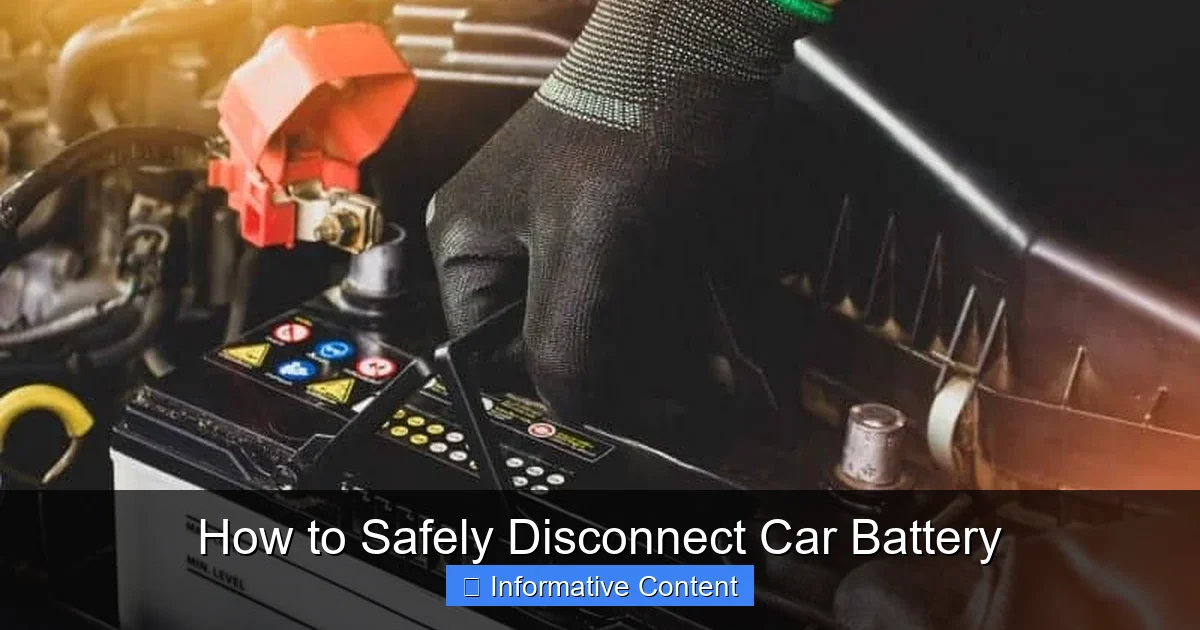
Safely disconnecting your car battery is a crucial skill for any car owner, vital for maintenance, repairs, or storage. This comprehensive guide outlines the necessary tools, strict safety precautions, and a clear, step-by-step process, emphasizing the correct order of disconnecting the negative terminal first to prevent electrical hazards. Always prioritize safety and follow instructions carefully to protect yourself and your vehicle.
Ever found yourself needing to work on your car, store it for a long period, or even just reset a stubborn check engine light? One of the most fundamental tasks, and often the first step, is knowing how to safely disconnect your car battery. While it might seem like a simple enough task, mishandling a car battery can lead to serious hazards, including electrical shocks, short circuits, sparks, and even chemical burns from battery acid.
But don’t worry! This comprehensive guide is designed to walk you through the entire process, making it simple, straightforward, and above all, safe. We’ll cover everything from why you might need to disconnect your battery, the essential tools you’ll need, a step-by-step guide for both disconnecting and reconnecting, and crucial safety precautions to keep you out of harm’s way. Our goal is to empower you with the knowledge to confidently and safely disconnect your car battery, ensuring peace of mind whether you’re a seasoned DIY enthusiast or just starting out.
Key Takeaways
- Safety First: Always wear appropriate personal protective equipment (PPE) like safety glasses and gloves to shield against battery acid and electrical sparks.
- Tools You’ll Need: Gather essential items such as a wrench (usually 10mm or 13mm), battery terminal cleaner, a wire brush, and a non-conductive tool to safely pry off terminals.
- The Correct Order: To prevent short circuits and sparks, *always* disconnect the negative (-) terminal first, followed by the positive (+) terminal.
- Secure Loose Cables: Once disconnected, ensure the battery cables are secured away from the battery terminals and any metal parts of the car to avoid accidental contact.
- Reconnection Protocol: When reconnecting, the order is reversed: connect the positive (+) terminal first, then the negative (-) terminal.
- Beware of Corrosion: Inspect terminals for corrosion before and after the process. Clean any buildup thoroughly with a wire brush and battery terminal cleaner for optimal conductivity.
- When in Doubt, Seek Help: If you are unsure at any point, notice excessive corrosion, or encounter unexpected issues, do not hesitate to consult a professional mechanic.
Quick Answers to Common Questions
Can I disconnect my car battery without tools?
No, you should never attempt to disconnect your car battery without the proper tools, specifically a wrench of the correct size. Using improper tools or trying to force terminals can damage them or create dangerous sparks.
What happens if I touch the positive and negative terminals at the same time?
Touching both terminals simultaneously, especially with a metal object, will create a direct short circuit. This can result in a significant spark, potential burns, damage to the battery, or even an explosion due to the rapid discharge of energy.
How long should I wait after disconnecting the battery before working on the car?
It’s generally recommended to wait at least 15-30 minutes after disconnecting the battery before working on sensitive electrical components. This allows residual power in capacitors and modules to dissipate completely, preventing unexpected power surges.
Will disconnecting the battery erase all my car’s settings?
Disconnecting the battery will typically reset the car’s clock, radio presets, and some learned engine parameters (like idle settings). More critical settings stored in non-volatile memory usually remain, but you might need to re-enter radio codes or drive a bit for the engine to re-learn optimal performance.
Do I need to turn off the engine before disconnecting the battery?
Yes, absolutely. Always ensure your engine is completely off, and all accessories (lights, radio, AC) are turned off before attempting to disconnect the car battery. Disconnecting a battery while the engine is running can cause severe damage to your vehicle’s alternator and other electronic components.
📑 Table of Contents
Why You Might Need to Disconnect Your Car Battery
Knowing how to safely disconnect your car battery isn’t just about repairs; it’s a versatile skill with several practical applications. Understanding these reasons will help you determine when this procedure is necessary for your vehicle.
Performing Electrical Repairs or Maintenance
Anytime you’re working on your car’s electrical system, whether it’s replacing a headlight, installing a new stereo, or fixing a wiring issue, disconnecting the battery is absolutely essential. This cuts off power to all electrical components, preventing accidental short circuits, electrical shocks, or damage to sensitive electronics. It’s the primary safety measure to ensure no power flows through the system while you’re working.
Resetting Your Car’s Computer (ECU)
Sometimes, your car’s onboard computer (ECU or PCM) might need a “hard reset” to clear error codes, resolve minor electronic glitches, or allow the system to re-learn certain parameters after a repair. Disconnecting the battery for a short period (often 15-30 minutes) effectively clears the volatile memory of the ECU, acting like a reboot for your car’s brain. This can sometimes fix issues like a check engine light staying on after a repair or strange shifting patterns.
Preventing Battery Drain During Long-Term Storage
If you plan to store your car for an extended period – say, a few weeks or months – your battery can slowly drain due to parasitic draws from the car’s computer, clock, alarm system, and other electronics. To preserve your battery’s charge and extend its lifespan, disconnecting it completely is an excellent strategy. This ensures it won’t be completely dead when you’re ready to drive your car again.
Replacing the Battery
Naturally, when it’s time for a new battery, the old one needs to be safely disconnected and removed before the new one can be installed. This is perhaps the most obvious reason, and following the correct disconnection procedure is paramount here to avoid sparks or damage to the new battery or vehicle’s electrical system during installation.
Essential Tools and Safety Gear
Before you even think about touching your car battery, preparation is key. Having the right tools and, more importantly, the correct safety gear will make the process of how to safely disconnect your car battery much smoother and significantly safer.
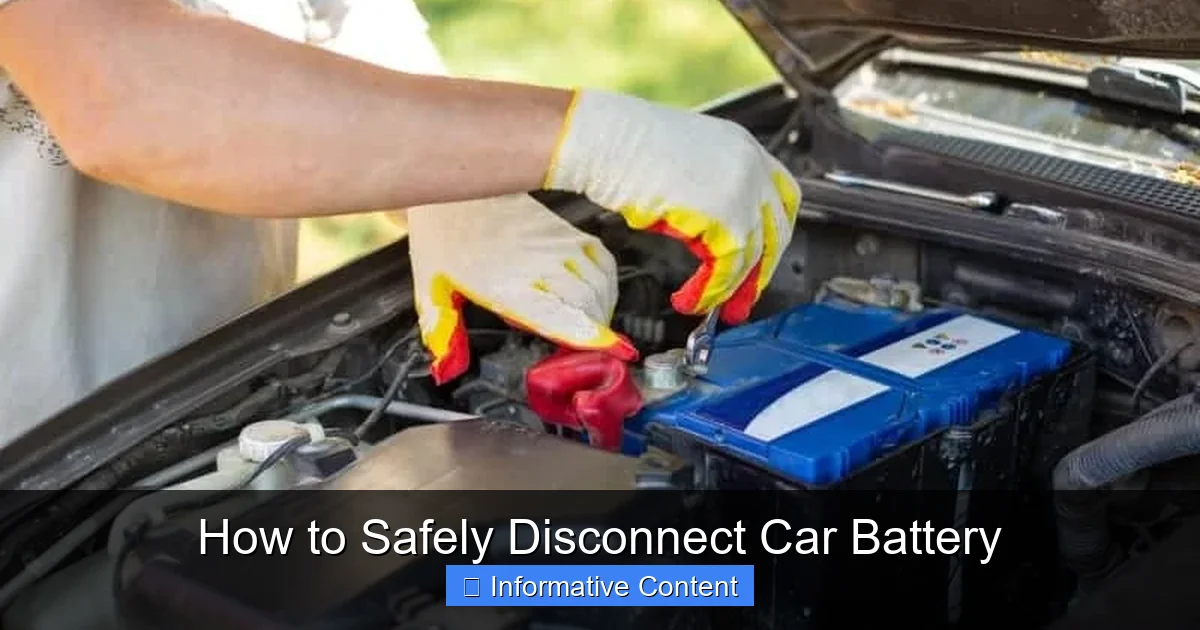
Visual guide about How to Safely Disconnect Car Battery
Image source: rxmechanic.com
Personal Protective Equipment (PPE)
- Safety Glasses: Battery acid can cause severe eye damage. Always wear ANSI-approved safety glasses to protect your eyes from splashes or fumes.
- Gloves: Chemical-resistant gloves (like nitrile or rubber) are crucial to protect your hands from battery acid, which is corrosive. They also offer a layer of insulation against minor electrical shocks.
- Long Sleeves and Pants: Wear clothing that covers your skin to minimize exposure to any potential acid splashes. Avoid loose-fitting clothing or jewelry that could get caught or conduct electricity.
Tools You’ll Need
- Wrench Set: You’ll typically need an open-end or box-end wrench, often 10mm or 13mm, to loosen the nuts on the battery terminals. Some vehicles might use different sizes or a Phillips head screwdriver for clamp-style terminals.
- Battery Terminal Cleaner / Wire Brush: Essential for removing corrosion from the battery terminals and cable clamps, ensuring a good electrical connection.
- Battery Terminal Puller (Optional but Recommended): For stubborn terminals that are difficult to remove by hand, a battery terminal puller can make the job much easier without damaging the battery post.
- Old Towel or Rag: Useful for wiping away any residue or protecting painted surfaces from potential acid drips.
- Baking Soda and Water Mixture: Keep a paste of baking soda and water nearby. This acts as a neutralizer for battery acid in case of a spill.
- Non-Conductive Tool (e.g., Plastic Pry Tool): Handy for gently separating terminals if they are stuck, without risking a short circuit.
Step-by-Step Guide to Safely Disconnecting Your Car Battery
Now that you’re geared up and ready, let’s dive into the core process of how to safely disconnect your car battery. Follow these steps carefully and methodically.
Step 1: Park Safely and Turn Off Your Car
First things first, park your car on a level surface in a well-ventilated area. Make sure the engine is completely off, the parking brake is engaged, and the transmission is in “Park” (P) for automatics or “Neutral” (N) with the parking brake firmly set for manuals. Turn off all lights, accessories, and the radio to ensure there’s no electrical draw.
Step 2: Locate the Battery and Identify Terminals
Your car battery is usually located under the hood, but sometimes it can be in the trunk or even under a rear seat. Once located, identify the positive (+) and negative (-) terminals. The positive terminal is almost always marked with a plus sign (+) and often has a red cover or cable. The negative terminal is marked with a minus sign (-) and usually has a black cable.
Step 3: Disconnect the Negative Terminal First
This is the most critical step to prevent sparks and short circuits.
- Using your wrench, loosen the nut on the negative (-) terminal clamp. You don’t need to remove the nut completely, just loosen it enough so the clamp can be wiggled loose.
- Once loosened, carefully twist and pull the negative cable clamp straight up off the battery post. If it’s stuck, a battery terminal puller or a non-conductive pry tool can help.
- Once the negative cable is off, tuck it away from the battery and any metal parts of the car. You can wrap it in an old rag or secure it with a bungee cord to ensure it doesn’t accidentally touch the battery post or other metal components. This completely breaks the circuit, making the subsequent steps much safer.
Step 4: Disconnect the Positive Terminal
Now that the negative cable is safely out of the way, it’s safe to disconnect the positive terminal.
- Using your wrench, loosen the nut on the positive (+) terminal clamp.
- Carefully twist and pull the positive cable clamp straight up off the battery post.
- Again, secure this cable away from the battery and any metal parts of the car.
Step 5: Inspect and Clean Terminals (Optional but Recommended)
With both cables disconnected, it’s an excellent time to inspect the battery terminals and cable clamps for corrosion. If you see a white, powdery, or greenish buildup:
- Use your wire brush and battery terminal cleaner to scrub away the corrosion from both the battery posts and the inside of the cable clamps.
- You can also use a mixture of baking soda and water (a tablespoon of baking soda per cup of water) applied with a brush. This neutralizes the acid. Rinse with clean water and dry thoroughly.
- Clean terminals ensure optimal electrical flow and prevent future issues.
Reconnecting Your Car Battery: The Right Way
Once you’ve finished your work or are ready to use your car again, reconnecting the battery also requires a specific order to maintain safety.
Step 1: Position the Battery (If Removed)
If you removed the battery, place it back securely in its tray. Ensure it’s stable and won’t shift during driving. Make sure the positive (+) and negative (-) terminals are correctly oriented.
Step 2: Connect the Positive Terminal First
This is the reverse of disconnecting and equally important for safety.
- Place the positive (+) cable clamp firmly onto the positive (+) battery post.
- Using your wrench, tighten the nut on the positive terminal clamp until it’s snug and the clamp won’t wiggle. Do not overtighten, as this can damage the terminal post.
Step 3: Connect the Negative Terminal Last
Now for the final connection.
- Place the negative (-) cable clamp firmly onto the negative (-) battery post.
- Using your wrench, tighten the nut on the negative terminal clamp until it’s snug and secure. Give it a gentle tug to ensure it’s firmly attached.
Step 4: Apply Anti-Corrosion Product (Optional)
After both terminals are reconnected and tightened, you can apply an anti-corrosion spray or grease to the terminals. This helps prevent future corrosion buildup and extends the life of your connections.
Step 5: Test Your Car
Close the hood and start your car. Check that all electrical components (lights, radio, power windows) are working correctly. You might notice your car’s clock needs to be reset, or certain electronic settings have returned to default – this is normal after a battery disconnection.
Important Safety Precautions and Tips
Beyond the steps, a few golden rules will always keep you safe when you need to safely disconnect your car battery.
- Work in a Well-Ventilated Area: Batteries can produce hydrogen gas, which is highly flammable. Good ventilation prevents gas from accumulating.
- No Smoking or Open Flames: Sparks, cigarettes, or open flames can ignite hydrogen gas, leading to an explosion. Keep all ignition sources away from the battery.
- Avoid Touching Both Terminals: Never touch both battery terminals simultaneously with your bare hands or with a metal tool. This can create a short circuit and cause severe burns or electrical shock.
- Remove Jewelry: Metal rings, watches, and bracelets can conduct electricity and cause a short circuit if they come into contact with the battery terminals. Remove all jewelry before starting.
- Keep Tools Away from Terminals: Be mindful of where your tools are. Dropping a wrench across both terminals can cause a dramatic and dangerous spark.
- Check for Damage: Before starting, visually inspect the battery for cracks, leaks, or swelling. A damaged battery could be unstable and require professional handling.
- Proper Disposal of Old Batteries: If you’re replacing the battery, ensure the old one is disposed of properly. Car batteries contain lead and sulfuric acid and must be recycled at designated centers or auto parts stores.
Common Mistakes to Avoid
Even with the best intentions, it’s easy to make small errors. Being aware of these common pitfalls will further ensure you safely disconnect your car battery.
- Disconnecting the Positive Terminal First: This is arguably the most common and dangerous mistake. If you disconnect the positive terminal first and your wrench accidentally touches a grounded metal part of the car, it will create a direct short circuit, leading to sparks, potential damage to the wrench or battery, and even an explosion. Always remember: negative first, positive last.
- Not Wearing Safety Gear: Skipping safety glasses or gloves is a recipe for disaster if battery acid splashes or a spark flies.
- Leaving the Car On: Attempting to disconnect the battery while the engine is running or accessories are on can lead to severe electrical surges and damage to your car’s sensitive electronics.
- Dropping Tools on the Battery: A metal tool falling across both terminals can instantly cause a short circuit and sparks. Work carefully and keep your tools organized.
- Overtightening Terminals: While terminals need to be snug, overtightening can strip the threads, crack the battery casing, or distort the terminal posts, leading to poor connections or leaks.
- Ignoring Corrosion: Failing to clean corroded terminals can result in poor electrical conductivity, leading to starting problems, reduced battery life, and inefficient charging.
Learning how to safely disconnect your car battery is a fundamental skill that contributes significantly to vehicle maintenance and personal safety. By following the steps outlined in this guide – prioritizing safety gear, adhering to the correct negative-first disconnection order, and being mindful of common mistakes – you can perform this task with confidence and ease. Remember, automotive work requires patience and attention to detail. If you ever feel uncertain or encounter a problem you’re not comfortable addressing, don’t hesitate to consult a certified mechanic. Your safety, and the health of your vehicle, are always worth the extra precaution.
Frequently Asked Questions
What is the most important safety rule when disconnecting a car battery?
The most crucial safety rule is to always disconnect the negative (-) terminal first. This prevents accidental short circuits and sparks, which can occur if a tool touches a grounded metal part of the car while working on the positive terminal with the negative still connected.
What type of wrench do I need to disconnect a car battery?
You typically need an open-end or box-end wrench, commonly a 10mm or 13mm size, to loosen the nuts on the battery terminals. Some older vehicles or specific models might require a different size or a Phillips head screwdriver for specific clamp designs.
Why do I need to clean battery terminals?
Cleaning battery terminals removes corrosion, which is a poor conductor of electricity. Corrosion can impede the flow of current, leading to difficulty starting your car, inefficient charging, and reduced battery lifespan. Clean terminals ensure a strong, reliable electrical connection.
What should I do if I accidentally get battery acid on my skin or eyes?
If battery acid gets on your skin, immediately rinse the affected area with plenty of cool water for at least 15 minutes. If it gets in your eyes, flush them with water for at least 20 minutes and seek immediate medical attention, even if you don’t feel severe discomfort.
Can I use water to clean battery corrosion?
While water can rinse away some loose corrosion, it’s not ideal for neutralizing the acidic buildup. A paste made of baking soda and water is highly effective because baking soda is an alkaline substance that chemically neutralizes the sulfuric acid. Always rinse thoroughly with clean water afterward.
How long can a car battery last when disconnected?
When completely disconnected from the car’s electrical system, a healthy car battery can hold its charge for several months, often between 6-12 months, depending on its age, condition, and ambient temperature. However, it’s still advisable to check its voltage periodically, especially during very cold or hot weather, and consider using a trickle charger for truly long-term storage.