
Reconnecting your car battery doesn’t have to be intimidating! This guide provides clear, step-by-step instructions, emphasizing safety first. Learn about essential tools, proper terminal cleaning, and how to reconnect car battery terminals in the correct order to get your vehicle back on the road safely and efficiently, ensuring a strong and reliable connection every time.
Ever found yourself in a situation where you needed to disconnect your car battery, perhaps for maintenance, storage, or to troubleshoot an electrical issue? Maybe you just replaced an old battery with a brand new one. Whatever the reason, the time inevitably comes when you need to reconnect your car battery. While it might seem like a simple task, doing it correctly and, more importantly, safely, is absolutely crucial. A small mistake can lead to sparks, damage to your vehicle’s electrical system, or even personal injury.
Don’t worry, though! You don’t need to be a seasoned mechanic to successfully reconnect your car battery. With a bit of patience, the right tools, and a clear understanding of the steps involved, you can confidently complete this task yourself. This comprehensive guide is designed to walk you through every aspect of how to reconnect your car battery, making sure you do it safely and effectively. We’ll cover everything from the essential safety precautions and tools you’ll need, to the precise step-by-step instructions, common troubleshooting tips, and what to expect once your battery is back in action.
So, let’s roll up our sleeves and get ready to empower you with the knowledge to reconnect your car battery like a pro. By the end of this article, you’ll feel confident in your ability to handle this common automotive task, saving you time, money, and potentially a call to a tow truck. Let’s dive in and get your car running smoothly again!
Key Takeaways
- Safety First: Always prioritize personal safety by wearing protective gear like gloves and eye protection, ensuring good ventilation, and understanding battery hazards before you start to reconnect your car battery.
- Gather the Right Tools: Have essential items ready, including a wrench (often 10mm or 13mm), a wire brush, battery terminal cleaner, and dielectric grease, to make the job of reconnecting your car battery smoother.
- Cleanliness is Crucial: Before reconnecting, thoroughly clean the battery posts and cable clamps to remove corrosion, which ensures a strong electrical connection and prevents future problems.
- Reconnect Positive First: When reconnecting your car battery, always attach the positive (+) terminal first, followed by the negative (-) terminal, to avoid dangerous sparks and potential short circuits.
- Secure and Test: Ensure all connections are tight and secure, then perform a system check by attempting to start your vehicle. Be prepared to reset certain electronic systems after you reconnect your car battery.
- Troubleshooting Preparedness: Understand common issues like a car not starting after reconnection and know when it’s best to consult a professional for further assistance.
Quick Answers to Common Questions
Which battery terminal do I connect first?
When reconnecting your car battery, always connect the positive (+) terminal first. This minimizes the risk of a dangerous short circuit if your wrench accidentally touches the car’s metal frame.
What tools do I need to reconnect my car battery?
You’ll typically need a wrench (usually 10mm or 13mm), a wire brush or battery terminal cleaner, and optionally, dielectric grease or terminal protector spray. Safety glasses and gloves are also essential.
Why is it important to clean battery terminals before reconnecting?
Cleaning battery terminals and cable clamps before reconnecting is crucial because corrosion acts as an insulator, hindering the flow of electricity. A clean connection ensures maximum power transfer and prevents starting issues.
What should I do if my car doesn’t start after reconnecting the battery?
First, re-check that both battery terminals are tight and secure. Ensure the battery itself is charged. If issues persist (e.g., clicking sound, no power), the battery might be dead, or there could be a deeper electrical problem that requires professional diagnosis.
Will I lose my radio presets when I reconnect my car battery?
Yes, in most modern cars, disconnecting and reconnecting the car battery will cause you to lose radio station presets, the clock setting, and possibly other memory-based electronic settings. You’ll need to re-enter them.
📑 Table of Contents
Why You Might Need to Reconnect Your Car Battery
Before we jump into the “how-to,” it’s helpful to understand why you might find yourself needing to reconnect your car battery in the first place. Knowing the common scenarios can give you context and confidence.
Common Scenarios for Reconnecting
- Battery Replacement: This is perhaps the most common reason. If your old battery died or was failing, you’ve likely just installed a new one and now need to securely reconnect it.
- Electrical System Troubleshooting: Sometimes, mechanics or DIYers will disconnect the battery to “reset” the car’s computer or to safely work on other electrical components without the risk of a short circuit.
- Storage or Long-Term Parking: If you’re storing a vehicle for an extended period, disconnecting the battery prevents parasitic drains from slowly depleting its charge. You’ll need to reconnect it when it’s time to drive again.
- Maintenance and Repairs: Certain repairs, like working on the starter, alternator, or major engine components, require disconnecting the battery for safety reasons.
- Accidental Disconnection: While rare, a loose terminal connection could vibrate off, requiring you to properly reconnect it.
Regardless of the reason, the process for how to reconnect your car battery remains the same, and safety should always be your top priority.
Essential Safety Gear and Precautions
Safety isn’t just a suggestion when working with car batteries; it’s a non-negotiable requirement. Car batteries contain corrosive acid and produce flammable gases, making them potentially dangerous if not handled correctly. Taking the proper precautions can prevent serious injury or damage to your vehicle. Before you even think about how to reconnect your car battery, get your safety gear ready.
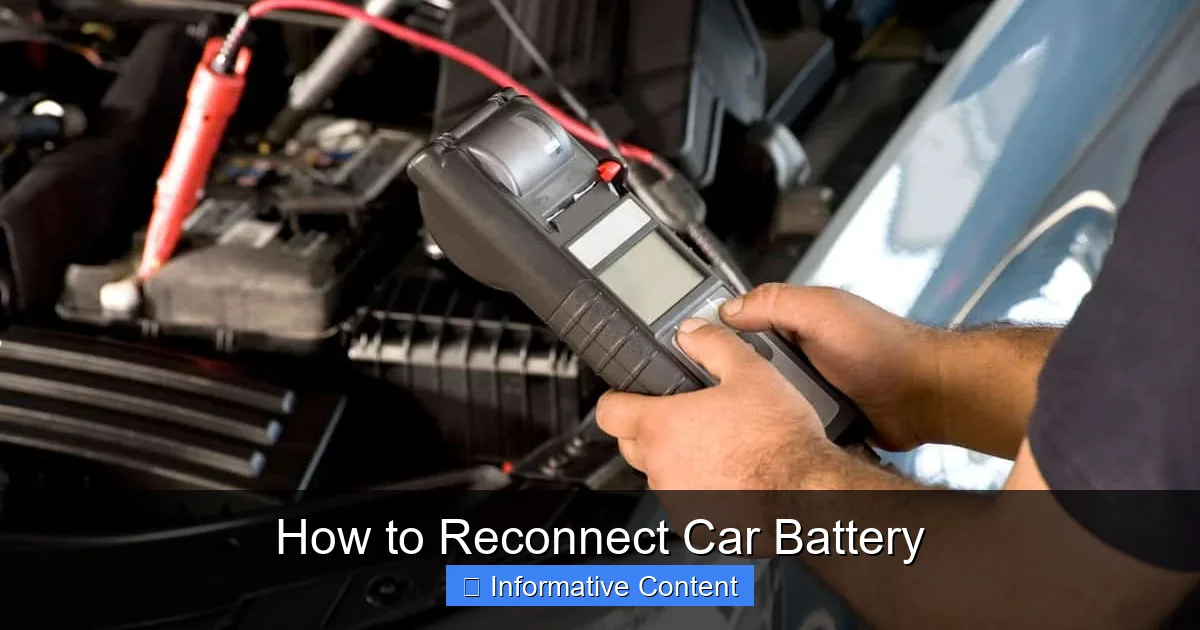
Visual guide about How to Reconnect Car Battery
Image source: vehq.com
Personal Protective Equipment (PPE)
- Safety Glasses or Goggles: This is arguably the most important piece of safety gear. Batteries contain sulfuric acid, which can cause blindness if it splashes into your eyes. Protect them!
- Heavy-Duty Gloves: Latex gloves won’t cut it. Opt for sturdy leather or chemical-resistant gloves to protect your hands from acid and provide a better grip.
- Old Clothes: Wear long sleeves and pants that you don’t mind getting dirty or potentially damaged by battery acid.
Workspace Safety
- Good Ventilation: Batteries emit hydrogen gas, which is highly flammable and explosive. Always work in a well-ventilated area, preferably outdoors or in an open garage, to dissipate these gases.
- No Sparks or Flames: Keep cigarettes, lighters, open flames, and any sources of sparks far away from the battery. A tiny spark near a gassing battery can cause an explosion.
- Remove Jewelry: Metal jewelry (rings, watches, bracelets) can conduct electricity, potentially causing a short circuit, severe burns, or damaging your battery if it comes into contact with the terminals. Take it all off!
- Keep Children and Pets Away: Ensure your work area is clear of curious onlookers who could accidentally bump tools or touch live terminals.
- Know Your Emergency Plan: Have baking soda or a battery acid neutralizer nearby (baking soda works well) in case of an acid spill. Also, know the location of a water source to flush skin or eyes immediately.
Understanding Battery Hazards
A car battery stores a tremendous amount of electrical energy. Shorting the terminals can cause a massive spark, melting tools, and potentially igniting battery gases. The acid is highly corrosive, and hydrogen gas is explosive. Understanding these risks will help you approach the task of how to reconnect your car battery with the necessary caution.
Gathering Your Tools
Having the right tools at hand before you start will make the process of how to reconnect your car battery much smoother and more efficient. No one wants to stop midway to search for a specific wrench!
Basic Tool Checklist
- Wrench Set (Socket or Combination): You’ll likely need a wrench to loosen and tighten the terminal clamps. Common sizes are 10mm, 13mm, or 1/2 inch. Some vehicles use a different size, so a set is helpful. A ratcheting wrench makes the job easier.
- Wire Brush or Battery Terminal Cleaner: Essential for cleaning corrosion off battery posts and cable clamps.
- Battery Terminal Protector Spray or Dielectric Grease: These help prevent future corrosion and ensure a good connection.
- Clean Rags or Paper Towels: For wiping away dirt, acid residue, and applying grease.
- Optional: Battery Post Cleaner Tool: This specialized tool makes cleaning battery posts and terminal clamps much easier and more thorough.
Optional but Helpful Items
- LED Headlamp or Flashlight: If working in a dimly lit area or at night.
- Terminal Puller: If the clamps are stuck due to corrosion (though less common when reconnecting).
- Memory Saver Tool: This plugs into your car’s OBD-II port or cigarette lighter and provides a small amount of power to retain computer memory, radio presets, and other electronic settings while the main battery is disconnected. It’s a lifesaver for modern cars.
The Step-by-Step Guide to Reconnecting Your Car Battery
Alright, safety gear on, tools ready. Now for the main event: the precise steps on how to reconnect your car battery. Follow these instructions carefully, and you’ll have your battery reconnected in no time.
Pre-Reconnection Checks
Before you even touch a terminal, do a quick visual inspection:
- Check Battery Condition: If you’re reconnecting an old battery, ensure it’s not damaged, leaking, or swollen. A damaged battery might need replacement, not reconnection.
- Verify Correct Orientation: Make sure the battery is placed correctly in its tray, with the positive (+) and negative (-) posts aligning with your car’s respective cables.
- Inspect Cables: Look for any signs of damage, fraying, or excessive corrosion on the battery cables themselves. If cables are severely damaged, they may need replacement.
Cleaning Battery Terminals (If Applicable)
This step is often overlooked but is absolutely critical for a reliable connection. Even a thin layer of corrosion can significantly impede electrical flow.
- Remove Any Old Corrosion: If there’s any visible white or bluish-green powdery corrosion on the battery posts or inside the cable clamps, it must be thoroughly cleaned off.
- Use a Wire Brush or Terminal Cleaner: Use a specialized battery terminal brush or a stiff wire brush to scrub both the battery posts and the inside surfaces of the cable clamps until they are shiny metal.
- Wipe Clean: Use a clean rag to wipe away all the loosened corrosion and dirt. You can also use a mixture of baking soda and water (a tablespoon of baking soda to a cup of water) to neutralize any lingering acid residue, then rinse with plain water and dry thoroughly. Ensure everything is completely dry before proceeding to reconnect your car battery.
Connecting the Positive Terminal First
This is a golden rule when you reconnect your car battery. Always connect the positive (+) terminal first. Why? Because if your wrench accidentally touches the car’s metal frame while connected to the negative terminal (which is grounded to the car’s chassis), it won’t create a spark. If it touches the frame while connected to the positive terminal, it will cause a dangerous short circuit. Connecting positive first minimizes this risk.
- Identify the Positive Terminal: Look for the “+” symbol on the battery and the red battery cable.
- Place the Positive Clamp: Carefully place the red positive cable clamp over the positive battery post. Ensure it sits flush and covers the post completely.
- Tighten the Clamp: Use your wrench to tighten the nut on the positive clamp. Turn it until the clamp is snug and secure on the post. It should not be able to twist or move easily. Do not overtighten, as this can strip the bolt or damage the battery post. Just firm and secure is perfect.
Connecting the Negative Terminal Second
Once the positive terminal is secure, it’s time to connect the negative.
- Identify the Negative Terminal: Look for the “-” symbol on the battery and the black battery cable.
- Place the Negative Clamp: Carefully place the black negative cable clamp over the negative battery post, ensuring it sits flush.
- Tighten the Clamp: Use your wrench to tighten the nut on the negative clamp until it is snug and secure. Again, avoid overtightening.
Securing and Testing Connections
You’re almost there! A few final checks will ensure everything is ready.
- Test the Clamps: Gently try to wiggle both positive and negative clamps. They should feel completely secure and not move at all. If they move, tighten them a little more.
- Apply Terminal Protector (Optional but Recommended): Once both clamps are securely tightened, spray a battery terminal protector or apply a thin layer of dielectric grease over the posts and clamps. This creates a barrier against moisture and air, significantly reducing future corrosion and maintaining a good electrical connection.
- Replace Battery Hold-Down: If your battery has a hold-down clamp or strap, ensure it’s properly secured to prevent the battery from moving around while the car is in motion.
Post-Reconnection Checks and First Start
With the battery cables securely attached, it’s time for the moment of truth. What happens next, and what should you look out for?
Double-Checking Everything
Before you even think about starting the engine, take a deep breath and quickly review your work:
- Are both terminals clean and corrosion-free?
- Are both positive and negative cables connected to the correct posts? (Red to +, Black to -)
- Are both terminal clamps tightened securely?
- Is the battery held down firmly?
- Are all tools clear of the engine bay?
- Is your personal protective equipment off and safely stored?
Once you’ve confirmed all these points, you are ready to attempt the first start after you reconnect your car battery.
The Moment of Truth: Starting Your Car
Get into your car, ensure it’s in park (P) or neutral (N), and turn the key. Listen to the engine. If all goes well, it should crank vigorously and start up as normal. You might notice a few things:
- Radio Presets Lost: Modern cars often lose radio station presets, clock settings, and sometimes even power window “auto-up/down” settings when the battery is disconnected.
- Check Engine Light (Temporary): In some cases, the “Check Engine” light might illuminate temporarily after you reconnect your car battery. This is often due to the car’s computer needing to re-learn certain parameters. It should clear itself after a few drive cycles. If it persists, there might be another issue.
- Rough Idle: The engine might idle a little rough for the first minute or two as the computer recalibrates. This is usually normal.
What to Do If It Doesn’t Start
Don’t panic! If your car doesn’t start after you reconnect your car battery, here are a few things to check:
- Are the Connections Tight? Re-check both positive and negative terminals. Are they absolutely secure and not wiggling? Loose connections are a very common reason for a non-start.
- Battery Charge: Is the battery actually charged? If you just bought a new battery, it should be fully charged. If you reconnected an old one that was previously drained, it might need a jump start or a charge.
- Lights On? Do the interior lights, dashboard lights, or headlights come on brightly? If they are dim or don’t come on at all, the battery might be dead or severely discharged.
- Clicking Sound? A rapid clicking sound usually indicates a low battery or a poor connection, preventing the starter from engaging properly.
- No Sound at All? If there’s no sound when you turn the key and no lights, check the battery terminals again. If they’re tight and the battery is charged, there might be a blown main fuse or a deeper electrical issue.
Important Tips and Troubleshooting
Even with careful steps, sometimes issues arise. Knowing a few extra tips can save you a lot of headache when you reconnect your car battery.
Avoiding Common Mistakes
- Incorrect Terminal Order: As emphasized, always positive first when reconnecting, negative first when disconnecting. Getting this wrong is the biggest safety hazard.
- Loose Connections: Vibrations can loosen clamps over time. Ensure they are tightened firmly but not excessively.
- Corrosion: Neglecting to clean corrosion will lead to poor performance and future electrical problems.
- Overtightening: Stripping terminal bolts or cracking battery posts can create a bigger repair job. Snug is enough.
- Leaving Tools on Battery: A wrench left on the battery can easily short the terminals. Always keep your work area clear.
Resetting Electronics After Reconnection
Modern cars are packed with electronics, and disconnecting the battery often means some settings get wiped. Here’s what you might need to reset:
- Radio Presets and Clock: Simple enough, just set them again.
- Power Windows: Some cars require “re-indexing” power windows. Roll them all the way down, then all the way up, holding the button for a few extra seconds at each end. This teaches the car the window’s full travel. Consult your owner’s manual if unsure.
- Engine Control Unit (ECU) Re-learning: The car’s computer might need a few drive cycles to re-learn idle parameters, fuel trims, and shift points. Drive normally for a day or two, and any minor quirks should disappear.
- Steering Angle Sensor: Some vehicles, especially those with electronic stability control (ESC) or traction control, might need the steering angle sensor recalibrated. This often involves driving straight for a short distance or turning the wheel lock-to-lock. Check your manual.
When to Call a Professional
While reconnecting your car battery is a DIY-friendly task, there are times when it’s best to call in the experts:
- Persistent Starting Issues: If your car still won’t start after you’ve reconnected the battery, checked connections, and confirmed the battery is charged, there’s a deeper issue (starter, alternator, ignition system, etc.) that requires professional diagnosis.
- Acid Leaks or Damaged Battery: If you notice the battery is cracked, leaking a lot of acid, or has any physical damage, do not attempt to handle it further. A professional can safely remove and dispose of it.
- Uncertainty or Discomfort: If at any point you feel unsure about the process, uncomfortable with the risks, or encounter unexpected difficulties, it’s always safer to consult a certified mechanic. They have the tools and expertise to handle complex electrical issues.
Conclusion
Successfully learning how to reconnect your car battery is a valuable skill for any vehicle owner. It’s a task that, when approached with care and precision, can save you time and money, and give you a greater sense of confidence in maintaining your vehicle. We’ve covered the critical safety precautions, the essential tools, and the detailed step-by-step process to ensure a secure and reliable connection. Remember, patience and attention to detail are your best friends here.
From cleaning those crucial terminals to tightening the clamps in the correct order – positive first, then negative – every step plays a vital role in getting your car back on the road safely. Don’t forget those post-reconnection checks and be prepared for minor electronic resets. By following this guide, you’ve not only reconnected your battery but also empowered yourself with practical automotive knowledge.
So, the next time you need to reconnect your car battery, you can do so with confidence, knowing you have the expertise to get the job done right. Drive safely!
🎥 Related Video: How to Disconnect and Reconnect the Car Battery
📺 FIX MY CAR
Thank You for your Donation: https://www.paypal.com/donate/?hosted_button_id=TQ2UTNS5WDC46 SUBSCRIBE So We Can …
Frequently Asked Questions
Is it safe to reconnect a car battery myself?
Yes, it is generally safe to reconnect a car battery yourself if you follow proper safety precautions, wear protective gear, use the correct tools, and understand the correct connection order. Always prioritize safety to avoid sparks or acid exposure.
What happens if I connect the battery terminals in the wrong order?
Connecting the battery terminals in the wrong order, specifically connecting the negative terminal first then the positive, significantly increases the risk of a short circuit. If your wrench touches the car’s metal frame while on the positive terminal, it can cause a large spark, damage electronics, or even lead to a battery explosion.
How tight should I tighten the battery terminals?
Battery terminals should be tightened until they are snug and secure, meaning they cannot be twisted or moved by hand. Avoid overtightening, as this can strip the bolt, crack the battery post, or damage the terminal clamp.
Why do my car’s electronics act weird after I reconnect the car battery?
When you reconnect your car battery, the car’s computer (ECU) may lose some of its learned settings, causing temporary quirks like a rough idle, lost radio presets, or the need to reset power windows. These issues usually resolve themselves after a few driving cycles or by following specific reset procedures in your owner’s manual.
How can I prevent corrosion after I reconnect my car battery?
To prevent corrosion after you reconnect your car battery, thoroughly clean the battery posts and cable clamps before connection. Then, apply a thin layer of dielectric grease or use a specialized battery terminal protector spray over the posts and clamped terminals once they are securely tightened.
When should I call a professional if I can’t reconnect my car battery?
You should call a professional if you’re unsure about any step, encounter persistent issues like the car not starting after reconnection despite checking all steps, notice a leaking or damaged battery, or if you simply feel uncomfortable performing the task yourself. A professional can diagnose underlying issues and ensure safe handling.