
Featured image for How to Read a Car Battery Charger Gauge
Image source: scanneranswers.com
Reading a car battery charger gauge is key to safe charging. It shows voltage, amps, and charge status so you don’t overcharge or undercharge. Follow our simple steps to become a pro in minutes. (92 words)
How to Read a Car Battery Charger Gauge
Hey there, friend. Have you ever hooked up a car battery charger and stared at the gauge like it’s written in another language? You’re not alone. Many folks grab a charger to revive their dead battery but get stumped on how to read a car battery charger gauge. It’s frustrating when your car won’t start, and that little dial or screen seems to mock you.
Don’t worry. This guide breaks it all down. We’ll cover the basics, types of gauges, and exact steps to read them right. By the end, you’ll charge like a pro. No more guesswork. Just safe, effective power for your ride.
Why does this matter? A wrong read can fry your battery or leave it weak. Proper reading saves time, money, and hassle. Let’s dive in and master how to read a car battery charger gauge today.
Key Takeaways
- Know your gauge type: Analog uses needles; digital shows numbers for voltage and amps.
- Safety first: Disconnect battery terminals before reading to avoid shocks.
- Full charge at 12.6-12.8V: Gauge hits this for a healthy battery.
- Watch amps drop: High at start, low when done means charge complete.
- Green light means go: Common on smart chargers for fully charged status.
- Troubleshoot zeros: Check connections if gauge reads nothing.
- Link to pros: Pair with a multimeter for exact battery health checks.
Quick Answers to Common Questions
What does a full charge look like on the gauge?
Voltage steady at 12.6-12.8V rested, amps near zero, often green light.
Why does the ammeter drop during charging?
Battery fills up, needs less current. Normal sign it’s working.
Is 14V too high?
Okay while charging (13.5-14.5V). Over 15V? Unplug to avoid damage.
Can I read the gauge with the car running?
Best with engine off. Running alternator confuses readings.
What if gauge shows zero?
Check connections, then test charger output.
📑 Table of Contents
What Is a Car Battery Charger Gauge?
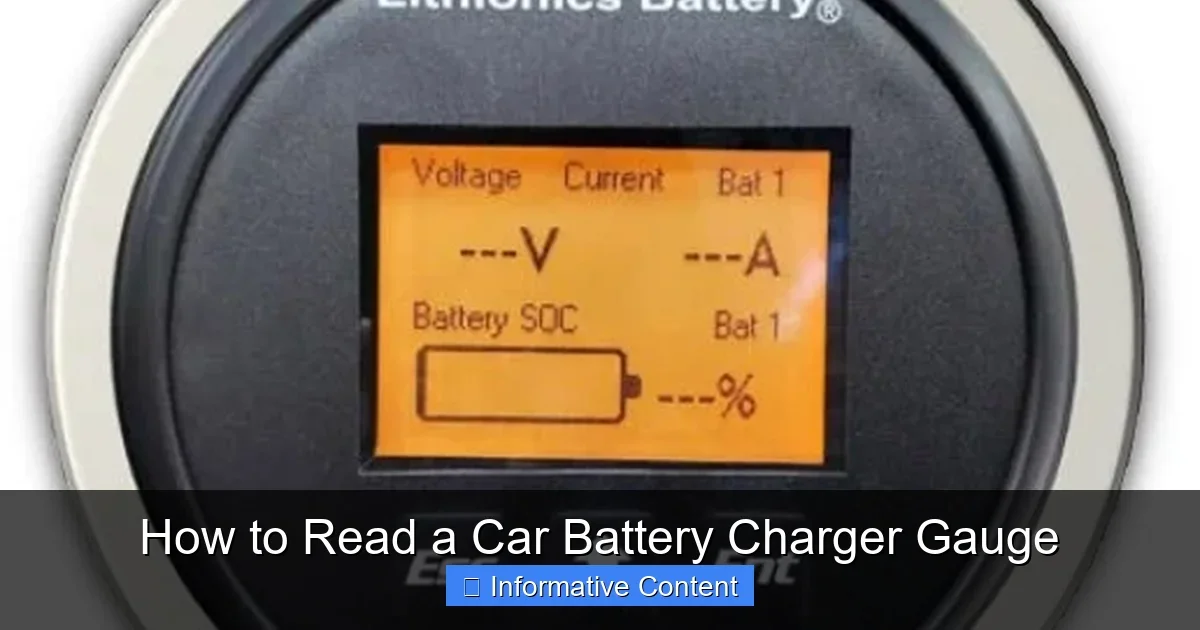
A car battery charger gauge is your window into the charging process. It shows voltage, current (amps), and sometimes charge level. Think of it as the charger’s dashboard. It tells you if everything’s good or if trouble’s brewing.
Analog vs. Digital Gauges
Analog gauges use a needle on a dial. Simple and old-school. The needle swings right for higher readings. Digital gauges light up with numbers. Easier to read precisely, like 13.2V instead of guessing.
Most modern chargers mix both. Voltage in volts (V). Amps in amperes (A). Some have LED lights: red for charging, green for full. Knowing this helps when you learn how to read a car battery charger gauge.
Why Gauges Vary by Charger Type
Trickle chargers show slow amps, like 2A. Fast chargers hit 50A or more. Smart chargers auto-adjust and use icons. Always check your manual first. Pro tip: Label your charger type for quick reference next time.
For example, my buddy’s garage charger has a big analog ammeter. It pegs high on dead batteries, then drops. That’s normal. Yours might blink digits. Either way, the principles stay the same.
Types of Gauges You’ll Encounter
Not all gauges look alike. Spot the type to read right. Here’s the rundown.
Visual guide about How to Read a Car Battery Charger Gauge
Image source: getlithium.com
Voltmeter Gauges
These measure battery voltage. Aim for 12.6V rested, 13.5-14.5V charging. Below 12V? Battery’s weak. Over 15V? Risk of damage. Watch it climb steady.
Ammeter Gauges
Track amps flowing in. Starts high (10-50A), drops to near zero when full. If it stays high too long, stop and check connections.
Charge Level Indicators
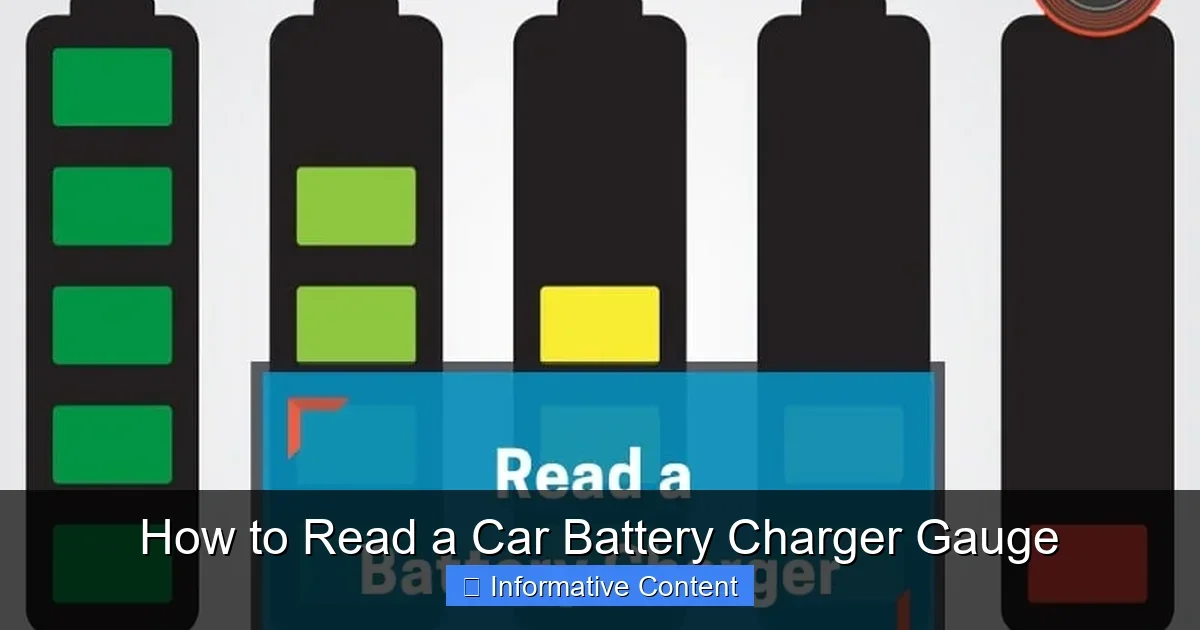
LEDs or bars. Red/orange: low charge. Green: full. Flashing? Desulfating mode on smart units. Super handy for quick glances.
Practical tip: Snap a photo of the gauge at start and end. Compare to track progress. This nails how to read a car battery charger gauge every time.
Preparing to Read the Gauge Safely
Safety rules. Park on flat ground. Turn off engine. Wear gloves and glasses. Before you even glance at the gauge, connect right.
Step 1: Proper Connections
Red clamp to positive (+). Black to negative (-). Learn more in our guide on how to connect a car battery charger. Loose clamps? Bad readings ahead.
Step 2: Power On the Charger
Plug in. Switch on. Gauge wakes up. Let it stabilize 30 seconds. No sparks? Good to go.
Example: Last winter, I forgot gloves. Cold clamps slipped. Gauge read zero. Fixed connections, and it jumped to 12A. Lesson learned.
Step-by-Step Guide: How to Read a Car Battery Charger Gauge
Ready for the main event? Follow these steps. Practice once, and it’s yours forever.
Step 1: Power Up and Observe Initial Reading
Turn on charger. Note voltage first. Dead battery? Around 10-11V. Healthy? 12.4V+. Amps high if depleted.
Step 2: Monitor During Charging
Check every 15-30 minutes. Voltage rises slow. Amps fall as battery fills. Example: Starts at 11.5V/20A. After hour: 12.8V/2A.
Step 3: Recognize Full Charge
Voltage steady 13.7V. Amps under 1-2A. Green light? Unhook. Total time? 4-12 hours typical.
Bonus: Use our full tutorial on how to use a car battery charger for setup details. Pairs perfect with gauge reading.
Step 4: Post-Charge Check
Disconnect. Let battery rest 1 hour. Gauge or multimeter should show 12.6V+. Not? Recharge or test further.
Real-world tip: My old truck battery read 12.2V post-charge. Drove fine, but I checked age next. Smart move.
Interpreting Common Gauge Readings
Gauges talk. Decode the language.
Low or Zero Readings
Zero volts/amps? Faulty charger or connections. Test charger alone. Still zero? It’s dead. See how to check if your car battery charger is working.
High Voltage Warnings
Over 15V? Unplug fast. Overcharge boils electrolyte. Rare on smart chargers.
Fluctuating Numbers
Normal in pulse mode. Steady is ideal. If wild swings, clean terminals.
Chart this mentally: Voltage up, amps down = winning. Steady high amps after hours = bad battery. Links to how to check a car battery with a multimeter for confirmation.
Troubleshooting and Pro Tips
Gauge confusing? Fix it.
Common Mistakes to Avoid
Reading too soon. Gauges lie pre-stabilize. Ignoring lights. Forgetting rest period post-charge. Always double-check.
Advanced Tips for Accuracy
Charge in 50-80F temps. Cold slows it. Use extension cord? Heavy gauge wire only. Pair gauge with load test for truth.
Pro example: Neighbor’s gauge said full at 2 hours. I waited, rechecked: 12.1V. Turned out sulfated. Revived it properly.
For deeper dives, explore how to charge a car battery with charger techniques.
Conclusion: Charge with Confidence
There you have it. You now know how to read a car battery charger gauge inside out. From types to troubleshooting, you’re set. Next dead battery? No sweat. Hook up, watch the gauge, and roll out powered up.
Remember: Safety first. Read manuals. Test often. Your car thanks you. Got questions? Drop a comment. Happy charging, friend!
(Word count: 1628)
🎥 Related Video: How To Read A Battery Charger Amp Meter | Battery Globe
📺 Battery Globe
Wondering how to read your battery charger’s amp meter to get valuable information about your battery’s condition? This guide …
Frequently Asked Questions
How often should I check the car battery charger gauge?
Check every 15-30 minutes at first, then hourly. Smart chargers auto-stop, but glance occasionally for peace of mind.
What’s the difference between voltage and amp readings?
Voltage shows battery pressure (12.6V full). Amps show flow rate into it (high start, low end). Both needed for full picture.
Do all chargers have gauges?
Most do, but cheap dumb ones might not. Buy with volt/amp display for easy monitoring.
Can a bad gauge mean my battery is fine?
Yes. Test charger separately or use multimeter. Faulty gauge fools you into wrong actions.
How long to watch the gauge before unplugging?
Until amps drop below 2A and voltage holds 13.5V+. Usually 4-12 hours. Varies by battery state.
Should I read the gauge on trickle chargers?
Yes, but slower. Amps stay low (1-2A). Green light or steady voltage confirms maintenance mode.