

Featured image for How to Read a Car Battery Charger
Image source: m.media-amazon.com
Struggling to understand your car battery charger? This guide shows you how to read a car battery charger step by step, from labels to lights. Get your battery charged right every time, safely and quickly.
How to Read a Car Battery Charger
Hey, have you ever stared at your car battery charger, scratching your head? All those numbers, symbols, and blinking lights can feel like a foreign language. But don’t worry—I’m here to help you master how to read a car battery charger. It’s easier than you think, and it can save you time, money, and headaches.
Whether your car won’t start on a cold morning or you’re maintaining a classic ride, knowing your charger inside out is key. A dead battery happens to the best of us. By learning to read the specs and signals, you’ll charge smarter. Let’s dive in and make you a pro.
Stick with me. We’ll break it down simply, like chatting over coffee. No jargon overload. Just practical tips to get your battery humming again.
Key Takeaways
- Check voltage first: Most car batteries need 12V; match your charger’s output to avoid damage.
- Understand amps: Low amps (2-10A) for maintenance; high (50A+) for fast charging—pick based on need.
- Read the modes: Automatic, manual, trickle—know what each does for your battery type.
- Watch indicator lights: Green means full; red signals issues like reverse polarity.
- Safety symbols matter: Look for warnings on explosions or shocks to stay safe.
- Test battery voltage: Use the charger’s meter or a multimeter before starting.
Quick Answers to Common Questions
What voltage should a car battery charger show?
Around 12.6V when full, 13.8-14.4V while charging.
What do red lights mean on a charger?
Usually charging or a fault like poor connection.
Can I leave a charger on overnight?
Yes, with smart or trickle modes to avoid overcharge.
How do I know if amps are right?
Match to battery size—2-10A for most maintenance.
What if the display shows “error”?
Check connections, polarity, or battery health.
📑 Table of Contents
Understanding the Basics of Car Battery Chargers
First things first. What makes a car battery charger tick? Most are designed for 12-volt lead-acid batteries in cars, trucks, and SUVs. They convert AC power from your wall outlet to DC power your battery craves.
Key Components to Spot
Look at the front panel. You’ll see clamps (red positive, black negative), a power cord, and a display or dials. Clamps connect to battery terminals. Positive to +, negative to -.
Pro tip: Always match polarity. Reverse it, and sparks fly—or worse. Chargers often have reverse polarity protection. But check the label for a symbol like a crossed-out battery.
Types of Chargers
- Trickle chargers: Slow and steady, 1-2 amps. Great for storage.
- Fast chargers: 20-100 amps. Quick boost for emergencies.
- Smart chargers: Automatic modes adjust for you.
Reading the type helps pick the right one. For example, a trickle charger for your boat battery over winter. Fast one if you’re late for work.
Decoding Labels and Specifications
Labels are your charger’s ID card. Found on the side or back. They tell voltage, amps, and more. This is core to how to read a car battery charger.
Visual guide about How to Read a Car Battery Charger
Image source: ourhometools.com
Voltage Ratings
Standard is 12V. Some handle 6V or 24V for trucks. Look for “Output: 12V DC.” Don’t use a 6V charger on a 12V battery—it won’t work right.
Example: Your Ford F-150 needs 12V. Charger says 12/24V switchable? Flip to 12V.
Amperage Explained
Amps show charge speed. 2-10A for slow charge (8-24 hours). 40-60A for fast (1-2 hours). Check “Max Charge Rate: 10A.”
Tip: For a 50 amp-hour battery, 5A takes 10 hours ideally. Formula: battery Ah divided by amps. But never exceed 10-20% of Ah for safety.
Safety note: High amps generate heat. Watch for warnings like “Not for AGM batteries” unless specified.
Other Specs to Note
CCA (Cold Cranking Amps) compatibility. Float voltage (13.6V maintenance). Certifications like UL or CE mean it’s safe.
For more on charging once you’ve read the specs, check our guide on how to charge a car battery with a charger.
Interpreting the Display and Indicators
Modern chargers have LCD screens or LED lights. They show real-time info. Key to understanding charge progress.
LED Lights Breakdown
- Red flashing: Connected, charging.
- Green solid: Battery full, ready.
- Yellow: Maintenance or float mode.
- Blinking red: Fault—check connections.
Picture this: You hook up. Red blinks. After hours, green glows. Done!
Digital Displays
Shows voltage (12.6V good), amps (charging rate), time left. Some estimate Ah restored.
Tip: Before charging, note battery voltage. Below 12.2V? It’s low. Use a voltmeter for accuracy. See how to check a car battery with a voltmeter for details.
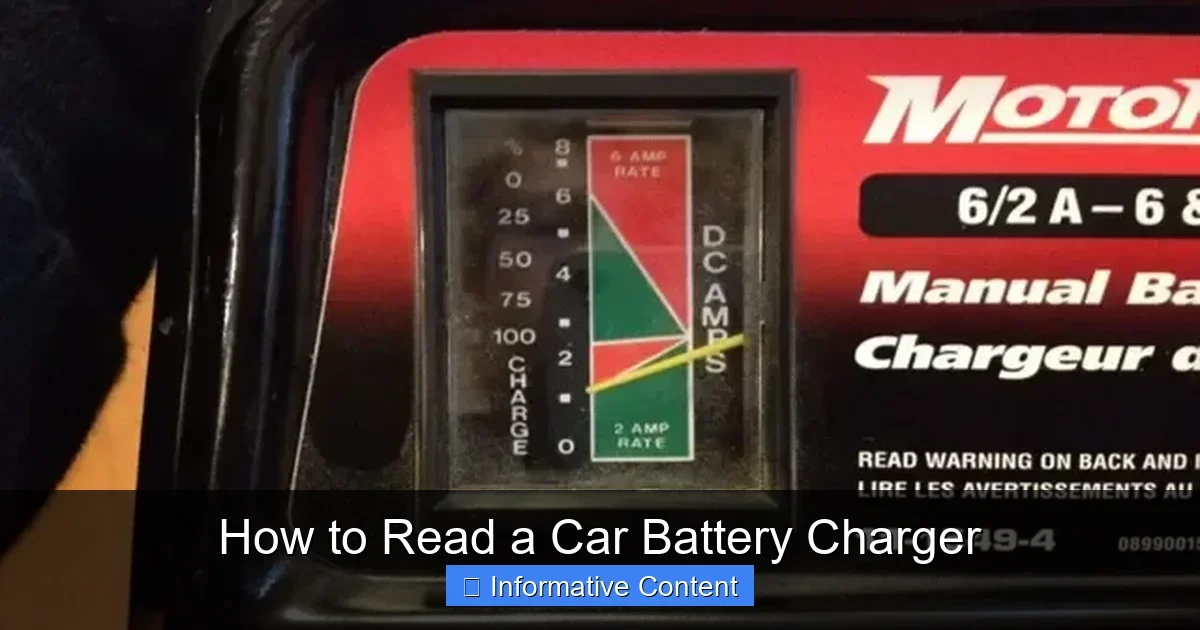
Analog Gauges
Older models have needles. Ammeter shows amps. Voltmeter tracks voltage. Needle in green zone? All good.
Understanding Charging Modes and Settings
Charger dials or buttons set modes. Wrong mode damages batteries.
Common Modes
- Manual: You control amps.
- Automatic: Detects battery, adjusts.
- Trickle/Float: Maintains charge without overcharge.
- Boost/Desulfate: Revives sulfated batteries.
For winter dead batteries, use boost. Daily drivers? Automatic. Read labels like “12V AGM Mode” for sealed batteries.
Selecting the Right Mode
Step 1: Identify battery type (flooded, AGM, gel). Step 2: Match mode. Example: AGM needs 14.7V—check display.
Once set, connect safely. Learn how to connect a car battery charger next.
Pro tip: Smart chargers auto-select. Less reading, more relaxing.
Safety Symbols and Warnings
Safety first. Symbols prevent booms or shocks.
Common Icons
- Explosion symbol: No sparks near battery.
- Lightning bolt: Risk of shock—dry hands.
- Eye protection: Wear goggles for acid spray.
- Recycle: Dispose properly post-use.
Warnings say: Ventilate area. No smoking. Disconnect in order: negative first.
What to Do
Read fine print. “Indoor use only”? Garage okay, not engine bay. Overheat symbol? Unplug if hot.
Example: Charger beeps, shows error. Unplug, check fuses.
Troubleshooting Charger Readings
Something off? Readings guide fixes.
Common Issues
No lights? Check outlet, fuses. Voltage stuck low? Bad connections. Amps zero? Reverse polarity.
Step-by-Step Fixes
- Clean terminals.
- Recheck polarity.
- Test battery health first.
If charger fails, battery might be toast. See how to tell if a car battery is bad.
Bonus: Log readings. Voltage before/after tracks health.
Wrapping It Up: Charge with Confidence
There you have it—your full guide on how to read a car battery charger. From labels to lights, you’re set. Practice on your next charge. It’ll become second nature.
Remember: Safety rules. Match specs. Watch progress. Your car will thank you with reliable starts.
Got questions? Drop a comment. Drive safe, friends!
(Word count: 1624)
🎥 Related Video: Car Battery Charger 12/24V 400A Heavy Duty Battery Copper Wire Intelligent Full Automatic Pulse Repa
📺 Ferdinand Malapit
Please order tru lazada by clicking here https://c.lazada.com.ph/t/c.YrKsDA New Lazada user are entitled for discount and free …
Frequently Asked Questions
How often should I read my car battery charger manual?
Review it before first use and yearly. Models vary, so refresh for safety and best results.
What’s the difference between 12V and 6V on a charger?
12V for cars, 6V for small vehicles like lawnmowers. Wrong voltage harms the battery fast.
Do all chargers have digital displays?
No, basic ones use LEDs or gauges. Digital shows more details like time remaining.
Can I use a car charger for a boat battery?
Often yes, if specs match. Check for marine mode to handle deep cycles.
What does “float mode” mean?
It maintains charge without overcharging, ideal for long-term storage like winter.
Is it safe to charge in the car?
Prefer detached. Heat and fumes build up inside. Ventilate if needed.