
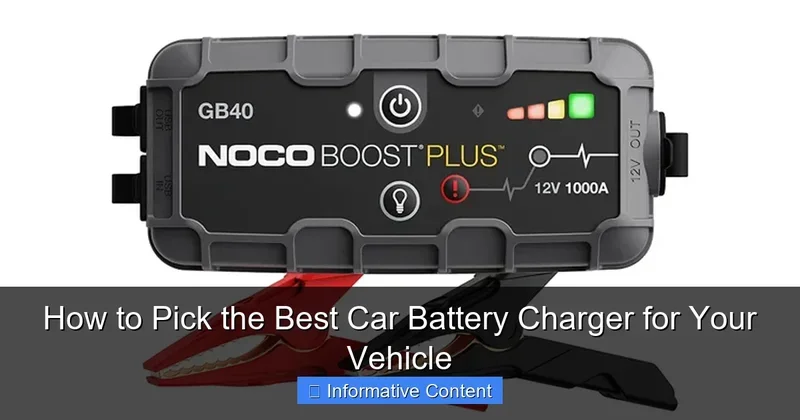
Choosing the right car battery charger can save you time, money, and frustration. With so many options available, it’s important to consider your vehicle type, charger features, and safety standards. A quality charger not only extends battery life but also prevents damage from overcharging.
Ever had your car refuse to start because the battery was dead? It’s one of those inconvenient moments that makes you wish you’d paid more attention to maintenance. But with the right car battery charger, you can avoid being stranded. Whether you’re dealing with a forgotten weekend getaway or a cold morning when your engine won’t turn over, knowing how to pick the best car battery charger can make all the difference.
The market is flooded with models that promise quick fixes and long-lasting power. But not all chargers are created equal. Some are designed for occasional use, while others are built for professional-grade performance. The key is finding one that matches your vehicle, your lifestyle, and your technical comfort level. In this guide, we’ll walk you through everything you need to know—from understanding voltage and amperage to selecting smart features that protect both your battery and your sanity.
Key Takeaways
- Match the charger to your vehicle: Most cars use 12-volt batteries, but trucks and RVs may require higher amperage or dual-voltage options.
- Understand amperage and charging speed: Slower, trickle charging is safer for long-term health; fast charging is useful for emergencies.
- Look for smart charging technology: Auto-detecting chargers adjust voltage and current automatically for optimal performance.
- Choose safety features: Reverse polarity protection, spark-proof connections, and temperature compensation prevent accidents and damage.
- Consider portability and usability: Compact, lightweight chargers are ideal for on-the-go use, while wall-mounted units suit garage setups.
- Check compatibility with battery types: Some chargers work only with lead-acid or AGM batteries—ensure your model supports your battery.
- Read user reviews and ratings: Real-world feedback helps confirm reliability, durability, and ease of use.
Quick Answers to Common Questions
What amp charger do I need for my car battery?
For most cars, a 4- to 10-amp charger is ideal. It charges safely without damaging the battery and can be left connected for long periods.
Can I leave a car battery charger on overnight?
Yes, if it has smart features like float mode and overcharge protection. These prevent overcharging and keep your battery safe during extended charging sessions.
Do I need a special charger for AGM batteries?
Most modern smart chargers automatically detect and adjust for AGM, gel, and flooded batteries. Just ensure your charger supports multiple battery types.
How long does it take to charge a car battery with a charger?
It depends on the battery’s state of charge and the charger’s amperage. A typical 50Ah battery might take 5–10 hours with a 5-amp charger.
Is it safe to charge a car battery indoors?
Only if the area is well-ventilated. Battery charging releases hydrogen gas, which is flammable. Never charge in enclosed, unventilated spaces.
📑 Table of Contents
Understanding Your Car Battery Needs
Before you even think about plugging in a charger, you need to understand what your car battery requires. Most standard passenger vehicles—like sedans, SUVs, and compact cars—use a 12-volt lead-acid battery. These are the ones most people think of when they hear “car battery.” But there’s more to it than just voltage.
Your battery’s capacity, often measured in ampere-hours (Ah), tells you how much energy it can store. For example, a typical car battery might be rated at 50Ah. This means it can theoretically deliver 50 amps for one hour, or 5 amps for ten hours before going flat. When selecting a charger, you want one that can deliver enough current to recharge this capacity efficiently—but not so fast that it damages the battery.
Types of Car Batteries
Not all batteries are the same. Here are the most common types you’ll encounter:
- Flooded (Wet) Lead-Acid: The traditional type, requiring occasional water top-ups. They’re affordable but less maintenance-friendly.
- AGM (Absorbent Glass Mat): Sealed and maintenance-free, often found in modern cars with start-stop technology. More expensive but handles deep discharges better.
- Gel Batteries: Used in some motorcycles and specialty vehicles. They’re vibration-resistant but require specific charging profiles.
Make sure your car battery charger is compatible with your battery type. Using the wrong settings can reduce lifespan or cause dangerous gas buildup.
Choosing the Right Amperage and Charging Speed
Amperage—measured in amps—determines how quickly your battery charges. Think of it like water flowing through a hose: higher amperage means faster flow, but too much pressure can damage the system.
For most everyday drivers, a charger between 2 to 10 amps is ideal. These car battery chargers are gentle on the battery and perfect for routine maintenance or occasional jump-starts. They’re also safe to leave connected overnight without risking overcharge.
On the other hand, if you frequently deal with deeply discharged batteries—like in winter or after long periods of inactivity—a higher-output charger (20+ amps) can get your car running faster. However, these should be used sparingly, as rapid charging can shorten battery life.
Trickle Charging vs. Fast Charging
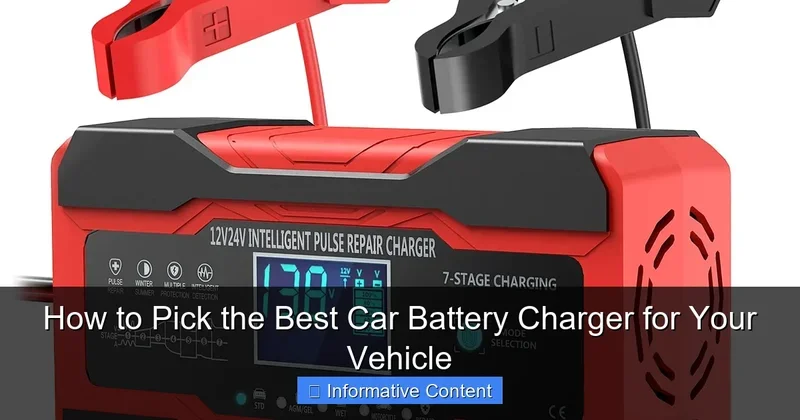
Trickle charging delivers a low, steady current—ideal for keeping your battery topped up during storage. It mimics the way a smart alternator works in your car.
Visual guide about How to Pick the Best Car Battery Charger for Your Vehicle
Image source: m.media-amazon.com
Fast charging, by contrast, pumps energy into the battery quickly. While convenient, it generates heat and stresses the internal plates. Use it only when you’re in a hurry.
Many modern car battery chargers offer both modes. Look for a unit with selectable amperage so you can switch between maintenance and emergency charging.
Smart Features to Look For
Gone are the days of guessing whether your battery is fully charged. Today’s car battery chargers come with intelligent features that monitor voltage, temperature, and charge status in real time.
Auto-Detection
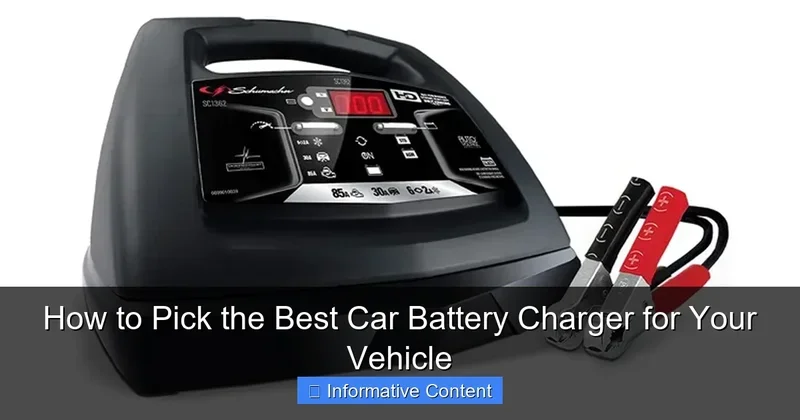
Top-tier models automatically detect 6V or 12V systems. This means you don’t have to manually adjust settings—just plug it in and go. It’s especially useful if you own multiple vehicles.
Visual guide about How to Pick the Best Car Battery Charger for Your Vehicle
Image source: hollingsworthauto.com
Desulfation Mode
Over time, lead-acid batteries develop sulfate crystals on their plates, reducing capacity. Many smart chargers include a desulfation mode that sends high-frequency pulses to break these crystals down, effectively “reviving” old batteries.
Float Mode
This keeps your battery at full charge without overcharging. It’s like a guardian angel for your battery—perfect for long-term storage or winter parking.
Temperature Compensation
Extreme heat or cold affects charging efficiency. Chargers with temperature sensors adjust their output accordingly, protecting your battery in all seasons.
Safety Features You Can’t Ignore
Safety should never be an afterthought. A poorly designed charger can cause sparks, battery explosions, or even fire hazards.
Reverse Polarity Protection
This prevents damage if you accidentally connect the clamps in reverse. The charger either shuts off or alerts you—never assume you’ll remember the correct order.
Spark-Proof Clamps
These reduce the risk of sparks near the battery, especially important if your battery is leaking acid or has hydrogen gas buildup (which happens during charging).
Overcharge Protection
Even smart chargers can malfunction. Overcharge protection cuts off power once the battery reaches full capacity, preventing damage and extending battery life.
Portability vs. Garage Use
Are you someone who likes to keep your garage organized, or do you often work from your driveway or even a campsite?
For daily garage use, a stationary car battery charger with wall-mounting capabilities and digital displays is great. These often have more advanced features and longer cables.
If you’re always on the road—say, for roadside assistance, camping, or fleet management—a portable charger is essential. Look for models that are lightweight, come with carrying cases, and have rugged construction. Some even double as jump starters or power banks.
Example: The Right Charger for Different Lifestyles
- Daily commuter: A 4-amp smart charger with auto-detection and float mode.
- RV owner: A dual-voltage 12/24V charger with desulfation and temperature control.
- Mechanic or roadside helper: A heavy-duty 20-amp charger with spark-proof clamps and rugged design.
Brand Reliability and Warranty
Not all brands are created equal. Stick with reputable manufacturers like NOCO, CTEK, Schumacher, or Black+Decker. These companies invest in research and testing, and their products often come with solid warranties—usually 1 to 3 years.
When reading reviews, pay attention to long-term reliability, not just initial performance. A charger that works perfectly for a week but fails after six months isn’t worth the savings.
Pro Tip:
Check if the brand offers customer support and replacement parts. A good warranty backed by responsive service is a sign of a trustworthy product.
How to Use Your New Charger (Quick Guide)
Once you’ve picked the right car battery charger, knowing how to use it is just as important. Here’s a quick step-by-step:
- Park your car in a well-ventilated area, away from flammable materials.
- Turn off the engine and remove the key.
- Connect the red clamp to the positive terminal (+), black to negative (-).
- Plug in the charger and select the appropriate mode (charge, maintain, etc.).
- Monitor the display until the battery reaches 100%.
- Disconnect in reverse order: black first, then red.
For detailed instructions, check out our guide on how to use a car battery charger.
Conclusion: Make the Smart Choice
Picking the best car battery charger doesn’t have to be overwhelming. By focusing on your vehicle’s needs, understanding key specifications like amperage and voltage, and prioritizing safety and smart features, you’ll make a choice that lasts.
Whether you’re a weekend warrior, a busy parent, or a DIY enthusiast, the right charger will keep your car running smoothly and save you from unexpected breakdowns. And remember—regular maintenance with a quality charger can extend your battery’s life by years.
Don’t wait for the next dead battery to take action. Invest in a reliable charger today and drive with confidence tomorrow.