
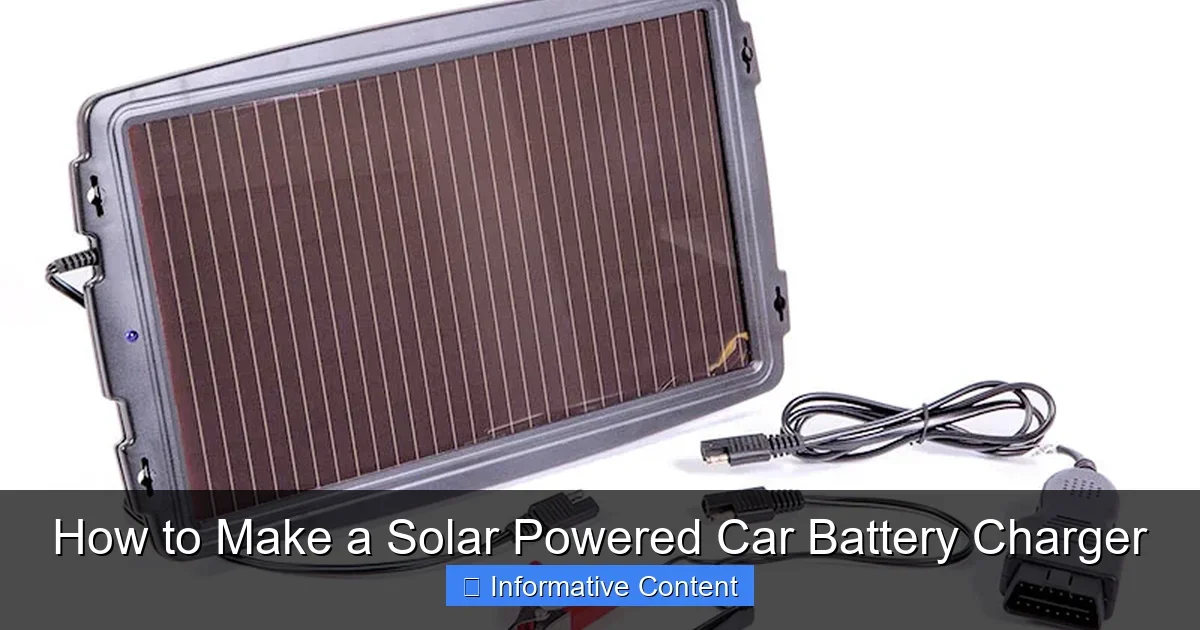
Featured image for How to Make a Solar Powered Car Battery Charger
Image source: carbatteryworld.com
Building a solar powered car battery charger is a fun, eco-friendly DIY project that keeps your vehicle ready anytime. With basic parts like a solar panel and charge controller, you can create a reliable trickle charger powered by the sun. Perfect for off-grid adventures or daily maintenance, this guide walks you through every step safely and simply.
How to Make a Solar Powered Car Battery Charger
Hey there, friend! Imagine never worrying about a dead car battery again, all thanks to the sun. That’s the magic of a solar powered car battery charger. It’s a simple DIY project that taps into free solar energy to keep your ride juiced up. Whether you’re prepping for a road trip, storing your car over winter, or just going green, this setup is a game-changer.
Store-bought chargers work fine, but why spend $100+ when you can build your own solar powered car battery charger for pennies? It’s portable, silent, and needs zero electricity bills. Plus, it’s satisfying to watch those panels soak up rays and revive your battery. In this guide, we’ll cover everything step by step. No fancy skills required—just grab some parts and let’s get started!
Before diving in, a quick tip: If your battery is old or damaged, it might not hold a charge. Learn how to tell if a car battery is bad first. That way, you’re not wasting effort on a dud.
Key Takeaways
- Cost-Effective: Build your solar powered car battery charger for under $50 using affordable parts, saving on grid electricity or store-bought units.
- Eco-Friendly: Harness free sunlight to charge your car battery, reducing your carbon footprint and reliance on fossil fuels.
- Easy DIY: No advanced skills needed—just basic wiring and tools for a working charger in under an hour.
- Safety First: Always use a charge controller to prevent overcharging and include fuses for protection.
- Versatile Use: Ideal for trickle charging during storage, camping trips, or emergencies when outlets aren’t available.
- Testing Essential: Check battery voltage before and after to ensure your solar powered car battery charger works perfectly.
Quick Answers to Common Questions
What size solar panel for a car battery?
Go for 10-20W for most cars. It provides 0.5-1.5A trickle charge safely.
Do I need a charge controller?
Yes! It stops overcharging and battery damage from voltage spikes.
How long to charge a dead battery?
10-20 hours in full sun. Solar is slow—great for maintenance, not emergencies.
Can it overcharge my battery?
No, with a good controller. It switches to float mode automatically.
Is it weatherproof?
Seal connections and use a case. Panels handle rain fine.
📑 Table of Contents
Why Choose a Solar Powered Car Battery Charger?
Solar chargers beat traditional ones hands down for everyday use. They trickle charge slowly and safely, perfect for lead-acid car batteries. No risk of overcharging like with fast grid chargers.
Top Benefits for You
- Free power from the sun—place it on your dashboard or garage roof.
- Compact and lightweight for boats, RVs, or cars in storage.
- Extends battery life by countering natural drain (about 1-3% per month).
Picture this: You’re camping off-grid. Hook up your solar powered car battery charger, and your battery stays topped at 12.6 volts. It’s peace of mind in a box. Compared to plugging into an outlet, it’s way greener and cheaper long-term.
When to Use It
Great for maintenance mode, not jump-starts. If you need quick power, check our guide on how to charge a car battery with a charger. Solar shines for slow, steady wins.
Gathering Materials and Tools
Ready to shop? Keep your solar powered car battery charger budget under $50. Here’s the shopping list for a 12V, 10-20W setup—enough for most cars.
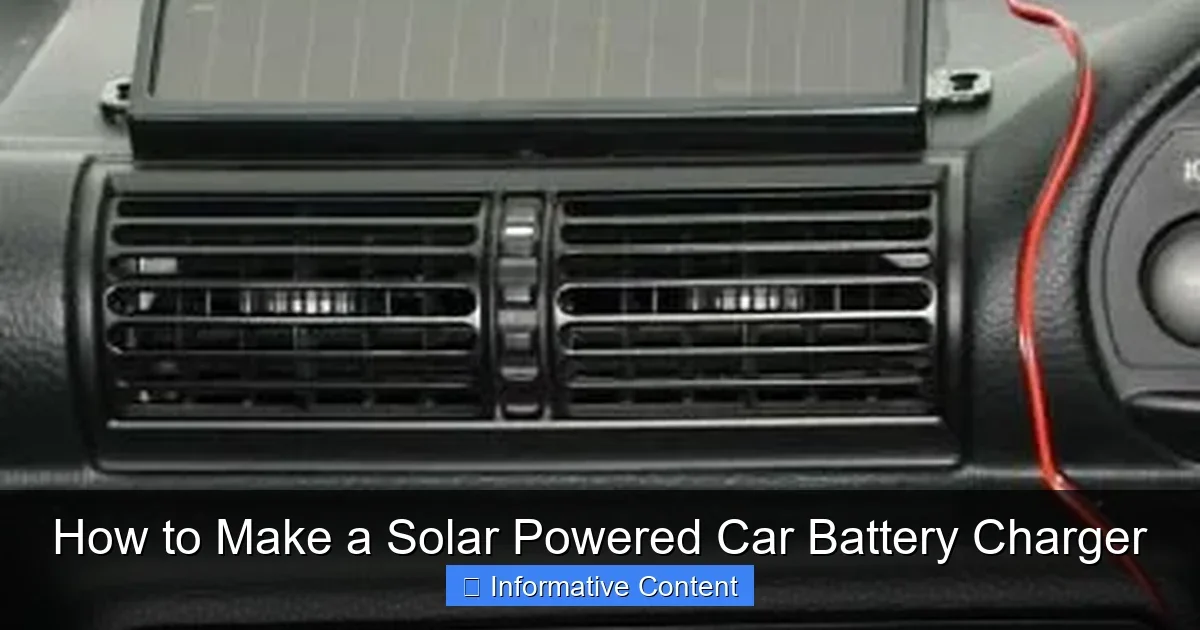
Visual guide about How to Make a Solar Powered Car Battery Charger
Image source: catalogueselect.com
Essential Parts List
- 12V solar panel (10-20W): $15-25. Polycrystalline works great.
- PWM charge controller (10A): $10. Prevents overcharge and reverse flow.
- Battery clips/alligator clamps: $5. Heavy-duty with insulation.
- 12-gauge wire (red/black, 10 ft each): $8.
- Inline fuse holder + 10A fuse: $5. Safety must-have.
- Optional: Diode (blocks night drain), blocking diode kit: $3.
Tools You’ll Need
Wire strippers, crimper, screwdriver, multimeter, electrical tape, zip ties. Borrow if you don’t have them. Pro tip: Buy from Amazon or auto stores for quick delivery.
Total time to gather: 30 minutes. Example: A 15W panel outputs 1 amp in full sun—ideal trickle for a 40-60Ah car battery.
Selecting the Perfect Solar Panel
Don’t grab just any panel. For a solar powered car battery charger, match it to your battery’s 12V system.
Key Specs to Look For
- Voltage: 17-18V open circuit (Voc) for 12V charging.
- Wattage: 10W for small cars, 20W+ for trucks/SUVs.
- Size: Under 12×12 inches for portability.
Avoid cheap no-name brands—they degrade fast. Renogy or HQST panels last years. Test output with a multimeter: Aim for 0.5-1.5A in sunlight.
Panel Placement Tips
Mount facing south at 30-45 degrees. Clean monthly for max efficiency. In winter, expect half output—plan accordingly.
Step-by-Step Building Guide
Time to assemble your solar powered car battery charger! Clear a workspace. Takes 45-60 minutes. Work in daylight to test as you go.
Step 1: Wire the Solar Panel to Controller
Strip 1/2 inch from panel wires. Connect positive (red) to controller’s PV+ input. Negative to PV-. Crimp securely. Add fuse on positive line near panel.
Step 2: Connect Controller to Battery Leads
From controller’s battery output: Red to positive clip wire, black to negative. Use 12-gauge for low resistance. Insulate all connections.
Step 3: Add Safety Features
Install inline fuse between controller and positive clip. If no diode in controller, add one after panel. Label wires: + and – clearly.
Pro example: My buddy built one for his Jeep. Placed on hood during off-season—battery never dropped below 12.4V!
For safe hookup, follow tips from our article on how to connect a car battery charger.
Safety Precautions and Best Practices
Safety isn’t optional with batteries—explosions happen from sparks or acid fumes. Treat your solar powered car battery charger build like gold.
Must-Do Safety Checks
- Disconnect car battery negative first. Reconnect last.
- Wear gloves/eye protection. Ventilate area.
- Never reverse polarity—double-check colors.
- Use waterproof enclosure for outdoor use.
Common Mistakes to Avoid
No controller? Battery boils. Undersized wire? Voltage drop kills efficiency. Always test unloaded first: Panel to multimeter should read 17V+.
Tip: Mount controller away from heat. It gets warm in sun.
Testing, Troubleshooting, and Maintenance
Your solar powered car battery charger is built—now prove it works. Grab a multimeter and learn how to check a car battery with a multimeter.
How to Test It
- Full sun: Panel output 0.8A+ at 17V.
- Connect to battery: Voltage rises slowly to 14.4V (bulk charge).
- Monitor: Drops to 13.5V float—controller magic.
Troubleshooting Tips
- No charge? Clean panel, check fuses.
- Low output? Shade or clouds—normal.
- Battery not holding? It might be toast.
Maintenance: Wipe panel monthly. Store flat in winter. Expect 5-10 year lifespan.
Final Thoughts: Power Up with the Sun!
Congrats—you just made a killer solar powered car battery charger! It’s saved me tons on replacements and keeps my old truck humming. Start small, tweak as needed, and share your build pics with friends.
Go solar, stay charged, and drive happy. If issues pop up, revisit basics or traditional methods. Your wallet and planet thank you. Happy DIY-ing!
🎥 Related Video: DIY Solar Powered RC Car Kit – The Ultimate Green Energy Kit | LGPW015 #stemlearning #scienceproject
📺 KitsGuru
LGPW015 Shop Kit Now: …
Frequently Asked Questions
How much does it cost to build a solar powered car battery charger?
You can assemble one for $30-60 with basic parts. Solar panels and controllers are the big spends, but they pay off quickly with free energy.
Will this work on any car battery?
Yes, for standard 12V lead-acid batteries in cars, trucks, or motorcycles. Avoid lithium unless specified—check voltage match.
How do I know if my solar charger is working?
Use a multimeter to check panel output (17V+), then battery voltage rise. Apps from controllers show real-time stats too.
Can I leave it connected all the time?
Absolutely, that’s the point! The controller maintains float charge without harm, perfect for stored vehicles.
What if there’s no sun for days?
Your battery holds 1-2 weeks depending on drain. For longer, add a bigger panel or hybrid setup with grid backup.
Is DIY solar safe for beginners?
Yes, if you follow steps and safety rules. Start with pre-wired kits if wiring scares you, then upgrade.