
Getting stuck with a dead car battery is frustrating, but knowing the signs can save you time and stress. This guide will walk you through how to know your car battery is dead by recognizing common symptoms like clicking sounds, dim lights, and a slow engine crank. Understanding these indicators empowers you to diagnose the issue quickly and decide on the next steps, whether it’s a jump-start or a replacement.
There are few things as frustrating as hopping into your car, turning the key, and being met with… silence. Or maybe a sad, struggling groan. That moment of dread often leads to one immediate thought: “Is my car battery dead?” It’s a common automotive hiccup, one that almost every driver experiences at some point. But how do you know your car battery is dead for sure, and what are the tell-tale signs to look out for?
Knowing how to spot the symptoms of a failing or dead car battery isn’t just about avoiding an inconvenient delay; it’s about understanding your vehicle better and being prepared. While the complete absence of power is a dead giveaway, batteries often give subtle hints before they completely kick the bucket. Recognizing these early warning signs can help you get a jump-start (pun intended!) on a solution, whether it’s a quick charge or a full replacement.
In this comprehensive guide, we’ll walk you through all the ways to know your car battery is dead, from the obvious non-starts to more subtle electrical glitches and even visual cues. We’ll break down the symptoms, explain what they mean, and empower you with the knowledge to diagnose the problem confidently. So, let’s dive in and learn how to decode what your car is trying to tell you when its power source is giving up the ghost.
Key Takeaways
- Silent Ignition or Clicking Sounds: The most common sign of a dead battery is a complete lack of response when you turn the key, or a rapid clicking noise without the engine turning over.
- Dim or Non-Functional Electronics: Weak headlights, a flickering dashboard, or slow power windows indicate insufficient power, often a direct symptom of a dying or dead battery.
- Slow Engine Crank: If your engine struggles to turn over, sounding sluggish and labored, it’s a strong indicator that the battery doesn’t have enough charge to properly start the vehicle.
- Visual Clues like Corrosion or Swelling: Inspect your battery for physical signs such as white, powdery corrosion on terminals or a swollen/misshapen battery case, which point to internal issues.
- Battery Age and Maintenance History: Batteries typically last 3-5 years. If yours is older and hasn’t been regularly checked, it’s more susceptible to failure, helping you know your car battery is dead.
- Voltmeter Test Confirmation: For a definitive answer, use a voltmeter to check the battery’s voltage; a reading below 12.4 volts usually means it needs charging or replacing.
- Rotten Egg Smell: A sulfurous, rotten egg odor near the battery indicates a leak or overcharging, both of which can lead to premature battery failure.
Quick Answers to Common Questions
How quickly can a car battery die?
A car battery can die almost instantly if there’s a short circuit or catastrophic failure, but more often it’s a gradual process, sometimes leaving you stranded overnight if you leave lights on or have a parasitic drain.
Can a car battery die from just sitting?
Yes, absolutely. Car batteries slowly discharge over time even when the car is off due to minor electrical draws (parasitic drain) and natural chemical processes. After a few weeks or months of sitting, a battery can easily die.
Will my car start if the battery is just low, not completely dead?
It might, but it will likely crank very slowly and struggle. If the battery is just low, you might get a start, but it’s a clear warning sign that it needs charging or inspection.
Is a clicking sound always a dead battery?
A rapid clicking sound is a very strong indicator of a dead or severely low battery, as there’s enough power for the starter solenoid but not the main starter motor. However, it can occasionally be a faulty starter motor or loose battery cables.
Can I jump-start a completely dead battery?
Yes, you can typically jump-start a completely dead battery. However, if the battery is old or damaged, it might not hold a charge afterward, meaning you’ll need to replace it.
📑 Table of Contents
The Obvious Signs: Nothing Happens (Or Almost Nothing)
When your car battery truly gives up, the signs are usually hard to miss. These are the classic scenarios that immediately make you suspect a dead battery. It’s important to understand these fundamental indicators of how to know your car battery is dead.
Complete Silence When You Turn the Key
This is perhaps the most definitive symptom. You get in, insert the key, turn it to the “start” position, and… absolutely nothing. No dashboard lights, no engine cranking, no clicking, just an eerie silence. It’s as if your car has decided to take a permanent nap. This usually means the battery has zero charge left, or there’s a complete disconnection, preventing any power from reaching the starter motor or electrical system. This is a very strong indicator of how to know your car battery is dead.
Rapid Clicking Sounds from the Engine
Another very common sign is a rapid, repetitive clicking sound coming from under the hood when you try to start the car. This sound is often the starter solenoid trying desperately to engage the starter motor, but the battery simply doesn’t have enough power (amperage) to actually turn the engine over. It has enough juice to activate the solenoid (the clicking part) but not enough to spin the heavy engine components. If you hear this, it’s a very clear signal of how to know your car battery is dead or severely discharged.
Dim or Non-Existent Dashboard Lights
Before you even try to crank the engine, take a look at your dashboard. When you turn the key to the “accessory” or “on” position, the dashboard lights should illuminate brightly. If they are very dim, flickering, or don’t come on at all, it’s a strong indication that your battery is low on power. The car’s computer and electronics need a certain voltage to operate correctly, and if that voltage isn’t present, the dashboard will reflect it. This is a crucial visual cue for how to know your car battery is dead.
Sluggish Engine Cranking
If the engine does try to turn over but does so very slowly and laboriously, almost like it’s struggling through molasses, your battery is likely on its last legs. A healthy battery delivers a strong, consistent surge of power to the starter motor, allowing the engine to crank quickly and efficiently. A weak battery, however, can only provide a fraction of that power, resulting in a slow, drawn-out crank that eventually fails to start the engine. This slow cranking is a textbook sign of how to know your car battery is dead or dying.
Electrical System Malfunctions
A car battery doesn’t just start your engine; it powers all the electrical components when the engine isn’t running or when the alternator isn’t fully keeping up. Problems with these systems can often hint at a failing battery, even before you try to start the car.
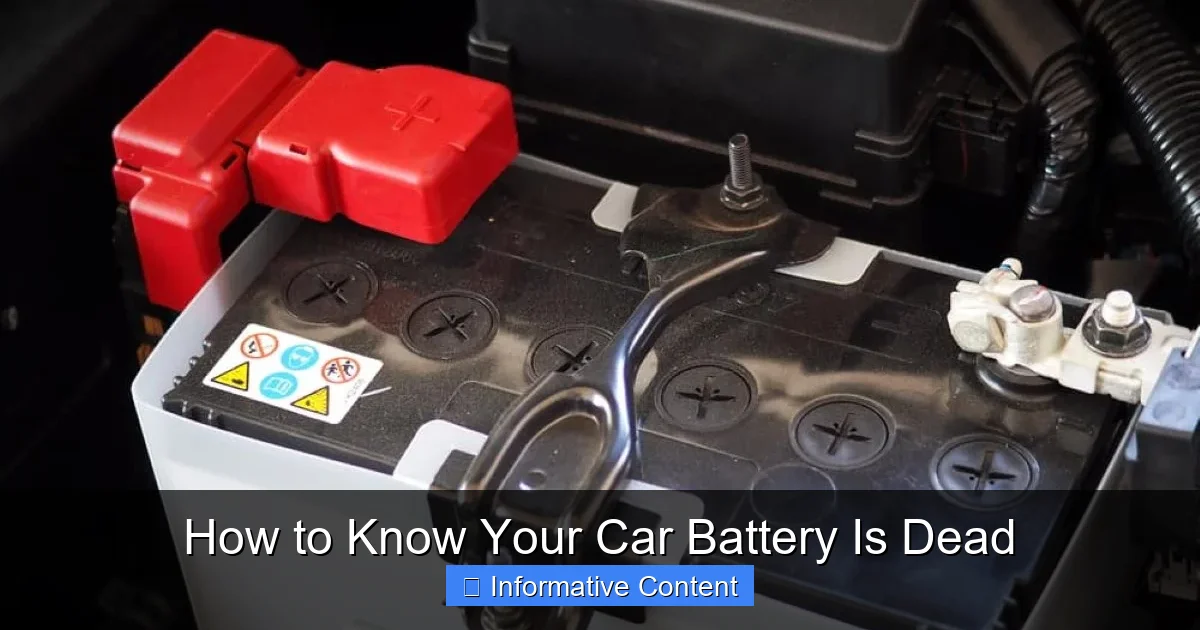
Visual guide about How to Know Your Car Battery Is Dead
Image source: citizenside.com
Dim Headlights (Especially at Idle)
Test your headlights. If they appear dim when the engine isn’t running, or if they significantly dim when you’re idling compared to when you’re driving (and the alternator is charging), it indicates a weak battery. The battery provides the initial power for accessories like headlights. If it’s struggling, those powerful bulbs will be among the first to show it. This is a subtle but important way how to know your car battery is dead or losing its charge.
Power Windows and Seats Moving Slowly
Modern cars rely heavily on electrical power for convenience features. If you notice your power windows rolling up or down at a snail’s pace, or your power seats adjusting much slower than usual, it’s a sign that the battery isn’t supplying enough juice. These components require a good amount of consistent power, and their sluggishness points to a general decline in battery performance. When you notice this, it’s a good time to consider how to know your car battery is dead and needs attention.
Radio and Infotainment System Issues
Your car’s radio, GPS, and other infotainment features are also powered by the electrical system. If these systems are acting erratically – flickering on and off, resetting, or failing to power up correctly – it could be due to a low battery voltage. While sometimes these are individual component failures, a widespread electrical issue affecting multiple systems often points back to the primary power source: the battery. These inconsistencies are helpful clues for how to know your car battery is dead.
Warning Lights on the Dashboard
Keep an eye on your dashboard warning lights. The “battery” or “charge” light, typically shaped like a battery icon, will illuminate if there’s a problem with the charging system – which often includes the battery itself. While this light can also indicate an alternator issue, if it comes on in conjunction with other symptoms mentioned, it strengthens the case for a dying battery. Some cars might also show general electrical system warnings. Pay attention to these indicators to know your car battery is dead or needs checking.
Visual and Olfactory Clues
Sometimes, the battery literally shows or smells its distress. A quick visual inspection can provide valuable insights into its health and help you determine how to know your car battery is dead.
Corroded Battery Terminals
Pop the hood and take a look at your battery terminals. If you see a white, powdery, or sometimes greenish substance built up around the positive (+) and negative (-) posts, that’s corrosion. While minor corrosion can be cleaned, excessive buildup can prevent a good electrical connection, impeding the flow of power from the battery to your car. This can mimic the symptoms of a dead battery, even if the battery itself isn’t completely flat. Regular cleaning is essential, but heavy corrosion might indicate a need for a new battery or professional inspection.
Swollen or Misshapen Battery Case
Examine the battery case itself. Is it bulging, swollen, or misshapen, especially on the sides or top? This is a serious sign of internal damage, often caused by extreme heat or overcharging, which leads to gas buildup inside the battery. A swollen battery is dangerous and likely on its way out (or already dead). Do not attempt to jump-start a visibly swollen battery, as it could explode. This is a very clear visual cue for how to know your car battery is dead and needs immediate replacement.
Sulfur or Rotten Egg Smell
If you detect a strong, pungent odor resembling rotten eggs or sulfur when you’re near the battery, it’s a critical warning sign. This smell indicates that the battery is leaking sulfuric acid or is being overcharged, causing the electrolyte solution to boil and release hydrogen sulfide gas. This situation is dangerous and means the battery is severely damaged. If you smell this, you’ve found a definitive way how to know your car battery is dead and potentially hazardous.
Leaking Battery Fluid
Look for any wet spots or residue on the battery tray or surrounding components. Leaking battery fluid (which is sulfuric acid) is a clear indication of a damaged battery. This can be due to cracks in the casing, overfilling, or internal pressure buildup. Leaking fluid can corrode other parts of your engine bay and is a definite sign that your battery is failing and needs to be replaced immediately. This is another unmistakable sign of how to know your car battery is dead.
Age and Maintenance History – A Key Indicator
Sometimes, the signs aren’t just about what’s happening now, but what has happened over time. A battery’s age and how it’s been treated are significant factors in its lifespan and can help you anticipate when to know your car battery is dead.
Battery Age Matters
Car batteries aren’t designed to last forever. On average, a car battery has a lifespan of 3 to 5 years, though this can vary depending on climate, driving habits, and battery type. If your battery is approaching or has exceeded this age range, it’s much more susceptible to failure, especially during extreme weather conditions (very hot or very cold). If your car is exhibiting any of the other symptoms and your battery is older than 3 years, age is a strong contributing factor to how to know your car battery is dead.
Lack of Regular Maintenance
While modern car batteries are often “maintenance-free,” older types or specific battery technologies might require occasional checks of electrolyte levels. Regardless of type, ensuring the terminals are clean and tight is basic maintenance. If your battery hasn’t been inspected or cleaned in a long time, corrosion can build up, or connections can loosen, leading to poor performance that mimics a dead battery. Neglecting maintenance shortens battery life and can lead to you wondering how to know your car battery is dead prematurely.
Frequent Short Trips or Extended Parking
Your car’s battery needs regular charging to stay healthy. This happens primarily when you drive. If your driving consists mainly of very short trips (under 20 minutes), the alternator might not have enough time to fully recharge the battery after starting the car. Over time, this can lead to a chronically undercharged battery. Similarly, leaving a car parked for extended periods without driving it (weeks or months) allows the battery to slowly self-discharge, eventually leading to a dead battery. Understanding your driving habits is key to knowing how to know your car battery is dead sooner rather than later.
Using Tools to Confirm a Dead Battery
While the visual and auditory cues are often sufficient, sometimes you want a definitive answer. There are a couple of tools that can help you confirm the diagnosis of how to know your car battery is dead.
Voltmeter Test (Measuring Voltage)
A simple and inexpensive tool, a multimeter (set to voltmeter function), can give you a precise reading of your battery’s charge. With the car off, connect the red lead to the positive terminal and the black lead to the negative terminal. A fully charged battery should read around 12.6 to 12.7 volts. A reading between 12.4 and 12.5 volts indicates it’s about 75% charged. Anything below 12.0 volts is considered discharged, and if it’s significantly lower, like 10-11 volts, it’s a strong indication of how to know your car battery is dead or critically low. If the reading is below 9.6 volts during cranking, the battery is almost certainly dead.
Battery Load Tester (More Accurate Diagnosis)
While a voltmeter tells you the static charge, a battery load tester goes a step further. It simulates the actual demands placed on the battery during starting. A load tester applies a controlled electrical load to the battery for a short period and measures how well the battery maintains its voltage under stress. This provides a much more accurate assessment of the battery’s health and its ability to deliver current, helping you determine how to know your car battery is dead or simply weak. Many auto parts stores offer free battery testing with a load tester.
Jump-Starting Attempt (A Temporary Solution)
If you suspect a dead battery, a jump-start can confirm it. If your car starts readily with a jump-start from another vehicle, it strongly indicates that your battery was indeed dead. However, if it immediately dies after the jump cables are removed, or struggles to start again shortly after, it confirms the battery isn’t holding a charge. Keep in mind that a jump-start is a temporary fix; it doesn’t solve the underlying problem of why the battery died. After a jump, it’s crucial to either drive the car for at least 30 minutes to allow the alternator to recharge the battery or have the battery professionally tested and potentially replaced. This practical test is a clear way how to know your car battery is dead.
Conclusion
Understanding how to know your car battery is dead empowers you to handle an unexpected breakdown with confidence and efficiency. From the dramatic silence of a completely flat battery to the subtle dimming of your headlights, recognizing these signs is key. Pay attention to those clicking sounds, the sluggish engine crank, and any unusual behavior from your car’s electrical system. Don’t forget to visually inspect your battery for corrosion, swelling, or leaks, and consider its age and maintenance history.
Armed with this knowledge, you’re better prepared to diagnose a dead battery yourself. Whether it means calling for roadside assistance, arranging a jump-start, or planning for a replacement, early detection can save you time, money, and a lot of frustration. So, the next time your car shows signs of struggling, you’ll know exactly what to look for and how to determine if it’s time for a new battery.
Frequently Asked Questions
How long does a typical car battery last?
Most car batteries have a lifespan of 3 to 5 years, depending on factors like climate, driving habits, and maintenance. Extreme temperatures (both hot and cold) can significantly shorten a battery’s life.
What does a car battery warning light on the dashboard mean?
The battery warning light, usually shaped like a battery icon, illuminates when there’s an issue with your vehicle’s charging system. This could mean a faulty alternator, a problem with the battery itself, or a loose connection.
Can cold weather make a battery appear dead?
Yes, cold weather significantly reduces a battery’s cranking power and its ability to hold a charge. A battery that works fine in warm weather might struggle or appear dead in freezing temperatures because its chemical reactions slow down.
Is it bad to repeatedly jump-start a car?
While an occasional jump-start isn’t harmful, repeatedly jump-starting your car can stress both the giving and receiving vehicles’ electrical systems. It also signals that your battery or charging system has a persistent problem that needs addressing.
How can I prevent my car battery from dying prematurely?
To extend battery life, drive regularly for at least 20-30 minutes, keep battery terminals clean, check electrolyte levels if it’s a serviceable battery, and consider a battery tender if you store your car for extended periods.
Should I replace my battery if it keeps dying?
If your battery repeatedly dies even after being jump-started or recharged, it’s a strong indication that it can no longer hold a charge effectively. In such cases, replacing the battery is usually the most reliable solution to avoid further breakdowns.