
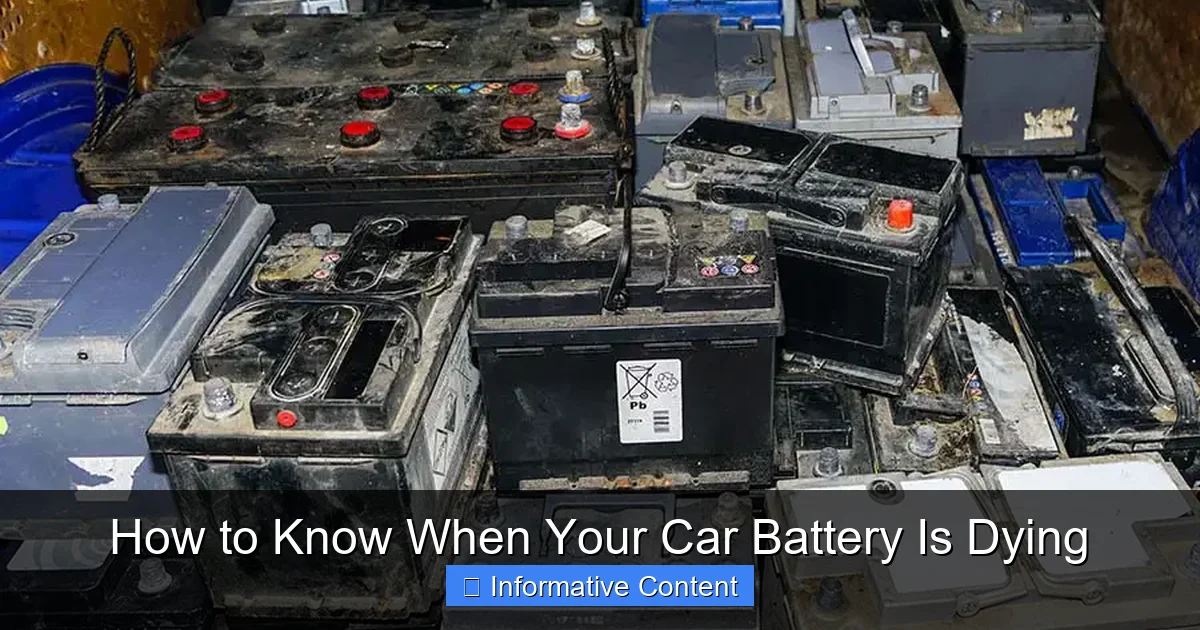
Knowing how to know when your car battery is dying can save you from unexpected breakdowns and stressful situations. Pay close attention to tell-tale signs such as slow engine cranking, dim headlights, and unusual electrical issues, as these are primary indicators. Regularly inspecting your battery for physical signs like corrosion or swelling, and conducting simple voltage tests, can help you predict and address a dying car battery before it leaves you stranded on the roadside.
How to Know When Your Car Battery Is Dying
Imagine this: you’re already running a few minutes late for an important appointment. You hop into your car, turn the key, and… nothing. Or maybe a slow, sad groan from the engine before it finally gives up. It’s a frustrating, often unexpected moment that many drivers experience. A dead car battery is more than just an inconvenience; it can derail your day and leave you feeling stranded.
But what if you didn’t have to be caught off guard? What if you could spot the warning signs and take action *before* your battery completely gives up the ghost? The good news is, your car often sends out subtle — and sometimes not-so-subtle — signals when its power source is nearing the end of its life. Learning how to identify these indicators is key to proactive maintenance and avoiding those dreaded no-start scenarios.
In this comprehensive guide, we’re going to walk you through everything you need to know about how to know when your car battery is dying. We’ll cover common symptoms, physical clues, simple tests you can perform, and even discuss factors that influence battery life. By the end, you’ll be equipped with the knowledge to tell if your battery is on its last legs and what steps to take next. So, let’s dive in and empower you to keep your vehicle running smoothly!
Key Takeaways
- Slow Engine Cranking: This is often the most common and earliest sign. If your engine turns over sluggishly or struggles to start, your car battery is dying.
- Dim or Flickering Lights: Weak headlights, interior lights, or dashboard lights, especially when starting the car, indicate a lack of sufficient power from the battery.
- Electrical System Malfunctions: Problems with power windows, seat warmers, radio, or charging ports can signal a failing battery struggling to power all car components.
- Dashboard Warning Lights: A “battery” or “check engine” light illuminating on your dashboard can be a direct alert that your charging system or battery needs attention.
- Physical Battery Signs: Inspect your battery for corrosion around the terminals, a swollen or bulging case, or a foul, rotten egg smell, all of which point to an imminent battery failure.
- Battery Age: Car batteries typically last 3-5 years. If yours is older, it’s naturally more prone to failure, making vigilance even more important.
- Voltage Testing: Use a multimeter to check your battery’s voltage. A reading consistently below 12.4V (when the car is off) suggests a weak or dying car battery.
Quick Answers to Common Questions
How long does a car battery typically last?
Most car batteries last between 3 to 5 years. However, this lifespan can be shortened by extreme temperatures, frequent short trips, and poor maintenance habits.
Can a dying car battery affect other electrical components?
Yes, a dying battery can lead to dim headlights, slow power windows, a malfunctioning radio, and other electrical issues because it struggles to provide consistent voltage to all vehicle systems.
Is a slow crank always a sign of a dying battery?
While a slow crank is a primary indicator, it could also be caused by a faulty starter motor or alternator. However, a dying battery is the most common culprit, so it’s the first thing to check.
What should I do if I smell rotten eggs coming from my battery?
If you smell a strong rotten egg odor, which is hydrogen sulfide gas, it indicates a serious battery issue like overheating or leaking. You should stop driving, avoid the area around the battery, and have it inspected by a professional immediately as it can be dangerous.
Can I test my car battery’s health at home?
Yes, you can perform a simple voltage test using a multimeter. A healthy battery should read around 12.6-12.8 volts when the car is off. Readings below 12.4 volts suggest a weak or dying battery.
📑 Table of Contents
The Obvious Red Flags: Slow Cranking and Starting Troubles
The most common and perhaps the most undeniable sign that your car battery is dying is when your vehicle struggles to start. This isn’t just a slight delay; it’s a noticeable hesitation, a weakness in the engine’s attempt to turn over.
Grinding or Clicking Sounds
When you turn the key or push the start button, do you hear a slow, labored cranking sound? Does the engine struggle to catch, taking several seconds longer than usual? This “slow crank” is a classic symptom of a battery that can no longer deliver the full burst of power needed to ignite the engine efficiently. Think of it like trying to run a marathon on an empty stomach – you might start, but you won’t have the energy to keep going strongly.
Sometimes, instead of a slow crank, you might hear a rapid clicking sound, or even a single click, followed by silence. This often happens when the battery has so little charge left that it can’t even engage the starter motor properly. The clicking is usually the starter solenoid attempting to do its job but failing due to insufficient power. If you hear these sounds, it’s a very strong indicator that your car battery is dying, or might already be dead.
Complete Silence or Dashboard Lights Only
Another common scenario is when you turn the key and get absolutely nothing – no cranking, no clicks, just silence. However, you might notice that the dashboard lights still come on, or the radio might still work. This can be confusing, as it seems like *some* power is available. The reality is that the battery has just enough juice for low-power accessories but not nearly enough to power the high-demand starter motor. This is a clear sign that your car battery is dying and needs immediate attention. If even the dashboard lights fail to illuminate, your battery is likely completely drained.
Subtler Electrical Symptoms: Beyond Just Starting
A dying car battery doesn’t always announce its demise with a dramatic no-start. Sometimes, it shows its weakness through other electrical components in your vehicle. These signs can be easy to overlook, but paying attention to them can provide crucial early warnings.
Dim or Flickering Lights
Take a moment to observe your car’s lights, especially when you’re about to start the engine. Are your headlights noticeably dimmer than usual? Do your interior lights or dashboard lights seem to flicker or lose intensity when the car is off or when you’re attempting to start it? This is a strong indicator that the battery isn’t providing a consistent, full voltage. As the battery weakens, it struggles to maintain adequate power to all electrical systems, making lights appear dim or unstable.
Failing Electrical Accessories
Your car’s battery powers more than just the engine starter. It also supplies electricity to a myriad of accessories. If you notice that your power windows are moving slower than usual, your seat heaters aren’t getting as warm, or your radio keeps cutting out or losing presets, these could all be signs of a weakening battery. Even USB charging ports might not deliver a consistent charge to your devices. While these issues could sometimes point to other electrical problems, when combined with other symptoms, they strongly suggest your car battery is dying.
Dashboard Warning Lights
Modern cars are equipped with sophisticated diagnostic systems designed to alert you to potential issues. If you see a battery-shaped warning light illuminate on your dashboard, it’s a direct signal that there’s a problem with your battery or the car’s charging system. Sometimes, a “check engine” light might also come on, which, while generic, can occasionally be triggered by a fault in the charging system or a weak battery. Don’t ignore these lights; they are your car’s way of telling you that something needs attention. It’s an important piece of information in understanding how to know when your car battery is dying.
Physical Clues: What Your Battery Looks Like and Smells Like
Sometimes, the best way to understand if your car battery is dying is to simply look at it. While you should always exercise caution around car batteries, a visual inspection can reveal significant warning signs.
Corrosion on Terminals
Pop open your hood and take a look at your battery terminals (the posts where the cables connect). Do you see a white, blue, or green powdery substance built up around them? This is corrosion, and while a small amount might be normal over time, excessive buildup can indicate a few things. It can suggest a poor connection, which hinders the battery’s ability to transfer power effectively. More importantly, it can also be a sign of a leaking battery, which means the internal chemicals are escaping, pointing to a dying or faulty battery.
Swollen or Bulging Battery Case
Carefully observe the sides and top of your battery. Does the battery case appear swollen, bulging, or distorted? This is a serious sign of internal damage, often caused by excessive heat or overcharging. When a battery swells, its internal components are likely compromised, meaning it can no longer hold a charge efficiently and is at high risk of failure. A swollen battery is a critical indicator that your car battery is dying and needs to be replaced immediately.
Foul, Rotten Egg Smell
If you notice a strong, pungent odor resembling rotten eggs when you open your car’s hood, this is a very concerning sign. This smell is hydrogen sulfide gas, which is released when the battery’s electrolyte fluid is overheating, leaking, or the battery is overcharging. This often happens when the battery is internally damaged or dying. This smell is not only unpleasant but can also be a sign of a dangerous situation, potentially leading to a battery explosion if not addressed. If you smell this, get your battery checked by a professional right away.
Understanding Battery Age and Performance
While symptoms are crucial, understanding the typical lifespan of a car battery and factors that affect it can give you a heads-up on when to expect potential issues.
The Typical Lifespan
Most car batteries are designed to last between three to five years under normal operating conditions. However, this is just an average. Some might fail sooner, while others might last a bit longer. If your battery is approaching or has exceeded this age range, it’s wise to be more vigilant about the signs discussed, as it’s naturally more susceptible to failure. Knowing the age of your battery is a vital part of knowing how to know when your car battery is dying.
Impact of Climate and Driving Habits
Extreme temperatures, both hot and cold, significantly impact battery life. Hot climates can accelerate the evaporation of battery fluid and lead to internal corrosion, shortening its lifespan. Cold weather, on the other hand, reduces the battery’s capacity and makes it harder for the engine to start, placing more strain on an already weak battery.
Your driving habits also play a role. Frequent short trips, where the engine doesn’t run long enough to fully recharge the battery, can gradually deplete its charge. Conversely, leaving your car unused for extended periods can also lead to self-discharge and battery degradation. If you fall into either of these categories, your battery might experience a shorter lifespan.
Proactive Testing: Confirming Your Suspicions
If you’ve noticed some of the signs mentioned above, or if your battery is simply getting old, you don’t have to wait for it to die completely. You can perform a few simple tests to confirm if your car battery is dying.
The Simple Voltage Test (Multimeter)
A multimeter is a handy tool that allows you to check your battery’s voltage. This is a straightforward test you can do at home.
- Ensure your car has been off for at least a few hours (ideally overnight) to get an accurate “resting voltage.”
- Set your multimeter to DC volts (VDC) and a range of 20V.
- Connect the red (positive) probe to the positive (+) battery terminal and the black (negative) probe to the negative (-) battery terminal.
- Read the display. A healthy, fully charged battery should read around 12.6 to 12.8 volts. A reading between 12.4 and 12.5 volts suggests a partial charge, but anything consistently below 12.4 volts indicates a weak or dying battery that likely won’t hold a full charge.
While this test is good for resting voltage, it doesn’t show how well the battery performs under load.
Professional Load Testing
For a more definitive answer, especially if your voltage test shows borderline results, a professional load test is recommended. Most auto parts stores offer this service for free. A load tester simulates the stress placed on the battery during startup. It applies a controlled load to the battery and measures its ability to maintain voltage. If the voltage drops significantly during the test, it confirms that your car battery is dying and needs replacement. This is the most accurate way to assess the battery’s health and its ability to deliver the necessary current for your vehicle.
What to Do When Your Battery is Dying
Once you’ve confirmed that your car battery is dying, you have a few options. Acting quickly can save you from a major headache.
Jump-Starting Safely
If your battery dies completely, a jump start can get you going temporarily. Always follow proper jump-starting procedures to avoid damage to your vehicle or injury.
- Park a good Samaritan’s car (with a healthy battery) next to yours, ensuring both engines are off.
- Connect one end of the red jumper cable to the positive (+) terminal of the dead battery.
- Connect the other end of the red cable to the positive (+) terminal of the good battery.
- Connect one end of the black jumper cable to the negative (-) terminal of the good battery.
- Connect the other end of the black cable to an unpainted metal surface on your car’s engine block, away from the battery.
- Start the good car and let it run for a few minutes.
- Attempt to start your car. If it starts, let it run for at least 15-20 minutes to allow the alternator to recharge the battery.
Remember, a jump start is a temporary fix. If your car battery is dying, it will likely happen again soon.
When to Replace
If your battery is showing persistent signs of weakness, failing voltage tests, or is simply past its typical lifespan, replacement is the best course of action. Don’t wait for it to completely strand you. Most auto parts stores can help you find the correct battery for your vehicle and often offer installation services. Consider investing in a high-quality battery, as it can pay off in reliability and longevity.
Preventative Maintenance Tips
To extend the life of your new battery and keep your current one healthier for longer, consider these tips:
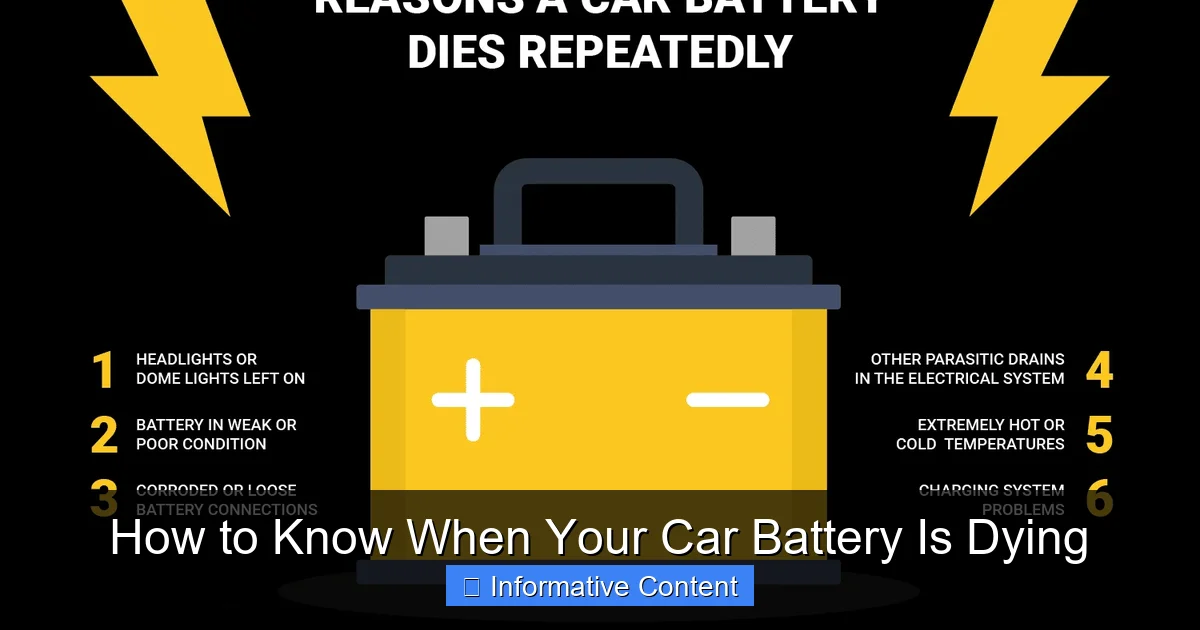
Visual guide about How to Know When Your Car Battery Is Dying
Image source: lifewire.com
- Regular Cleaning: Keep battery terminals clean and free of corrosion. You can use a wire brush and a mixture of baking soda and water to clean off any buildup.
- Check Connections: Ensure battery cables are tightly secured to the terminals. Loose connections can lead to poor performance and charging issues.
- Limit Short Trips: If possible, take longer drives periodically to allow your alternator to fully recharge the battery.
- Turn Off Accessories: Always turn off headlights, interior lights, and the radio before leaving your car to prevent accidental draining.
- Use a Battery Maintainer: If you store your car for extended periods, a trickle charger or battery maintainer can keep the battery topped up and prevent self-discharge.
- Routine Inspections: Include a battery check in your regular vehicle maintenance schedule.
Learning how to know when your car battery is dying is an essential part of being a responsible car owner. By paying attention to the various signals your car sends, from slow cranking to physical changes and electrical glitches, you can often predict a battery failure before it leaves you stranded. Don’t ignore these warning signs! Proactive testing and timely replacement can save you time, stress, and potentially money in the long run. Keep these tips in mind, and you’ll be well-prepared to keep your car starting strong every time.
Frequently Asked Questions
How often should I check my car battery?
It’s a good idea to visually inspect your battery and its terminals for corrosion or damage every few months, especially before extreme weather seasons. Getting its voltage and load tested annually by a professional is also a smart preventative measure, particularly if your battery is older than three years.
Can cold weather kill a car battery faster?
Cold weather significantly impacts battery performance, reducing its capacity and making it harder for the engine to start. While cold doesn’t “kill” a healthy battery faster, it certainly exposes weaknesses in an already dying car battery, making it more likely to fail during winter months.
Why do my car’s electrical components seem fine, but it won’t start?
If your radio and lights work but the engine won’t crank, it usually means your battery has enough power for low-drain accessories but not enough high-amperage current needed to engage the starter motor. This is a classic sign of a dying car battery that can’t handle the heavy load of starting the engine.
Is it safe to drive with a battery warning light on?
No, it’s generally not safe to drive with a battery warning light illuminated for an extended period. This light indicates a problem with the charging system (battery or alternator). If your alternator isn’t charging, your car will eventually run solely on battery power until it dies, potentially leaving you stranded.
What causes battery corrosion?
Corrosion on battery terminals is often caused by hydrogen gas escaping from the battery vents, reacting with the metal terminals and surrounding air. It can also be a sign of overcharging or a leaky battery. While some corrosion is normal over time, excessive buildup can hinder electrical flow and signals a potential issue with your car battery.
Can short trips damage my car battery?
Yes, frequent short trips can be detrimental to your car battery’s lifespan. The alternator needs a sufficient amount of time to fully recharge the battery after starting the engine. If your trips are consistently too short, the battery never gets a full charge, leading to gradual depletion and premature failure.