

Knowing if your car battery is dead can save you a lot of hassle and time. Look out for clicking noises, dim lights, or a completely unresponsive vehicle. This guide will walk you through the visual checks, easy tests with tools like a voltmeter, and what to do next, ensuring you’re prepared for a flat battery situation.
There are few things more frustrating than settling into your car, turning the key, and being met with… silence. Or maybe a sad little click. Or perhaps your lights are as dim as a distant memory. Whatever the scenario, the immediate question that pops into your head is, “Is my car battery dead?” It’s a common problem, one that almost every driver encounters at some point.
A dead car battery isn’t just an inconvenience; it can throw a wrench in your entire day, making you late for work, missing an important appointment, or stranding you far from home. But how do you really know if your car battery is dead, or if it’s something else entirely? Pinpointing the issue quickly can save you time, money, and a lot of headaches. This comprehensive guide will walk you through all the signs, tests, and next steps, helping you become a pro at diagnosing a flat battery.
Understanding the indicators of a dead battery isn’t just about getting your car started today; it’s about empowering you with knowledge for future situations. We’ll cover everything from the sounds your car makes (or doesn’t make) to simple visual checks and even how to use basic tools for testing. By the end, you’ll have a clear picture of how to know if your car battery is dead, what caused it, and what your options are to get back on the road.
Key Takeaways
- Listen for Clicking Sounds: If you turn the key and hear rapid clicking but no engine crank, it’s a strong indicator of a dead or severely discharged battery.
- Observe Your Lights: Dim headlights, interior lights, or dashboard warning lights that are unusually faint or don’t turn on at all, often signal a lack of power from the battery.
- Perform a Visual Inspection: Check the battery for corrosion on terminals, any signs of swelling or cracking, and listen for a rotten egg smell, which can indicate internal damage.
- Test with a Voltmeter: A simple voltmeter can measure the battery’s static voltage; a reading below 12.4 volts suggests a discharged or failing battery.
- Understand Common Drains: Leaving lights on, a faulty alternator, or extreme temperatures are frequent culprits for battery drain, not just old age.
- Know Your Next Steps: Be prepared to jump-start the car, call for roadside assistance, or plan for a battery replacement if tests confirm it’s dead.
- Practice Preventive Maintenance: Regularly cleaning terminals, checking fluid levels (if applicable), and avoiding short trips can extend battery life and prevent unexpected failures.
Quick Answers to Common Questions
Can a dead battery affect other electronics in my car?
Yes, a dead battery means no power to any electrical component, so your car’s radio, power windows, central locking, and even dashboard lights will not work or will operate very weakly.
How long does it take to charge a dead car battery?
If you’re jump-starting, you should drive for at least 30 minutes to allow the alternator to recharge it sufficiently. With a dedicated battery charger, it can take anywhere from a few hours to a full day, depending on the charger’s amperage and the battery’s state.
Can I jump-start my car multiple times if the battery keeps dying?
While you *can* jump-start multiple times, it’s not a solution. If your battery repeatedly dies, it indicates a deeper problem like a failing battery, a faulty alternator, or a parasitic drain that needs to be addressed.
Will my car battery die faster in winter?
Yes, cold weather significantly reduces a battery’s cranking power and capacity. It also makes engine oil thicker, requiring more effort to start the engine, thus making your battery work harder in winter.
Is it safe to drive with a dead battery if it’s been jump-started?
Once jump-started, you can drive, but your alternator will be working hard to recharge the battery. If the battery is truly dead and won’t hold a charge, it could die again, possibly stranding you. It’s best to get it checked and possibly replaced as soon as possible.
📑 Table of Contents
The Tell-Tale Signs: What Happens When Your Battery Dies?
Often, your car will give you hints before it completely conks out. Recognizing these early warning signs can help you address the issue before you’re left stranded. Here’s what to look, listen, and feel for when you suspect your car battery is dead.
The Infamous Clicking Sound and No Crank
This is perhaps the most classic symptom. You turn the key, and instead of the reassuring roar of the engine, you hear a rapid-fire clicking sound. This sound typically comes from the starter solenoid trying to engage but not having enough power to turn the engine over. It’s a very strong indicator that your car battery is dead or severely discharged. The starter needs a significant surge of power to operate, and if the battery can’t provide it, you get the click, click, click.
Dim or Non-Existent Lights
Before you even try to start the engine, pay attention to your car’s lights. Are your headlights unusually dim? Do the interior dome lights barely glow? Does the dashboard light up feebly, or not at all? If the lights are weak or completely out, it’s a clear sign of low battery power. Even if your lights come on, try to start the car. If the lights then dim significantly or go out, it confirms the battery is struggling to provide the necessary current.
A Slow or Labored Crank
Sometimes, your car might attempt to start, but it sounds like it’s struggling. The engine turns over very slowly, making a “rrr…rrr…rrr” sound rather than a quick “vroom.” This sluggishness means the battery has just enough juice to engage the starter motor, but not enough to spin the engine at the speed required for ignition. This is a common pre-cursor to a completely dead battery, signaling it’s on its last legs.
No Power At All: The Silent Treatment
In the worst-case scenario, you might get absolutely no response when you turn the key. No lights, no clicking, no dashboard indicators – nothing. It’s like the car has completely lost all electrical power. This usually means the battery is entirely flat, or there’s a serious electrical disconnect, like a completely corroded terminal or a broken cable. If you experience this, it’s a pretty definitive answer to how to know if your car battery is dead.
Warning Lights on the Dashboard
Modern cars are equipped with a battery warning light (often shaped like a battery icon) that illuminates if there’s an issue with the charging system or the battery itself. While this light usually comes on when there’s an issue with the alternator, it can also indicate a battery problem, especially if it stays on while driving or appears alongside other signs of a weak battery.
Visual Inspection: A First Look Under the Hood
Sometimes, your battery will give you visual cues about its health. Before you even think about starting the car or grabbing a multimeter, take a quick peek under the hood. Safety first: always ensure your car is off and cool before touching anything under the hood.
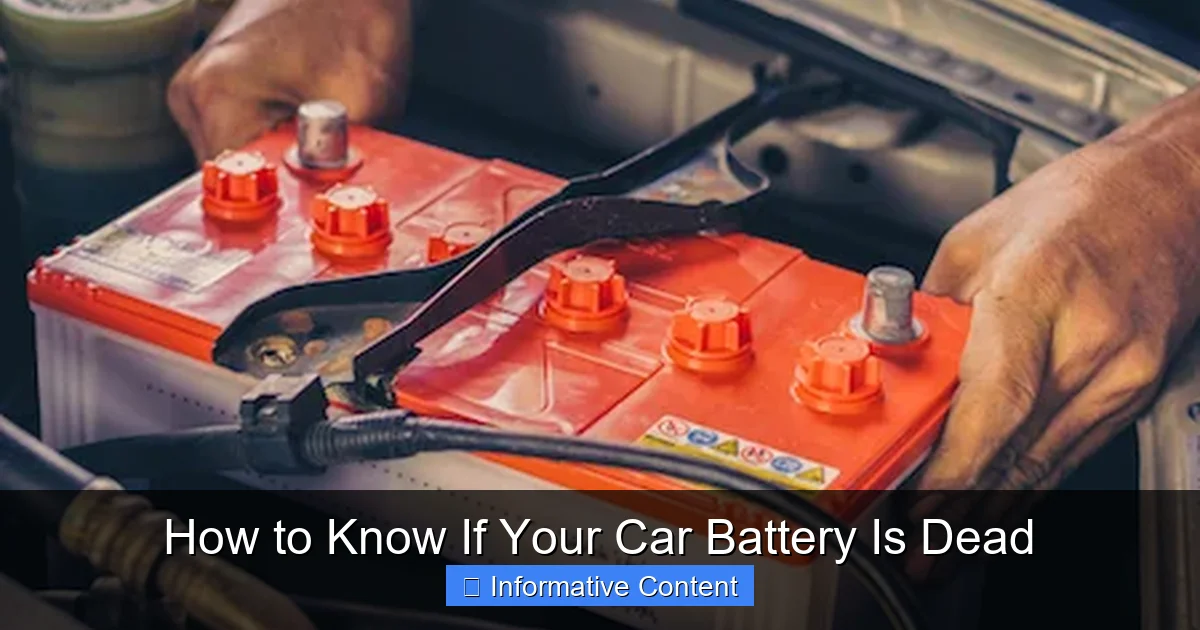
Visual guide about How to Know If Your Car Battery Is Dead
Image source: denverexpresscare.com
Corrosion on Battery Terminals
When you open your hood, locate the battery. Check the positive (+) and negative (-) terminals. Do you see a fluffy, powdery, white, blue, or green substance around them? That’s corrosion. While minor corrosion can be cleaned, excessive buildup can prevent the battery from delivering power effectively to the car’s electrical system. This can make it seem like your car battery is dead, even if it has some charge left. It obstructs the flow of electricity, making it harder for your engine to start.
Bulging or Cracked Battery Case
Inspect the battery case itself. Does it look swollen, bulging, or cracked? Batteries can swell due to extreme heat or cold, or from overcharging, which causes gases to build up inside. A cracked case could mean fluid leakage (which is highly corrosive and dangerous) and indicates severe internal damage. If your battery looks anything but flat and rectangular, it’s likely compromised and needs immediate attention.
A Strange Odor: The Smell of Rotten Eggs
Do you smell something like rotten eggs or sulfur when you’re near the battery? This distinctive odor indicates that the battery is leaking sulfuric acid or has been overcharged, causing the electrolyte to boil and release hydrogen sulfide gas. This is a serious sign of internal battery damage and a definite indicator that the battery needs replacement. Such a smell is not only unpleasant but also points to a potentially hazardous situation.
Loose Battery Cables
While checking the terminals, gently try to wiggle the battery cables. If they are loose, they might not be making a proper connection, which can mimic the symptoms of a dead battery. Sometimes, simply tightening these connections can resolve the issue. Always wear gloves and be careful when handling battery terminals.
Testing Your Battery: Tools and Techniques
Visual inspections and listening to your car’s symptoms are great first steps, but to truly know if your car battery is dead, you might need to perform a quick test. These tests provide concrete data about your battery’s health.
The Voltmeter/Multimeter Test (Static Voltage)
A simple and affordable tool, a voltmeter (or multimeter set to DC voltage) is your best friend for battery diagnostics.
- Ensure the car is off: For at least 15-30 minutes if it was recently running, to allow the battery to normalize.
- Connect the leads: Attach the red (positive) lead of the voltmeter to the positive (+) battery terminal and the black (negative) lead to the negative (-) battery terminal.
- Read the voltage:
- 12.6 volts or higher: Your battery is fully charged and in good health.
- 12.4 – 12.6 volts: Good charge, but not 100%.
- 12.0 – 12.4 volts: Discharged. Your battery needs charging.
- Below 12.0 volts: Severely discharged or potentially dead. If after charging it still reads this low, it’s likely dead.
Remember, this is a “static” voltage test. It tells you the battery’s charge level, but not necessarily its ability to deliver current under load. A battery can show 12.6 volts but still fail under the strain of starting the engine if its internal resistance is too high.
Load Tester (More Accurate)
For a more definitive answer on how to know if your car battery is dead, a battery load tester is ideal. This tool simulates the load placed on a battery during starting.
- Connect the tester: Follow the manufacturer’s instructions, connecting the leads to the appropriate battery terminals.
- Apply the load: The tester will draw a significant amount of current from the battery for a short period.
- Interpret the results: A healthy battery will maintain a voltage above 9.6 volts during the load test. If the voltage drops significantly below this threshold, it indicates the battery is weak and likely needs replacement, even if its static voltage reading was acceptable.
Load testers are more expensive than voltmeters but provide a much clearer picture of a battery’s true health and capacity.
Battery Hydrometer (For Flooded Lead-Acid Batteries)
If you have a traditional flooded lead-acid battery with removable caps, a hydrometer can measure the specific gravity of the electrolyte in each cell. This tells you the state of charge of each individual cell.
- Remove cell caps: Carefully remove the caps to expose the electrolyte.
- Draw electrolyte: Use the hydrometer to draw a small amount of electrolyte into its chamber.
- Read the float: The level at which the float settles indicates the specific gravity. A reading of 1.265 or higher typically means a fully charged cell. Significant differences between cells (e.g., one cell much lower than others) indicate internal damage.
Caution: Battery acid is corrosive. Wear eye protection and gloves, and avoid skin contact. This test is not for sealed, AGM, or Gel batteries.
Professional Diagnostic Check
When in doubt, or if you don’t have the tools, the best way to know if your car battery is dead is to take it to a professional. Most auto parts stores offer free battery testing. They use sophisticated diagnostic tools that can assess the battery’s cold cranking amps (CCA), internal resistance, and overall health, giving you a definitive answer and often suggesting whether a simple charge or a full replacement is needed.
Understanding What Drains a Battery (Beyond Old Age)
While an old battery eventually dies due to chemical degradation, many factors can unexpectedly drain a perfectly good battery. Understanding these can help you prevent future issues.
Leaving Lights On or Doors Ajar
This is the classic, most common culprit. Forgetting to turn off your headlights, interior dome lights, or even leaving a door slightly ajar (which keeps the interior lights on) can completely drain a battery overnight. Modern cars often have features to prevent this, but it still happens.
Parasitic Drain
A parasitic drain occurs when electrical components continue to draw power from the battery even when the car is turned off. This could be due to a faulty stereo, an alarm system, a stuck relay, a short circuit, or a malfunctioning electronic module. Diagnosing a parasitic drain can be tricky and often requires professional help.
Extreme Temperatures
Both extreme heat and extreme cold can significantly impact battery life and performance.
- Heat: High temperatures can accelerate the chemical reactions inside the battery, leading to faster degradation and evaporation of electrolyte.
- Cold: Freezing temperatures reduce the battery’s capacity to produce power and thicken the oil in the engine, making it harder to crank. A battery that’s perfectly fine in summer might fail to start your car in winter.
Faulty Alternator
The alternator is responsible for charging your car battery while the engine is running. If your alternator is failing, it won’t properly recharge the battery, leading to a gradual drain over time. Eventually, the battery will run out of juice, leaving you stranded. Often, a failing alternator will trigger a battery warning light on your dashboard.
Frequent Short Trips
If you primarily drive short distances, your alternator might not have enough time to fully recharge the battery after each start-up. Over time, this cumulative undercharging can lead to a discharged battery. Batteries need sustained driving to regain their full charge.
What to Do When Your Battery is Dead (Next Steps)
So, you’ve gone through the signs, perhaps run a test, and you know your car battery is dead. Now what? Don’t panic; you have several options.
Jump-Starting Your Car
This is often the quickest solution if your battery is simply discharged and not completely dead. You’ll need jumper cables and another running vehicle (or a portable jump starter).
- Position vehicles: Park the working car close enough so the jumper cables can reach, but don’t let them touch. Ensure both vehicles are off.
- Connect positive: Attach one red (positive) clamp to the positive (+) terminal of the dead battery.
- Connect other positive: Attach the other red (positive) clamp to the positive (+) terminal of the good battery.
- Connect negative: Attach one black (negative) clamp to the negative (-) terminal of the good battery.
- Connect other negative: Attach the other black (negative) clamp to an unpainted metal surface on the engine block or frame of the dead car, away from the battery.
- Start the good car: Let it run for a few minutes.
- Start the dead car: Try to start your car. If it starts, let both cars run for about 10-15 minutes to allow your battery to charge a bit.
- Disconnect in reverse order: Remove the cables carefully, starting with the negative clamp from your car.
After a jump start, drive your car for at least 30 minutes to allow the alternator to recharge the battery. If it doesn’t start again later, the battery likely needs replacement.
Calling Roadside Assistance
If you’re uncomfortable with jump-starting, don’t have another vehicle, or suspect a more serious issue, calling roadside assistance is a smart move. Services like AAA or your car’s manufacturer assistance program can send a technician to jump-start your car or tow it to a service center.
Replacing the Battery
If your battery is old (typically 3-5 years) or if tests confirm it’s failing, replacement is the ultimate solution.
- Identify battery specs: Check your owner’s manual for the correct battery size, type (e.g., AGM, flooded), and Cold Cranking Amps (CCA) rating.
- Purchase a new battery: You can buy one from an auto parts store, dealership, or even some large retail chains.
- Installation (DIY or Professional):
- DIY: Disconnect the negative terminal first, then the positive. Remove the old battery. Clean the battery tray and terminals. Install the new battery, connecting the positive terminal first, then the negative.
- Professional: Most auto parts stores will install a new battery for free or a small fee with purchase. This is recommended if you’re unsure or prefer not to handle the heavy battery and corrosive materials.
Proper disposal of the old battery is important. Most places that sell batteries will also recycle your old one.
Preventive Maintenance Tips
To avoid asking yourself how to know if your car battery is dead in the future, follow these simple maintenance tips:
- Regularly clean terminals: Use a battery terminal brush and a baking soda/water solution to remove corrosion.
- Check fluid levels: For flooded batteries, ensure the electrolyte levels are appropriate (use distilled water if topping up).
- Keep connections tight: Ensure battery cables are securely fastened.
- Avoid short trips: If you mostly drive short distances, consider taking a longer drive once a week to allow the battery to fully charge.
- Use a battery tender: If your car sits for extended periods, a battery tender (trickle charger) can keep it topped up.
- Test annually: Have your battery tested professionally at least once a year, especially before winter.
Conclusion
Dealing with a dead car battery is never fun, but by understanding the signs and knowing how to test it, you can handle the situation with confidence. From the tell-tale clicking sound to dim lights, visual cues like corrosion, and the critical readings from a voltmeter, you now have the knowledge to accurately know if your car battery is dead. More importantly, you’re equipped with practical steps to take, whether it’s a quick jump-start or a full replacement.
Remember, prevention is always better than cure. Regular maintenance and being aware of the factors that can drain your battery will significantly reduce your chances of being stranded. Keep this guide handy, and you’ll be well-prepared for any battery-related surprises that come your way, ensuring your drives are smooth and uninterrupted.
🎥 Related Video: DEAD BAD CAR BATTERY SYMPTOMS – How To Tell If Your Battery is Dead
📺 YOUCANIC
Buy YOUCANIC Pro Scanner https://www.youcanic.com/scanner/ Get Factory Service Repair Manuals & Specs …
Frequently Asked Questions
How old does a car battery usually get before it dies?
Most car batteries last between 3 to 5 years, though this can vary significantly based on climate, driving habits, and maintenance. Extreme temperatures and frequent short trips tend to shorten a battery’s lifespan.
Can a fully discharged battery be recharged?
Yes, most fully discharged batteries can be recharged, especially if the discharge was due to leaving lights on. However, if a battery has been completely flat for an extended period, it may suffer permanent damage and might not hold a charge effectively even after recharging.
What is “cold cranking amps” (CCA) and why does it matter?
Cold Cranking Amps (CCA) is a rating used to define a battery’s ability to start an engine in cold temperatures. It’s the number of amperes a battery can deliver for 30 seconds at 0°F (-18°C) while maintaining at least 7.2 volts. A higher CCA rating means better starting power in cold weather.
My car won’t start, but the lights and radio work. Is it still the battery?
It might not be the battery alone. If lights and accessories work but the engine won’t crank, it could point to a problem with the starter motor, the ignition switch, or even a transmission interlock switch. While the battery might be weak, it’s likely not completely dead in this scenario.
How can I prevent my car battery from dying unexpectedly?
Regular maintenance is key! Keep your battery terminals clean and tight, ensure fluid levels are correct (for flooded batteries), avoid leaving lights on, and consider a battery tender if your car sits for long periods. Getting your battery tested annually can also catch issues before they become emergencies.
Is there a difference between a “dead” battery and a “flat” battery?
Often, these terms are used interchangeably. However, a “flat” battery typically means it’s discharged and can be recharged. A “dead” battery usually implies it’s beyond recharging, meaning it has internal damage, has lost its capacity, or is at the end of its lifespan and needs to be replaced.