
Don’t get stranded! Learning how to know if car battery needs to be replaced is crucial for reliable driving. Look for tell-tale signs like slow engine cranking, dim lights, or a dashboard warning light. Regular visual inspections and simple tests with a voltmeter can help confirm a failing battery’s condition, ensuring you replace it proactively to avoid unexpected breakdowns and keep your journeys smooth and worry-free.
How to Know If Car Battery Needs to Be Replaced
There’s hardly a more frustrating feeling for a driver than turning the key or pushing the start button, only to be met with a pathetic click or deafening silence. Your car battery, though often out of sight, is the unsung hero that brings your vehicle to life. It powers everything from the starter motor to your dashboard lights and radio, making it absolutely essential for a smooth journey.
Most of us don’t think about our car battery until it’s too late – when we’re stranded in a parking lot or running late for an important appointment. But what if you could spot the warning signs beforehand? What if you knew exactly how to know if car battery needs to be replaced before it leaves you high and dry? The good news is, your car usually gives you clues, and with a little knowledge, you can become adept at recognizing them. This guide will walk you through everything you need to know, from common symptoms to simple tests, empowering you to make an informed decision about your battery’s health.
Understanding when your car battery is on its last legs isn’t just about convenience; it’s also about safety and preventing unexpected repair costs. A proactive approach can save you a lot of hassle and potential danger. Let’s dive in and learn how to identify those tell-tale signs that scream, “My car battery needs to be replaced!”
Key Takeaways
- Average Lifespan: Most car batteries last between 3 to 5 years. Factors like climate, driving habits, and maintenance can significantly affect this duration.
- Common Warning Signs: Be alert for a slow engine crank, dim headlights or interior lights, clicking sounds when trying to start, or the illumination of your car’s battery warning light on the dashboard.
- Visible Deterioration: Physically inspect your battery for signs like corrosion on the terminals, a bloated or distorted battery case, or a distinct rotten egg smell, which all signal serious internal issues.
- Test Its Health: Use a simple voltmeter to check the battery’s voltage (a healthy battery should read around 12.6 volts when off). For a more definitive assessment, a professional load test is recommended to check its cranking power.
- Maintenance Matters: Regular cleaning of battery terminals, ensuring secure connections, and avoiding prolonged periods of inactivity or frequent short trips can extend your battery’s life.
- Proactive Replacement: Don’t wait until your battery completely fails and leaves you stranded. If your battery is old and consistently showing warning signs, it’s best to replace it proactively to ensure reliable starting.
Quick Answers to Common Questions
Question 1?
How long do car batteries typically last?
Answer 1
Car batteries generally last between 3 to 5 years, though this can vary significantly based on factors like climate, driving habits, and how well the battery is maintained.
Question 2?
Can a dead battery be recharged?
Answer 2
Yes, most dead car batteries can be recharged, especially if they are not too old and haven’t suffered internal damage. You can use a jump starter or a battery charger to revive it.
Question 3?
What’s the most common sign of a dying battery?
Answer 3
The most common and earliest sign of a dying battery is a slow engine crank, where the engine struggles to turn over when you try to start the car.
Question 4?
Is it safe to replace a car battery myself?
Answer 4
Replacing a car battery can be done by yourself, but it requires caution. Always disconnect the negative terminal first and reconnect it last. Wear protective gear (gloves, eye protection) and be aware of the battery’s weight and corrosive contents.
Question 5?
What voltage should a healthy car battery show?
Answer 5
A fully charged and healthy car battery, when the car is off and has been resting for at least 30 minutes, should typically show a reading of 12.6 volts or higher with a voltmeter.
📑 Table of Contents
The Lifespan of a Car Battery: What to Expect
Before we delve into the warning signs, it’s helpful to understand how long car batteries typically last. This gives you a baseline for when to start paying closer attention to its performance. Knowing this average lifespan is the first step in learning how to know if car battery needs to be replaced.
Average Lifespan and Its Variables
Generally, a car battery is designed to last anywhere from 3 to 5 years. This isn’t a hard and fast rule, though. Many factors can either shorten or extend this period. Think of it like a human lifespan – some folks live to a ripe old age, while others face challenges earlier on. Your car battery is much the same.
- Climate: Extreme temperatures are a battery’s worst enemy. Hot climates can cause battery fluid to evaporate faster, accelerating internal corrosion. Cold weather, while not directly damaging the battery, reduces its cranking power and makes it harder for the engine to start, placing greater stress on an already weakened battery.
- Driving Habits: Frequent short trips are surprisingly tough on a battery. If you only drive short distances, your alternator doesn’t get enough time to fully recharge the battery after starting the car. Over time, this leads to a chronically undercharged battery, which significantly shortens its life. On the other hand, long, regular drives help keep the battery topped up and healthy.
- Parasitic Drain: This refers to electrical components that draw power from your battery even when the car is turned off. Things like car alarms, interior lights left on, or faulty electronics can slowly drain your battery. If left for too long, this can deep-discharge the battery, causing irreparable damage.
- Maintenance: A well-maintained battery lasts longer. Keeping the terminals clean and free of corrosion, and ensuring the battery is securely mounted, can make a difference.
As your battery approaches the 3-year mark, it’s a good idea to start monitoring its performance more closely. This proactive approach will help you determine how to know if car battery needs to be replaced before it completely fails.
Warning Signs: How Your Car Tries to Tell You
Your car is pretty good at communicating when something’s not right, and a dying battery is no exception. Paying attention to these subtle (and not-so-subtle) cues is key to knowing how to know if car battery needs to be replaced.
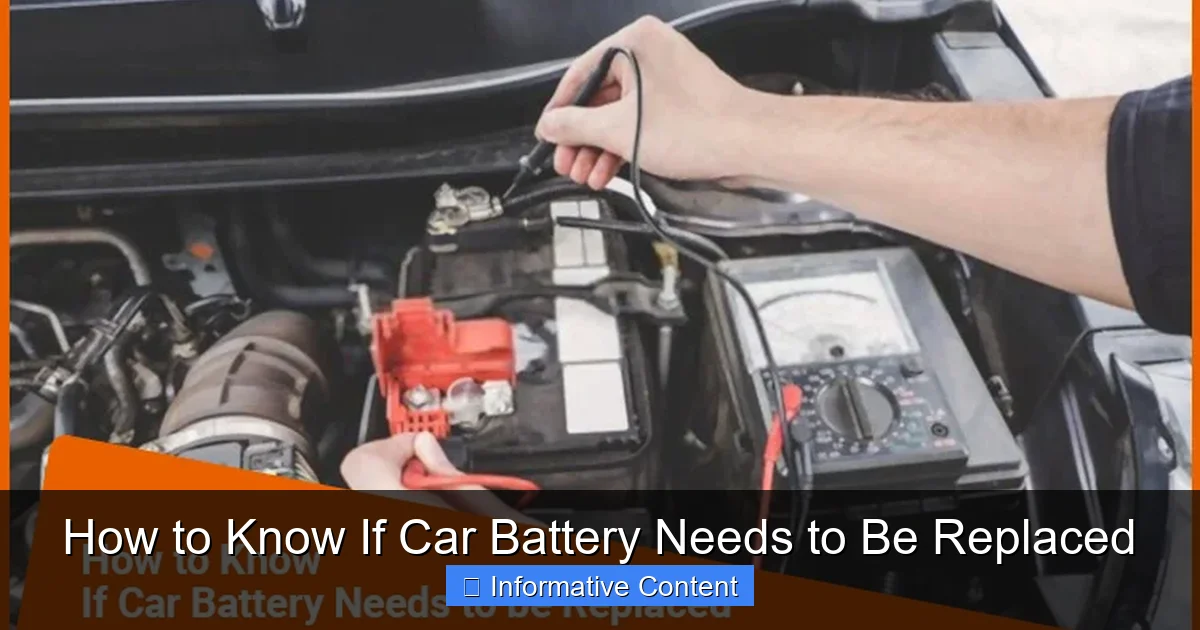
Visual guide about How to Know If Car Battery Needs to Be Replaced
Image source: autocarelabs.com
Slow Engine Crank
This is arguably the most common and earliest sign. When you turn the key or press the start button, does your engine crank slowly, sluggishly, or take longer than usual to turn over? Instead of a quick “Vroom!”, you might hear a drawn-out “Rrr…rrr…rrr…” sound. This indicates that your battery is struggling to provide enough power to the starter motor. It’s like trying to lift something heavy when you’re tired – you can still do it, but it takes more effort and time.
Dim Lights and Electrical Issues
Your battery powers all your car’s electrical components. If it’s weak, you might notice other electrical problems. Pay attention to:
- Dim Headlights: Are your headlights noticeably dimmer than usual, especially when the car isn’t running or just after starting?
- Flickering Dash Lights: Do the lights on your dashboard flicker or seem unusually dim?
- Slow Windows: Do your power windows roll up and down slower than they used to?
- Malfunctioning Accessories: Does your radio, GPS, or other accessories cut out or behave erratically?
These are all strong indicators that your battery isn’t holding a full charge and you might need to figure out how to know if car battery needs to be replaced soon.
Dashboard Warning Lights
Most modern cars have a battery warning light on the dashboard. It typically looks like a battery icon. If this light illuminates while you’re driving, it doesn’t always mean the battery itself is bad. It often indicates a problem with the charging system, which includes the alternator and voltage regulator. However, if the battery light comes on and stays on, it’s a clear signal that your car isn’t getting enough power and you should get it checked immediately. A consistently illuminated battery light is a huge red flag that your car battery needs to be replaced, or at least thoroughly inspected.
Clicking Sound When Starting
If you hear a rapid clicking sound when you try to start your car, but the engine doesn’t turn over, it’s usually a sign of a severely discharged or dead battery. The clicking is often the starter solenoid trying to engage, but there isn’t enough power from the battery to fully turn the starter motor and crank the engine. In this scenario, it’s very clear how to know if car battery needs to be replaced or at least jump-started.
Corrosion on Battery Terminals
A visual inspection can reveal a lot. Pop your hood and take a look at your battery terminals (the posts where the cables attach). Do you see a fuzzy, powdery, blue, green, or white substance building up around them? This is corrosion, usually caused by hydrogen gas escaping from the battery, reacting with the metal terminals. While minor corrosion can sometimes be cleaned off, excessive buildup can prevent a good electrical connection, making it harder for your battery to deliver power. Significant corrosion, especially if recurring, can be a sign that your battery is aging and inefficiently releasing gases, indicating it might be time to replace it.
Bloated or Distorted Battery Case
This is a more severe visual symptom. If your battery case looks swollen, bulging, or distorted on the sides, it’s a serious problem. This usually happens due to extreme heat (like overcharging) or freezing, which causes the internal plates to warp and the case to expand. A bloated battery is a dangerous battery and definitely needs to be replaced immediately. This is one of the clearest physical signs for how to know if car battery needs to be replaced.
Foul, Rotten Egg Smell
If you ever catch a distinct smell of rotten eggs (sulfur) coming from under the hood, this is a major warning sign. It indicates that your battery is leaking sulfuric acid or is overcharging, causing the electrolyte solution to boil and release hydrogen sulfide gas. This gas is toxic and corrosive, and it signifies a severely damaged battery. If you notice this smell, turn off your car, open the hood, and exercise extreme caution. Your car battery needs to be replaced without delay.
Testing Your Car Battery: Tools and Techniques
Observing warning signs is great, but sometimes you need to confirm your suspicions with a test. There are a few ways to measure your battery’s health, ranging from simple visual checks to more precise electronic tests. These tests are essential for truly understanding how to know if car battery needs to be replaced.
Visual Inspection (Again)
We touched on this before, but it’s worth reiterating. A good visual inspection is always the first step. Look for:
- Cracks or Leaks: Any cracks in the battery casing or signs of fluid leakage mean the battery is compromised and needs replacement.
- Corrosion: As mentioned, cleanable corrosion can be a minor issue, but heavy, recurring corrosion or corrosion eating away at the terminals indicates a problem.
- Secure Connections: Ensure the battery cables are tightly fastened to the terminals. Loose connections can mimic a dead battery.
- Bulging/Swelling: Reiterate the danger of a swollen battery.
Voltmeter Test
This is a simple and inexpensive test you can perform yourself. You’ll need a multimeter (set to DC Volts). Here’s how:
- Turn Off Everything: Make sure your car is off, and all lights and accessories are completely off for at least 30 minutes. This allows the battery to rest and give an accurate reading.
- Connect the Multimeter: Attach the red (positive) probe to the positive (+) battery terminal and the black (negative) probe to the negative (-) battery terminal.
- Read the Voltage:
- A fully charged, healthy battery should read around 12.6 volts or higher.
- A reading between 12.4 and 12.6 volts indicates a good charge, but not full.
- A reading below 12.4 volts suggests the battery needs charging.
- A reading below 12.0 volts typically means the battery is significantly discharged or has a dead cell.
While a voltmeter test can tell you the battery’s charge level, it doesn’t fully tell you its cranking power or ability to hold a charge under load. It’s a good initial indicator for how to know if car battery needs to be replaced, but not the final word.
Load Test (Professional Recommended)
A load test is the most accurate way to assess your battery’s health. It measures the battery’s ability to hold voltage while supplying a large current, simulating the demands of starting your car. Most auto parts stores offer free battery testing, which often includes a load test. They’ll use specialized equipment that puts a controlled “load” on the battery and measures how much the voltage drops. If the voltage drops too low under load, even if the static voltage (from the voltmeter test) seems okay, it indicates a weak battery that won’t reliably start your car. This test is crucial for definitively determining if your car battery needs to be replaced.
Understanding Battery Performance and Maintenance
Knowing how to know if car battery needs to be replaced also involves understanding what impacts its performance and how to maintain it. Good habits can truly extend your battery’s life.
Temperature Extremes
We touched on this, but it bears repeating. Both very hot and very cold temperatures are detrimental. Heat causes battery fluid to evaporate and accelerates internal corrosion. Cold weather reduces the chemical reaction inside the battery, making it less efficient and demanding more from an already struggling unit. Parking in a garage or shaded area can offer some protection.
Short Trips
If your daily commute consists of short drives (under 20-30 minutes), your alternator doesn’t have enough time to fully recharge the battery after each start. Over time, this cumulative undercharging can lead to sulfation, where lead sulfate crystals build up on the battery plates, reducing its capacity. Occasionally taking a longer drive can help, or using a trickle charger if your car sits for long periods.
Parasitic Drain
This sneaky battery killer refers to components in your car that continue to draw small amounts of power even when the vehicle is off. While some drain is normal (e.g., memory for your radio settings), excessive parasitic drain can quickly deplete your battery, especially if the car sits for several days. If your battery keeps dying even after being charged, and you’ve ruled out the alternator, a parasitic drain could be the culprit. This may require a professional diagnosis to pinpoint the source.
Regular Maintenance Tips
- Keep Terminals Clean: Regularly inspect and clean your battery terminals. You can use a battery terminal brush and a mixture of baking soda and water to remove corrosion. Always wear gloves and eye protection.
- Check Cable Connections: Ensure the battery cables are tight and secure. Loose connections can lead to poor electrical flow and starting issues.
- Secure the Battery: Make sure the battery is securely fastened in its tray. Vibrations from driving can damage internal components if the battery isn’t held firmly in place.
- Consider a Battery Tender: If you don’t drive your car often or for long distances, a battery tender or trickle charger can keep your battery fully charged, preventing discharge and extending its life.
The Replacement Decision: When to Act
So, you’ve noticed some warning signs, perhaps run a quick test, and now you’re wondering: “Is this really how to know if car battery needs to be replaced, or can I get by a little longer?” Here’s how to make that final call.
When Symptoms Are Consistent
If you’re experiencing multiple warning signs consistently – like a slow crank every morning, dim lights, and an older battery – it’s a strong indicator. One isolated incident, especially in extreme weather, might just be a temporary dip in performance. But a pattern of struggle means your battery is steadily losing its ability to hold a charge and deliver power. Don’t ignore these persistent calls for attention.
Age as a Factor
Even if your battery isn’t showing dramatic symptoms, its age is a critical factor. If your battery is 4-5 years old or older, it’s wise to consider proactive replacement. Batteries degrade over time, and their internal resistance increases, making them less efficient, even if they appear to be holding a charge. Waiting until a very old battery completely dies can leave you stranded at the most inconvenient time.
Don’t Wait Until It’s Too Late
The cost of a new battery is typically far less than the inconvenience, towing fees, and potential safety risks of a sudden breakdown. If you’ve gathered enough evidence through observation and testing, and your battery falls into the older age bracket, it’s far better to replace it proactively. Think of it as preventative maintenance that ensures peace of mind and reliable starts every time you turn the key. When your battery consistently tells you it’s struggling, that’s your definitive answer on how to know if car battery needs to be replaced.
Conclusion
Understanding how to know if car battery needs to be replaced is a vital skill for any car owner. Your battery is a critical component, and paying attention to its health can save you from inconvenient breakdowns and potentially costly repairs. By recognizing the warning signs—like a slow engine crank, dim lights, or a dashboard warning—and by performing simple visual checks and voltage tests, you can accurately assess your battery’s condition.
Remember, while some minor issues can be addressed with maintenance, an aging battery with persistent symptoms is often signaling its final farewell. Don’t wait until you’re stranded to take action. Be proactive, replace your battery when the signs are clear, and enjoy the confidence of a reliable start every time you get behind the wheel. Keeping an eye on your battery’s health is a small effort that yields big returns in terms of peace of mind and driving reliability.
Frequently Asked Questions
Why do car batteries die faster in extreme weather?
Extreme heat can cause the battery fluid to evaporate faster and accelerate internal corrosion, while cold weather reduces the battery’s chemical reaction efficiency, making it harder to deliver the power needed to start the engine, especially if the battery is already weak.
Can a short circuit damage my car battery?
Yes, a short circuit can severely damage a car battery. It can cause a rapid discharge, excessive heat buildup, and even lead to internal damage like warped plates or electrolyte boiling, significantly shortening the battery’s lifespan or rendering it unusable.
What is parasitic drain and how does it affect my battery?
Parasitic drain refers to electrical components that draw power from your battery even when the car is turned off. If this drain is excessive, it can slowly deplete your battery over time, especially if the car sits unused for several days, leading to a dead battery and potentially shortening its overall life.
Should I always buy the most expensive car battery?
Not necessarily. While more expensive batteries often offer higher quality, better cold cranking amps (CCA), and longer warranties, a mid-range battery that meets your car’s specifications and driving conditions is often sufficient. Research reviews and consider your climate and driving habits when making a choice.
Does disconnecting the battery save it from dying?
Disconnecting the battery can prevent it from being drained by parasitic loads if the car is going to sit for an extended period. However, it won’t prevent the natural self-discharge that occurs over time, especially in extreme temperatures. A battery tender is a better solution for long-term storage.
How do I dispose of an old car battery properly?
Car batteries contain hazardous materials and should never be thrown in regular trash. Most auto parts stores, recycling centers, and service stations will accept old car batteries for proper recycling, often offering a core charge refund or simply disposing of it responsibly for free.