
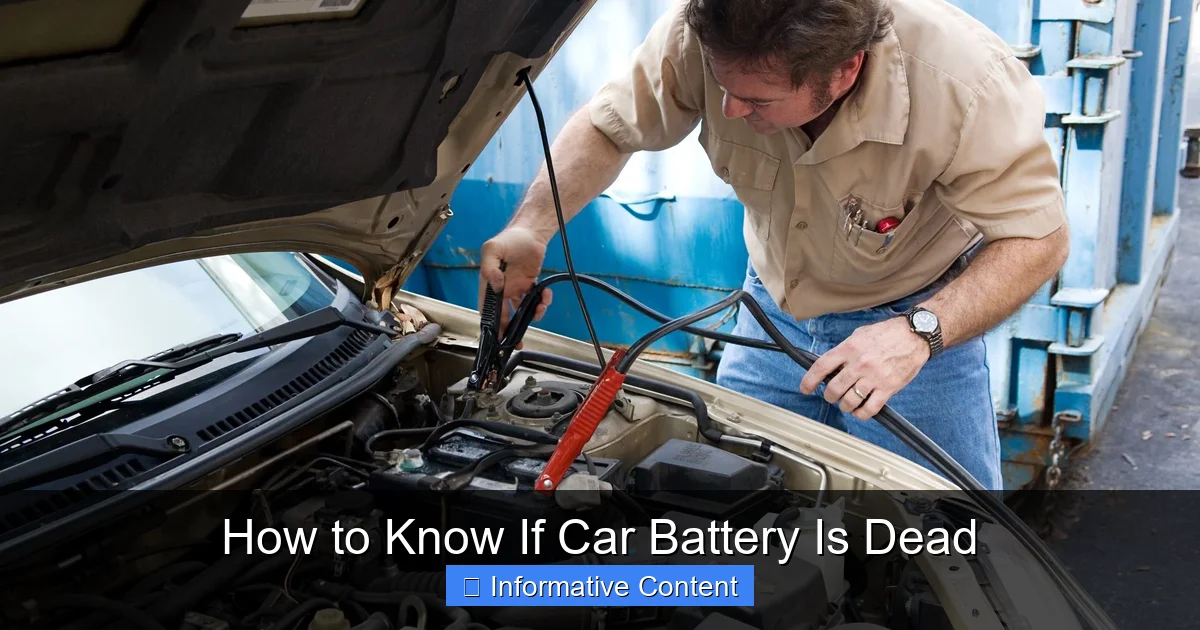
When your car won’t start, a dead battery is often the culprit. Look for obvious signs like no engine crank, dim dashboard lights, or a clicking sound. Other indicators include slow engine turnover, failing electrical accessories, or even physical damage to the battery itself. Understanding these symptoms and performing simple tests can help you quickly determine if your car battery is dead and what to do next.
Few things are as frustrating as turning the key in your ignition, only to be met with silence, a slow groan, or a series of alarming clicks. It’s that sinking feeling that tells you your morning commute, grocery run, or weekend adventure might be put on hold. Often, the culprit is the humble car battery, a crucial component that powers everything from your engine’s starter to your radio. But how can you be sure? How to know if car battery is dead and not something else entirely?
Don’t worry! You don’t need to be a seasoned mechanic to diagnose a dead car battery. With a little knowledge and observation, you can often figure out what’s going on under the hood yourself. This guide will walk you through all the tell-tale signs, from the obvious to the subtle, helping you understand whether your car battery is truly dead or if another issue might be at play. We’ll cover everything from what you see and hear, to what your car’s electrical systems are doing, and even physical signs to look for on the battery itself.
So, let’s dive in and empower you with the knowledge to confidently identify a dead car battery, so you can take the right steps to get your vehicle back on the road. Knowing how to know if car battery is dead can save you time, stress, and potentially unnecessary repair costs.
Key Takeaways
- No Crank or Slow Crank: The most common sign of a dead car battery is when the engine fails to crank at all or cranks very slowly and struggles to start.
- Dim or Non-Existent Dashboard Lights: A failing battery often won’t supply enough power to illuminate dashboard warning lights brightly, or they might not appear at all.
- Clicking Sounds: If you hear a rapid clicking sound when turning the key, it’s typically a sign the starter motor isn’t getting enough power from a weak or dead car battery.
- Electrical System Failure: Accessories like the radio, power windows, central locking, or headlights may malfunction, work slowly, or not at all, indicating insufficient power.
- Physical Signs: Visible corrosion on terminals, a swollen battery case, or a sulfuric smell can all point to a severely damaged or dead car battery.
- Battery Testing: The most accurate way to confirm if your car battery is dead is by using a multimeter to check its voltage (below 12.4V for a resting battery) or performing a professional load test.
- What to Do: If your car battery is dead, consider a jump-start to get going, but then plan for further testing or replacement to avoid future breakdowns.
Quick Answers to Common Questions
Can a completely dead car battery be jump-started?
Yes, most completely dead car batteries can be jump-started, provided the battery isn’t physically damaged (like bulging or leaking) and the internal cells are still functional. However, if it dies immediately after disconnecting the jumper cables, the battery likely won’t hold a charge.
How long does it take for a dead battery to recharge after a jump-start?
After a successful jump-start, you should drive your car for at least 15-30 minutes, or longer, to allow the alternator to adequately recharge the battery. Short drives might not be enough to fully replenish a significantly discharged battery.
Will my car lights work if the car battery is dead?
If your car battery is dead, your car lights (headlights, interior lights) will likely be very dim, flicker, or not work at all. A completely dead battery provides no power for any electrical components.
Can a bad alternator cause symptoms similar to a dead battery?
Yes, a faulty alternator can cause symptoms very similar to a dead battery. If your alternator isn’t charging the battery while the engine is running, the battery will eventually drain, leading to starting problems and electrical issues. After a jump-start, if your car dies quickly, the alternator might be the real culprit.
Is it safe to touch a corroded car battery?
While generally not immediately dangerous, it’s best to avoid direct skin contact with battery corrosion as it’s an acidic substance. Always wear gloves and eye protection when cleaning corrosion, and wash your hands thoroughly afterward.
📑 Table of Contents
The Most Obvious Signs: When Nothing Happens
Sometimes, your car battery’s demise is pretty dramatic and unmistakable. These are the situations where you almost immediately suspect your car battery is dead.
1. Complete Silence or No Crank
This is the classic, “my car won’t start” scenario. You turn the key, or push the start button, and absolutely nothing happens. No sound, no clicking, just an eerie silence. Or, you might hear a very faint click from under the hood, but the engine doesn’t even attempt to turn over. This usually means there isn’t enough power to engage the starter motor. If you’re asking yourself how to know if car battery is dead, and this is your experience, you’re likely on the right track.
2. Dim or Non-Existent Dashboard Lights
When you open your car door or turn the key to the “on” position, your dashboard lights usually illuminate brightly as part of the vehicle’s system check. If your car battery is dead or severely weakened, these lights might be very dim, flicker, or not appear at all. The car’s computer system and accessories rely on a steady power supply, and a failing battery simply can’t provide it.
3. A Rapid Clicking Sound
This is another very common indicator that your car battery is dead or very low on charge. When you turn the key, you hear a rapid “click, click, click” sound coming from the engine bay. This noise is typically the starter solenoid attempting to engage the starter motor. It’s trying to do its job, but there isn’t enough power from the battery to spin the engine. Think of it like a light switch trying to turn on a very powerful appliance with only a trickle of electricity – it just clicks. This sound is a strong clue that your car battery is dead.
Subtle Clues: When Your Car Struggles to Start
Visual guide about How to Know If Car Battery Is Dead
Image source: i.ytimg.com
Sometimes a car battery doesn’t die instantly but instead slowly loses its ability to hold a charge. In these cases, the signs might be less dramatic but still point to a failing battery.
1. Slow Engine Crank or Sluggish Start
Instead of a quick, confident “vroom,” your engine might crank very slowly, almost like it’s struggling through molasses. It might take several seconds of this sluggish cranking before the engine finally catches and starts. This is a clear sign that the car battery is dead or on its way out. The starter motor isn’t getting the full 12 volts it needs to spin the engine efficiently. This often happens on colder mornings when batteries are less efficient.
2. Issues with Electrical Accessories
Your car battery doesn’t just start the engine; it powers all your vehicle’s electrical components when the engine isn’t running or during startup.
- Dim Headlights: Try turning on your headlights before starting the car. If they appear noticeably dim, especially compared to their usual brightness, your car battery is dead or very weak.
- Slow Power Windows: Do your power windows roll up and down sluggishly, or do they stop halfway? This indicates a lack of sufficient power.
- Failing Radio or Infotainment System: If your radio cuts out, resets, or refuses to turn on, it could be due to a lack of consistent power from the car battery.
- Central Locking Problems: Sometimes, the remote central locking might stop working, or it might work only intermittently, further hinting that your car battery is dead.
These electrical issues, particularly when combined with starting problems, are strong indicators.
Physical Signs of a Failing Battery
Beyond what you see and hear from inside the car, a quick look under the hood at the battery itself can provide valuable information. Remember to exercise caution when inspecting your battery – wear gloves and eye protection if you plan to touch it.
1. Corrosion on Battery Terminals
Pop open your hood and take a look at the battery terminals (the posts where cables attach). If you see a fuzzy, white, blue, or green powdery substance built up around the terminals, that’s corrosion. While some corrosion is normal over time, excessive buildup can prevent a good electrical connection, making it harder for the battery to deliver power. It doesn’t necessarily mean the car battery is dead, but it can certainly mimic the symptoms and should be cleaned.
2. Swollen or Bulging Battery Case
Inspect the sides and top of your battery. If the casing appears swollen, bulging, or misshapen, this is a serious sign of internal damage. This usually occurs when the battery has been overcharged or has experienced extreme temperature changes, causing the internal components to expand. A swollen battery is dangerous and almost certainly a dead car battery that needs immediate replacement.
3. Rotten Egg or Sulfuric Smell
If you detect a strong odor like rotten eggs or sulfur when you open your hood, it’s a major red flag. This smell indicates that the battery is leaking gas, which is often a sign of internal damage, overcharging, or a short circuit. If you smell this, your car battery is dead or severely compromised, and you should avoid touching it and get it professionally inspected and replaced.
4. Battery Age
While not a “sign” in the traditional sense, the age of your battery is a crucial factor. Most car batteries last between 3 to 5 years, depending on climate, driving habits, and maintenance. If your battery is older than 3 years and you’re experiencing any of the above symptoms, it’s highly probable that your car battery is dead or nearing the end of its life.
Testing Your Battery: How to Know for Sure
If you’ve observed some of the signs, but want definitive proof, you can perform a couple of simple tests.
1. Using a Multimeter
A multimeter is a handy tool for checking the voltage of your battery.
- Preparation: Ensure your car has been off for at least a few hours (ideally overnight) to get an accurate “resting voltage.”
- Connect: Set your multimeter to DC volts (usually 20V range). Connect the red positive (+) lead to the positive terminal of the battery and the black negative (-) lead to the negative terminal.
- Read the Voltage:
- 12.6 volts or higher: Your battery is fully charged.
- 12.4 – 12.6 volts: Good charge, but might be slightly undercharged.
- 12.0 – 12.4 volts: Discharged. Your car battery is dead or significantly discharged and needs charging.
- Below 12.0 volts: Seriously discharged, almost certainly a dead car battery. It might not even hold a charge anymore.
Remember, this is a resting voltage. A battery might show decent resting voltage but still fail under load.
2. The Headlight Test
This is a quick and dirty way to get a general idea without special tools:
- Turn off your car and open the hood.
- Turn on your headlights (don’t start the car). Note their brightness.
- Try to start the car.
- If the headlights significantly dim or go out entirely when you try to start the car, it’s a strong indication that your car battery is dead or too weak to handle the starting load.
3. Professional Battery Load Test
While a multimeter gives you resting voltage, a load test simulates the stress of starting your engine. This is the most accurate way to determine your battery’s health. Most auto parts stores offer free battery testing, including load tests. If your battery fails a load test, then your car battery is dead or critically weak and needs replacement.
What to Do When Your Car Battery Is Dead
So, you’ve confirmed it: your car battery is dead. Now what?
1. Jump-Starting Your Car
This is the most common immediate solution. You’ll need jumper cables and another vehicle with a working battery.
- Connect the red (+) clamp to the dead battery’s positive terminal.
- Connect the other red (+) clamp to the good battery’s positive terminal.
- Connect the black (-) clamp to the good battery’s negative terminal.
- Connect the other black (-) clamp to an unpainted metal surface on the dead car’s engine block (away from the battery).
- Start the good car and let it run for a few minutes.
- Try to start your car.
If it starts, let it run for at least 15-20 minutes to give the alternator a chance to charge the battery. However, a jump-start is usually a temporary fix. If your car battery is dead and needed a jump, it likely means it’s time for a replacement.
2. Charging Your Battery
If you have a battery charger, you can attempt to charge your dead car battery. Slow charging is generally better for battery health. However, if the battery is very old or internally damaged (e.g., swollen), charging might not work or could even be dangerous.
3. Replacing the Battery
Ultimately, if your car battery is dead and won’t hold a charge, replacement is the solution.
- You can purchase a new battery from an auto parts store and install it yourself (it’s a relatively straightforward DIY task for most cars).
- Alternatively, take your car to a mechanic or service center for professional replacement. They will also properly dispose of your old battery.
Conclusion: Empowering Your Diagnosis
Understanding how to know if car battery is dead can save you from inconvenient breakdowns and potential misdiagnoses. By paying attention to the sounds your car makes (or doesn’t make), the behavior of its electrical components, and the physical condition of the battery itself, you can quickly narrow down the problem. Remember the key signs: a silent start, slow cranking, dim lights, and clicking sounds are all strong indicators your car battery is dead.
While a jump-start can get you moving in a pinch, it’s crucial to follow up with proper testing, like a multimeter check or a professional load test, to confirm the battery’s health. Equipping yourself with this knowledge means you’ll be better prepared the next time your car shows signs of power trouble, allowing you to react quickly and confidently to get back on the road. Don’t let a dead car battery catch you off guard again!
🎥 Related Video: DEAD BAD CAR BATTERY SYMPTOMS – How To Tell If Your Battery is Dead
📺 YOUCANIC
Buy YOUCANIC Pro Scanner https://www.youcanic.com/scanner/ Get Factory Service Repair Manuals & Specs …
Frequently Asked Questions
What causes a car battery to die suddenly?
A car battery can die suddenly due to several reasons, including leaving headlights or interior lights on overnight, a faulty alternator that isn’t recharging the battery, extreme weather conditions (both hot and cold), or simply reaching the end of its lifespan. Sometimes, a short circuit in the electrical system can also rapidly drain the battery.
How often should I check my car battery’s health?
It’s a good practice to have your car battery’s health checked at least once a year, especially before the onset of extreme weather conditions (winter or summer). Most auto parts stores offer free battery testing services that can quickly assess its charge and overall condition.
Can cold weather make my car battery die faster?
Yes, cold weather significantly impacts battery performance. Low temperatures reduce the battery’s capacity to produce power and increase the viscosity of engine oil, making the starter motor work harder. This combination often exposes a weak or aging battery, making it seem like it died faster.
What is the average lifespan of a car battery?
The average lifespan of a car battery is typically between 3 to 5 years. However, this can vary based on factors like driving habits, climate (extreme temperatures shorten life), and how well the battery is maintained.
Will driving my car recharge a dead battery completely?
While driving your car will help recharge a dead battery via the alternator, it may not fully restore a deeply discharged battery. For a complete and healthier recharge, especially if the battery was completely dead, a dedicated battery charger is more effective.
Are there any preventative measures to avoid a dead car battery?
Yes, several measures can help. Regularly check and clean battery terminals, ensure all lights and accessories are off when the engine is shut down, take longer drives periodically, and consider using a battery tender if your car is stored for extended periods. Also, have the battery tested annually.