
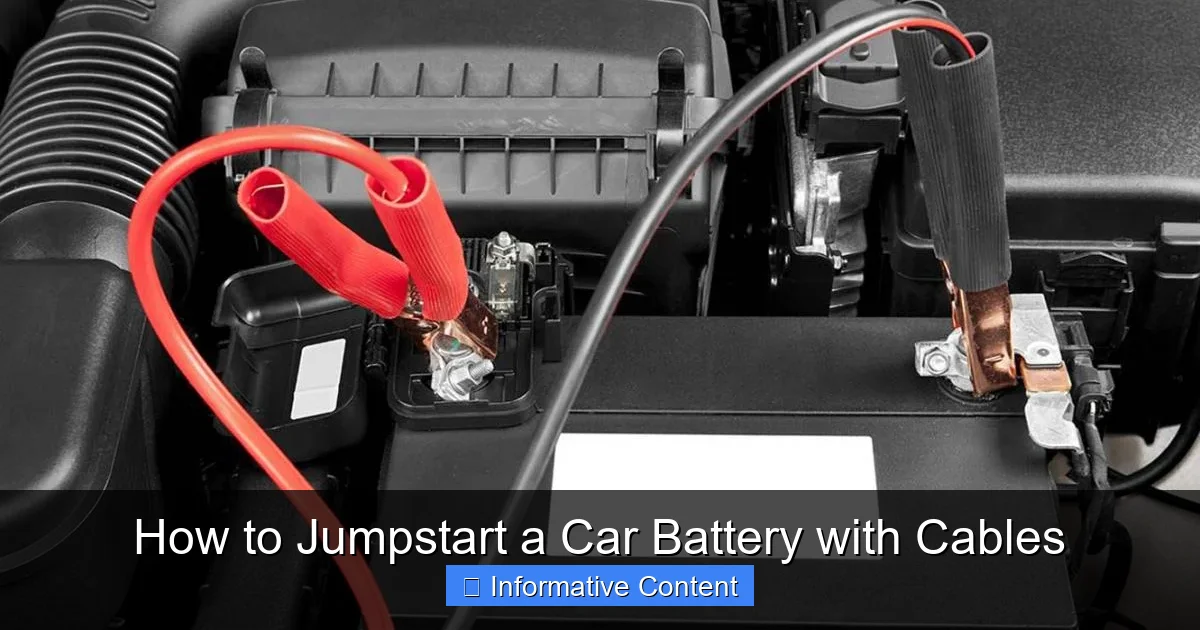
Getting stuck with a dead car battery can be frustrating, but knowing how to jumpstart a car battery with cables is a valuable skill that can save you time and money. This comprehensive guide walks you through every step, from gathering your equipment and prioritizing safety to connecting and disconnecting the cables correctly, ensuring you can confidently get your vehicle running again. Always remember to prioritize safety and follow the instructions carefully to avoid damage or injury.
How to Jumpstart a Car Battery with Cables
Imagine this: You’re running late for an important appointment, you hop in your car, turn the key, and… nothing. Just a sad, clicking sound, or worse, complete silence. We’ve all been there, or at least know someone who has. A dead car battery is one of the most common and inconvenient roadside emergencies. It can feel like a huge obstacle, but here’s the good news: with a little know-how and the right tools, it’s a problem you can often fix yourself!
Learning how to jumpstart a car battery with cables is a truly essential life skill for any car owner. It not only empowers you to help yourself out of a sticky situation but also allows you to be a hero for a stranded friend, family member, or even a stranger in need. It might seem a bit intimidating at first, with all those wires and the potential for sparks, but trust me, it’s a straightforward process once you understand the steps and, most importantly, the safety precautions.
In this comprehensive guide, we’re going to walk you through everything you need to know about how to jumpstart a car battery with cables. We’ll cover what equipment you’ll need, crucial safety measures, a detailed step-by-step process for connecting and disconnecting the cables, and even what to do if things don’t go exactly as planned. By the end of this, you’ll feel confident and prepared to tackle a dead battery with ease. Let’s get you back on the road!
Key Takeaways
- Safety First: Always wear protective gear like gloves and eye protection, and ensure both vehicles are turned off and in park/neutral with the parking brake engaged before you begin the jumpstarting process.
- Proper Equipment: You’ll need a set of good quality jumper cables and a donor vehicle with a fully charged 12-volt battery to successfully jumpstart a car battery with cables.
- Correct Connection Sequence: Connect the red positive (+) clamp to the dead battery, then to the donor battery. Connect the black negative (-) clamp to the donor battery, then to an unpainted metal surface on the dead car’s engine block or frame, away from the battery.
- Starting the Vehicles: Start the donor car first and let it run for a few minutes before attempting to start the dead car. If it doesn’t start immediately, wait a few more minutes.
- Careful Disconnection: Disconnect the cables in the reverse order of connection: black from the dead car, black from the donor car, red from the donor car, and finally red from the dead car.
- Post-Jumpstart Actions: After a successful jumpstart, drive the car for at least 20-30 minutes to allow the alternator to recharge the battery. If the battery keeps dying, it might need replacement or professional inspection.
Quick Answers to Common Questions
Can I jumpstart a car without another car?
No, you typically need another working vehicle (the donor car) with a charged battery to provide the power necessary to jumpstart a car battery with cables. Alternatively, a portable jump starter can be used, which acts as a self-contained power source.
How long should I leave the donor car running after connecting cables?
After connecting the cables, you should let the donor car run for 5-10 minutes before attempting to start the dead car. This allows some charge to transfer to the dead battery.
Is it safe to jumpstart a car in the rain?
It is generally not recommended to jumpstart a car in heavy rain due to the risk of water causing short circuits or electrical shocks. If you must, ensure all connections are dry, and take extra precautions, but it’s best to wait until conditions improve or seek professional help.
What if the dead car’s battery is frozen?
Never attempt to jumpstart a frozen car battery. A frozen battery can explode when attempting to charge or jumpstart it. Wait for the battery to thaw completely before attempting any jumpstart or charging, or call for professional assistance.
Can I damage my car’s electronics by jumpstarting?
If done incorrectly, particularly by reversing polarity (connecting positive to negative and vice versa), you can potentially damage the electrical systems, alternator, or sensitive electronics in both vehicles. Following the correct steps for how to jumpstart a car battery with cables is crucial to prevent damage.
📑 Table of Contents
What You’ll Need Before You Begin
Before you even think about connecting anything, it’s important to make sure you have all the necessary items on hand. Gathering your tools beforehand will make the process of how to jumpstart a car battery with cables much smoother and safer.
Jumper Cables: Not All Are Created Equal
First and foremost, you’ll need a good set of jumper cables. This isn’t the time to skimp on quality. Look for cables that are thick-gauge (lower gauge number means thicker cable, like 4-gauge or 6-gauge are good choices) and at least 10 to 20 feet long. Thicker cables allow for better current flow and are more durable, while longer cables give you more flexibility when positioning the cars. Ensure the clamps are sturdy and have strong springs for a secure grip. Always check your cables for any frayed wires or damaged insulation before use.
A Donor Vehicle with a Charged Battery
To jumpstart a car battery with cables, you’ll need another vehicle with a fully charged 12-volt battery. This “donor” car will provide the necessary power. Ideally, the donor car should have a battery with a similar voltage and capacity to your dead battery. Most passenger cars use 12-volt systems, so this is usually not an issue. Make sure the donor car is easily accessible and can be parked close enough to your vehicle for the jumper cables to reach comfortably.
Safety Equipment: Better Safe Than Sorry
While not strictly required to make the jumpstart work, safety equipment is absolutely crucial for your well-being.
- Gloves: Protect your hands from grime, heat, and potential sparks.
- Eye Protection: Safety goggles or glasses are non-negotiable. Batteries contain corrosive acid and can emit explosive gases, making eye protection vital.
- Flashlight: If you’re jumpstarting at night or in a dimly lit area, a flashlight is essential for seeing what you’re doing.
- Owner’s Manuals: Both yours and the donor car’s manuals can provide specific instructions or warnings about jumpstarting for those particular models. Some newer vehicles have specific jumpstart terminals that differ from the battery posts.
Safety First: Crucial Precautions
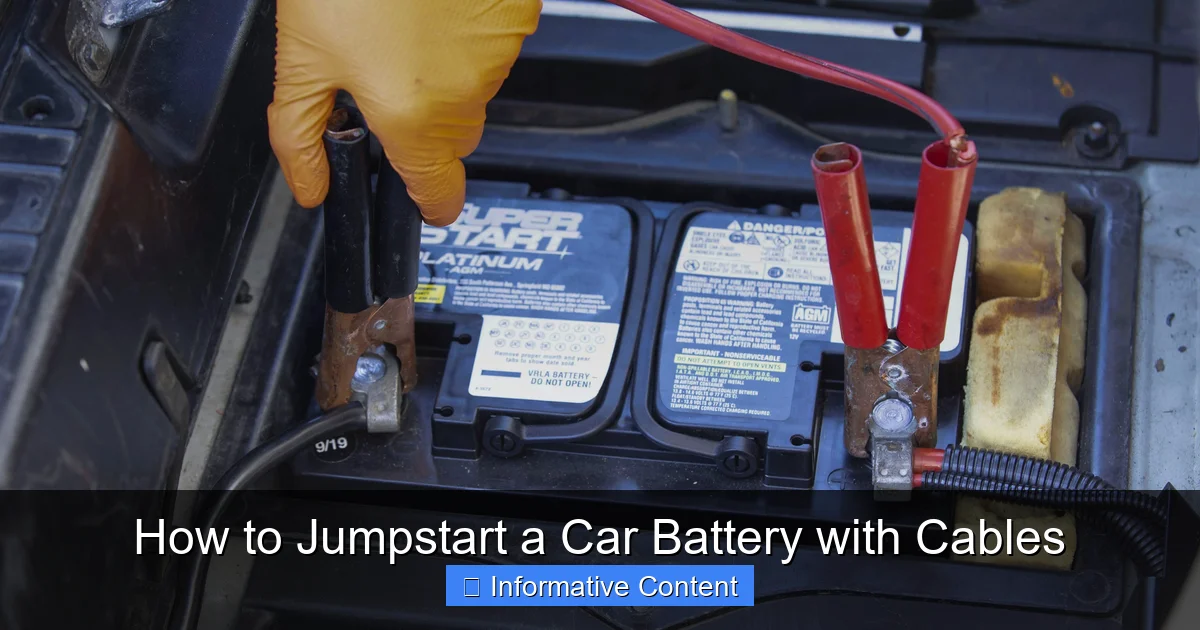
Visual guide about How to Jumpstart a Car Battery with Cables
Image source: hips.hearstapps.com
When you’re dealing with car batteries and electrical currents, safety isn’t just a suggestion; it’s a necessity. Taking proper precautions is the most important part of learning how to jumpstart a car battery with cables safely.
Personal Safety
Always prioritize your personal safety above all else.
- Wear Protective Gear: As mentioned, put on your safety glasses and gloves before you touch anything.
- Remove Jewelry: Metal jewelry can conduct electricity and cause serious burns or short circuits. Remove rings, watches, and bracelets.
- Stay Clear of Moving Parts: Once the engines are running, keep hands, hair, and loose clothing away from belts, fans, and other moving components.
- No Smoking or Open Flames: Batteries can emit hydrogen gas, which is highly flammable. Avoid sparks, flames, or smoking near the battery area.
Vehicle Safety
Prepare both vehicles properly to prevent damage or further issues.
- Turn Off Both Cars: Make sure both the dead car and the donor car are completely turned off. Remove keys from the ignition if possible.
- Engage Parking Brakes: Set the parking brake on both vehicles to prevent them from rolling.
- Shift to Park or Neutral: For automatic transmissions, put the gear selector in “Park” (P). For manual transmissions, put it in “Neutral” (N).
- Check Battery Condition: Briefly inspect the dead battery. If it’s cracked, leaking, or bulging, do NOT attempt to jumpstart it. This indicates a severely damaged battery that could explode. Call for professional roadside assistance instead.
- Position Vehicles Carefully: Park the donor car as close as possible to the dead car, ideally nose-to-nose or side-by-side, but ensure they are not touching. Leave enough space to safely walk between them and work comfortably.
Ventilation
Ensure you are in a well-ventilated area. If you’re in a garage, open the garage door to allow any potential battery gases to dissipate.
Step-by-Step Guide to Jumpstarting Your Car
Now that you’re prepared and safe, let’s get into the nitty-gritty of how to jumpstart a car battery with cables. Follow these steps carefully to ensure a successful and safe jumpstart.
Step 1: Prepare the Vehicles
With both cars turned off, parking brakes engaged, and in Park/Neutral, open the hoods of both vehicles. Locate the batteries. The positive (+) terminal is usually larger and marked with a plus sign, often covered with a red cap. The negative (-) terminal is smaller, marked with a minus sign, and typically has a black cap. Clean any corrosion off the terminals with a wire brush if necessary.
Step 2: Connect the Red Positive (+) Clamp to the Dead Battery
Take one red (positive) clamp of your jumper cables. Attach it securely to the positive (+) terminal of the dead car’s battery. Make sure it has a firm, metal-to-metal connection.
Step 3: Connect the Other Red Positive (+) Clamp to the Donor Battery
Take the other red (positive) clamp of the jumper cables. Attach it securely to the positive (+) terminal of the donor car’s battery. Again, ensure a solid connection.
Step 4: Connect the Black Negative (-) Clamp to the Donor Battery
Now, take one black (negative) clamp. Attach it securely to the negative (-) terminal of the donor car’s battery.
Step 5: Connect the Other Black Negative (-) Clamp to the Dead Car’s Engine Block or Frame
This is a critical step for safety. Do NOT connect the second black clamp directly to the negative (-) terminal of the dead battery. Instead, find a substantial, unpainted metal part of the dead car’s engine block or frame. This could be a sturdy metal bracket, an engine bolt, or another heavy metal part away from the battery and moving components. This provides a ground connection and minimizes the risk of sparks near the battery’s hydrogen gas.
Once all four clamps are securely attached, double-check that no cables are dangling into the engine compartment where they could get caught in moving parts. Also, ensure the cables aren’t touching each other.
Step 6: Start the Donor Car
Start the engine of the donor car. Let it run for about 5-10 minutes. This allows the donor car’s alternator to charge the dead battery slightly before you attempt to start it. You might even rev the donor car’s engine gently a few times to increase the charging current.
Step 7: Start the Dead Car
After the donor car has run for a few minutes, try to start the dead car.
- If it starts immediately: Great! You’ve successfully performed how to jumpstart a car battery with cables. Move on to the disconnection steps.
- If it cranks but doesn’t start: Give it a minute or two, then try again. Sometimes the battery needs a bit more charge.
- If it still won’t start after a few tries: Do not keep cranking excessively, as this can damage the starter. There might be another issue at play (more on troubleshooting later).
Step 8: Disconnect the Cables Carefully
Once the dead car is running, it’s time to disconnect the cables. This process should be done in the reverse order of connection to avoid any short circuits or sparks.
- Remove the black negative (-) clamp from the dead car’s engine block/frame.
- Remove the black negative (-) clamp from the donor car’s battery.
- Remove the red positive (+) clamp from the donor car’s battery.
- Remove the red positive (+) clamp from the dead car’s battery.
Make sure the clamps don’t touch each other or any metal surfaces on either car after being removed, as they could still be carrying a charge.
What to Do After a Successful Jumpstart
You’ve done it! You know how to jumpstart a car battery with cables, and your car is running again. But the job isn’t quite finished yet. There are a few important steps to take to ensure you don’t end up with another dead battery soon after.
Keep Driving to Recharge the Battery
Your car’s alternator needs time to fully recharge the battery. Do not turn off your car immediately after a jumpstart. Drive it for at least 20-30 minutes, or even longer, if possible. This allows the alternator to do its job and replenish the battery’s charge. If you only drive for a short time, the battery might not have enough power to start the car again later.
Check Your Battery and Charging System
A dead battery often indicates an underlying issue. It could be an old battery that simply can’t hold a charge anymore, a faulty alternator (which charges the battery while the engine is running), or a parasitic drain (something in your car is drawing power even when it’s off).
- Battery Age: Car batteries typically last 3-5 years. If yours is older, it might be time for a replacement.
- Professional Check: It’s a good idea to have your battery and charging system tested by a mechanic or at an auto parts store as soon as possible. Many auto parts stores offer free battery and alternator checks.
Consider a Battery Charger
If your car isn’t starting due to infrequent use, a battery maintainer or trickle charger can be a great investment. It keeps your battery topped up when the car isn’t being driven for extended periods, preventing the need to learn how to jumpstart a car battery with cables again and again.
Troubleshooting Common Issues
Sometimes, even after following all the steps for how to jumpstart a car battery with cables, things don’t go perfectly. Don’t worry, here are some common issues and what they might mean.
Car Still Won’t Start After Jumpstarting
- No Cranks: If you hear nothing, or just a single click, it could mean the battery is severely dead, the connections aren’t good, or there’s a problem with the starter motor. Double-check all cable connections for tightness and ensure they are on clean, metal surfaces. Try waiting a bit longer with the donor car running.
- Cranking but Not Starting: If the engine turns over but doesn’t fire up, the issue might not be the battery at all. It could be a fuel problem (empty tank, fuel pump issue), ignition system problem (spark plugs, coils), or another major engine component. In this case, jumpstarting won’t help, and you’ll need professional assistance.
- Weak Connections: Ensure the clamps are firmly attached to the terminals and the ground point. Wiggle them slightly to ensure good contact.
Excessive Sparks During Connection or Disconnection
A small spark when connecting the final negative clamp is normal and usually nothing to worry about. However, if you see large, continuous sparks, immediately stop and re-evaluate your connections. It could indicate a short circuit or improper grounding. Ensure the cables are not touching each other and that the positive and negative clamps are correctly identified and connected.
Cables Feel Hot
If the jumper cables become warm or hot to the touch, it indicates too much current flowing through them, possibly due to a weak connection, very low battery on the dead car, or simply thin, low-quality cables. Disconnect them and let them cool. Recheck all connections and retry. If the cables continue to overheat, it’s safer to stop and seek professional help.
Reversed Cable Connection
This is a dangerous mistake. If you accidentally connect the positive to the negative, you could damage the electrical systems in both cars, potentially causing an explosion. Modern cars usually have protection against reverse polarity, but it’s not foolproof. If you suspect reversed cables, disconnect them immediately and check everything carefully before reconnecting. Always remember: Red to Positive (+), Black to Negative (-) or a good ground point.
Conclusion
Learning how to jumpstart a car battery with cables is a truly empowering skill that every driver should possess. It’s not just about getting your car running again; it’s about preparedness, self-reliance, and potentially helping others in a tough spot. While the process involves dealing with electricity and car components, by following the clear steps and prioritizing safety, you can confidently and safely perform a jumpstart.
Remember to always keep a good quality set of jumper cables in your trunk, along with safety gloves and eye protection. Knowing these steps can turn a frustrating roadside breakdown into a minor inconvenience. And if you ever find yourself in doubt or if the jumpstart doesn’t work, don’t hesitate to call for professional assistance. But for now, you’re equipped with the knowledge to tackle that dead battery head-on. Happy driving, and stay safe out there!
Frequently Asked Questions
How do I know if my car battery is dead or if it’s another issue?
Signs of a dead battery include no crank or a very slow crank when you turn the key, dim or non-existent lights on the dashboard, and accessories not working. If the engine cranks but won’t start, or if all electrical components work but the engine doesn’t turn over, it might indicate a problem with the starter, fuel system, or ignition, rather than just a dead battery.
Can I use jumper cables from a smaller car to jumpstart a larger car?
Generally, yes, as long as both vehicles have 12-volt systems. However, a smaller car’s battery might take longer to provide enough charge, and you may need to let the donor car run for a longer period (10-15 minutes) before attempting to start the larger, dead vehicle.
What should I do if the car won’t start even after a successful jumpstart?
If your car starts with a jump but dies immediately or won’t hold a charge, it suggests a problem beyond just a flat battery. It could indicate a faulty alternator not charging the battery, a severely damaged battery that can no longer hold a charge, or a parasitic drain. In such cases, it’s best to have your vehicle inspected by a professional mechanic.
How often should I replace my car battery?
Most car batteries have a lifespan of about 3 to 5 years, depending on climate, driving habits, and maintenance. Extreme temperatures (both hot and cold) can significantly reduce battery life. Regular testing during routine maintenance can help you know when it’s time for a replacement before it completely dies.
Is there an alternative to using another car for a jumpstart?
Yes, portable jump starters (also known as battery booster packs) are excellent alternatives. These compact devices contain a powerful battery and jumper cables, allowing you to jumpstart your car without needing a second vehicle. They are a great item to keep in your trunk for emergencies.
What is the importance of connecting the black clamp to a metal ground on the dead car?
Connecting the final black negative clamp to an unpainted metal ground point (like the engine block or frame) instead of directly to the negative terminal of the dead battery minimizes the risk of igniting hydrogen gas that can build up around the battery. This gas is highly flammable, and a spark from the final connection could cause an explosion, making this a critical safety step.