
Car battery corrosion can severely impact your vehicle’s performance, but it’s a problem you can tackle yourself with the right knowledge and tools. This comprehensive guide will walk you through safe and effective methods to remove corrosion, from understanding its causes to preventing its return, ensuring your battery delivers reliable power and extending its lifespan.
How to Get Corrosion Off Car Battery
Ever popped the hood of your car only to find a fuzzy, often colorful, mess clinging to your battery terminals? That unsightly gunk is car battery corrosion, and while it might look harmless, it’s actually a silent saboteur of your vehicle’s electrical system. This common issue can lead to a host of problems, from sluggish starts and unreliable electronics to, in severe cases, a completely dead battery. Nobody wants to be stranded because of a little powdery buildup, right?
The good news is that learning how to get corrosion off car battery is a manageable DIY task, even for those who aren’t seasoned mechanics. With a few simple tools, some common household ingredients, and a good understanding of the process, you can clean up those terminals, restore your battery’s efficiency, and potentially save yourself a costly trip to the repair shop. More importantly, understanding how to address this issue can significantly extend the life of your car battery and prevent future headaches.
This article will be your friendly guide, walking you through everything you need to know about car battery corrosion. We’ll demystify what causes it, outline the essential safety precautions you must take, detail the tools required, and provide a clear, step-by-step process for effectively removing the buildup. We’ll also dive into practical tips for preventing corrosion from returning, helping you keep your car running smoothly and reliably. So, let’s roll up our sleeves and learn how to get corrosion off car battery like a pro!
Key Takeaways
- Safety First: Always wear personal protective equipment (PPE) like gloves and eye protection when working with car batteries to prevent contact with corrosive acids.
- Disconnect Safely: Before attempting any cleaning, always disconnect the negative battery cable first, then the positive, to prevent accidental shorts or sparks.
- Simple Cleaning Solution: A paste made from baking soda and water is highly effective for neutralizing and cleaning car battery corrosion due to its alkaline properties.
- Thorough Scrubbing: Use a dedicated battery terminal brush or a stiff wire brush to physically remove the loosened corrosion from terminals and cable clamps.
- Rinse and Dry: After scrubbing, rinse the area with clean water and ensure all components are completely dry before reconnecting to prevent new problems.
- Preventative Measures: Apply anti-corrosion spray or dielectric grease to clean terminals after reassembly to create a protective barrier and inhibit future buildup.
- Regular Inspections: Periodically check your battery terminals for any signs of corrosion to catch and address issues early, maintaining optimal battery health and performance.
Quick Answers to Common Questions
Is car battery corrosion dangerous?
Yes, car battery corrosion is dangerous. It’s acidic and can cause chemical burns to skin and eyes. Additionally, working with batteries incorrectly can cause sparks, leading to explosions from hydrogen gas. Always wear protective gear and follow safety procedures.
What causes car battery corrosion?
Car battery corrosion is primarily caused by hydrogen gas escaping from the battery and reacting with sulfuric acid vapors and the metal of the terminals and cable clamps. This process forms various metallic salts, which appear as the white, blue, or green fuzzy buildup.
Can I use Coca-Cola to clean battery terminals?
While Coca-Cola contains phosphoric acid that can break down corrosion, it’s not recommended. It leaves behind sticky sugar residue that can attract dirt and cause new problems. Baking soda and water are far more effective, safer, and leave no harmful residue.
How often should I clean battery terminals?
You should inspect your battery terminals every 3-6 months. If you notice any signs of corrosion, clean them immediately. Even without visible corrosion, a preventative clean every year or two can help maintain optimal performance.
What if the corrosion is really bad?
For severe corrosion, take extra safety precautions. You might need to gently scrape off large chunks with a plastic scraper before applying the baking soda paste. If the corrosion has damaged the battery cables or terminals significantly, or if you’re unsure, it’s best to consult a professional mechanic.
📑 Table of Contents
Understanding Car Battery Corrosion: What’s That Fuzzy Stuff?
Before we dive into how to get corrosion off car battery, it’s helpful to understand what car battery corrosion actually is and why it forms. Essentially, it’s a chemical reaction involving the battery’s terminals, the battery acid, and the surrounding air. When your car battery operates, it produces hydrogen gas. If there are tiny leaks around the terminal posts or if the battery is overcharged, this gas can mix with sulfuric acid (which is inside the battery) and react with the metal terminals and cable clamps.
The Chemistry Behind the Gunk
Most car batteries contain a sulfuric acid electrolyte. Over time, or due to slight leaks, overfilling, or even just gas escaping during normal operation, acid vapors can escape the battery. These vapors react with the copper in the battery cables and the lead in the terminals, creating a variety of metallic salts. This is what you see as corrosion. On the positive terminal, you’ll typically find copper sulfate (which is often blue or green). On the negative terminal, you might see lead sulfate or other lead compounds (which appear white or grayish). Both types look like a fuzzy, powdery, or crusty buildup.
Why is Car Battery Corrosion a Problem?
This fuzzy stuff isn’t just an eyesore; it’s a major roadblock for your car’s electrical system. Corrosion acts as an electrical insulator. It prevents a clean, strong electrical connection between the battery terminals and the cable clamps that power your car. This poor connection leads to a higher electrical resistance. What does that mean for you? It means:
- Weak or Slow Starts: The starter motor won’t get enough power, leading to a hesitant engine crank.
- Malfunctioning Electronics: Your car’s radio, lights, power windows, or even the onboard computer might act erratically due to insufficient power.
- Reduced Battery Life: The battery has to work harder to push power through the corrosion, stressing it and potentially shortening its overall lifespan.
- Charging Issues: The alternator might struggle to properly charge the battery if corrosion impedes the flow of electricity to and from the battery.
Clearly, learning how to get corrosion off car battery is crucial for your vehicle’s health and your peace of mind.
Safety First: Your Number One Priority
Working with car batteries involves handling corrosive acids and high electrical currents, which can be dangerous if not approached with caution. Before you even think about learning how to get corrosion off car battery, you absolutely must prioritize safety. Taking a few moments to prepare properly can prevent serious injuries.
Visual guide about How to Get Corrosion Off Car Battery
Image source: wikihow.com
Personal Protective Equipment (PPE)
This isn’t optional; it’s essential. Battery acid can cause severe burns to your skin and eyes, and touching corroded terminals can irritate. Always wear:
- Safety Glasses or Goggles: Protect your eyes from splashes of acid or flying debris while scrubbing.
- Heavy-Duty Gloves: Chemical-resistant gloves (like nitrile or rubber) are best to protect your hands from acid and cleaning solutions.
- Old Clothes: Wear long sleeves and pants that you don’t mind getting stained or damaged. Acid splashes can eat through fabric.
A Well-Ventilated Work Area
Car batteries can release hydrogen gas, which is highly flammable. Always work in an area with good airflow. Avoid working in an enclosed garage without opening doors and windows. Never smoke or use an open flame near a car battery. A spark, even from static electricity, can ignite hydrogen gas, leading to an explosion.
Disconnecting the Battery Safely – A Critical Step
This is perhaps the most important safety step when learning how to get corrosion off car battery. Incorrectly disconnecting your battery can cause sparks, damage your vehicle’s electronics, or even lead to an explosion. Here’s the correct order:
- Turn Off Your Car: Make sure the engine is off and the ignition is completely switched off. Remove the key.
- Locate the Terminals: Identify the positive (+) terminal (usually marked with a plus sign and often has a red cable) and the negative (-) terminal (marked with a minus sign and usually has a black cable).
- Disconnect the Negative First: Using a wrench (typically 10mm or 13mm, but check your car’s manual), loosen the nut on the negative (-) terminal clamp. Remove the negative cable and move it away from the battery so it cannot accidentally touch the terminal again. This step is crucial because it breaks the electrical circuit, preventing sparks if your wrench accidentally touches the car’s metal frame while you’re working on the positive terminal.
- Disconnect the Positive Second: Now, loosen the nut on the positive (+) terminal clamp and remove the positive cable. Again, move it away from the battery.
- Secure Cables: Ensure both cables are secured away from the battery terminals and any metal parts of the car. You can wrap them in a rag or bungee them out of the way.
With these safety precautions in place, you’re ready to tackle the corrosion confidently and safely.
Gathering Your Arsenal: Tools and Materials You’ll Need
You don’t need a professional mechanic’s toolbox to learn how to get corrosion off car battery. Most of the items you’ll need are either common household goods or inexpensive tools you can pick up at any auto parts store or hardware store. Having everything ready before you start will make the process smooth and efficient.
Essential Tools:
- Wrench or Socket Set: A 10mm or 13mm wrench is typically what you’ll need to loosen and tighten battery terminal nuts. An adjustable wrench can work, but a correctly sized box-end or socket wrench is safer and less likely to slip.
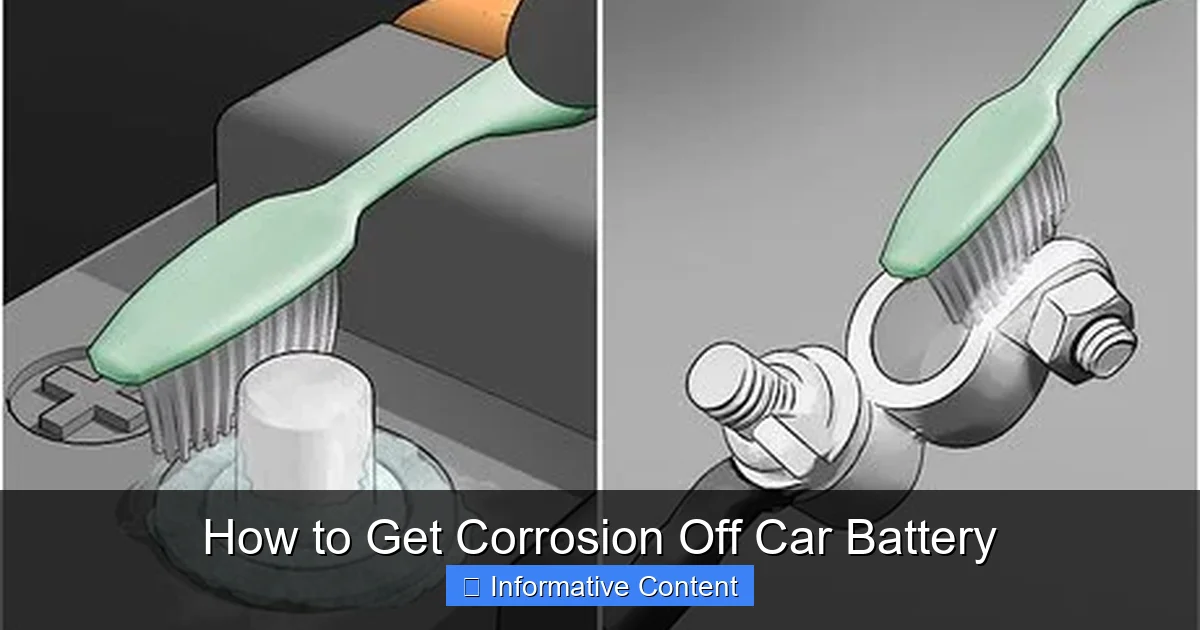
- Battery Terminal Brush: This is a specialty tool designed for the job. It often has a conical wire brush for cleaning the inside of the cable clamps and a cylindrical brush for cleaning the battery posts. They are inexpensive and highly effective.
- Wire Brush (Optional): If you don’t have a dedicated battery terminal brush, a small, stiff wire brush (brass or steel) can be used to scrub the posts and clamps. Be gentle on the battery case itself.
- Clean Rags or Old Towels: For wiping, drying, and protecting surfaces.
- Stiff Bristle Brush (e.g., old toothbrush): Useful for reaching tight spots and scrubbing away stubborn corrosion.
- Bucket or Small Container: To mix your cleaning solution.
Cleaning Materials:
- Baking Soda: This is your secret weapon! Baking soda (sodium bicarbonate) is a mild alkali that effectively neutralizes the acidic corrosion.
- Clean Water: For mixing with baking soda and for rinsing the cleaned areas. Distilled water is ideal for rinsing if available, but tap water is usually fine.
- Anti-Corrosion Spray or Dielectric Grease (Recommended): After cleaning, these products create a protective barrier that helps prevent future corrosion. You can find them at any auto parts store.
Additional Helpful Items (Optional but Recommended):
- Post Puller: If your battery terminals are stuck, this tool can help remove them without damaging the posts.
- Terminal Spreader: Can help spread open corroded clamps that are difficult to remove.
- Battery Terminal Cleaner Spray: While baking soda and water work wonderfully, some pre-made sprays can also be effective.
- Non-Metallic Scraper: A plastic scraper can help remove large chunks of corrosion before scrubbing.
Once you have all these items assembled and your safety gear on, you are fully equipped to get that car battery corrosion cleaned up.
The Step-by-Step Guide: How to Get Corrosion Off Car Battery
Now that you’re prepared with all your tools and safety gear, it’s time to learn the actual process of how to get corrosion off car battery. Follow these steps carefully for a thorough and safe cleaning.
Step 1: Disconnect the Battery Cables Safely
Refer back to the “Safety First” section for a detailed explanation. To reiterate:
- Ensure your car is off and the key is removed from the ignition.
- First, locate the negative (-) terminal (black cable) and, using your wrench, loosen the nut. Remove the cable and secure it away from the battery and any metal parts.
- Next, locate the positive (+) terminal (red cable) and loosen its nut. Remove this cable and secure it away as well.
Once both cables are disconnected and safely out of the way, you can move on to cleaning.
Step 2: Prepare Your Cleaning Solution
For most car battery corrosion, a simple baking soda and water paste is the most effective and safest cleaning solution.
- In a small bucket or container, mix 2-3 tablespoons of baking soda with just enough water to form a thick paste. You want it to be thick enough to cling to the terminals without being too runny.
- Alternatively, you can sprinkle baking soda directly onto the corroded areas and then spray or pour a small amount of water over it. You’ll see it fizz and bubble, which is the baking soda reacting with and neutralizing the acidic corrosion. This reaction is exactly what you want!
Step 3: Apply and Scrub Away the Corrosion
Now comes the satisfying part of truly getting rid of that car battery corrosion.
- Apply the Solution: Generously apply the baking soda paste directly onto the corroded battery terminals and the inside of the cable clamps. Let it sit for a few minutes (3-5 minutes) to allow the neutralizing action to take place. You’ll likely see more fizzing as it works.
- Scrub the Terminals: Use your battery terminal brush (or a stiff wire brush) to scrub the corrosion off the battery posts. Work in a circular motion, ensuring you get all sides of the posts. Don’t be afraid to apply a little elbow grease, but avoid scrubbing the battery case itself too aggressively.
- Clean the Cable Clamps: Use the internal brush of your battery terminal cleaner (or an old toothbrush/small wire brush) to clean the inside surfaces of the cable clamps thoroughly. This is critical, as a clean connection here is vital for electrical flow. Make sure all flaky or powdery residue is removed.
- Address Other Areas: If you see corrosion on the battery tray or other parts of the battery, you can use the baking soda solution and a rag or brush to clean those areas too.
Step 4: Rinse and Dry Thoroughly
After you’ve scrubbed away all visible corrosion, you need to rinse and dry the area.
- Rinse: Carefully pour or spray a small amount of clean water over the cleaned terminals and clamps. Be cautious not to get excessive water inside the battery itself (though modern sealed batteries make this less of a concern). The goal is to wash away all the baking soda residue and loosened corrosion.
- Dry: Use a clean, dry rag or towel to thoroughly dry the battery terminals, cable clamps, and surrounding areas. Make sure everything is completely dry before reconnecting anything. Moisture can lead to new corrosion or short circuits. You can also use compressed air if available, but a rag works perfectly well.
Step 5: Reconnect and Protect Your Terminals
You’re almost done! The last step involves reconnecting your battery and taking measures to prevent future corrosion.
- Apply Anti-Corrosion Protection: Before reconnecting, apply a thin layer of anti-corrosion spray, dielectric grease, or petroleum jelly (Vaseline) to the clean battery posts. This creates a barrier against moisture and acid vapors, significantly reducing the chances of future corrosion buildup.
- Reconnect the Positive First: Slide the positive (+) cable clamp back onto the positive battery terminal. Tighten the nut securely with your wrench. It should be snug, but don’t overtighten, as this can damage the terminal post.
- Reconnect the Negative Second: Now, slide the negative (-) cable clamp back onto the negative battery terminal. Tighten this nut securely.
- Wipe Down: Give the entire battery and surrounding area a final wipe-down with a clean rag.
That’s it! You’ve successfully learned how to get corrosion off car battery and restored a healthy connection. Now, give your car a try. It should start with more vigor and confidence!
Preventing the Return: Keeping Corrosion at Bay
Cleaning car battery corrosion is a great skill to have, but wouldn’t it be even better to prevent it from forming in the first place? Taking a few proactive steps can significantly reduce the chances of seeing that fuzzy gunk reappear. Prevention is always easier than cure, especially when it comes to battery maintenance.
Use Anti-Corrosion Products
This is arguably the most effective preventative measure after cleaning. As mentioned in the cleaning steps, applying a protective coating to your battery terminals is key:
- Anti-Corrosion Spray: These sprays are specifically designed to protect battery terminals. They create a sealing film that prevents acid vapors and moisture from reaching the metal.
- Dielectric Grease: A non-conductive, silicone-based grease that repels moisture and prevents corrosion. Apply a thin layer to the posts before reattaching the cables, and then another thin layer over the connected clamps.
- Petroleum Jelly (Vaseline): A common household item, petroleum jelly can also serve as a temporary barrier against corrosion. While not as long-lasting as specialized products, it’s better than nothing. Apply a thin coat after cleaning and reassembly.
- Anti-Corrosion Washers/Felt Pads: These are felt rings soaked in anti-corrosion solution that you place over the battery posts before attaching the cable clamps. They provide an extra layer of protection and are very inexpensive.
Regular Inspections and Cleaning
Even with protective products, it’s a good idea to periodically check your battery terminals. Make it a habit to peek under the hood every few months or during routine oil changes. If you catch early signs of minor corrosion, you can clean it quickly before it becomes a major problem. A quick wipe down with a damp cloth can often remove small amounts of buildup before it turns into noticeable corrosion.
Proper Battery Installation
Ensure your battery is securely mounted in its tray. A loose battery can vibrate, causing the terminals to wear or connections to loosen, which can lead to leaks and increased corrosion. Also, ensure the battery hold-down clamp is snug but not overtightened. Make sure the battery cables are also securely connected, but again, avoid overtightening the terminal clamps.
Keep Your Battery Clean and Dry
A clean battery is a happy battery. Wipe down the top of your battery periodically with a damp rag to remove any dust, dirt, or debris. This helps prevent conductive paths from forming across the battery case, which can lead to self-discharge and corrosion. Also, check for any cracks or damage to the battery case itself, as these can be sources of acid leaks.
Avoid Overfilling (for serviceable batteries)
If you have an older, serviceable battery (one with removable caps for adding distilled water), be careful not to overfill the cells. Overfilling can cause electrolyte (acid) to spill or weep out, leading to external corrosion. Always fill to the marked level.
By integrating these preventative measures into your routine, you won’t just know how to get corrosion off car battery, but you’ll significantly extend the life and reliability of your battery, saving you time, money, and frustration in the long run.
Conclusion
Dealing with car battery corrosion can seem like a daunting task, but as you’ve seen, it’s a perfectly manageable DIY project. Learning how to get corrosion off car battery is a valuable skill that empowers you to take better care of your vehicle, prevent unexpected breakdowns, and extend the lifespan of an expensive component. We’ve covered everything from understanding the fuzzy gunk to the crucial safety steps, the simple tools you’ll need, and a clear, step-by-step cleaning process.
Remember, the key to successful corrosion removal lies in prioritizing safety, using the right tools and cleaning solutions (like baking soda!), and being thorough in your scrubbing, rinsing, and drying. More importantly, don’t forget the power of prevention. A few minutes spent applying anti-corrosion products and performing regular checks can save you hours of troubleshooting and potential repair costs down the road.
So, the next time you see that tell-tale fuzzy buildup, don’t despair. Armed with this knowledge, you can confidently tackle the problem, restore your battery’s efficiency, and ensure your car starts reliably every single time. Happy driving, and keep those battery terminals sparkling clean!
🎥 Related Video: HOW TO CLEAN A CAR BATTERY | Remove Acid Corrosion Using Baking soda and Water
📺 Family Variety Channel
Use baking soda and water to remove acid corrosion. #shorts #howto.
Frequently Asked Questions
What does battery corrosion look like?
Battery corrosion typically appears as a fuzzy, powdery, or crusty buildup on the battery terminals and cable clamps. It can be white or grayish (often on the negative terminal) or blue/green (more common on the positive terminal), indicating different chemical reactions.
Why is preventing corrosion important?
Preventing corrosion is crucial because it acts as an electrical insulator, impeding the flow of electricity to and from your battery. This can lead to weak starts, erratic electronics, reduced battery life, and charging issues, ultimately impacting your car’s reliability.
Can corrosion kill my battery?
While corrosion itself doesn’t directly “kill” a battery, it can significantly shorten its lifespan and make it appear dead. By restricting power flow, it forces the battery to work harder and can prevent it from charging properly, leading to premature failure if left unaddressed.
Is it okay to drive with corroded battery terminals?
It is not advisable to drive with corroded battery terminals. The corrosion causes a poor electrical connection, which can lead to unreliable starting, dim lights, malfunctioning electronics, and could even damage your vehicle’s charging system over time. Address it as soon as possible.
What’s the best homemade cleaner for battery corrosion?
The best and safest homemade cleaner for car battery corrosion is a paste made from baking soda and water. Baking soda is alkaline and effectively neutralizes the acidic corrosion, allowing it to be easily scrubbed away without harsh chemicals.
How long does it take to clean battery corrosion?
Cleaning car battery corrosion is a relatively quick task, typically taking only 15-30 minutes from start to finish. This includes the time to gather tools, disconnect the battery, apply and scrub the cleaner, rinse, dry, and reconnect everything, plus apply a preventative measure.