
Connecting a battery charger to your car safely involves a few key steps: turning off your car, ensuring good ventilation, connecting the positive (red) clamp to the battery’s positive terminal, and the negative (black) clamp to a good metal ground point away from the battery. This process helps rejuvenate a drained battery or maintain its charge.
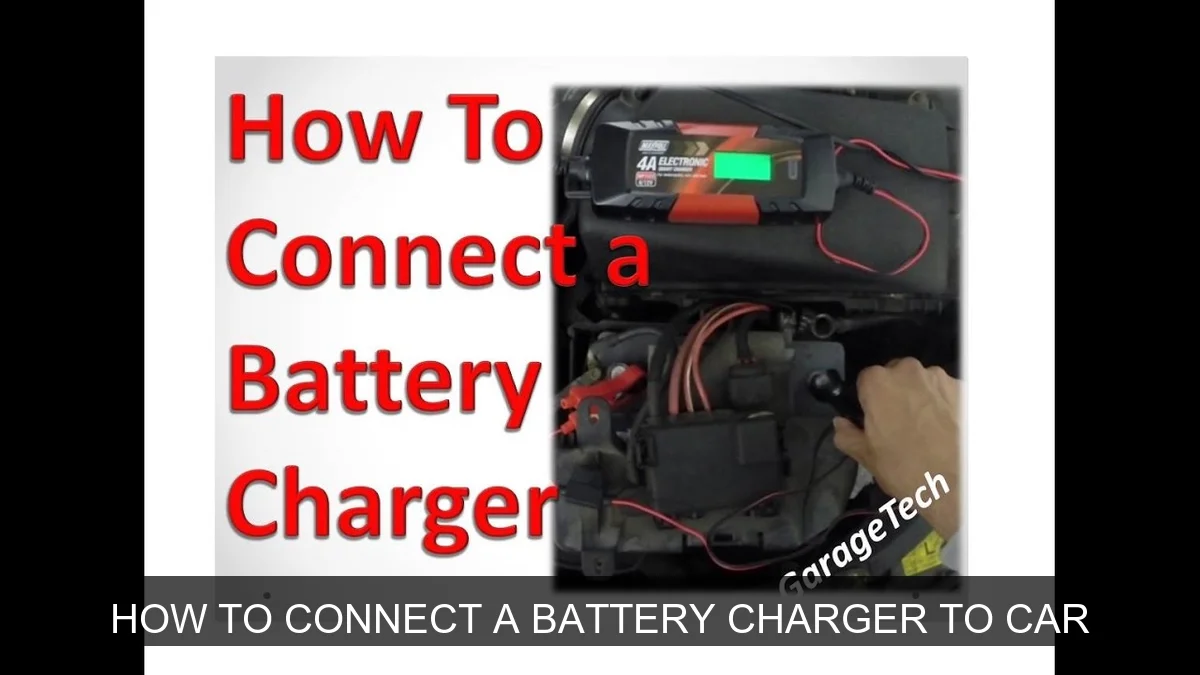
Image source: Ytimg
📋 Table of Contents
- 🔹 Understanding Battery Charging Basics
- 🔹 Why Connect a Battery Charger to Your Car?
- 🔹 How Connecting a Battery Charger to a Car Works
- 🔹 Step-by-Step Guide: How to Connect a Battery Charger to Your Car
- 🔹 Essential Safety Precautions
- 🔹 Understanding Different Battery Charger Types
- 🔹 Common Mistakes to Avoid
- 🔹 Benefits of Properly Charging Your Car Battery
- 🔹 People Also Ask (FAQ)
- 🔹 Conclusion
Understanding Battery Charging Basics
Connecting a battery charger to your car involves hooking up a device that sends electrical current to your car’s 12-volt battery. This process recharges the battery, restoring its ability to start your engine and power electrical components. It’s a skill many car owners find useful, especially if they face a dead battery or store their vehicle for long periods. Doing it correctly ensures safety and effective charging.
In this guide, we’ll walk you through the proper way to connect a battery charger to your car, covering everything from safety tips to understanding why and how it all works. You’ll learn the simple steps involved and gain confidence in handling this common automotive task.
Why Connect a Battery Charger to Your Car?
Connecting a battery charger is important for several reasons, primarily to maintain or restore your car’s electrical system. A car battery can lose charge over time, even when the car isn’t running, especially with modern vehicles that have many always-on electrical components. Here are a few common scenarios:
- Reviving a Dead Battery: If you’ve left your lights on or haven’t driven your car in a while, your battery might be too drained to start the engine. A charger can bring it back to life.
- Preventing Battery Drain: For cars stored for long periods, like classic cars or seasonal vehicles, a “trickle charger” or “maintainer” can keep the battery at an optimal charge level, preventing it from going flat.
- Extending Battery Life: Regularly keeping your battery properly charged can actually help it last longer. Deep discharges can be hard on a battery over time.
- Supporting Vehicle Electronics: Sometimes, even when the car runs, you might use accessories that draw a lot of power. A charger can help supplement this demand.
How Connecting a Battery Charger to a Car Works
At its core, connecting a battery charger to a car involves creating a circuit between the charger and the car’s battery. The charger takes AC (alternating current) from a wall outlet and converts it into DC (direct current) that your car battery needs. This DC current then flows into the battery, reversing the chemical process that discharges it.
Here’s a simplified breakdown:
- The charger draws power from a standard wall socket.
- Inside the charger, a rectifier converts this AC power into DC power.
- A transformer adjusts the voltage to match what the car battery needs (usually around 12-14 volts).
- The red (positive) clamp connects to the battery’s positive terminal, and the black (negative) clamp connects to a metal ground point on the car’s chassis (away from the battery). This completes the electrical circuit.
- Current flows into the battery, recharging it. Smart chargers monitor the battery’s state and adjust the charging rate accordingly, preventing overcharging.
The key is making sure the connections are secure and in the correct order to avoid sparks or damage.
Step-by-Step Guide: How to Connect a Battery Charger to Your Car
Follow these steps carefully to connect a battery charger to your car battery safely and effectively. Remember, safety is always the priority!
Gather Your Tools and Prepare the Area
Before you begin, make sure you have everything you need and are in a safe environment.
- Battery charger: Ensure it’s suitable for your car’s 12-volt battery.
- Safety gear: Gloves and eye protection are highly recommended.
- Wire brush: For cleaning battery terminals, if needed.
- Well-ventilated area: Battery charging can produce hydrogen gas, which is flammable. Avoid enclosed spaces.
- Engine off: Make sure your car’s engine is off, and the ignition is in the “off” position.
- Accessories off: Turn off all car accessories like lights, radio, and air conditioning.
Locate Your Car Battery and Terminals
Most car batteries are under the hood, but some vehicles place them in the trunk or under a seat. Identify the positive (+) and negative (-) terminals. The positive terminal is usually larger and marked with a plus sign, often covered with a red cap. The negative terminal has a minus sign and is typically black.
If terminals look corroded, gently clean them with a wire brush until they are shiny. Good contact is crucial for efficient charging.
Connecting the Positive Clamp (Red)
- Ensure the battery charger is unplugged from the wall outlet. This is a critical safety step to prevent sparks.
- Take the red (positive) clamp from the charger.
- Firmly attach the red clamp to the positive (+) terminal of your car battery. Make sure it has a solid connection and won’t easily slip off.
Connecting the Negative Clamp (Black)
This step is slightly different from jump-starting a car, as you’re not connecting to another battery.
- Take the black (negative) clamp from the charger.
- Attach the black clamp to a clean, unpainted metal part of your car’s chassis or engine block. Choose a spot away from the battery itself and any fuel lines or moving parts. This provides a good ground connection and minimizes the chance of sparks near the battery, where hydrogen gas can accumulate.
- Do not connect the negative clamp directly to the negative (-) terminal of the battery unless your charger’s instructions specifically say to (some modern smart chargers might allow it, but it’s generally safer to use a ground point).
Plug In and Start Charging
- Once both clamps are securely attached, you can now plug your battery charger into a wall outlet.
- Select the appropriate charging settings on your charger, if it has any (e.g., 12V, amperage, battery type). Refer to your charger’s manual.
- Allow the battery to charge. Charging times can vary widely based on the battery’s condition, its size, and the charger’s output. Most modern chargers have indicator lights to show charging progress or completion.
Disconnecting the Charger (In Reverse Order)
Once the battery is fully charged or you’re done charging:
- Unplug the charger from the wall outlet first. This eliminates the power source before you touch the clamps.
- Remove the black (negative) clamp from the car’s ground point.
- Remove the red (positive) clamp from the battery’s positive terminal.
- Replace any battery terminal covers and close the hood.
Essential Safety Precautions
Working with car batteries and electricity requires careful attention to safety. Ignoring these precautions can lead to serious injury or damage.
- Wear safety glasses and gloves: Battery acid is corrosive, and sparks can be dangerous.
- Ensure good ventilation: Car batteries produce explosive hydrogen gas during charging. Charge in an open area to disperse these fumes.
- Avoid sparks: Always connect the charger to the battery terminals BEFORE plugging the charger into the wall. Disconnect from the wall FIRST, then remove the clamps. This minimizes the risk of sparks that could ignite hydrogen gas.
- Check voltage compatibility: Make sure your charger is rated for a 12-volt car battery. Using the wrong voltage can damage the battery or charger.
- Keep away from flammables: Ensure no fuel, oil, or other flammable materials are near the battery or charging area.
- Read your charger’s manual: Every charger can have slightly different operating instructions or safety features. Always consult the manufacturer’s guide.
- Inspect the battery: Look for cracks, leaks, or swelling on the battery casing. Do not attempt to charge a visibly damaged battery; it could be dangerous.
Understanding Different Battery Charger Types
Not all battery chargers are the same. Knowing the difference can help you choose the right one for your needs.
| Charger Type | Description | Typical Use |
|---|---|---|
| Manual Chargers | Older, simpler chargers that deliver a constant current. You must monitor charging and disconnect manually to prevent overcharging. | Infrequent, supervised charging of deeply discharged batteries. |
| Automatic Chargers | “Smart” chargers that monitor battery voltage and automatically adjust the charging rate. They stop charging when the battery is full to prevent overcharging. | General purpose charging, safer and more convenient. |
| Trickle Chargers | Low-amperage chargers that deliver a very small, continuous charge to maintain a battery. | Maintaining charge on vehicles stored for long periods (e.g., winter storage, classic cars). |
| Battery Maintainers | Similar to trickle chargers but often more sophisticated, cycling on and off to keep the battery at an optimal level without overcharging. | Long-term battery maintenance, ideal for rarely used vehicles. |
| Portable Jump Starters | These are not chargers, but devices that provide a burst of power to start a dead car. They don’t recharge the battery over time. | Emergency starting of a dead battery. |
For most routine charging and maintenance, an automatic charger or battery maintainer is often the best choice for ease of use and safety.
Common Mistakes to Avoid
To ensure a smooth charging process and avoid potential hazards, be aware of these common errors:
- Connecting clamps in the wrong order: This is a big one. Always connect the red clamp first, then the black. Disconnect black first, then red.
- Not unplugging the charger before connecting/disconnecting: Plugging in the charger with clamps already attached, or removing clamps while it’s still plugged in, can create dangerous sparks.
- Charging in an unventilated area: As mentioned, hydrogen gas is explosive. Always charge where fresh air can circulate.
- Ignoring corrosion on terminals: Corroded terminals prevent a good electrical connection, leading to inefficient charging or no charging at all.
- Overcharging the battery: While automatic chargers help prevent this, older manual chargers or leaving any charger connected for too long without supervision can boil the battery’s electrolyte, damaging it.
- Not reading the charger’s instructions: Each charger might have specific features or warnings. It’s always best to consult the manual.
- Using an incompatible charger: Make sure your charger is designed for a 12-volt automotive battery.
Benefits of Properly Charging Your Car Battery
Taking the time to properly connect and charge your car battery offers several advantages that go beyond simply getting your car started.
- Reliable Starts: A fully charged battery ensures your engine cranks over strong every time you turn the key or push the button.
- Extended Battery Lifespan: Keeping a battery at a good state of charge helps prevent sulfation, a common cause of battery failure, thus making your battery last longer.
- Optimal Performance of Electronics: Many modern car systems, from infotainment to safety features, rely on stable voltage. A well-charged battery helps these systems perform as intended.
- Cost Savings: Avoiding premature battery replacement due to neglect saves you money in the long run.
- Peace of Mind: Knowing your battery is in good health reduces the worry of being stranded with a dead car.
People Also Ask (FAQ)
What is the difference between a battery charger and a jump starter?
A battery charger slowly replenishes the energy in a car battery over hours by providing a steady current. A jump starter, however, delivers a high burst of power instantly to help a dead battery start the engine, but it doesn’t recharge the battery itself. Think of a charger as a marathon runner and a jump starter as a sprinter.
Is it safe to charge a car battery while it’s still in the car?
Yes, it is generally safe to charge a car battery while it’s still in the car, provided you follow all safety instructions and ensure good ventilation. The key is to connect the negative clamp to a chassis ground point away from the battery to minimize spark risk.
How long does it take to charge a car battery?
The charging time varies significantly. A completely dead battery could take anywhere from 4 to 24 hours, depending on the battery’s size (Ah rating) and the charger’s output amperage. A trickle charger might take days for a full charge. Many automatic chargers will indicate when charging is complete.
Can I leave a battery charger connected indefinitely?
It depends on the charger. You can leave a “battery maintainer” or “smart charger” connected indefinitely, as they are designed to monitor the battery and automatically switch to a maintenance mode once fully charged. However, you should never leave a basic manual charger connected for too long, as it can overcharge and damage the battery.
What if my battery still won’t hold a charge after connecting a battery charger?
If your battery doesn’t hold a charge after a proper charging cycle, it might be at the end of its life. Car batteries typically last 3-5 years. Extreme temperatures, frequent deep discharges, or internal damage can shorten this lifespan. In such cases, the battery likely needs to be replaced.
Conclusion
Learning how to connect a battery charger to your car is a practical skill that can save you time, hassle, and money. By following the correct steps – connecting the positive clamp first, then the negative to a chassis ground, and always unplugging before disconnecting – you ensure a safe and effective charging process. Remember to prioritize safety by wearing protective gear and working in a well-ventilated area.
Understanding your charger type and avoiding common mistakes will help you maintain your car’s battery health, extend its life, and ensure your vehicle is always ready to go. With this knowledge, you’re well-equipped to handle a drained battery with confidence.