
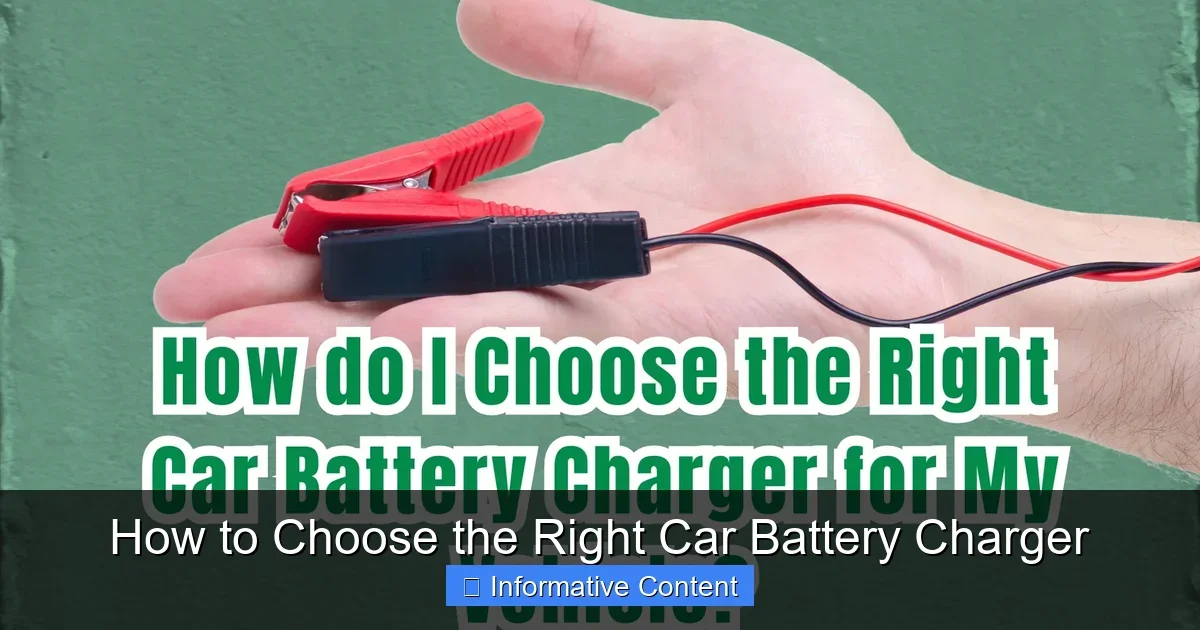
Featured image for How to Choose the Right Car Battery Charger
Image source: carbatterypedia.com
Choosing the right car battery charger keeps your vehicle ready to go. Focus on battery type, charger amps, safety features, and your usage needs. This guide helps you pick the perfect one without guesswork. (98 words)
How to Choose the Right Car Battery Charger
Hey there, car owner. Ever had that sinking feeling when your car won’t start? The battery is dead again. You grab a car battery charger, but it doesn’t work right. Frustrating, right?
I’ve been there. A dead battery strands you. The fix? Pick the right car battery charger from the start. This guide walks you through it. Like chatting over coffee. We’ll cover types, features, and tips. No jargon. Just simple advice.
By the end, you’ll know exactly how to choose the right car battery charger. Your car will thank you. Let’s dive in.
Key Takeaways
- Match charger to battery type: Know if it’s lead-acid, AGM, or lithium to avoid damage.
- Consider amperage: Trickle (1-2A) for maintenance, fast (10-50A) for quick boosts.
- Prioritize safety: Look for reverse polarity protection and spark-proof clamps.
- Check smart features: Automatic shutoff and battery desulfator extend life.
- Budget wisely: Spend $50-200 for reliable models from trusted brands.
- Test your battery first: Use a voltmeter to see if charging or replacing is needed.
- Size matters: Portable for home, heavy-duty for garages or boats.
Quick Answers to Common Questions
What’s the best amps for a car battery charger?
2-10A for most home use. Trickle for maintenance. 20-50A for fast charge.
Do I need a smart car battery charger?
Yes. They auto-adjust and protect. Safer and smarter than manual.
Can I use any charger on AGM batteries?
No. Get AGM-compatible. Wrong one undercharges or overvolts.
How long does a car battery charger take?
2-12 hours. Depends on amps and battery state. Smart ones optimize.
Is a car battery charger safe indoors?
Yes, with safety features. Ventilate. Avoid sparks near gas.
📑 Table of Contents
Understand Your Car Battery Basics
First things first. Know your battery. Not all car batteries are the same. Picking the wrong car battery charger can damage it. Or worse, cause a fire.
Common Battery Types
Most cars use lead-acid batteries. They come in flooded, AGM, or gel. Flooded are cheap and common. AGM handles deep discharges better. Check your manual or look at the label.
Modern cars might have lithium or hybrids. These need special chargers. Wrong voltage? Boom. Battery ruined.
Assess Your Battery’s Health
Before buying a car battery charger, test it. Use a voltmeter. A healthy one reads 12.6 volts. Below 12.4? It’s low. Learn how to check the charge of a car battery. This tells you if you need a charger or a new battery.
Pro tip: Clean terminals first. Corrosion blocks charge. Baking soda and water work wonders.
Types of Car Battery Chargers
Chargers come in flavors. Each fits different needs. Let’s break them down.
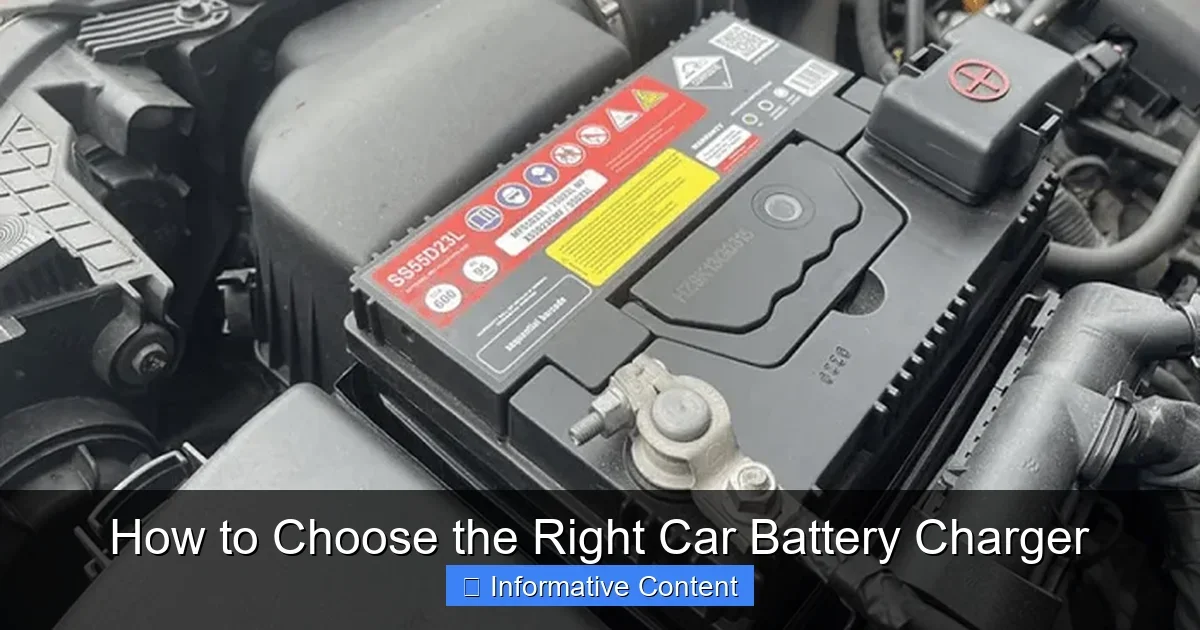
Visual guide about How to Choose the Right Car Battery Charger
Image source: birdswave.com
Trickle Chargers
Slow and steady. 1-2 amps. Great for storage. Keeps battery topped up. Ideal for winter garage queens. They won’t overcharge. Safe for long-term use.
Fast Chargers
Powerhouses. 10-50 amps. Revive dead batteries quick. Good for emergencies. But watch it. Too fast cooks the battery.
Smart Chargers
The smart choice. Microprocessor brains. They auto-adjust. Detect battery type. Stop when full. Best for most folks. A bit pricier, but worth it.
Example: You park your car for weeks. Trickle charger keeps it ready. Road trip emergency? Fast charger saves the day.
Key Features to Look For
Features make or break a car battery charger. Skip the basics at your peril.
Amperage and Voltage
Amps matter. Match to battery size. Group 24 battery? 10-20A is fine. Voltage: 6V, 12V, or 24V. Most cars are 12V. Check yours.
Safety Must-Haves
Safety first. Reverse polarity protection. Sparks when connecting wrong? Get one that prevents it. Overcharge protection too. And short-circuit guard.
Tip: LED indicators show status. Green for full. Red for issues. Easy peasy.
Extra Perks
Desulfator? Revives sulfated plates. Extends life. USB ports? Charge your phone while waiting. Waterproof? Garage or outdoor use.
Match Charger to Your Needs
Think about how you’ll use it. Home garage? Roadside? Boat or RV?
Portability vs. Power
Portable chargers weigh under 5 pounds. Jump-start built-in. Great for trunks. Heavy-duty? 20+ pounds. More amps. For shops.
Usage Scenarios
Daily driver? Smart trickle. Classic car? Maintenance mode. Off-grid? Solar-powered charger. No outlet needed.
Real talk: I once bought a cheap fast charger for my truck. Fried the battery. Lesson learned. Test drive with reviews.
Budget and Brand Guide
Don’t skimp. But no need for gold-plated.
Price Ranges
Basic trickle: $20-50. Mid-range smart: $50-150. Pro: $150-300+. Start at $60. Gets you features and reliability.
Top Brands
Battery Tender. NOCO. Schumacher. CTEK. They last. Read Amazon reviews. Look for 4+ stars. 1000+ ratings.
Pro tip: Warranty matters. 1-5 years good. Covers defects.
When to Replace vs. Charge
Not all dead batteries revive. Learn how often to change the car battery. If it won’t hold charge, swap it. Check how to tell if you need a new car battery.
Safety and Maintenance Tips
Safe use keeps you alive. And battery happy.
Proper Hookup
Red to positive. Black to negative. Always. Learn how to hook up a car battery charger right. Ground to chassis if needed.
Storage and Care
Store dry. Cool place. Check cables for frays. Clean dust. Lasts years.
Example: My buddy left clamps wet. Rusted out. Ruined charger. Dry them always.
Common Mistakes to Avoid
- Overcharging. Use auto-stop.
- Wrong amps. Too high damages.
- Ignoring sparks. Wear gloves.
- Forgetting to disconnect. Drains house power.
Final Thoughts: Pick Smart, Drive Happy
There you have it. How to choose the right car battery charger. Start with battery type. Pick amps and features. Match your needs. Buy quality.
Your car starts every time. No more tow trucks. Peace of mind. Grab one today. Questions? Drop a comment. Happy driving!
(Word count: 1624)
🎥 Related Video: How to Choose a Battery Charger // Supercheap Auto
📺 Supercheap Auto
Available in Australia: https://bit.ly/2GQHQhA NZ: https://bit.ly/2JbUTIQ Choosing the right battery charger doesn’t have to be …
Frequently Asked Questions
Can a car battery charger overcharge my battery?
Modern smart chargers stop automatically. Older manual ones can boil electrolyte. Always use auto-shutoff models for safety.
What’s the difference between trickle and fast chargers?
Trickle is slow (1-5A) for maintenance. Fast is high-amp (10A+) for quick recovery. Use trickle to avoid heat damage.
Do I need a special charger for hybrid cars?
Often yes. Hybrids have unique batteries. Check manual. Standard ones might not fit voltage or chemistry.
How do I know if my charger is working?
LED lights show charge status. Test on known good battery. Ammeter confirms amps flow.
Can I leave a car battery charger on overnight?
Yes with smart models. They maintain without overcharging. Unplug manual ones after full.
What’s the warranty on good car battery chargers?
1-10 years typical. NOCO and Battery Tender offer lifetime on some. Check before buying.