
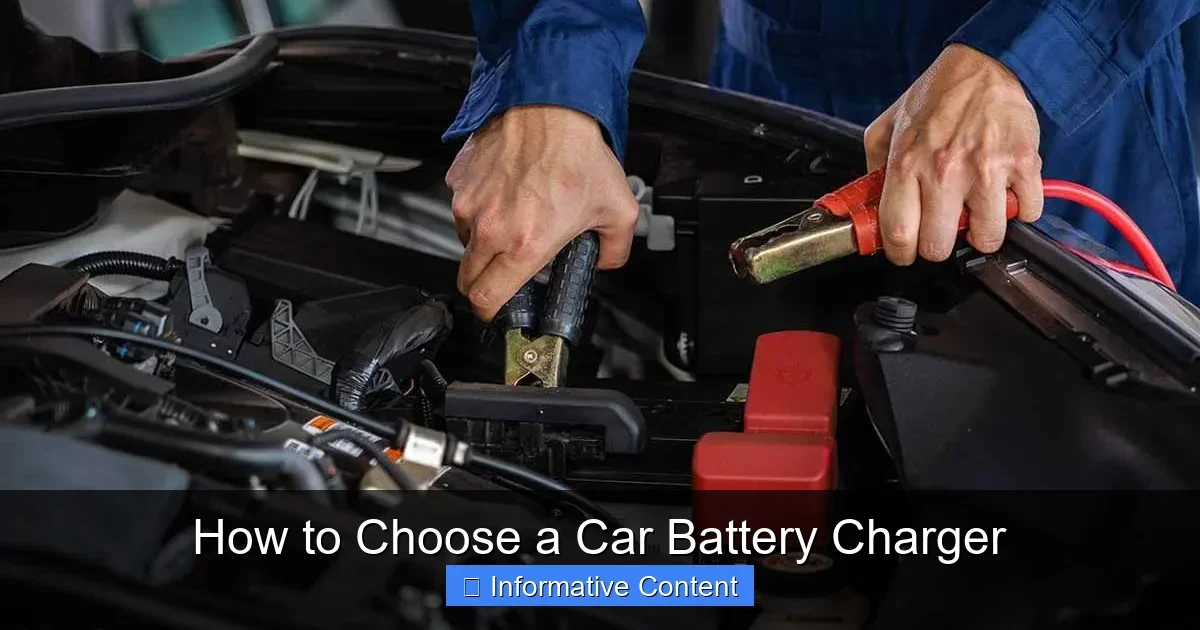
Featured image for How to Choose a Car Battery Charger
Image source: mach1services.com
Choosing the right car battery charger saves time, money, and frustration. Focus on your battery type, needed amps, safety features, and smart tech. With our tips, you’ll pick a charger that keeps your car ready to go. (78 words)
How to Choose a Car Battery Charger
Hey there, friend. Ever had your car refuse to start on a busy morning? That dead battery can ruin your day. A good car battery charger is your best buddy in these moments. It keeps things running smooth.
But with so many options out there, how do you pick the right one? Don’t worry. I’ll walk you through it step by step. We’ll cover everything from types to safety tips. By the end, you’ll know exactly what to buy.
Think of this as me grabbing coffee with you, sharing garage secrets. Let’s get your ride charged up right.
Key Takeaways
- Match charger to battery type: Pick lead-acid, AGM, or lithium for your vehicle to avoid damage.
- Consider amperage wisely: 2-10 amps for maintenance, 20+ for quick boosts, based on battery size.
- Prioritize safety features: Look for reverse polarity protection, spark-proof clamps, and auto shut-off.
- Opt for smart chargers: Microprocessor-controlled models repair and maintain batteries better than basic ones.
- Check compatibility: Ensure 12V for cars, higher for trucks; verify CCA match.
- Budget smartly: Spend $50-200 for quality; read reviews and warranties.
- Test battery first: Use a multimeter to confirm if charging or replacement is needed.
Quick Answers to Common Questions
What’s the best amps for a standard car battery charger?
4-10 amps. Safe and effective for most 12V batteries.
Do I need a smart car battery charger?
Yes, for maintenance. They auto-adjust and protect better.
Can one charger work for all batteries?
No. Match lead-acid, AGM, or lithium types.
How long does a car battery charger last?
5-10 years with good care. Check warranty.
Is a trickle charger enough for emergencies?
No. Use fast chargers for dead batteries quick.
📑 Table of Contents
1. Assess Your Needs First
Before you shop, stop and think. What do you need this car battery charger for? Daily top-ups? Reviving a dead battery? Or storage over winter?
Know Your Battery Type
Most cars use lead-acid batteries. But some have AGM or gel types. Check your manual. Wrong charger? It could damage cells. For example, lithium batteries need special chargers. Match them up.
Vehicle and Usage Tips
Daily driver? Go for a maintenance charger. Classic car in the garage? Trickle charger works great. Big truck? Need higher amps. Pro tip: List your needs. It narrows choices fast.
Also, test your car battery with a multimeter first. This tells if it’s dead or just low. Saves buying wrong gear.
2. Understand Types of Car Battery Chargers
Chargers come in flavors. Pick the right one for your job.
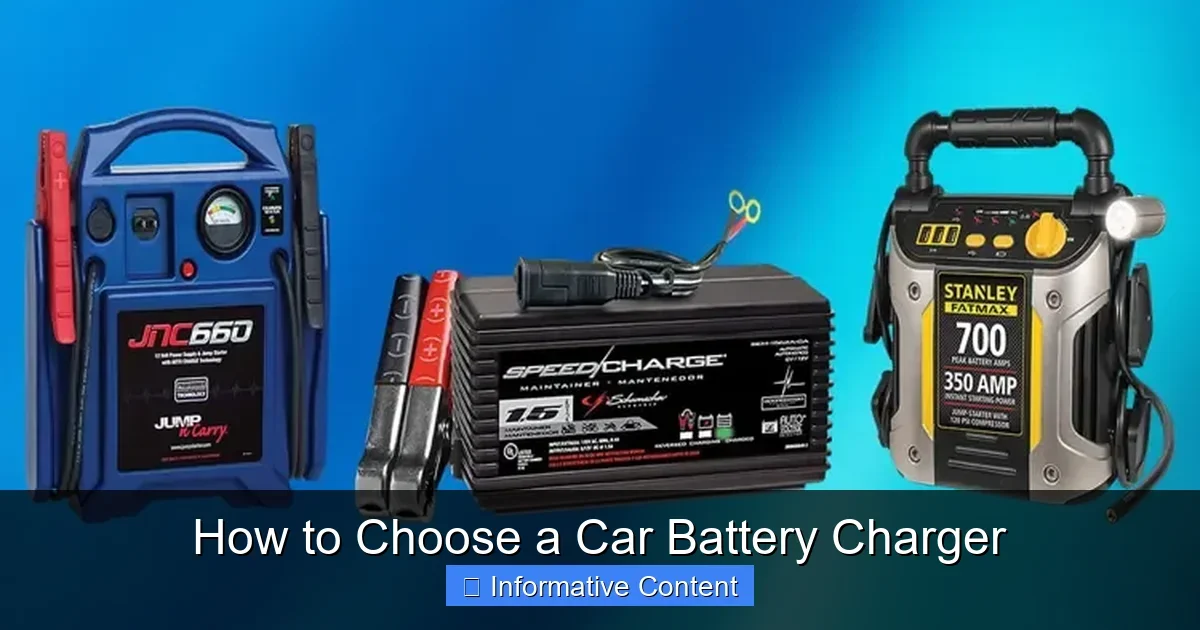
Visual guide about How to Choose a Car Battery Charger
Image source: toolsadvisers.com
Trickle Chargers
Slow and steady. 1-2 amps. Perfect for long-term storage. Keeps battery topped without overcharge. Great for boats or RVs too.
Fast or Boost Chargers
High power, 20-100 amps. Jump-starts dead batteries quick. Use sparingly. Too much? Heats up battery bad. Example: Roadside emergency hero.
Smart or Automatic Chargers
These are stars now. Microprocessors watch voltage. They charge, test, repair sulfation. Switch modes auto. Best all-rounder for home use.
Learn more on how to use a trickle charger on your car battery once picked.
Manual vs. Automatic
Manual: You watch and stop. Cheap but risky. Automatic: Safer, hands-free. Worth extra bucks.
3. Key Specifications to Check
Numbers matter. Read labels close.
Amperage (Amps)
Main stat. 2-10 amps for standard cars. Matches most 40-60Ah batteries. Formula: 10% of battery Ah rating. So 50Ah battery? 5 amps ideal. Faster? Riskier.
Voltage and Compatibility
12V for cars. 24V for some trucks. Check CCA (cold cranking amps). Charger should handle it. Multi-stage charging? Gold standard: Bulk, absorption, float.
Cable Length and Clamps
Long cables reach tight spots. Heavy-duty clamps grip well. Jaw or ring types? Jaw for quick. Ring for permanent.
Tip: For a sedan, 6-10 ft cables rock. Trucks need more.
4. Safety Features Are Non-Negotiable
Safety first, always. Batteries spark and explode if mishandled.
Must-Have Protections
Reverse polarity: Won’t charge backward. Spark-proof: No fires on connect. Overcharge protection: Auto stops. Short-circuit guard too.
Weatherproofing and Portability
IP65 rating for garage use. Wheeled models for shops. Fan-cooled? Prevents overheat.
Real talk: I once fried clamps ignoring sparks. Never again. Prioritize this.
After buying, check our guide on how to connect a car battery charger safely.
5. Smart Features and Extras
Modern chargers pack tech. Makes life easy.
Digital Displays and Modes
LCD shows progress. Modes for repair, supply, winter. Desulfation pulse revives old batteries.
Bluetooth and Apps
Top models connect to phone. Track charge remote. Cool for fleets.
Portability and Multi-Use
Compact for trunk. Charges phones too? Bonus. Jump-start built-in? Ultimate tool.
Example: NOCO Genius. Small, smart, fixes batteries. Love it for my truck.
6. Budget, Brands, and Where to Buy
Money talk. Balance cost and quality.
Price Ranges
Basic: $20-50. Trickle only. Mid: $50-150. Smart features. Pro: $150+. Heavy-duty.
Top Brands to Trust
NOCO, Battery Tender, Schumacher. CTEK for premium. Read Amazon reviews. Look for 3+ year warranty.
Shopping Tips
AutoZone, online deals. Compare specs, not price alone. Return policy matters.
Pro tip: If battery’s toast, learn how to tell if a car battery is bad before charging.
Final Thoughts: Charge Ahead Confidently
There you have it, pal. Choosing a car battery charger boils down to needs, type, specs, safety, and smarts. Skip cheap junk. Invest in reliable.
Picture this: Winter morning. Car starts first try. That’s the win. Grab one today. Follow our tips. Your battery thanks you.
Got questions? Drop ’em below. Safe driving!
(Word count: 1628)
🎥 Related Video: How to Choose a Battery Charger // Supercheap Auto
📺 Supercheap Auto
Available in Australia: https://bit.ly/2GQHQhA NZ: https://bit.ly/2JbUTIQ Choosing the right battery charger doesn’t have to be …
Frequently Asked Questions
What’s the difference between a charger and maintainer?
A charger boosts dead batteries fast. A maintainer, or trickle charger, keeps full ones topped off slowly. Pick based on your need—quick fix or long-term storage.
Can I leave a car battery charger connected overnight?
Yes, with automatic models. They shut off when full. Never leave manual ones plugged in unattended to avoid overcharge risks.
How do I know if my car battery charger is working?
Check voltage output with a multimeter. Amps should match specs. Lights or display confirm charging mode.
Are battery chargers safe for indoor use?
Yes, if they have ventilation and safety features. Use in well-ventilated garages. Avoid damp areas.
What’s the ideal charging time for a dead battery?
4-12 hours at 10 amps. Depends on size and depletion. Smart chargers optimize this.
Do I need a special charger for AGM batteries?
Yes. AGM needs higher voltage stages. Standard ones undercharge them, shortening life.