
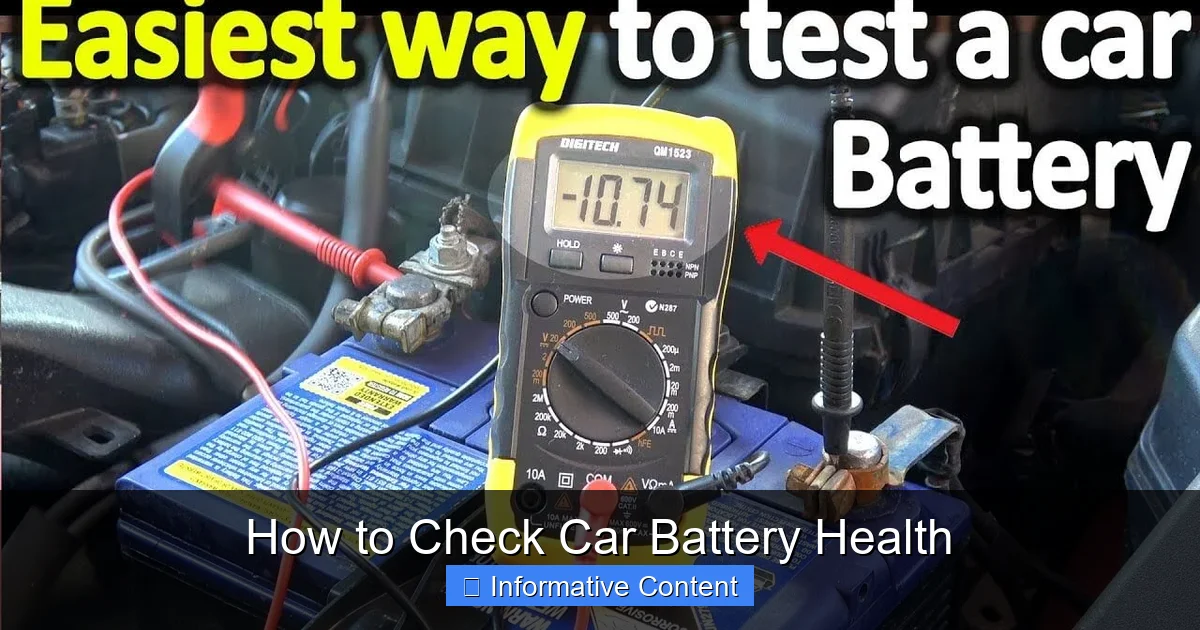
Don’t get stranded! Learning how to check car battery health is crucial for reliable vehicle operation. This comprehensive guide empowers you to identify common warning signs, utilize simple tools like a multimeter, and perform basic tests to accurately gauge your battery’s condition. By understanding how to check car battery health, you can proactively maintain your car, extend battery life, and prevent unexpected failures, ensuring a smooth and safe driving experience every time.
Is there anything more frustrating than turning the key, hearing that dreaded slow crank, and realizing your car isn’t going to start? That feeling of helplessness, perhaps on a cold morning or when you’re already running late, is something most drivers experience at least once. Often, the culprit is a dying car battery. But what if you could spot these problems *before* they leave you stranded?
Understanding how to check car battery health isn’t just about preventing inconvenient breakdowns; it’s about proactive maintenance that can save you time, money, and a whole lot of stress. Your car’s battery is the heart of its electrical system, responsible for starting the engine and powering various components. A healthy battery ensures reliable starts and optimal performance. A weak one, however, can lead to a cascade of electrical issues and, inevitably, a dead car.
In this friendly guide, we’ll walk you through everything you need to know about how to check car battery health. We’ll cover the tell-tale signs of a failing battery, the essential tools you’ll need, and easy, step-by-step instructions to perform tests yourself. By the end, you’ll be empowered to keep a watchful eye on your battery’s condition, helping you extend its life and ensure your car is always ready to go when you are.
Key Takeaways
- Understand Common Symptoms: Look out for slow engine cranking, dim lights, or a dashboard battery light, as these are strong indicators of a weakening battery.
- Utilize a Multimeter: A simple multimeter can effectively measure your battery’s resting voltage, which offers a preliminary insight into its charge level and overall health.
- Perform a Load Test: For a more accurate assessment, a battery load tester simulates real-world starting conditions, revealing if your battery can hold sufficient voltage under stress. This is crucial for truly understanding how to check car battery health.
- Conduct Visual Inspections Regularly: Check battery terminals for corrosion, ensure connections are tight, and look for any physical damage like cracks or swelling.
- Prioritize Safety: Always wear appropriate safety gear, such as gloves and eye protection, when working with car batteries to prevent acid exposure or electrical shocks.
- Maintain Proactive Habits: Regular visual checks, ensuring proper charge, and keeping terminals clean can significantly extend your battery’s lifespan and reliability.
Quick Answers to Common Questions
What’s the ideal voltage for a healthy car battery?
A fully charged, healthy car battery should show a resting voltage between 12.6 and 12.8 volts after the car has been off for a few hours.
Can a multimeter fully assess battery health?
A multimeter is great for checking resting voltage and the charging system, but it won’t tell you how well the battery holds voltage under load. For a complete assessment, a load test is also needed.
How often should I check my car battery?
It’s a good practice to check your car battery’s health at least twice a year, perhaps before summer and winter, or if you notice any of the warning signs discussed.
What’s CCA?
CCA stands for Cold Cranking Amps. It’s a rating that measures a battery’s ability to start an engine in cold temperatures, indicating the maximum current a battery can deliver at 0°F (-18°C) for 30 seconds while maintaining a voltage of at least 7.2 volts.
Is it safe to clean battery terminals myself?
Yes, it is safe to clean battery terminals yourself, provided you wear safety glasses and gloves, disconnect the negative terminal first, and use the recommended baking soda paste and wire brush method.
📑 Table of Contents
Why Car Battery Health Matters for Your Drive
Your car battery might seem like a humble box under the hood, but it plays a starring role in your vehicle’s operation. Its primary job is to deliver a powerful jolt of electricity to the starter motor, getting your engine roaring to life. Beyond that, it also stabilizes the voltage for your car’s electrical system and provides power to accessories like your radio, lights, and windows when the engine isn’t running.
Imagine relying on your battery for such critical functions. If it’s weak or failing, the consequences can range from a minor inconvenience to a serious safety issue. A dead battery can leave you stuck in a remote location, delay important appointments, or even put you at risk if it fails in traffic. Moreover, a struggling battery can put extra strain on other components, like your alternator, potentially leading to more expensive repairs down the line. Knowing how to check car battery health regularly is your first line of defense against these problems. It’s about ensuring peace of mind and the smooth operation of your vehicle.
Common Signs of a Dying Car Battery
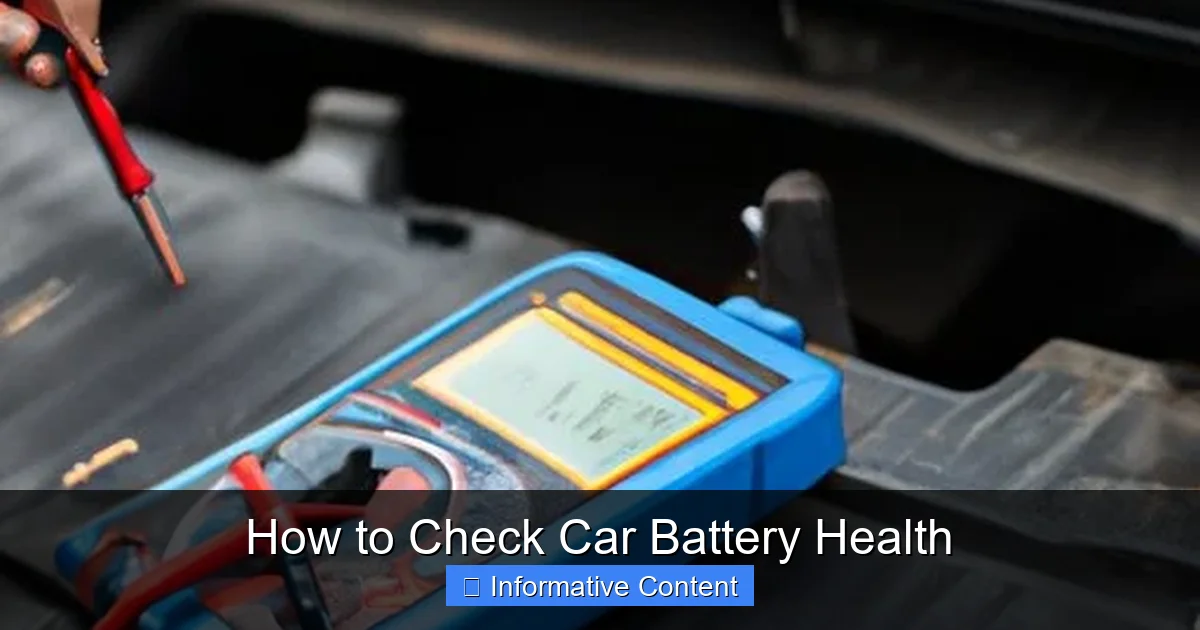
Visual guide about How to Check Car Battery Health
Image source: tffn.net
Your car’s battery usually gives you hints when it’s nearing the end of its life. Learning to recognize these subtle (and not-so-subtle) signals can save you from an unexpected breakdown.
Slow Engine Crank
This is perhaps the most common and obvious sign. When you turn the key or push the start button, does your engine struggle to turn over? Does it sound sluggish, like it’s taking a lot of effort? This “rruh-rruh-rruh” sound, rather than a quick “vroom,” indicates the battery isn’t supplying enough power to the starter motor.
Dim Headlights or Interior Lights
Before you even try to start the car, turn on your headlights. If they appear dim or noticeably weaker than usual, it’s a good sign your battery is losing its charge. You might also notice interior lights or the dashboard display seem less vibrant. This is especially apparent when the engine is off.
Dashboard Warning Light
Many modern cars have a battery warning light (it often looks like a battery symbol) on the dashboard. If this light illuminates while you’re driving, it’s a clear signal that there’s an issue with your charging system or the battery itself. Don’t ignore it!
Clicking Sound from the Engine
If you turn the key and hear only a rapid clicking sound, it means the battery doesn’t have enough power to fully engage the starter motor. The starter solenoid is trying to pull power, but the battery can’t deliver.
Corrosion on Battery Terminals
A visual inspection is crucial. If you see a white or bluish, powdery substance building up around the battery terminals (where the cables connect), this is corrosion. Corrosion can impede the flow of electricity, making it harder for your battery to deliver power effectively.
Old Battery
Car batteries typically last between 3 to 5 years, depending on climate, driving habits, and maintenance. If your battery is older than this, even without obvious symptoms, it’s wise to start thinking about its condition. Age alone is a significant factor when considering how to check car battery health.
Essential Tools for Checking Battery Health
You don’t need a professional garage to check your car battery health. A few inexpensive tools can help you perform most of the necessary tests right in your driveway.
Multimeter (or Voltmeter)
This is your primary diagnostic tool. A multimeter measures voltage, current, and resistance. For checking your battery, you’ll primarily use its voltmeter function. They are affordable and easy to find at any auto parts store or electronics shop.
Battery Load Tester
While a multimeter tells you the battery’s resting voltage, a load tester simulates the stress your battery experiences when starting the engine. This provides a more comprehensive picture of its health by seeing if it can maintain voltage under demand. You can buy one or often get a free test done at an auto parts store.
Battery Hydrometer (for serviceable batteries)
Some older or specific types of batteries (called “flooded” or “serviceable” batteries) have removable caps that allow you to check the electrolyte levels. A hydrometer measures the specific gravity of the electrolyte, indicating the state of charge in individual cells. Most modern car batteries are “maintenance-free” and sealed, so this tool isn’t always necessary.
Safety Gear
Always prioritize safety when working with car batteries.
- Safety Glasses: Protect your eyes from acid splashes or sparks.
- Gloves: Protect your hands from battery acid and dirt.
Battery Terminal Cleaner/Wire Brush
A simple wire brush or a specialized terminal cleaning tool helps remove corrosion from battery posts and cable clamps.
Step-by-Step Guide to Checking Voltage (Resting Voltage)
Checking your battery’s resting voltage with a multimeter is the easiest and most common way to get an initial idea of its health.
Safety First!
Before you touch anything, make sure your car is turned off, the ignition is completely off, and the parking brake is engaged. Wear your safety glasses and gloves. Avoid touching anything else under the hood that might be hot or moving.
Locate Your Battery
Most car batteries are found under the hood. However, some vehicles (especially luxury or newer models) might have them in the trunk, under the back seat, or even in the wheel well. Consult your car’s owner’s manual if you can’t find it.
Prepare Your Multimeter
1. Set your multimeter to measure DC (direct current) voltage. Look for a “V” with a straight line above it (V DC).
2. Choose a range that includes 12V or 20V (e.g., “20V DC”).
3. Connect the red lead to the “VΩmA” or “V” port and the black lead to the “COM” port.
Take the Reading (Resting Voltage)
1. Make sure the car has been off for at least 2-3 hours. This allows the battery to “rest” and provides an accurate resting voltage reading, free from residual surface charge from driving.
2. Connect the red (positive) probe of the multimeter to the positive (+) terminal of your car battery.
3. Connect the black (negative) probe of the multimeter to the negative (-) terminal of your car battery.
4. Read the voltage displayed on your multimeter.
Interpret the Results
The voltage reading gives you a good indication of your battery’s state of charge:
- 12.6V – 12.8V: Your battery is fully charged and in good health.
- 12.4V: The battery is approximately 75% charged. It’s not critical, but you might want to consider a trickle charge.
- 12.2V: The battery is around 50% charged. This is a concerning level; your battery likely needs a full charge and further testing.
- Below 12.0V: Your battery is severely discharged and likely has a problem. It might be dead or on its last legs.
If your battery consistently shows a low resting voltage, even after being fully charged, it’s a strong sign it’s time for a replacement. This is a crucial step in understanding how to check car battery health effectively.
Checking the Charging System (Engine On)
After checking the resting voltage, you can also quickly check your car’s charging system (alternator).
1. With the multimeter still connected to the battery terminals, start your car.
2. Let the engine run for a few minutes.
3. Observe the voltage reading. A healthy charging system should show a reading between 13.7V and 14.7V. If it’s outside this range, either too low (below 13V) or too high (above 15V), it indicates a problem with your alternator or voltage regulator, not necessarily the battery itself.
Beyond Voltage: Load Testing Your Battery
While resting voltage gives you a good snapshot, it doesn’t tell the whole story. A battery can show a healthy resting voltage but fail completely when put under the strain of starting your engine. This is where a battery load tester comes in.
Why Resting Voltage Isn’t Enough
Think of it like this: a person can look perfectly healthy sitting down, but might struggle to run a sprint. Similarly, a battery might have sufficient surface charge to show a good resting voltage, but lack the internal capacity to deliver the large burst of current (known as Cold Cranking Amps or CCA) needed to crank your engine. This is why learning how to check car battery health needs more than just voltage readings.
What is a Load Test?
A load test puts your battery under a simulated “load” – essentially drawing a significant amount of current, similar to what happens when you start your car. By observing how the battery’s voltage drops under this load, you can determine if it has enough reserve capacity to reliably start your vehicle.
How to Perform a Load Test (Briefly)
Dedicated battery load testers are available for purchase, or you can often get this test done for free at most auto parts stores.
1. Ensure your battery is fully charged before testing.
2. Connect the load tester’s clamps to the battery terminals (red to positive, black to negative), following the manufacturer’s instructions.
3. Activate the load (usually a button or switch) for about 10-15 seconds. Do *not* exceed the recommended time to avoid damaging the battery.
4. Observe the voltage reading on the tester during the load.
Interpreting Load Test Results
- Good Battery: The voltage should not drop below 9.6 volts during the 10-15 second test. If it maintains above 10.5V, that’s even better.
- Weak Battery: If the voltage drops significantly below 9.6V, especially early in the test, your battery is likely weak and nearing its end.
The specific minimum voltage can vary slightly based on the battery’s CCA rating and temperature. Always refer to your battery’s specifications and the load tester’s instructions. This test is the most accurate way to truly check car battery health.
Professional Load Testing
If you don’t own a load tester or feel uncomfortable performing the test yourself, most auto parts stores and mechanic shops offer free battery testing services. They have sophisticated testers that can provide a detailed report, often including the battery’s actual CCA compared to its rated CCA.
Visual Inspection and Maintenance Tips
Beyond electrical tests, a simple visual inspection and a few maintenance habits can significantly impact your battery’s lifespan and performance.
Inspect for Corrosion
Corrosion, that white or bluish powdery buildup on the terminals, is a common issue. It acts as an insulator, preventing a good electrical connection.
- How to Clean: Disconnect the negative cable first, then the positive. Mix a paste of baking soda and water (about two tablespoons of baking soda to a cup of water). Apply it to the corroded areas with an old toothbrush or a wire brush. The paste will bubble as it neutralizes the acid. Rinse with clean water and dry thoroughly before reconnecting (positive first, then negative).
Check Terminal Connections
Ensure the battery cable clamps are tight and secure on the battery posts. Loose connections can lead to intermittent power, poor starting, and even arcing, which can be dangerous. Give them a gentle wiggle to test their tightness. If loose, tighten them with a wrench (but don’t overtighten!).
Look for Cracks or Swelling
Visually inspect the battery casing for any cracks, bulges, or swelling. These are signs of internal damage, often caused by overcharging, freezing, or extreme heat. A damaged case means the battery is compromised and needs immediate replacement.
Electrolyte Levels (if applicable)
For serviceable “flooded” batteries (those with removable caps), check the fluid levels. The electrolyte should cover the lead plates inside each cell. If levels are low, top them up *only* with distilled water. Never use tap water, as minerals can damage the battery. Be careful when removing caps, as battery acid is corrosive.
Keep it Clean
Beyond just terminals, wipe down the top of your battery regularly with a damp cloth. Dirt and grime can accumulate and, when mixed with moisture, can create a conductive path that slowly drains the battery.
Regular Driving
Short, frequent trips don’t give your alternator enough time to fully recharge the battery after starting. Try to take your car for longer drives (at least 20-30 minutes) regularly to ensure the battery stays topped up.
Using a Trickle Charger or Battery Maintainer
If you store your car for extended periods, or if you only drive short distances, consider investing in a trickle charger or battery maintainer. These devices deliver a low, continuous charge to keep your battery at optimal levels, preventing deep discharge and extending its life.
Conclusion
Knowing how to check car battery health is a fundamental skill for any car owner. It empowers you to take control of your vehicle’s reliability and prevents those unwelcome surprises that a dead battery can bring. By regularly performing simple voltage tests, considering a load test, and conducting visual inspections, you can monitor your battery’s condition effectively.
Remember, a car battery typically lasts 3 to 5 years, but proper maintenance and proactive checks can help you get the most out of it. Don’t wait for your car to refuse to start; arm yourself with the knowledge and tools to keep your battery healthy, ensuring smooth, reliable journeys every time you turn the key. Stay safe, stay smart, and enjoy the peace of mind that comes with a well-maintained vehicle!
🎥 Related Video: How to Check Car Battery Life at home🔥🔋#carlover #carbattery #multimeter #shortsfeed #wagonr
📺 M.A Vlogs
Hello Guyss In this short I am gonna show you How to check Car Battery Life at Home with using Multi Meter…It is very usefull …
Frequently Asked Questions
How long do car batteries typically last?
Car batteries generally last between 3 to 5 years. This lifespan can vary significantly based on climate, driving habits (frequent short trips can reduce life), and how well the battery is maintained.
What causes car batteries to die prematurely?
Common causes include extreme temperatures (both hot and cold), frequent short drives that don’t allow full recharging, leaving lights or accessories on, excessive vibration, and not cleaning corrosion from terminals. Deep discharges also significantly shorten a battery’s life.
Should I disconnect my battery if I’m storing my car?
Yes, if you’re storing your car for an extended period (more than a few weeks), disconnecting the negative battery terminal can prevent parasitic drains from slowly discharging the battery. Alternatively, a battery tender or trickle charger is an even better solution to keep it fully charged.
What’s the difference between a car battery and a deep cycle battery?
A car battery (starting battery) is designed to deliver a large burst of power for a short duration to start an engine. A deep cycle battery, on the other hand, is built to provide a steady, lower current over a longer period and can be discharged deeply many times without damage, making it suitable for marine or RV applications.
Can cold weather affect battery health?
Yes, cold weather severely impacts battery performance. Batteries lose capacity in the cold, and the engine also requires more power to start. This combination often exposes a weak battery that might have seemed fine in warmer temperatures.
Is it better to jump-start or charge a weak battery?
If your battery is just weak, charging it with a battery charger is generally better. Jump-starting gets you going quickly but doesn’t fully recharge the battery and can put a strain on the donor car’s electrical system. After a jump, it’s advisable to drive for a while or fully charge the battery to prevent future issues.