
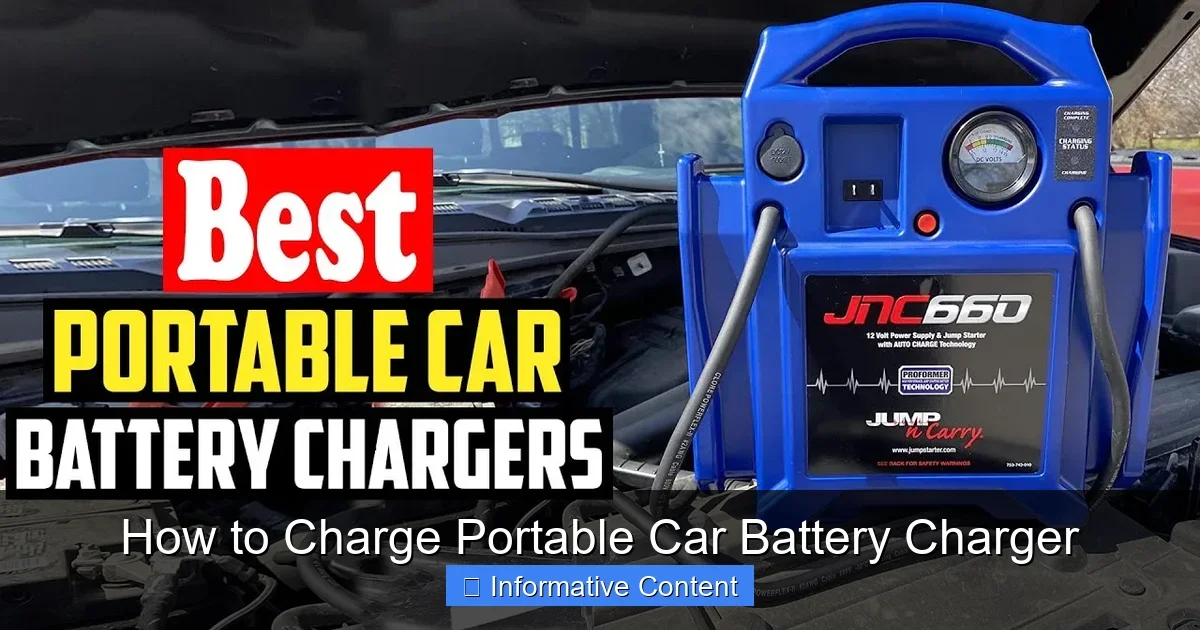
Featured image for How to Charge Portable Car Battery Charger
Image source: i.ytimg.com
Charging your portable car battery charger is simple and key to reliable roadside power. Follow our easy steps to plug in, monitor, and maintain it properly. Avoid common mistakes to ensure it’s always ready to jump-start your car. (78 words)
How to Charge Portable Car Battery Charger
Hey there, road warrior! Ever grabbed your portable car battery charger for an emergency, only to find it’s as dead as the car battery you’re trying to save? Yeah, that stinks. These handy devices—also called jump starters or power packs—are lifesavers. But they need their own juice. Knowing how to charge portable car battery charger right keeps you prepared.
Picture this: You’re on a road trip. Battery dies at midnight. No problem, you’ve got your portable charger. But if it’s not charged? Nightmare. Today, I’ll walk you through it like we’re chatting in the garage. Simple steps, pro tips, and fixes for hiccups. Let’s get your charger powered up and ready.
These gadgets pack lithium-ion batteries. They jump-start cars, power phones, even inflate tires. But misuse charging? You risk fires or short life. Stick with me, and you’ll master how to charge portable car battery charger in no time.
Key Takeaways
- Read the manual first: Every portable car battery charger has unique specs for safe charging.
- Use the right cable: Match the original or compatible AC/DC adapter to avoid damage.
- Charge fully before storage: Keep it at 100% to prevent deep discharge.
- Monitor temperature: Charge in a cool spot between 32°F and 104°F.
- Check LED indicators: They show charge level—red for low, green for full.
- Safety first: Never charge a damaged unit; unplug after full charge.
- Recharge monthly: Maintain health even if unused.
Quick Answers to Common Questions
How often should I charge my portable car battery charger?
After every use, and monthly if stored. Keeps lithium battery healthy.
Can I charge it in my car?
Yes, via 12V lighter if supported. Slower than wall, though.
What if it gets hot while charging?
Normal mild warmth. Very hot? Unplug, let cool, check cable.
Is overnight charging safe?
Yes for smart models—they stop at full. Watch first time.
Can I use any USB cable?
No—use manufacturer-specified for amps/voltage match.
📑 Table of Contents
Understanding Your Portable Car Battery Charger
Before diving into how to charge portable car battery charger, know what you’re dealing with. Most models are compact power banks with clamps for car batteries. They output hundreds of amps for jumps but charge via wall outlets or cars.
Common Types and Specs
Jump starters vary. Some peak at 1000 amps. Others hit 2000+. Battery capacity? Often 10,000-20,000 mAh. Check yours—NOCO, Schumacher, or Stanley? Each has quirks.
For example, my NOCO Boost GB40 charges via USB-C or AC. Yours might use 12V DC. Always peek at the label. Voltage matters: 12V standard, some 24V for trucks.
Why Proper Charging Matters
Lithium batteries hate deep discharge. Charge regularly. It boosts cycles—up to 1000 charges. Neglect it? Capacity drops fast. Pro tip: Charge after every use, even if LEDs show green.
Fun fact: These beat old lead-acid. Lighter, safer. But follow rules to avoid puffs (that’s battery swell).
Gathering What You Need
Ready to learn how to charge portable car battery charger? Grab basics first. No fancy tools needed.
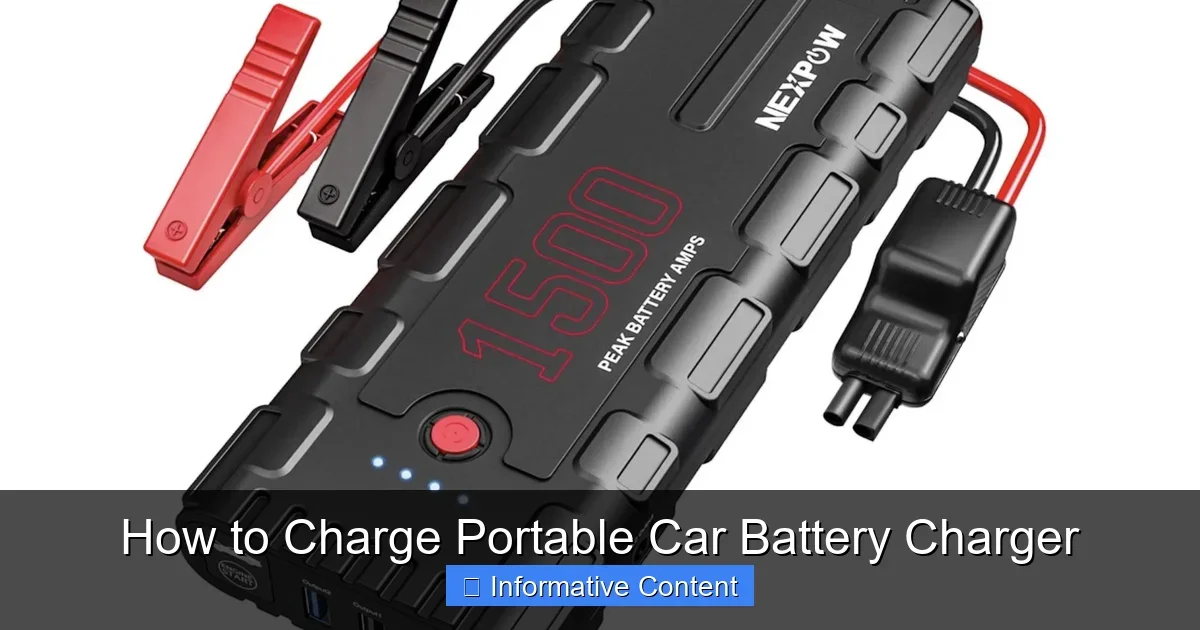
Visual guide about How to Charge Portable Car Battery Charger
Image source: imore.com
Essential Items
- Original charging cable or adapter (AC wall plug, usually).
- Power outlet (110-240V AC).
- Clean, dry workspace.
- Manual (download if lost).
Got a car-only model? Use cigarette lighter. Extension cord? Fine, but heavy-duty gauge 14+.
Optional Goodies
Multimeter checks voltage. Gloves protect hands. Fire extinguisher nearby—better safe.
Example: My Stanley jumps via 12V port. I plug into garage outlet. Takes 4 hours flat.
Step-by-Step Guide: How to Charge Portable Car Battery Charger
Here’s the meat—your foolproof walkthrough on how to charge portable car battery charger. Takes 10 minutes to start.
Step 1: Inspect and Prep
Unpack or grab unit. Check for dents, leaks, or smells. Damaged? Don’t charge—recycle. Wipe clamps clean. Ensure vents unblocked.
Power off. Some auto-shutoff. Press button: LEDs blink status.
Step 2: Connect the Charger
Find port. Often “DC IN” or micro-USB. Plug cable firmly. Other end to wall socket. Flip switch if needed.
LEDs light up? Good—charging starts. Red pulsing? Normal. Steady green? Full soon.
Tip: Wall over car charger. Faster amps.
Step 3: Monitor Progress
Don’t walk away first time. Watch 10 minutes. Heat normal, hot? Unplug, cool off.
Time varies: 2-6 hours typical. 20Ah unit? 4 hours at 5A.
Step 4: Disconnect Safely
Green solid? Done. Unplug wall first, then device. Store half-charged? No—full best.
Pro move: Note start time. App timers help.
Charging Times and Factors
How long for how to charge portable car battery charger? Depends.
Average Times
Empty to full:
- Small (500A): 2-3 hours.
- Medium (1000A): 3-5 hours.
- Large (2000A): 5-8 hours.
Trickle? Overnight safe with smart models.
What Slows It Down?
Cold weather: 20% longer. Weak outlet? Same. Old battery? Test it.
Example: Winter charge my NOCO? 5 hours vs. summer 3.
Once charged, use it right. Learn how to charge car battery using charger like yours for dead batteries.
Safety Tips for Charging
Safety first in how to charge portable car battery charger. Fires rare, but possible.
Top Precautions
- Charge indoors, away from kids/pets.
- No metal surfaces—sparks.
- Temp: 32-104°F ideal.
- Ventilate—gases minimal, but air flow.
Never cover. Use surge protector. Wet? Dry fully first.
Emergency Signs
Smoke, hiss, bulge? Unplug, outside, call maker. Example: Once smelled odd—false alarm, but checked.
For hooking it up later, see how to hook up car battery charger.
Troubleshooting Common Problems
Issues happen. Fix how to charge portable car battery charger snags easy.
Won’t Charge?
Cable bad? Swap. Outlet dead? Test lamp. Port dirty? Blow out.
Charges Slow?
Weak power source. Try direct wall. Battery old? 300 cycles max.
LED Errors?
Blink codes in manual. 3 reds? Overheat—wait.
Dead battery fix: how to charge a dead car battery after yours revives.
Reset: Hold power 10 seconds. Still? Warranty time.
Maintenance and Best Practices
Charged? Keep it that way.
Storage Tips
Full charge, cool/dry spot. Monthly top-up. No freezer—condensation kills.
Longevity Hacks
- 80% cycles best—not always 100%.
- Discharge test yearly.
- Update firmware if smart model.
Use often. Sits 6 months? Capacity dips 20%.
Wrapping It Up: Stay Powered and Ready
There you have it—your complete guide on how to charge portable car battery charger. From prep to troubleshoot, you’re set. These tools save days, trips, sanity. Charge smart, drive confident.
Grab yours, plug in today. Questions? Drop below. Safe travels, friend!
(Word count: 1628)
🎥 Related Video: How to Recharge GOOLOO Jump Starte GT1500
📺 Gooloo_US
https://www.amazon.com/GOOLOO-SuperSafe-Starter-Portable-Resistant/dp/B08CC1GYR1/ref=sr_1_53?keywords=jump% …
Frequently Asked Questions
How long does it take to charge a portable car battery charger?
Typically 2-8 hours based on size and power source. Small units take 2-3 hours; larger ones up to 8. Always check your model’s specs.
Can I leave my portable car battery charger plugged in all the time?
No, unplug after full charge to avoid overcharge stress. Smart ones auto-stop, but it’s best practice for battery life.
What should I do if my charger won’t hold a charge?
Test with multimeter; if low after full charge, battery may be worn. Contact manufacturer for warranty or replace after 300 cycles.
Is it safe to charge in extreme temperatures?
Avoid below 32°F or above 104°F. Cold slows charging; heat risks damage. Room temp is ideal.
Do I need to fully discharge before recharging?
No—lithium hates deep discharge. Top up anytime; partial charges are fine and better.
How do I know when it’s fully charged?
LEDs turn green or show 100%. Manual confirms pattern. Don’t rely on time alone.