
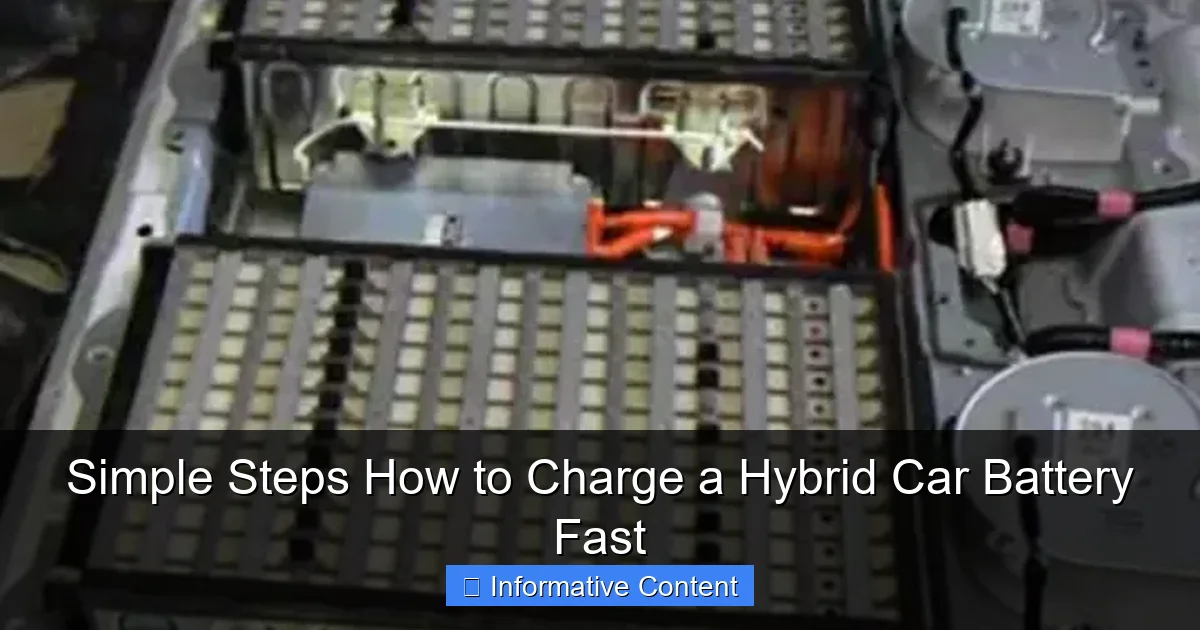
For most hybrid cars, the battery primarily self-charges through regenerative braking and the gasoline engine, negating the need for external ‘fast charging’ like an EV. To maintain peak battery readiness quickly, focus on efficient driving that maximizes regeneration. Only plug-in hybrids (PHEVs) connect to external chargers, where higher amperage Level 2 stations offer the quickest top-ups.
Hey there, fellow eco-conscious driver! Are you new to the exciting world of hybrid cars, or perhaps just got a new plug-in hybrid and are wondering, “How exactly do I keep this battery happy and full?” Trust me, you’re not alone. When I first got my PHEV (that’s Plug-in Hybrid Electric Vehicle for the uninitiated!), I felt a mix of excitement and a tiny bit of confusion. It’s not quite a regular gas car, and it’s not quite a full EV, so how to charge a hybrid car battery fast and efficiently seemed like a bit of a mystery. But don’t you worry, it’s far simpler than it sounds!
Think of this as your friendly guide, a chat over coffee where we break down all the nuances of powering up your hybrid. We’ll explore the different types of hybrids, why charging them makes such a difference to your wallet and the planet, and most importantly, the simple, step-by-step process of getting that battery juiced up. We’re talking about practical tips, clear instructions, and everything you need to know to feel confident about keeping your hybrid running at its best.
So, whether you’re pondering how to charge a hybrid car battery at home, curious about public charging, or just want to understand the basics, you’ve come to the right place. Let’s demystify hybrid charging together and help you maximize your electric miles. It’s truly a game-changer once you get the hang of it, and you’ll be zipping around on electric power more often than you think!
Key Takeaways
- Understand your hybrid type: Most hybrids self-charge; PHEVs require plugging in.
- Upgrade to Level 2 home charging: Install a 240V system for significantly faster at-home power.
- Leverage public fast chargers: Utilize DCFC for rapid top-ups on compatible plug-in hybrids.
- Prioritize compatible charging equipment: Always use chargers designed for your specific hybrid model.
- Monitor charging progress: Use vehicle apps or displays to track battery status and completion.
- Maintain battery health: Avoid deep discharges to ensure efficient, faster future charging.
Quick Answers to Common Questions
Do I always have to plug in my hybrid car to charge it?
Not necessarily! Most traditional hybrids recharge their batteries through regenerative braking and the gas engine, but Plug-in Hybrid Electric Vehicles (PHEVs) do require external power to **charge a hybrid car battery** fully for electric-only driving.
What kind of charger do I need for a fast home charge?
For the quickest at-home experience, you’ll want a Level 2 (240-volt) charger. This significantly speeds up the process to **charge a hybrid car battery** compared to a standard wall outlet, getting you back on the road faster.
Can I use public charging stations to charge my hybrid?
Yes, if you own a Plug-in Hybrid (PHEV)! Public Level 2 stations are widely available, making it convenient to **charge a hybrid car battery** while you’re shopping or at work.
How long does it usually take to fully charge a hybrid car battery?
Charging times vary, but typically a PHEV can fully **charge a hybrid car battery** in 1-4 hours using a Level 2 charger, or 8-12 hours with a standard 120-volt home outlet. It depends on your battery size and charger type.
Is it okay to leave my hybrid plugged in overnight?
Absolutely! Modern hybrid vehicles and charging systems are designed with smart technology to prevent overcharging, so feel free to plug in and **charge a hybrid car battery** overnight without worry.
📑 Table of Contents
- Understanding Your Hybrid: Not All Hybrids Are Created Equal
- Why Charging Your Hybrid Matters: Unlocking Full Potential
- The Different Ways to Charge Your Hybrid Battery
- Simple Steps for Home Charging Your Hybrid Successfully
- Navigating Public Charging Stations for Your Hybrid
- Optimizing Your Hybrid Charging Habits for Battery Health and Efficiency
- Comparing Charging Levels for PHEVs
- Conclusion
Understanding Your Hybrid: Not All Hybrids Are Created Equal
Before we dive into the “how-to,” it’s super important to understand that not all cars labeled “hybrid” actually get plugged in. This was one of my first lightbulb moments! The term “hybrid” is a bit of a catch-all, and understanding which type of hybrid you have is the first step in knowing how to charge a hybrid car battery – or if you even need to.
The Classic Hybrid Electric Vehicle (HEV)
These are the pioneers, like the original Toyota Prius. HEVs combine a gasoline engine with an electric motor and a battery. The key here is that the battery charges itself through regenerative braking (when you slow down, the energy usually lost as heat is converted into electricity) and by the gasoline engine. You never plug these in. They seamlessly switch between electric and gas power, or use both, to optimize fuel efficiency. If you have an HEV, you don’t need to worry about how to charge a hybrid car battery manually; it handles it all on its own!
The Plug-in Hybrid Electric Vehicle (PHEV)
Ah, the star of our show! PHEVs are like the bridge between HEVs and full Battery Electric Vehicles (BEVs). They also have a gasoline engine and an electric motor, but with a significantly larger battery pack. This larger battery allows them to travel a considerable distance (typically 20-50 miles, sometimes more) purely on electricity, without using a drop of gasoline. And here’s the kicker: to get that all-electric range, you absolutely do need to plug them in to charge the battery. This is where learning how to charge a hybrid car battery becomes crucial for PHEV owners.
Mild Hybrids (MHEV): A Quick Note
You might also hear about “mild hybrids.” These are usually cars where a small electric motor assists the gasoline engine, often helping with acceleration or enabling a smoother start/stop system. The electric motor isn’t powerful enough to drive the car on its own for any significant distance, and like HEVs, their batteries are self-charging. No plugging in required here either. So, when we talk about how to charge a hybrid car battery, our focus is squarely on the Plug-in Hybrid Electric Vehicle (PHEV).
Why Charging Your Hybrid Matters: Unlocking Full Potential
If you’ve got a PHEV, you’ve invested in a fantastic piece of technology that offers the best of both worlds: electric driving for your daily commute and a gasoline engine for longer trips without “range anxiety.” But to truly reap the benefits, you’ve got to charge it. Understanding how to charge a hybrid car battery isn’t just about getting power; it’s about maximizing your investment and impact.
Visual guide about hybrid car battery charge
Image source: dealerinspire-image-library-prod.s3.us-east-1.amazonaws.com
Maximizing Your Electric Range
This is arguably the biggest reason to charge your PHEV regularly. Every time you plug in, you’re filling up your “electric tank.” For many PHEV owners, their daily commute falls within their car’s electric range. Imagine driving to work, running errands, and picking up the kids, all without using a single drop of gasoline! That’s the power of a charged PHEV battery. Knowing how to charge a hybrid car battery means you can consistently access this incredible feature.
Significant Fuel Savings
Less gasoline used means more money in your pocket. Electricity is generally cheaper per mile than gasoline, especially if you charge at home during off-peak hours. The more often you drive on electric power, the less you visit the gas station. It’s a simple equation, and it can add up to substantial savings over time. Regularly charging is key to achieving these savings.
Reduced Emissions and Environmental Benefits
Beyond your wallet, charging your PHEV has a positive impact on the environment. Driving on electricity means zero tailpipe emissions. While the electricity generation itself might have an emissions footprint, it’s often cleaner and more efficient than burning gasoline directly in your car’s engine. Plus, as our power grids incorporate more renewable energy sources, the environmental benefits of driving electric-powered vehicles like a PHEV only grow. Learning how to charge a hybrid car battery contributes directly to a greener planet.
The Different Ways to Charge Your Hybrid Battery
Alright, so you’ve got a PHEV, and you’re ready to charge! Fantastic. Now, let’s talk about the practicalities. There are a few main ways you can go about it, each with its own advantages. Getting familiar with these options is central to understanding how to charge a hybrid car battery efficiently for your lifestyle.
Visual guide about hybrid car battery charge
Image source: i.ytimg.com
Level 1 Charging: The Everyday Wall Outlet
This is the simplest form of charging and it comes standard with every PHEV. You just plug into a regular 120-volt household outlet, just like you would with your phone or a lamp. Your car comes with a special cable (often called an “EVSE” – Electric Vehicle Supply Equipment) that acts as the charging unit. It’s convenient because you don’t need any special installation, but it is slow. Think of it as a trickle charge. For many PHEVs, Level 1 charging can take 8-12 hours or even longer to fully charge an empty battery. It’s perfect for overnight charging if you don’t drive many miles daily or if you have all night to top up. It’s a great entry point for learning how to charge a hybrid car battery at home.
Level 2 Charging: Faster and More Convenient
If you want faster charging at home, Level 2 is the way to go. This uses a 240-volt outlet, similar to what your electric dryer or oven uses. Installing a Level 2 charger (which usually involves purchasing a dedicated charging station and having an electrician install it) significantly speeds up charging times. Most PHEVs can go from empty to full in 2-4 hours with a Level 2 charger. This is ideal if you have a longer commute, need to top up during the day, or just prefer the convenience of quicker charging. It makes a big difference in how quickly you can get back on electric power, and many find it essential for consistently knowing how to charge a hybrid car battery without much fuss.
Public Charging Stations: On the Go Power
Beyond your home, a growing network of public charging stations is available. These mostly offer Level 2 charging, but sometimes you might find DC Fast Charging stations too (though PHEVs often can’t utilize the full speed of these, or have limited DC charging capability compared to full EVs). Public stations are great for topping up while you’re at work, shopping, or dining out. They can be found in parking garages, shopping centers, workplaces, and dedicated charging hubs. We’ll dive more into navigating these later, but knowing they’re an option is key to always figuring out how to charge a hybrid car battery when you’re away from home.
Understanding Your Car’s Charging Port
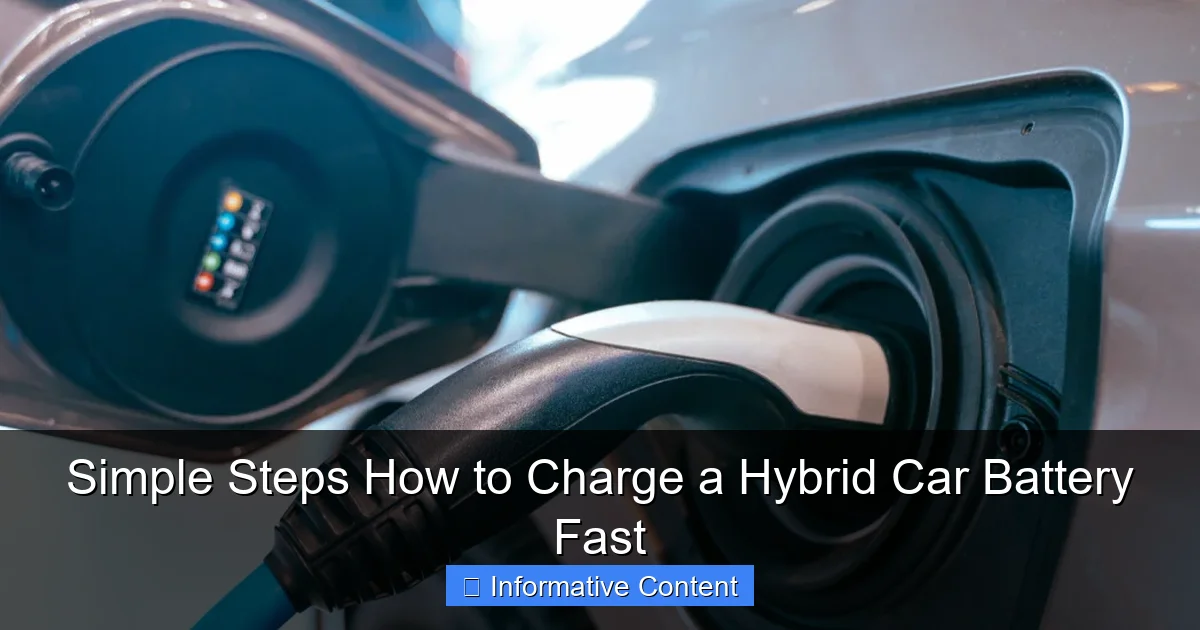
Every PHEV has a charging port, usually located on the fender, front grille, or sometimes where the fuel door would typically be. Most PHEVs in North America use a J1772 connector for Level 1 and Level 2 charging. This is a universal standard, so any Level 1 or Level 2 EVSE cable will fit your car. It’s good to know this so you can confidently connect when you’re ready to charge.
Simple Steps for Home Charging Your Hybrid Successfully
Now, let’s get down to the nitty-gritty: the actual process of charging your PHEV at home. This is where understanding how to charge a hybrid car battery really comes to life. It’s straightforward, I promise!
Step 1: Locate Your Charging Port
First things first, find the charging port on your vehicle. As mentioned, it’s typically on the side, front, or sometimes near the gas cap. It usually has a small cover that you’ll need to open. Make sure the car is turned off and in “Park” before you proceed.
Step 2: Connect to a Power Source (Level 1 or 2)
- For Level 1: Grab the charging cable that came with your car. One end plugs into a standard 120-volt wall outlet (make sure it’s a dedicated circuit if possible, especially if you’re concerned about tripping breakers, though for a PHEV’s smaller battery it’s usually fine).
- For Level 2: If you have a Level 2 charger installed, simply take the connector from its holster. The charger itself will be hardwired or plugged into a 240-volt outlet.
Before plugging into your car, ensure the charging unit’s indicator lights show it’s ready to charge.
Step 3: Plug in Your Vehicle
Carefully take the vehicle end of the charging cable (the J1772 connector) and plug it firmly into your car’s charging port. You’ll usually hear a click, indicating it’s locked into place. Most cars will also give you an audible confirmation (like a beep) and/or a visual cue (like flashing lights on the dashboard or near the charging port) to let you know it’s connected properly and charging has started. This is the moment you’re actually learning how to charge a hybrid car battery!
Step 4: Monitor and Confirm Charging
Once plugged in, your car and the charging unit will communicate. The charging unit will usually have indicator lights that show it’s actively charging. Your car’s dashboard or infotainment screen will also display charging status, estimated time to full, and the current charge level. If you’re using a smart charger or your car has a companion app, you can often monitor the charging process from your phone. When the battery is full, the charging will typically stop automatically, and you can unplug.
Important Safety Tips for Home Charging
- Use the Right Equipment: Always use the charging cable provided with your car or a reputable aftermarket EVSE.
- Inspect Cables: Before each use, quickly check the charging cable for any signs of damage or wear.
- Avoid Extension Cords (Level 1): While tempting, it’s generally recommended to avoid using extension cords for Level 1 charging, as they can overheat. If you must, ensure it’s a heavy-duty, outdoor-rated cord specifically designed for high amperage use.
- Keep it Dry: While charging cables are designed to be weather-resistant, try to keep the connection point as dry as possible during rain or snow.
- Professional Installation for Level 2: Always have a certified electrician install your Level 2 home charging station to ensure it’s done safely and up to code.
Navigating Public Charging Stations for Your Hybrid
Charging at home is great, but sometimes you’ll need to top up when you’re out and about. Public charging stations are becoming increasingly common, and figuring out how to charge a hybrid car battery when you’re away from your garage is a skill worth mastering.
Finding a Compatible Charging Station
The first step is locating a station. There are several excellent apps and websites designed for this:
- PlugShare: My personal favorite. It’s a fantastic app that shows charging stations on a map, lets you filter by connector type (J1772 for PHEVs!), network, and even user reviews about the station’s reliability.
- ChargePoint, Electrify America, EVgo, Shell Recharge: These are major charging networks, and their own apps also show their respective stations.
- Your Car’s Navigation System: Many newer PHEVs have built-in navigation that can show nearby charging stations.
Look for stations that offer Level 2 charging, as this is what your PHEV is designed to use. Pay attention to the connector type – you’ll need a J1772 connector.
Understanding Charging Network Apps
Most public charging stations belong to a network (like ChargePoint, Electrify America, etc.). You’ll often need to download their app, create an account, and link a payment method. This app is usually how you’ll start and stop charging, and it will also show you pricing, availability, and your charging history. It’s a key tool when learning how to charge a hybrid car battery on the go.
Connecting and Initiating a Public Charge
- Park: Pull up to the charging station and park your car.
- Open Port: Open your car’s charging port cover.
- Connect Cable: Take the J1772 connector from the charging station and firmly plug it into your car’s port.
- Initiate Charge: This is usually done through the network’s app on your phone, or sometimes by tapping an RFID card (provided by the network) on the station’s reader. Follow the instructions on the charging station screen or within the app.
- Confirm: Just like at home, confirm that your car and the station show that charging has begun.
Paying for Your Public Charge
Payment methods vary:
- Per kWh: You pay for the amount of electricity (kilowatt-hours) consumed.
- Per Minute: You pay for the time your car is plugged in.
- Flat Fee: Some stations might have a fixed price per session.
- Free: You might even find free charging at certain workplaces, retailers, or public spaces – a fantastic bonus!
Always check the pricing before initiating a charge, as it can vary significantly.
Optimizing Your Hybrid Charging Habits for Battery Health and Efficiency
Knowing how to charge a hybrid car battery is one thing, but charging it smartly is another. A few simple habits can extend your battery’s life, maximize your electric miles, and even save you more money.
Don’t Always Charge to 100% (or let it drop to 0%)
While modern PHEVs have sophisticated battery management systems, lithium-ion batteries generally prefer to stay within a range of about 20% to 80% charged for optimal longevity. Constantly charging to 100% or letting it frequently drop to near 0% can put a bit more stress on the battery. For daily driving, aim to keep it topped up but don’t obsess over always hitting 100%. For longer trips, of course, charge to full!
Pre-conditioning Your Cabin While Plugged In
Many PHEVs allow you to “pre-condition” the cabin (warm it up or cool it down) while the car is still plugged in. This is a brilliant tip! When you do this, the energy for heating or cooling comes directly from the grid, not from your battery. This means when you unplug and drive off, your battery is fully reserved for driving, maximizing your electric range. It’s a subtle but very effective way to optimize your electric driving.
Scheduling Your Charging for Off-Peak Hours
If your electricity provider offers different rates at different times of the day (Time-of-Use rates), charging during off-peak hours can save you a good chunk of change. Many PHEVs and home charging stations allow you to schedule charging sessions. Set it to start charging in the middle of the night when electricity is cheapest. This is a savvy move when considering how to charge a hybrid car battery economically.
Regular, Consistent Charging is Key
Unlike old nickel-cadmium batteries that had a “memory effect,” modern lithium-ion batteries in your PHEV thrive on frequent, consistent charging. Don’t wait until the battery is completely depleted before plugging in. If you have the opportunity to plug in, even for a short top-up, do it! The more you charge, the more you drive on electricity, and the more you save.
Keep Your Battery Cool (and Warm) When Parked
Extreme temperatures can impact battery health. While most PHEVs have thermal management systems, parking in shaded areas on hot days, or in a garage during extreme cold, can help maintain optimal battery temperatures, contributing to its longevity. If you have a garage, using it can be beneficial.
Comparing Charging Levels for PHEVs
To help visualize the differences, here’s a quick comparison of the primary charging levels available for PHEVs:
| Charging Level | Voltage | Typical Power Output | Approximate Charge Time (for a typical PHEV) | Common Use Case |
|---|---|---|---|---|
| Level 1 (AC) | 120V | 1.4 kW – 1.9 kW | 8-12+ hours | Overnight home charging, occasional top-ups, no installation needed. |
| Level 2 (AC) | 240V | 3.3 kW – 7.7 kW (or more) | 2-4 hours | Daily home charging, workplace charging, public stations for faster top-ups. |
| DC Fast Charging (DCFC) | 400V – 800V | 25 kW – 350+ kW | Not typically used by PHEVs for full charge; limited compatibility/speed. | Primarily for full EVs; some PHEVs have very limited DCFC capability (e.g., 20-30kW) for quick partial top-ups on long journeys. |
Note: Charge times are estimates and vary significantly based on your specific PHEV’s battery size, onboard charger capacity, and the charging station’s power output.
Conclusion
So there you have it! Understanding how to charge a hybrid car battery isn’t nearly as complex as it might seem at first glance. Whether you’re patiently trickle-charging at home with Level 1, zipping up with a Level 2 setup, or navigating the world of public chargers, the process is logical and accessible. The most important takeaway is that by embracing charging, you’re truly unlocking the full potential of your Plug-in Hybrid Electric Vehicle.
You’re not just saving money on gas and reducing your carbon footprint; you’re also gaining the incredible convenience of electric driving for your daily needs. So go forth, plug in with confidence, and enjoy those quiet, smooth, and efficient electric miles. Your hybrid, your wallet, and the planet will thank you. Happy charging!
🎥 Related Video: How to charge 12v battery on your hybrid car.
📺 TmT Toyota mechanic Tips
Frequently Asked Questions
How do you charge a hybrid car battery, especially if it’s not a plug-in?
The method depends on your hybrid type. Standard hybrids (HEVs) charge automatically through regenerative braking, which captures energy during deceleration, and by the gasoline engine. Plug-in hybrids (PHEVs) also use these methods but can additionally be charged by plugging into an external power source, similar to an electric car.
What are the fastest ways to charge a plug-in hybrid car battery at home or on the go?
For the fastest home charging, a Level 2 (240-volt) charger is recommended, which can significantly reduce charging times compared to a standard wall outlet. When away from home, public Level 2 charging stations are common and faster, while some newer PHEVs may also support limited DC fast charging for an even quicker top-up.
What equipment do I need to charge a hybrid car battery at home?
To charge a plug-in hybrid car battery at home, you typically need the charging cable that came with your vehicle. This can plug into a standard 120-volt wall outlet (Level 1 charging), though it’s slower. For faster charging, you’ll need a dedicated 240-volt Level 2 charging station installed, which often requires a professional electrician.
Do all hybrid cars need to be plugged in to charge their battery, or do some charge automatically?
No, not all hybrid cars need to be plugged in. Conventional hybrids (HEVs) self-charge their battery primarily through regenerative braking and power generated by the gasoline engine, without any external plug-in required. Only plug-in hybrid electric vehicles (PHEVs) offer the capability and necessity to plug into an external power source to fully charge their larger batteries.
Can I use public charging stations to charge my hybrid car battery?
Yes, if you own a plug-in hybrid (PHEV), you can absolutely use public charging stations. These stations, including Level 2 and sometimes DC fast chargers, provide a convenient way to charge your car’s battery when you’re away from home. Simply locate a compatible station using charging apps and connect your vehicle’s charging cable.
Are there best practices for charging a hybrid car battery to maintain its long-term health?
For plug-in hybrids, it’s generally best to avoid routinely depleting the battery to 0% or charging it to 100% unless needed for a long trip, as keeping the charge between 20-80% can extend battery life. Regularly plugging in your PHEV ensures the battery is conditioned and ready, and following your car manufacturer’s specific recommendations is always advisable.