
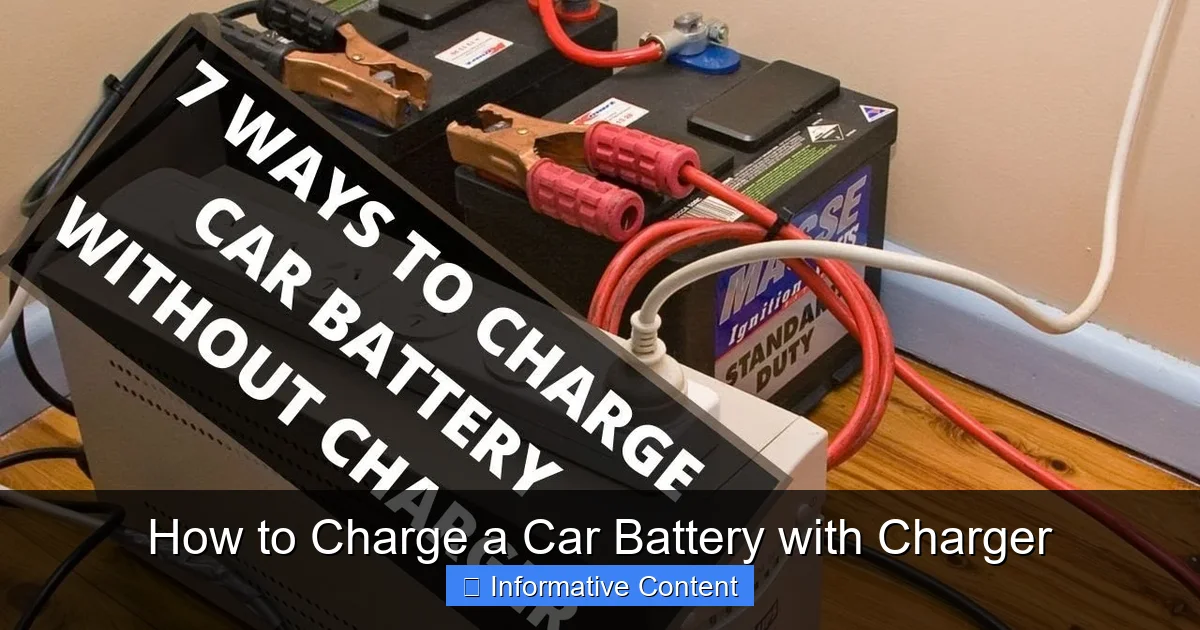
Charging a car battery with a charger is a straightforward process, but it demands strict adherence to safety protocols. Always wear protective gear, ensure proper ventilation, and connect the charger correctly (positive to positive, negative to negative, then to power) before beginning. Monitoring the charge and disconnecting in the correct sequence (power off, negative first, then positive) ensures safety and prevents damage to your battery or vehicle.
Has your car ever refused to start, greeting you with nothing but a click or silence? It’s a frustrating, often inconvenient moment that most drivers will experience at some point. More often than not, a dead car battery is the culprit. While a jump start can get you going in a pinch, knowing how to charge a car battery with charger properly is a fundamental skill that empowers you to handle these situations independently and maintain your vehicle’s health.
Charging your car battery isn’t just about getting back on the road; it’s also a key part of battery maintenance, especially if your car sits unused for extended periods or makes frequent short trips. A well-maintained battery lasts longer and performs more reliably. This guide will walk you through every step of how to charge a car battery with charger, ensuring you do it safely and effectively. We’ll cover everything from choosing the right equipment to understanding the process and troubleshooting common issues, turning a potentially daunting task into a simple one.
Why Charging Your Car Battery Matters
Understanding why you might need to charge your car battery with a charger is the first step. Car batteries lose charge over time, even when the vehicle isn’t in use, due to parasitic drains from onboard electronics. Cold weather can significantly reduce battery performance, making it harder for the alternator to keep up. Short drives don’t allow the alternator enough time to fully recharge the battery, leading to a gradual depletion. Knowing how to charge a car battery with charger allows you to proactively address these issues, preventing unexpected breakdowns and extending the life of your battery. Let’s dive into the specifics of how to charge a car battery with charger effectively and safely.
Key Takeaways
- Safety is Paramount: Always wear safety glasses and gloves, ensure good ventilation, and work away from flammable materials when you charge a car battery with charger.
- Understand Your Equipment: Know the type of your car battery (e.g., lead-acid, AGM, gel) and select a compatible car battery charger with appropriate voltage and amperage settings.
- Correct Connection Sequence: Always connect the red (positive) clamp to the positive (+) battery terminal first, then the black (negative) clamp to the negative (-) battery terminal or a bare metal ground point on the engine block/chassis, *before* plugging the charger into an AC outlet.
- Monitor the Charging Process: Keep an eye on your charger’s indicators. Modern smart chargers will often switch to maintenance mode or signal completion automatically, but older models may require manual monitoring.
- Disconnect Safely: Once charging is complete, *unplug the charger from the AC outlet first*. Then, disconnect the black (negative) clamp, followed by the red (positive) clamp, reversing the connection order.
- Proper Ventilation: Charging car batteries can release hydrogen gas, which is highly flammable. Always ensure adequate airflow to prevent gas buildup.
- Avoid Overcharging: While smart chargers mitigate this risk, overcharging can damage a battery, especially older types. Always follow your charger and battery manufacturer’s instructions.
Quick Answers to Common Questions
Can I charge a car battery while it’s still in the car?
Yes, you can charge a car battery while it’s still in the car. Just make sure the car is turned off, the keys are out of the ignition, and you connect the negative charger clamp to a metal part of the car chassis or engine block away from the battery to prevent sparks.
How long does it take to charge a completely dead car battery?
A completely dead car battery can take anywhere from 2 to 24 hours to charge, depending on the charger’s amperage and the battery’s capacity. A 10-amp charger might take 6-12 hours, while a 2-amp trickle charger could take 12-24 hours or more.
What amperage should I use to charge my car battery?
For most regular car batteries, a smart charger with an output of 2-10 amps is ideal. Lower amps (2-4A) are better for a slow, deep charge, while higher amps (up to 10A) can charge faster for larger or very discharged batteries. Always choose a smart charger to prevent overcharging.
Is it safe to leave a car battery charger on overnight?
If you have a modern “smart” or “automatic” battery charger, it is generally safe to leave it on overnight. These chargers automatically switch to a maintenance or float mode once the battery is fully charged, preventing overcharging. However, never do this with older, manual chargers.
What should I do if my battery charger shows an error?
If your battery charger shows an error, first double-check all connections to ensure they are secure and correctly polarized (positive to positive, negative to negative/ground). Ensure the battery isn’t severely damaged or too deeply discharged for the charger to recognize. If problems persist, consult your charger’s manual or consider replacing the battery.
📑 Table of Contents
1. Understanding Your Car Battery and Charger
Before you even think about how to charge a car battery with charger, it’s crucial to understand what you’re working with. Not all batteries and chargers are created equal.
Types of Car Batteries
Most cars use 12-volt lead-acid batteries. Within this category, there are a few common types:
- Standard Flooded Lead-Acid Batteries: These are the most common and require occasional maintenance, such as checking and topping up electrolyte levels with distilled water. They are usually identified by removable caps on top.
- AGM (Absorbent Glass Mat) Batteries: These are sealed, maintenance-free batteries that offer better performance, vibration resistance, and a longer lifespan. They are more expensive but are becoming increasingly common, especially in vehicles with start-stop technology.
- Gel Cell Batteries: Similar to AGM, these are also sealed and maintenance-free, using a gelled electrolyte. They are less common in standard automotive applications but are found in some specialized vehicles.
It’s vital to know your battery type because it can influence the charger you choose and how you charge a car battery with charger.
Types of Car Battery Chargers
Choosing the right charger is just as important as knowing how to charge a car battery with charger.
- Trickle Chargers: These deliver a low, constant current (typically 1-2 amps) over a long period. They are good for maintaining a fully charged battery or slowly bringing a deeply discharged battery back to life. They lack advanced features and can overcharge if not monitored.
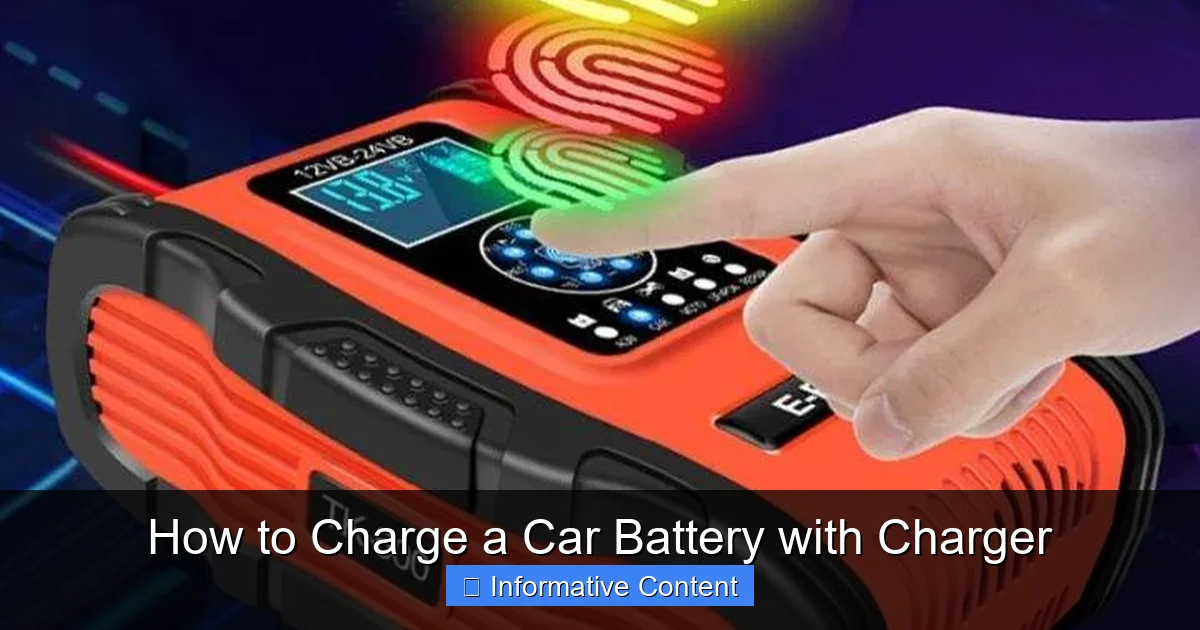
- Smart (or Automatic) Chargers: These are highly recommended for home use. They can detect the battery’s charge level, adjust the charging current, and automatically switch to a “float” or maintenance mode once the battery is full. This prevents overcharging and makes the process of how to charge a car battery with charger much safer and more convenient. Many also have modes for different battery types (e.g., AGM mode).
- Booster/Jump Starters: While some have a charging function, their primary purpose is to provide a quick surge of power to start a car with a dead battery. They are not designed for long-term battery charging.
For most purposes, a good quality smart charger is your best bet for learning how to charge a car battery with charger. Look for one that matches your battery’s voltage (12V for most cars) and offers varying amperage settings.
2. Safety First: Essential Precautions Before You Begin
Visual guide about How to Charge a Car Battery with Charger
Image source: lzd-img-global.slatic.net
Safety is not optional when you charge a car battery with charger. Car batteries contain sulfuric acid and produce explosive hydrogen gas. Mishandling can lead to serious injury or damage.
Personal Protective Equipment (PPE)
- Safety Glasses or Goggles: Essential to protect your eyes from acid splashes or exploding gases.
- Gloves: Acid-resistant gloves (rubber or nitrile) protect your skin.
- Old Clothes: Battery acid can damage clothing.
Location and Environment
- Ventilation: Always work in a well-ventilated area. Charging batteries release hydrogen gas, which is highly flammable and can accumulate in enclosed spaces. A garage door open or working outdoors is ideal.
- Away from Ignition Sources: Keep sparks, open flames, cigarettes, and anything that could ignite hydrogen gas far away from the battery.
- Stable Surface: Ensure the car is parked on a level surface with the parking brake engaged. If you’re removing the battery, place it on a stable, non-conductive surface away from direct sunlight or extreme heat.
- Vehicle Off: Always turn off your car’s engine and all electrical accessories before connecting the charger. It’s often recommended to remove the key from the ignition to prevent accidental power surges.
Remember these precautions every time you charge a car battery with charger. They are non-negotiable for your safety.
3. Preparing Your Car and Charger for Charging
Now that you’re geared up for safety, let’s get ready to connect the charger. This is where you really start to learn how to charge a car battery with charger.
Locating and Accessing the Battery
Most car batteries are under the hood, usually on one side. Some vehicles, however, place the battery in the trunk, under the back seat, or even in the wheel well. Consult your car’s owner’s manual if you can’t find it. Once located, ensure you have clear access to both battery terminals.
Cleaning the Battery Terminals (If Necessary)
Corrosion (a powdery blue, white, or green substance) on the battery terminals can impede charging and proper connection.
- If you see corrosion, disconnect the battery (negative first, then positive, if removing the battery for cleaning) and clean the terminals with a wire brush and a battery terminal cleaning solution (or a mixture of baking soda and water).
- Rinse with clean water and dry thoroughly before reconnecting. For just charging, you can often clean around the terminals with the battery still connected to the car, being careful not to bridge the terminals.
Connecting the Charger to the Battery
This is perhaps the most critical step in how to charge a car battery with charger. The order of connection matters to prevent sparks.
- Ensure Charger is OFF and Unplugged: Double-check that your battery charger is turned off and disconnected from any AC power source.
- Connect Positive (Red) Clamp: Attach the red (positive, usually marked with a “+”) clamp of the charger to the positive (+) terminal of your car battery. Ensure a firm, metal-on-metal connection.
- Connect Negative (Black) Clamp: Now, attach the black (negative, usually marked with a “-“) clamp of the charger.
- Option A (Battery in Car): Connect the black clamp to an unpainted, metal part of the car’s frame or engine block, away from the battery itself and any fuel lines. This provides a ground connection and minimizes the risk of sparks near the battery’s hydrogen gas.
- Option B (Battery Removed from Car): Connect the black clamp directly to the negative (-) terminal of the battery.
- Double-Check Connections: Make sure both clamps are securely attached and not touching any other metal parts that could cause a short circuit.
Following these steps precisely when you charge a car battery with charger will help ensure a safe start to the process.
Connecting the Charger to Power
Once the clamps are securely attached to the battery (and possibly the vehicle’s ground), it’s time to supply power to the charger.
- Plug into AC Outlet: Plug the charger’s power cord into a standard 120V (or appropriate for your region) wall outlet.
- Turn Charger ON: Switch the charger on. If you have a smart charger, select the correct battery type and charging mode (e.g., 12V, standard, AGM). If it’s a manual charger, select the appropriate amperage (e.g., 2A for slow charge, 10A for faster). For most home charging, a lower amperage is safer and better for the battery’s longevity.
Now, the charging process has begun! You’re officially learning how to charge a car battery with charger.
4. The Charging Process: What to Expect
With the charger connected and running, you’ll need to monitor the process, especially if you’re not using a fully automatic smart charger.
Monitoring the Charge
Most modern smart chargers have LED indicators or a digital display showing the charging status (e.g., “charging,” “charged,” “error”).
- Smart Chargers: These are generally “set it and forget it” devices. They will detect the battery’s state, charge it appropriately, and switch to a maintenance or “float” mode when full, preventing overcharging.
- Older/Manual Chargers: You might see an ammeter that shows the current flowing into the battery. As the battery charges, the amperage will decrease. You’ll need to manually turn off these chargers once the battery is fully charged.
Check your charger’s manual for specific instructions on how to interpret its indicators and how long you should charge a car battery with charger.
How Long Does it Take to Charge a Car Battery?
The time it takes to charge a car battery with charger depends on several factors:
- Battery’s State of Discharge: A completely dead battery will take much longer than one that’s only partially discharged.
- Charger’s Amperage: A higher amperage charger will charge faster, but a slower charge (e.g., 2-4 amps) is generally better for the battery’s health, especially for deep discharges.
- A completely dead car battery might take 10-24 hours with a 2-amp charger.
- With a 10-amp charger, it could take 2-4 hours to get a significant charge, or 6-12 hours for a full charge from completely dead.
- Battery Capacity (Ah): Larger batteries have higher Amp-hour (Ah) ratings and will take longer to charge.
- Battery Condition: An old or damaged battery might not accept a full charge, or might take an excessively long time.
The best practice for how to charge a car battery with charger is to use a smart charger and let it run until it indicates a full charge. This usually means it has switched to maintenance mode.
Indications of a Full Charge
- Smart Charger Indicator: The charger’s LED will change from “charging” to “charged” or “float/maintenance mode.”
- Voltage Reading: A fully charged 12V car battery will typically read around 12.6 to 12.8 volts (or slightly higher immediately after charging, which will stabilize).
- Specific Gravity: If you have a standard flooded battery and a hydrometer, fully charged cells will show a specific gravity of around 1.265 to 1.299.
Do not leave a manual charger connected indefinitely, as this can overcharge and damage the battery. Knowing when to stop is key to how to charge a car battery with charger effectively.
5. Disconnecting the Charger Safely
Just as connecting the charger has a specific, safe order, so does disconnecting it. Reversing the connection order helps prevent sparks.
- Turn Charger OFF: First and foremost, turn off your battery charger.
- Unplug from AC Outlet: Disconnect the charger’s power cord from the wall outlet. This is a critical step to ensure no power is flowing.
- Disconnect Negative (Black) Clamp: Carefully remove the black (negative) clamp from the car’s chassis/engine block or the battery’s negative terminal.
- Disconnect Positive (Red) Clamp: Finally, remove the red (positive) clamp from the battery’s positive terminal.
Once the charger is fully disconnected, you can safely close the hood or put the battery back in place. You have successfully learned how to charge a car battery with charger!
Post-Charging Tips
After successfully completing the process to charge a car battery with charger:
- Inspect Terminals: Ensure the battery terminals are clean and corrosion-free. Applying a thin layer of dielectric grease or anti-corrosion spray can help protect them.
- Start Your Car: Attempt to start your car. If it starts, great! If not, the battery might be beyond charging, or there could be another issue (e.g., faulty alternator, starter motor).
- Test Battery: Consider having your battery tested at an auto parts store to check its overall health and cranking amps, especially if it was deeply discharged or is old.
6. Troubleshooting Common Charging Issues
Even when you follow the steps on how to charge a car battery with charger, sometimes things don’t go as planned.
Charger Not Turning On or Indicating Error
- Check Connections: Ensure all clamps are securely attached to the battery terminals and the power cord is firmly plugged into the outlet.
- Verify Battery Voltage: Some smart chargers won’t activate if the battery voltage is too low (e.g., below 2-3 volts). You might need a specialized charger for deeply discharged batteries or consider replacement.
- Charger Malfunction: If connections are good and the battery isn’t completely dead, the charger itself might be faulty.
Battery Not Holding a Charge
If you charge a car battery with charger and it quickly dies again, this usually indicates a deeper problem:
- Bad Battery: The battery might be old and unable to hold a charge due to internal damage (e.g., sulfation, shorted cells). Batteries typically last 3-5 years.
- Faulty Alternator: The car’s alternator, which charges the battery while the engine runs, might be failing. If your car starts but then dies or the battery light comes on, this is a strong possibility.
- Parasitic Drain: Something in the car (e.g., interior light left on, faulty stereo component) could be continuously drawing power, even when the car is off. This requires professional diagnosis.
When to Replace a Battery
Knowing how to charge a car battery with charger is great, but sometimes replacement is the only option. Consider replacement if:
- Your battery is 3-5 years old or more.
- It struggles to hold a charge even after a full charging cycle.
- You notice physical damage, leaks, or significant corrosion that can’t be cleaned.
- Your car frequently struggles to start, especially in cold weather.
Conclusion
Knowing how to charge a car battery with charger is a valuable skill for any car owner. It not only saves you from the inconvenience of a dead battery but also contributes to the overall health and longevity of your vehicle’s electrical system. By following the detailed steps outlined in this guide – prioritizing safety, understanding your equipment, connecting correctly, monitoring the process, and disconnecting safely – you can confidently tackle this task. Regular battery maintenance, including occasional charging, will keep your car running smoothly and reliably for years to come. So, the next time your battery needs a boost, you’ll know exactly how to charge a car battery with charger like a pro!
🎥 Related Video: How to charge 12v Car Battery
📺 CarHow
Its seen as good practice to connect the black wire second, and to connect it to some bare metal part in the engine.
Frequently Asked Questions
Do I need to disconnect the car battery from the car’s terminals before charging?
No, you generally don’t need to disconnect the car battery from the car’s terminals if you are using a modern smart charger. However, if you are using an older, non-smart charger, or if you are concerned about potential electrical spikes affecting your car’s sensitive electronics, disconnecting the negative terminal first can be a cautious step.
Can I use a jump starter to charge my car battery?
A jump starter is designed to provide a quick boost to start a dead car, not for a full charge. While some portable jump starters have a low-amperage charging function, they are not ideal for fully charging a battery. For proper charging, use a dedicated car battery charger.
What’s the difference between a trickle charger and a smart charger?
A trickle charger provides a constant low current and needs to be monitored to prevent overcharging. A smart charger, on the other hand, automatically senses the battery’s state, adjusts the charging current, and switches to a maintenance mode once fully charged, making it safer and more efficient.
How often should I charge my car battery with a charger?
The frequency depends on your driving habits. If you drive short distances frequently, or if your car sits unused for weeks, charging it once a month or every few weeks can help maintain its health. For daily drivers with longer commutes, occasional charging (e.g., every 3-6 months) might be sufficient.
What if my battery gets hot while charging?
A car battery becoming slightly warm during charging is normal. However, if it becomes excessively hot, starts to bulge, or emits a strong, foul odor (like rotten eggs), immediately disconnect the charger. This indicates a serious problem, possibly overcharging or internal damage, and the battery should be replaced by a professional.
Can I charge an AGM battery with a regular lead-acid charger?
It’s best to use a charger specifically designed for AGM batteries or a smart charger with an AGM mode. While some regular lead-acid chargers might work, AGM batteries require a slightly different charging voltage profile. Using an incompatible charger can reduce the AGM battery’s lifespan or even damage it.