
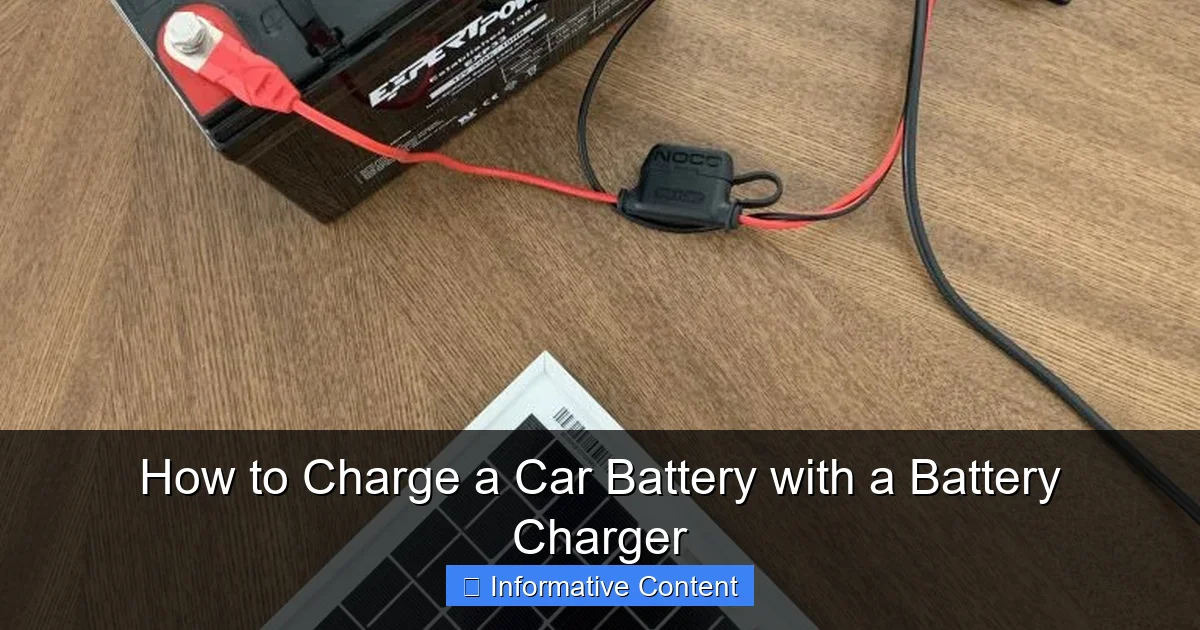
Charging a car battery with a battery charger is a straightforward process that anyone can master with the right knowledge and precautions. This guide will walk you through everything from selecting the correct charger and essential safety gear to a detailed, step-by-step procedure for safely connecting and operating your device. You’ll learn how to extend your battery’s life and ensure your vehicle is always ready to go.
There’s nothing quite like the sinking feeling of turning the key in your ignition, only to be met with a weak click or, worse, absolute silence. A dead car battery is a universal experience for drivers, and it often strikes at the most inconvenient times. While jump-starting is a common solution, it’s not always ideal or even possible if you’re alone or don’t have another vehicle handy. That’s where knowing how to charge a car battery with a battery charger comes in – a valuable skill that can save you time, money, and a lot of frustration.
Learning to charge a car battery yourself isn’t just about getting out of a sticky situation; it’s also a fundamental aspect of vehicle maintenance. Regular and proper charging can extend your battery’s lifespan, ensure reliable starts, and give you peace of mind. While the idea of messing with car batteries and electrical currents might seem intimidating at first, rest assured, it’s a perfectly manageable task for the average car owner. With the right tools, a clear understanding of the steps, and a firm commitment to safety, you’ll be a pro at keeping your battery in top shape.
This comprehensive guide is designed to demystify the process of how to charge a car battery with a battery charger. We’ll cover everything from understanding your battery and choosing the right charger to a detailed, step-by-step walkthrough of the charging process, emphasizing safety at every turn. So, let’s banish those dead battery worries and empower you with the knowledge to tackle this essential maintenance task with confidence!
Key Takeaways
- Safety First: Always prioritize safety by wearing protective gear (gloves, eye protection) and working in a well-ventilated area to avoid dangerous fumes and electrical hazards when charging a car battery.
- Choose the Right Charger: Select an automatic or “smart” battery charger appropriate for your car’s battery voltage (typically 12V) and type, as these prevent overcharging and are generally safer for beginners.
- Proper Connection is Crucial: Connect the red positive (+) clamp to the battery’s positive terminal and the black negative (-) clamp to an unpainted metal part of the car chassis, away from the battery, to minimize spark risk.
- Preparation Matters: Before connecting, ensure your vehicle is off, the battery terminals are clean, and the charger is unplugged from the AC outlet.
- Monitor and Disconnect Safely: Once charging is complete (indicated by the charger), unplug the charger from the AC outlet first, then disconnect the negative clamp, followed by the positive clamp.
- Understand Charging Time: Charging duration varies based on battery size, its current discharge level, and the charger’s amperage output. Avoid overcharging, especially with manual chargers.
- Maintain Battery Health: Regular cleaning, avoiding deep discharges, and using a battery maintainer for stored vehicles can significantly extend your car battery’s lifespan.
Quick Answers to Common Questions
Can I charge a car battery without disconnecting it from the car?
Yes, in most cases, you can charge a car battery without disconnecting it from the car. However, ensure all vehicle accessories and the ignition are off. Some very sensitive modern vehicles might recommend disconnecting, so always check your owner’s manual.
How do I know if my car battery is fully charged?
Most modern automatic battery chargers have indicator lights that will show when the battery is “fully charged” or has switched to a “maintenance” or “float” mode. If you have a voltmeter, a fully charged 12V car battery should read around 12.6 to 12.8 volts when the car is off and the battery has rested for a bit.
Is it safe to leave a battery charger connected overnight?
If you are using a modern “smart” or “automatic” battery charger or a “battery maintainer,” it is generally safe to leave it connected overnight. These chargers are designed to detect when the battery is full and automatically switch to a trickle charge or maintenance mode, preventing overcharging. Manual chargers should never be left unattended.
What happens if I connect the battery charger clamps incorrectly?
Connecting the clamps incorrectly (reverse polarity) can be dangerous. It can cause sparks, potentially damage your battery, the charger, or even your car’s electrical system. Most smart chargers have reverse polarity protection that will prevent charging and alert you with a warning light or sound.
Can a battery charger fix a completely dead battery?
A battery charger can often bring a completely dead battery back to life, provided the battery is otherwise healthy and not permanently damaged. Some smart chargers even have “desulfation” or “recondition” modes for deeply discharged batteries. However, if the battery is old or damaged, it might not hold a charge even after an extended charging period.
📑 Table of Contents
Understanding Your Car Battery and Charger
Before you dive into charging, it’s helpful to understand a little about what you’re dealing with. Knowing the basics of your car battery and the different types of chargers available will help you make informed decisions and ensure a safe and effective charging process.
How a Car Battery Works
Most modern car batteries are 12-volt lead-acid batteries, whether they are conventional flooded (wet cell), maintenance-free, absorbed glass mat (AGM), or gel cell types. They work by converting chemical energy into electrical energy to start your engine and power your car’s electrical components when the engine isn’t running. When you start your car, the battery expends energy. While you drive, the alternator recharges it. However, if your car sits for too long, or if you leave lights on, the battery can drain, leaving you stranded. Learning how to charge a car battery with a battery charger brings it back to life.
Types of Car Battery Chargers
Not all battery chargers are created equal. Choosing the right one is crucial for both safety and effectiveness when you need to charge a car battery. Here are the main types you’ll encounter:
- Trickle Chargers/Battery Maintainers: These deliver a small, steady current (typically 1-2 amps) over a long period. They’re ideal for maintaining a full charge on batteries in vehicles stored for extended periods, like RVs, classic cars, or seasonal vehicles. They prevent the battery from slowly discharging but aren’t designed to quickly charge a deeply dead battery.
- Smart/Automatic Chargers: These are the most popular and recommended for most car owners. Smart chargers detect the battery’s voltage and charge level, then automatically adjust the charging current and switch to a maintenance mode once the battery is full. This prevents overcharging, which can damage the battery. They often feature multiple charging stages (desulfation, bulk, absorption, float) for optimal battery health. These are excellent for learning how to charge a car battery with a battery charger safely.
- Manual Chargers: These older models deliver a constant current regardless of the battery’s charge level. They require constant monitoring to prevent overcharging, which can boil the battery”s electrolyte and cause permanent damage. Unless you’re an experienced technician, it’s best to avoid manual chargers in favor of smart, automatic options.
- Jump Starters (Portable Power Packs): While not strictly “chargers” in the long-term sense, many portable jump starters also include charging functions. They’re primarily designed to give a quick burst of power to start a dead engine, but some also have lower amperage charging capabilities for a slower charge.
Essential Safety Equipment
Working with car batteries involves electricity and corrosive chemicals (sulfuric acid). Safety is paramount when you charge a car battery. Always have the following on hand:
- Safety Glasses or Goggles: Protect your eyes from acid splashes or sparks.
- Rubber Gloves: Protect your hands from acid.
- Old Clothes: Battery acid can damage clothing.
- Ventilation: Ensure you are in a well-ventilated area (e.g., outdoors or a garage with the door open). Charging batteries can produce hydrogen gas, which is highly flammable.
- Baking Soda and Water: Keep a mix handy to neutralize any accidental acid spills.
Gathering Your Gear: What You’ll Need
Before you start the process of how to charge a car battery with a battery charger, let’s make sure you have everything ready. Having the right tools makes the job easier and safer.
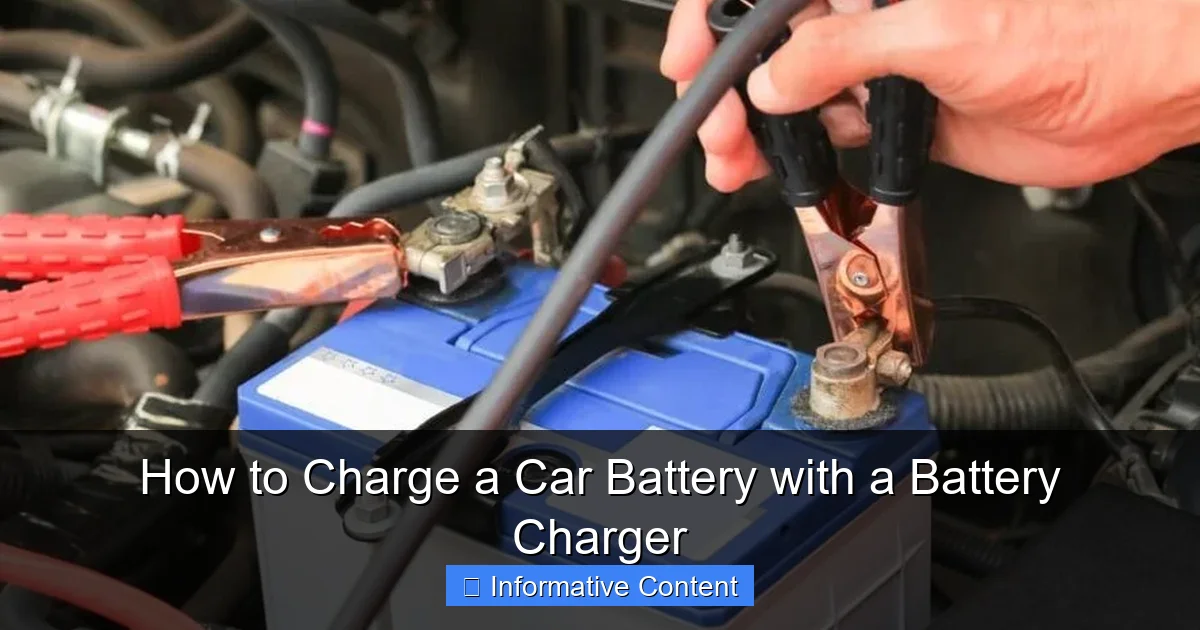
Visual guide about How to Charge a Car Battery with a Battery Charger
Image source: mechanicbase.com
The Right Battery Charger
As discussed, an automatic, smart battery charger is highly recommended. Ensure it matches your car’s battery voltage (almost always 12V). Look for one with a charging rate of at least 10 amps for a reasonably quick charge, but smart chargers will regulate this anyway. For a battery maintainer, 1-2 amps is sufficient.
Safety First: Protective Equipment
Again, this cannot be stressed enough. Get your safety glasses or goggles and rubber gloves ready. Think of it as standard operating procedure for any automotive work, especially when dealing with electricity and chemicals to charge a car battery.
Basic Tools
- Wire Brush or Battery Terminal Cleaner: To clean corrosion from battery terminals.
- Rags or Paper Towels: For cleaning and wiping.
- Adjustable Wrench or Pliers: To loosen and tighten battery terminal clamps if you need to remove the battery or clean under the clamps.
Good Ventilation
Always perform battery charging in a well-ventilated area. If you’re in a garage, open the garage door. If you’re outdoors, even better. This dissipates any potentially explosive hydrogen gas that can be produced during charging.
The Step-by-Step Guide: How to Safely Charge Your Car Battery
Now that you’re prepared, let’s walk through the exact steps for how to charge a car battery with a battery charger safely and effectively.
Step 1: Safety First, Always!
Put on your safety glasses and gloves. Ensure your workspace is well-ventilated. Have your baking soda and water mixture nearby in case of an acid spill. Do not smoke or have open flames near the battery.
Step 2: Prepare Your Vehicle and Battery
- Turn Off Your Car: Make sure the ignition is off, and all accessories (radio, lights, interior lights) are turned off. Remove the key from the ignition for extra safety.
- Locate the Battery: Most car batteries are under the hood, but some vehicles place them in the trunk or under a back seat.
- Identify Terminals: Locate the positive (+) terminal (usually larger and marked with a plus sign, often covered with a red cap) and the negative (-) terminal (marked with a minus sign, often covered with a black cap).
- Clean Terminals: If you see any white or bluish corrosion on the battery terminals, use your wire brush to clean them thoroughly. Corrosion can impede the charging process. A mix of baking soda and water can help neutralize and clean the corrosion. Rinse with clear water and dry completely.
Step 3: Connect the Charger
This is a critical step where sparks can occur, so pay close attention. Ensure your battery charger is UNPLUGGED from the AC outlet before connecting the clamps to the battery.
- Connect Positive Clamp: Take the red (positive) clamp from your battery charger and securely attach it to the positive (+) terminal of your car battery. Ensure a solid metal-to-metal connection.
- Connect Negative Clamp: Take the black (negative) clamp from your battery charger. DO NOT connect it directly to the negative (-) terminal of the battery. Instead, connect it to a clean, unpainted metal part of your car’s chassis or engine block, away from the battery itself. This grounds the circuit and reduces the risk of sparks near the battery, which could ignite hydrogen gas.
Pro Tip: Some modern cars with sophisticated electronics or battery monitoring systems might recommend connecting the negative clamp directly to the negative terminal or to a specific grounding point. Always consult your car’s owner’s manual for specific instructions if you’re unsure. For most standard charging scenarios, the chassis ground method is safer.
Step 4: Set Up Your Charger
Now that the clamps are connected, you can plug your battery charger into a standard 120V AC wall outlet.
Most smart/automatic chargers will automatically detect the battery type and voltage. If your charger has settings:
- Voltage: Select “12V” for a standard car battery.
- Amperage/Mode: For a deeply discharged battery, you might choose a higher amperage setting if available (e.g., 10-15 amps for a faster charge). For maintenance or a slightly low battery, a lower amperage (e.g., 2-6 amps) is fine. Many smart chargers simply have a “car” or “standard” mode.
- Battery Type: If your charger has specific settings for “flooded,” “AGM,” or “gel,” select the one that matches your battery type.
Once set, turn the charger ON.
Step 5: Start the Charging Process
The charger will now begin to charge your car battery. Most smart chargers have indicator lights to show charging progress (e.g., “charging,” “fully charged”). Allow the charger to do its work. Do not leave the charger unattended for extended periods, especially if it’s an older manual type.
Step 6: Monitor and Disconnect Safely
When the battery is fully charged (your smart charger will likely indicate this with a “fully charged” or “maintain” light), it’s time to disconnect. This order is also crucial to prevent sparks:
- Turn Off Charger: First, turn off the battery charger (if it has a switch) and then UNPLUG IT FROM THE AC WALL OUTLET.
- Disconnect Negative Clamp: Remove the black (negative) clamp from the car’s chassis or engine block.
- Disconnect Positive Clamp: Remove the red (positive) clamp from the battery’s positive (+) terminal.
- Reinstall Covers: If your battery had terminal covers, replace them.
You have successfully learned how to charge a car battery with a battery charger! You can now attempt to start your vehicle.
How Long Does It Take to Charge a Car Battery?
One of the most common questions is, “How long will it take to charge a car battery?” The answer isn’t a simple number, as several factors influence the charging time.
Factors Affecting Charging Time
- Battery’s State of Charge: A completely dead battery will take significantly longer to charge than one that’s only slightly discharged.
- Battery Capacity (Ah): Larger batteries (e.g., for trucks or SUVs) have higher amp-hour (Ah) ratings and will require more time to fully charge compared to smaller car batteries.
- Charger’s Amperage Output: A charger with a higher amp output (e.g., 15 amps) will charge faster than a lower amp charger (e.g., 2 amps).
- Battery Type and Condition: An older, weaker battery might take longer or might not hold a charge as well as a newer one.
General Timelines
Here’s a rough guide for a standard 12V car battery (typically 40-60 Ah capacity):
- Deeply Discharged Battery (e.g., 0-20% charge): Using a 10-amp charger, it could take anywhere from 8-12 hours or more to reach a full charge. A 2-amp maintainer might take 24-48 hours or longer.
- Moderately Discharged Battery (e.g., 50% charge): With a 10-amp charger, you might be looking at 4-6 hours.
- Slightly Low Battery (e.g., 75% charge): A 10-amp charger could top it off in 1-3 hours.
Remember, these are estimates. Your smart charger’s indicator lights are your best guide. It’s designed to tell you when it’s done. Patience is key when you charge a car battery effectively.
Don’t Overcharge
While modern smart chargers largely prevent overcharging by automatically switching to a float/maintenance mode, it’s still good to be aware. Overcharging, especially with manual chargers, can cause excessive gassing, heat, and eventually damage to the battery cells, reducing its lifespan or even causing it to explode. Always choose an automatic charger for peace of mind when you charge a car battery.
Tips for Battery Health and Longevity
Charging a car battery isn’t just a reactive fix; it’s part of a proactive approach to battery maintenance. Here are some tips to keep your battery healthy and extend its life, minimizing the need for emergency charging:
Regular Maintenance
- Keep Terminals Clean: Regularly check and clean any corrosion from your battery terminals. A clean connection ensures efficient charging by the alternator and when you connect your battery charger.
- Check Water Levels (for Flooded Batteries): If you have a conventional flooded lead-acid battery with removable caps, periodically check the electrolyte levels. If low, top up with distilled water (never tap water). Most modern batteries are “maintenance-free” and sealed, so this step won’t apply.
Avoid Deep Discharges
Repeatedly allowing your car battery to completely drain (deep discharge) significantly shortens its lifespan. Try to avoid leaving lights on, accessories running, or your car sitting for extended periods without running the engine. If your car won’t start, address the issue promptly to prevent further battery drain. This is why it’s so helpful to know how to charge a car battery with a battery charger quickly.
Use a Battery Maintainer for Stored Vehicles
If you have a car, motorcycle, RV, or boat that sits for weeks or months at a time, connect it to a battery maintainer. This device will keep the battery topped off at its optimal charge level without overcharging, preventing natural discharge and sulfation. This simple step can add years to your battery’s life.
Understand Cold Weather Effects
Cold weather significantly reduces a battery’s cranking power and makes it harder for the chemical reactions to occur. If you live in a cold climate, ensure your battery is in good condition before winter hits and consider using a block heater or battery warmer if your car sits outside in extreme cold.
When to Replace Your Battery
Even with the best care, car batteries don’t last forever. The average lifespan is 3-5 years. Watch for warning signs like slow cranking, dimming lights when starting, or the “check engine” light coming on. If your battery frequently dies despite proper charging, it might be time for a replacement. A professional battery test can confirm its health.
Conclusion
Learning how to charge a car battery with a battery charger is an incredibly useful skill that empowers you to take control of your vehicle’s maintenance. By understanding the different types of chargers, prioritizing safety, and following our detailed step-by-step guide, you can confidently bring a dead battery back to life and ensure your car is always ready to hit the road.
Remember, safety glasses, gloves, and a well-ventilated area are non-negotiable. Always connect the red clamp to positive, and the black clamp to a grounded metal part of the chassis (away from the battery). And with a smart, automatic charger, you’ve got a trusty companion that will handle the charging process with minimal fuss, preventing overcharge and protecting your battery.
Beyond emergency fixes, incorporating regular battery care – like cleaning terminals and using a maintainer for stored vehicles – will significantly extend your battery’s life, saving you money and hassle in the long run. So, next time your battery acts up, you’ll know exactly how to charge a car battery with a battery charger, turning a potential breakdown into a simple maintenance task. Drive safe, and keep those batteries charged!
🎥 Related Video: How to charge 12v Car Battery
📺 CarHow
Its seen as good practice to connect the black wire second, and to connect it to some bare metal part in the engine.
Frequently Asked Questions
How often should I charge my car battery?
For most daily drivers, your car’s alternator charges the battery sufficiently, so you shouldn’t need to manually charge it often. However, if your car sits for long periods (weeks or months), using a battery maintainer periodically is recommended to prevent discharge and prolong battery life.
Can I use any battery charger for my car?
No, you should use a battery charger designed for your car’s battery voltage, which is typically 12 volts. While chargers for other voltages (like 6V or 24V) exist, using the wrong one can damage your battery or charger. An automatic smart charger is always the safest and most convenient option.
What is the difference between charging a battery and jump-starting it?
Jump-starting provides a quick burst of power from another battery (or a jump starter) to get your engine running, allowing your alternator to then recharge your battery. Charging, on the other hand, is a slower, controlled process that fully replenishes the battery’s chemical energy using a dedicated battery charger.
Why should I connect the negative clamp to the car chassis instead of the battery terminal?
Connecting the negative clamp to a grounded metal part of the chassis (away from the battery) minimizes the risk of creating a spark directly near the battery. Batteries can release flammable hydrogen gas during charging, and a spark could potentially ignite it, leading to an explosion. This is a crucial safety step when you charge a car battery.
What should I do if my battery charger gets hot?
It’s normal for a battery charger to get slightly warm during operation, especially when charging a deeply discharged battery. However, if the charger becomes excessively hot, starts smoking, or emits a burning smell, immediately unplug it from the wall, disconnect the clamps, and have it inspected. This could indicate a fault with the charger or the battery.
How long does a car battery typically last?
The average lifespan of a car battery is generally between 3 to 5 years, though this can vary significantly based on climate, driving habits, and maintenance. Extreme temperatures (both hot and cold), frequent short trips, and allowing the battery to deep discharge can shorten its life. Regular monitoring and proper charging can help maximize its longevity.