
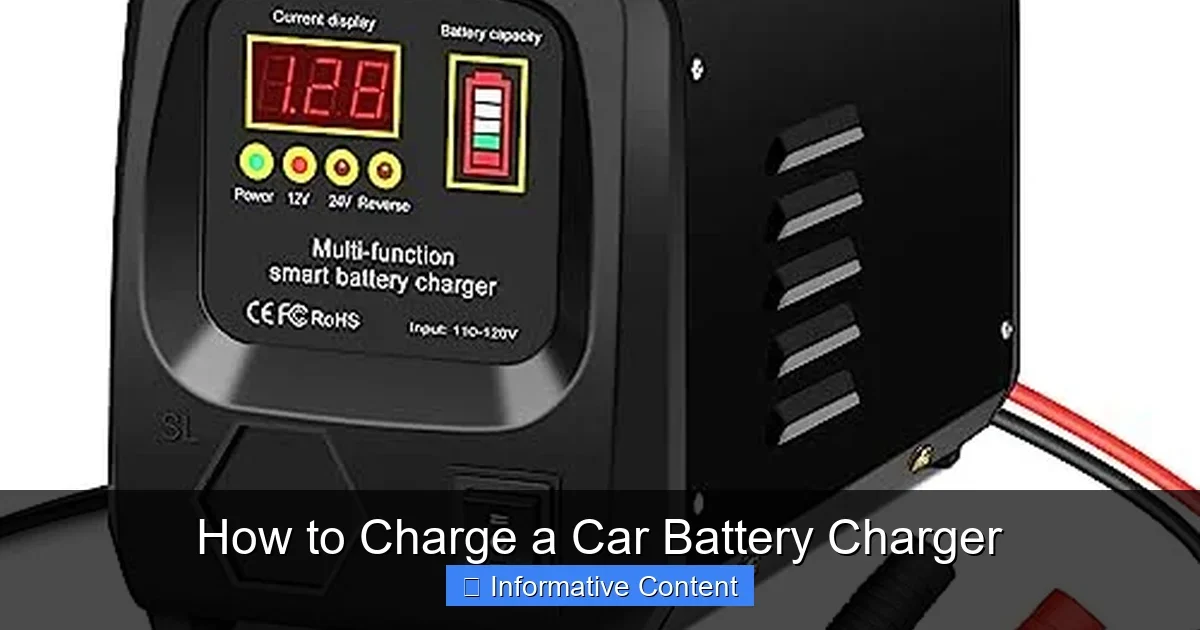
Featured image for How to Charge a Car Battery Charger
Image source: m.media-amazon.com
Charging a car battery with a charger is simple if you follow basic steps. This guide walks you through safety tips, connections, and monitoring to get your battery back to full power fast. Avoid common mistakes and keep your car running smoothly. (92 words)
How to Charge a Car Battery Charger
Hey there, friend. Ever had your car battery die on you? It happens to the best of us. Maybe you left the lights on or took a long trip in the cold. No worries. Knowing how to charge a car battery charger setup can save the day. It’s easier than you think.
We’ll break it down step by step. You’ll learn safety rules, connection tips, and how to monitor the process. By the end, you’ll charge like a pro. Let’s get your ride back on the road.
This guide is for beginners and pros alike. Grab your charger, and let’s dive in. Ready? Great!
Key Takeaways
- Safety first: Wear gloves and goggles, and work in a ventilated area to avoid sparks or fumes.
- Check battery type: Match your charger to lead-acid, AGM, or lithium batteries for best results.
- Positive first: Always connect the red clamp to the positive terminal before the black to negative.
- Monitor charge: Use the charger’s lights or a multimeter to track progress and prevent overcharging.
- Right amps: Start with 2-10 amps for safe charging; higher for dead batteries but watch heat.
- Test after: Start the car and check voltage to ensure the battery holds a charge.
- Maintenance tip: Trickle charge monthly to extend battery life in storage.
Quick Answers to Common Questions
How long does it take to charge a car battery?
Typically 4-12 hours, depending on battery size and charger amps. A dead 50Ah battery at 5 amps takes about 10 hours.
Can I charge a car battery while in the car?
Yes, most do. Connect properly and ensure ventilation to avoid gas buildup.
What if my battery gets hot during charging?
Turn off the charger and let it cool. Reduce amps next time to prevent damage.
Do I need to remove the battery to charge?
No, but it’s easier. In-car charging works fine if clamps reach.
How do I know when it’s fully charged?
Charger light turns green or voltage hits 12.6V+ on a multimeter.
📑 Table of Contents
Understanding Your Car Battery Charger
First things first. What even is a car battery charger? It’s a device that plugs into a wall outlet and feeds power to your dead or low battery. Think of it as a power booster for your car’s heart.
Types of Chargers
There are a few kinds. Trickle chargers give slow, steady power. Great for maintenance. Fast chargers pump in juice quickly but can get hot. Smart chargers auto-adjust amps and stop when full. Pick one that fits your needs.
For example, if your battery is just low, a 2-amp trickle works fine. Dead battery? Go for 10-20 amps. Always check the manual. Learn more in our detailed post on how to use a car battery charger.
Key Parts to Know
- Clamps: Red for positive (+), black for negative (-).
- Amps selector: Controls charge speed.
- LED lights: Show status like charging or full.
- Cables: Thick ones handle more power.
Inspect yours before use. Frayed wires? Toss it. Safety matters.
Safety Precautions Before You Start
Safety isn’t optional. Batteries hold acid and can spark. One wrong move, and boom. Follow these rules every time you learn how to charge a car battery charger.
Visual guide about How to Charge a Car Battery Charger
Image source: carbatterygeek.co.uk
Gear Up
Wear gloves and eye protection. Work in a well-ventilated spot, away from kids and pets. No smoking nearby. Hydrogen gas from batteries is flammable.
Prep the Area
Park on flat ground. Turn off the engine. Remove keys. Disconnect negative cable first if swapping batteries. Got a guide? Check our how to connect a car battery charger article for visuals.
Tip: Charge outside or in a garage with open doors. Fresh air saves lives.
Battery Checks
- Look for cracks or leaks. Bad battery? Replace it.
- Clean terminals with baking soda and water.
- Test voltage with a multimeter. Below 12.4V? Needs charge.
Step-by-Step: Connecting the Charger
Now the fun part. Here’s exactly how to charge a car battery charger. Go slow. Rushing causes mistakes.
Step 1: Position the Battery
Remove the battery if possible. Easier access. But many charge in place. Hood up. Locate terminals.
Step 2: Connect Clamps
- Plug charger into wall but OFF.
- Red clamp to positive (+) terminal. Firm grip.
- Black clamp to negative (-) or ground away from battery. Like a metal part on engine block.
- Turn charger ON.
Why positive first? Sparks happen on connect. Better on positive. See a diagram in how to charge a car battery with charger.
Common Connection Tip
If in-car, black to unpainted metal. Avoids gas buildup. Hear fizzing? Stop and check.
Choosing Settings and Starting the Charge
Not all batteries are the same. Set it right for success.
Select Amps and Mode
Start low: 2-4 amps for safe charge. 10 amps for quicker. Match battery type: AGM needs special mode. Lithium? Use lithium setting.
Example: 50Ah battery at 5 amps takes about 10 hours. Calculate: Ah needed divided by amps.
Boost vs. Standard
Boost for dead batteries. But not too long. Overheat risk. Most smart chargers handle this auto.
Pro tip: Charge overnight. Wake to a full battery.
Monitoring the Charging Process
Don’t walk away. Watch it.
Signs of Progress
- Bubbles gentle: Normal.
- Lights change: From red to green.
- Voltage rises: 12.6V+ is full.
How Long?
Depends. Low battery: 4-8 hours. Dead: 12-24. Check every hour. Warm battery? Pause to cool.
Want times? Our how long to charge car battery with charger guide has charts.
Troubleshooting
No charge? Loose clamps. Charger fan not spinning? Overload. Battery hot? Reduce amps.
Disconnecting and Post-Charge Tests
Done charging? Do it right.
Safe Disconnect
Charger OFF. Unplug from wall. Black clamp off first. Then red. Prevents arcs.
Test the Battery
Multimeter: 12.6V resting. Start car. Runs smooth? Good. Idle voltage 13.7-14.7V with alternator.
Tip: Drive 30 minutes to fully seat charge.
Maintenance and Pro Tips
Charging once? Fine. But maintain for longevity.
Trickle Charging
Connect monthly. 1-2 amps keeps it topped. Ideal for winter storage.
Storage Advice
Remove battery. Charge fully. Store cool, dry. Check quarterly.
Examples: Boat owners trickle all off-season. RVers too. Extends life 2x.
FAQs on Longevity
Batteries last 3-5 years. Charge regular prevents sulfation. Dirty terminals kill fast.
Conclusion
There you have it, buddy. Now you know how to charge a car battery charger like a champ. Safety, steps, monitoring – all covered. Your car thanks you.
Next dead battery? No panic. You’ve got this. Share tips with friends. Drive safe!
(Word count: 1628)
Frequently Asked Questions
Can I leave the charger on overnight?
Yes, with smart chargers that auto-stop. Manual ones? Check periodically to avoid overcharge. Always use in ventilated areas.
What amp setting for a dead battery?
Start at 10-20 amps for boost, then drop to 2-4. Monitor heat closely. Dead batteries take 12+ hours.
Is it safe to charge in the garage?
Yes, if ventilated. Open doors or use a fan. Avoid enclosed spaces due to hydrogen gas risk.
Why connect positive first?
Sparks occur on connection. Positive terminal is safer. Reverse risks explosion from hydrogen ignition.
Can I charge a frozen battery?
No. Let it thaw first. Charging frozen batteries can cause cracks. Warm garage helps.
How often should I charge my car battery?
Monthly trickle for stored vehicles. After long inactivity. Keeps sulfation away and extends life.