
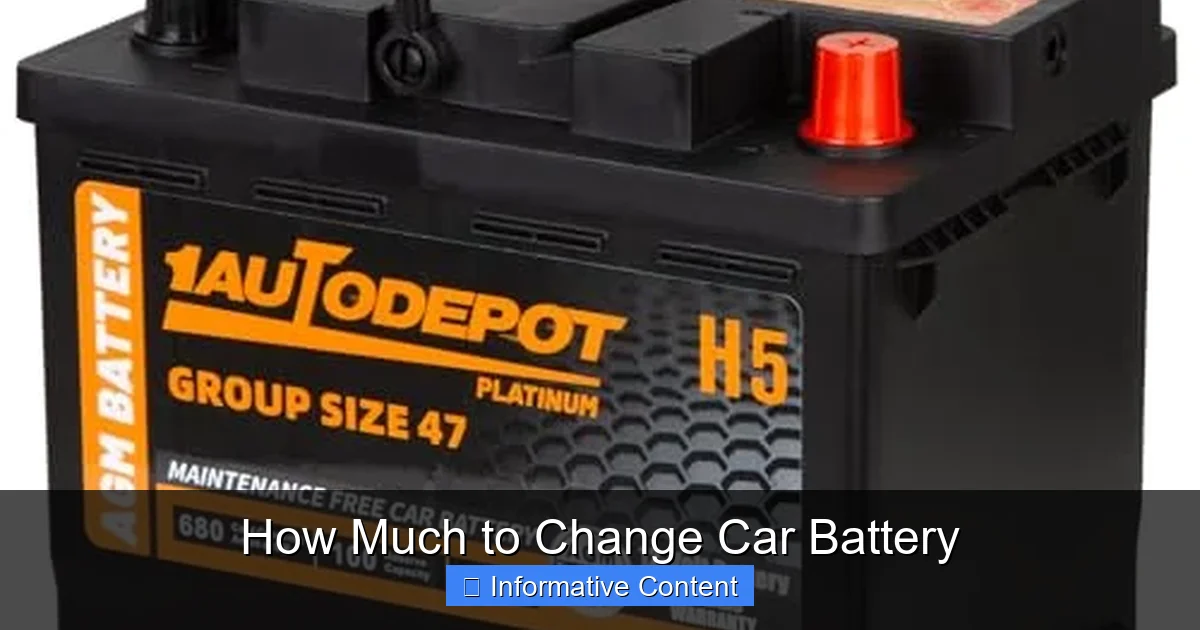
Changing a car battery can range from $100 to $400+, depending on the battery type, vehicle, and installation method. While a basic lead-acid battery for a standard car might be on the lower end, an AGM or specialized battery for a luxury vehicle will cost more. DIY replacement saves on labor but requires tools and confidence, while professional service offers convenience and expertise.
That moment arrives for every car owner. You turn the key, or push the start button, and instead of the satisfying rumble of the engine, you get a click, a groan, or worse – absolute silence. Your car battery, a critical component that powers everything from your headlights to your ignition, has decided to call it quits. It’s inconvenient, often frustrating, and immediately begs the question: “How much to change car battery?”
Dealing with a dead battery can feel daunting, especially if you’re not mechanically inclined. But understanding the costs involved, the factors that influence them, and your options for replacement can make the process much smoother and less stressful. This article is your friendly guide to navigating the world of car battery replacement, helping you feel confident about your next steps and your budget. We’ll break down everything you need to know, from different battery types to installation choices, so you’re fully prepared.
So, let’s dive in and demystify the process. We’ll explore the typical price ranges, what makes some replacements more expensive than others, and even offer some clever ways to save a few dollars. By the end of this read, you’ll have a clear picture of how much to change car battery and what to expect when that inevitable moment arrives.
Key Takeaways
- Cost Variability: The price to change a car battery varies widely, typically between $100 and $400, influenced by the battery type (standard, AGM, EFB), vehicle make and model, and whether you opt for DIY or professional installation.
- Battery Types Matter: Standard flooded lead-acid batteries are the least expensive, while Absorbent Glass Mat (AGM) and Enhanced Flooded Batteries (EFB) cost more but offer better performance and lifespan, especially for vehicles with start-stop technology or demanding electrical systems.
- DIY Savings: Replacing your car battery yourself can save $50-$150+ on labor costs. However, it requires basic tools, some mechanical aptitude, and awareness of safety precautions and potential issues like resetting vehicle electronics.
- Professional Convenience: Opting for professional installation by a mechanic or auto parts store ensures correct installation, proper disposal of the old battery, and often includes a warranty on both parts and labor, providing peace of mind.
- Beyond the Battery: Sometimes, a dead battery is a symptom, not the cause. You might also face costs for diagnostics, alternator replacement, or starter motor issues, which can significantly increase the overall repair bill.
- Extend Battery Life: Regular maintenance, avoiding short trips, keeping terminals clean, and ensuring proper charging can significantly extend your car battery’s lifespan, potentially delaying the need to change it.
- Shop Around: Battery prices and installation costs can differ between auto parts stores, independent mechanics, and dealerships. It’s wise to get a few quotes before making a decision to find the best value for how much to change car battery.
Quick Answers to Common Questions
How long does it take to change a car battery?
For most vehicles with an easily accessible battery, a professional can change it in 15-30 minutes. More complex installations (e.g., battery under a seat or in the trunk) can take 45-90 minutes or longer.
Can I just buy a cheaper battery than my car came with?
While you can, it’s generally not recommended. Your car’s manufacturer specifies a certain battery type (e.g., AGM, EFB) and power rating (CCA) for a reason. Using a cheaper, lower-spec battery might lead to premature failure, affect vehicle electronics, or not adequately support modern car features like start-stop systems.
Do car batteries come with a warranty?
Yes, most new car batteries come with a warranty, typically ranging from 24 to 48 months (2 to 4 years) for free replacement, followed by a prorated warranty. Always check the warranty details before purchasing.
What is a core charge when buying a car battery?
A core charge is a refundable deposit added to the price of a new battery, usually around $10-$20. You get this money back when you return your old battery for recycling, encouraging proper disposal of hazardous materials.
Is it bad to jump-start a dead battery?
Jump-starting a dead battery is generally safe and often necessary in an emergency. However, frequent jump-starting indicates an underlying issue (like a failing battery or alternator) that needs to be addressed. Modern cars require careful attention to the correct jump-start procedure to avoid damaging electronics.
📑 Table of Contents
Understanding the Core Costs: How Much to Change Car Battery?
When you’re asking “how much to change car battery,” the answer isn’t a single, straightforward number. It’s a range, influenced by several key factors. Generally, you can expect to pay anywhere from $100 to over $400 for a new battery and its installation. Let’s break down where that money goes.
The Price of the Battery Itself
The battery is the biggest chunk of the expense. Just like buying groceries, there are different brands, sizes, and types, each with its own price tag.
- Standard Flooded Lead-Acid Batteries: These are the most common and typically the most affordable option. They work well for older vehicles or those with basic electrical demands. Prices usually range from $80 to $150.
- Absorbent Glass Mat (AGM) Batteries: AGM batteries are a step up. They offer better performance, longer life, and are more resistant to vibration and extreme temperatures. They’re often found in newer vehicles, especially those with start-stop technology or lots of onboard electronics. You can expect to pay between $180 and $250, sometimes more.
- Enhanced Flooded Batteries (EFB): These are a hybrid, offering some benefits of AGM but at a lower cost, often used in vehicles with basic start-stop systems. They typically fall in the $150 to $200 range.
- Specialty Batteries: Some luxury or high-performance vehicles require very specific or even proprietary batteries. These can push the price significantly higher, sometimes exceeding $300 or $400.
The specific group size (e.g., Group 24, Group 35, Group 65) and cold cranking amps (CCA) rating also affect the price. Higher CCA means more starting power, which often correlates with a higher price.
Labor Costs for Installation
If you’re not doing it yourself, you’ll pay for labor. This cost varies based on where you get the work done.
- Auto Parts Stores: Many auto parts retailers (like AutoZone, Advance Auto Parts, O’Reilly Auto Parts) offer free battery testing and often free installation if you buy the battery from them. This is a great way to save on labor, assuming your vehicle’s battery is easily accessible.
- Independent Mechanics: A local mechanic might charge $30 to $100 for labor to change a car battery. This is a fair price for their expertise and convenience.
- Dealerships: Dealerships typically charge the highest labor rates. You might pay $75 to $150 or more for battery installation at a dealership. This is often because they use OEM (Original Equipment Manufacturer) parts and specialized tools for specific vehicle models.
The complexity of the installation also plays a role. In many modern cars, the battery isn’t under the hood anymore. It might be in the trunk, under the back seat, or even tucked away in a wheel well. Accessing these batteries can require removing other components, which increases labor time and, consequently, the cost of how much to change car battery.
DIY vs. Professional Installation: Weighing Your Options
Visual guide about How Much to Change Car Battery
Image source: thumbs.dreamstime.com
Deciding whether to tackle battery replacement yourself or have a professional do it is a major factor in how much to change car battery. Each option has its pros and cons regarding cost, convenience, and peace of mind.
The DIY Route: Saving Money, Taking on Responsibility
If you’re comfortable with basic car maintenance, changing your own battery can save you $50 to $150 or more in labor costs.
What You’ll Need for DIY:
- Tools: Usually a wrench (often 10mm or 13mm for terminals, sometimes a larger socket for hold-down clamps), a wire brush for cleaning terminals, and terminal protector spray.
- Safety Gear: Gloves and eye protection are crucial. Batteries contain sulfuric acid, which is corrosive.
- Battery Charger/Memory Saver (Optional but Recommended): For many modern cars, disconnecting the battery can cause the vehicle’s computer to lose its settings (radio presets, power window limits, engine fault codes). A memory saver plugs into your OBD-II port or cigarette lighter to provide continuous power while the main battery is disconnected.
- New Battery: Of course! Make sure it’s the correct group size and CCA for your vehicle.
DIY Advantages:
- Cost Savings: No labor charges means you only pay for the battery and any tools you might need to buy once.
- Immediate Fix: If you have the battery and tools, you can get your car running quickly.
- Learning Experience: A great way to get more familiar with your vehicle’s mechanics.
DIY Disadvantages:
- Risk of Error: Incorrect installation can damage your vehicle’s electrical system, lead to poor battery performance, or even cause a short circuit.
- Safety Concerns: Working with car batteries involves corrosive chemicals and electrical hazards.
- Disposal: You’re responsible for properly disposing of the old battery. Many auto parts stores will take old batteries for recycling, often with a core charge refund.
- Memory Loss: Without a memory saver, you might have to reprogram various electronic settings.
- Complexity: Some modern car batteries are buried and require significant disassembly to access, making DIY challenging for the average person.
Professional Installation: Convenience and Expertise
Paying a professional to change your car battery offers convenience and reassurance.
Where to Go for Professional Service:
- Auto Parts Stores: As mentioned, many offer free installation with purchase. This is often the cheapest professional option for how much to change car battery.
- Independent Mechanics: Good for more complex installations or if you want a trusted professional to also check other components.
- Dealerships: Best if your car is under warranty, requires specialized tools, or if you prefer OEM parts.
- Mobile Mechanics: Some services will come to you, which is great if your car is truly dead and you can’t get it to a shop. This might come with a slight premium for the convenience.
Professional Advantages:
- Expertise: Mechanics know how to properly disconnect, install, and secure the battery, preventing damage to your vehicle.
- Proper Disposal: They handle the hazardous waste disposal for you.
- Diagnostic Services: A mechanic can often test your alternator and starter to ensure the battery was the sole problem, potentially preventing future issues.
- Warranty: Often includes a warranty on both the battery and the installation.
- Convenience: You drop off your car (or they come to you) and pick it up when it’s done.
Professional Disadvantages:
- Higher Cost: You pay for labor, which adds to the overall expense of how much to change car battery.
- Time: You might have to wait for an appointment or for the work to be completed.
Beyond the Battery: Related Costs and What Else to Check
Sometimes, a dead battery isn’t just about the battery. It can be a symptom of a larger problem. When you’re figuring out how much to change car battery, it’s wise to consider other components that work in tandem with it.
Alternator Issues
The alternator is responsible for charging your battery while the engine is running and providing power to the vehicle’s electrical systems. If your alternator is failing, your new battery might quickly die again.
- Symptoms: Dimming headlights, dashboard warning light (often a battery icon), strange noises, or frequent battery drain.
- Cost to Replace Alternator: This can add significantly to your bill, ranging from $300 to $800 or more, depending on your vehicle and part costs.
Starter Motor Problems
The starter motor is what initially turns the engine over when you start your car. If it’s faulty, your battery might be perfectly fine, but your car still won’t start.
- Symptoms: A single click when trying to start, grinding noises, or the engine not cranking at all (even with a charged battery).
- Cost to Replace Starter: Similar to an alternator, this can run from $250 to $700+.
Parasitic Drains
This occurs when something in your car continues to draw power even when the car is off. This could be a faulty interior light switch, a glove box light staying on, or an aftermarket accessory. A mechanic can perform a “parasitic draw test” to identify the culprit. This diagnostic test might add $50-$150 to your total bill, but it’s essential to prevent future battery drains.
Corrosion or Damaged Cables
Corrosion on battery terminals or damaged battery cables can prevent your battery from delivering power efficiently or charging properly. Cleaning terminals is often a quick fix, but replacing cables can add $50 to $200, including parts and labor.
Always ask your mechanic to perform a quick diagnostic check on your charging system (alternator and starter) when replacing your battery. Many shops offer this test for free or a minimal charge. It’s a small extra step that can save you a lot of headache and money down the road, ensuring that how much to change car battery is the only cost you incur.
Tips for Saving Money and Extending Battery Life
While you might eventually need to change your car battery, there are ways to stretch its life and save money when the time comes.
Shop Around for Batteries
Battery prices can vary significantly between different retailers. Check prices at local auto parts stores, big box retailers (like Walmart or Costco), and online. Don’t forget to compare warranties – a longer warranty often indicates a higher-quality battery. Many stores also have sales or loyalty programs that can save you money on how much to change car battery.
Consider Refurbished or Remanufactured Batteries (With Caution)
Sometimes, you can find refurbished batteries at a lower cost. These can be a good option for older vehicles where you don’t want to invest heavily. However, they typically come with a much shorter warranty and might not last as long as a new battery. Use caution and ensure you understand the warranty terms.
Utilize Free Installation Offers
As mentioned, many auto parts stores offer free installation with the purchase of a new battery. This is a no-brainer if you’re buying a battery from them and your car’s battery is easily accessible.
Proper Maintenance is Key
- Keep Terminals Clean: Regularly check your battery terminals for corrosion (a white or bluish powdery substance). Clean them with a wire brush and a mixture of baking soda and water. Apply a terminal protector spray afterward.
- Check Water Levels (for non-sealed batteries): Some traditional lead-acid batteries have removable caps allowing you to check and top off electrolyte levels with distilled water. *Never use tap water.*
- Regular Driving: Short trips don’t allow your alternator enough time to fully recharge the battery. If you mostly make short trips, consider a longer drive every week or so, or use a trickle charger.
- Avoid Draining: Don’t leave lights on, the radio playing, or accessories plugged in when the engine is off.
- Test Regularly: Have your battery tested periodically, especially as it approaches its typical lifespan (3-5 years). Many auto parts stores offer free battery testing. This can give you an early warning before it completely fails.
- Insulate in Extreme Temperatures: In very cold climates, a battery blanket can help maintain battery temperature, improving starting power. In very hot climates, ensuring your battery is securely mounted and has good ventilation can help.
Use a Battery Tender/Trickle Charger
If you store your car for extended periods, or if you only drive it occasionally, a battery tender or trickle charger can keep your battery fully charged and prolong its life. These devices provide a slow, steady charge to prevent self-discharge.
Conclusion: Being Prepared Pays Off
When that familiar moment of a dead battery hits, knowing how much to change car battery can make all the difference. While the exact cost varies, you now understand the main components: the battery itself (ranging from $80 for a basic lead-acid to $400+ for specialty types) and labor costs (from free DIY to $150+ at a dealership).
Remember, how much to change car battery isn’t just about the immediate expense. It’s also about making smart choices for your vehicle’s long-term health. Whether you choose to save money with a DIY swap, or opt for the convenience and expertise of a professional installation, being informed empowers you. Keep an eye on your battery’s age, perform routine maintenance, and consider having it tested regularly. By doing so, you can often extend its lifespan, and when it finally gives out, you’ll be ready to tackle the replacement with confidence and a clear understanding of the costs involved. Drive safely, and may your battery always be charged!
🎥 Related Video: Never Change Your Car’s Battery Like This
📺 Scotty Kilmer
Never Change Your Car’s Battery Like This Subscribe for more daily vids …
Frequently Asked Questions
How often should I change my car battery?
Most car batteries last between 3 to 5 years, though this can vary based on climate, driving habits, and battery type. It’s a good idea to have your battery tested annually after the 3-year mark to gauge its remaining life.
What are the signs that my car battery needs to be replaced?
Common signs include slow engine cranking, dim headlights when starting, the battery light illuminating on your dashboard, and needing frequent jump-starts. If your battery casing looks swollen or smells like rotten eggs, it’s definitely time for a change.
Can extreme temperatures affect my car battery’s lifespan?
Yes, both extreme heat and cold can significantly impact battery life. Heat accelerates the chemical reactions within the battery, causing faster degradation, while cold temperatures reduce its ability to produce power, making starting more difficult.
Should I replace my car battery even if it’s still working but old?
If your battery is past its typical lifespan (e.g., 5+ years) and showing signs of weakness, it’s often wise to replace it proactively, especially before winter or a long trip. This can prevent being stranded unexpectedly and provides peace of mind.
Does the brand of car battery matter?
While many brands offer reliable batteries, quality can vary. Reputable brands often offer better performance, longer warranties, and more consistent quality. It’s often worth investing in a well-regarded brand for reliability.
Is there a specific time of year when it’s best to buy a car battery?
Battery prices don’t fluctuate seasonally in a major way, but you might find sales during major holidays or around the change of seasons. The best time to buy is when your current battery shows signs of weakness, regardless of the calendar.