
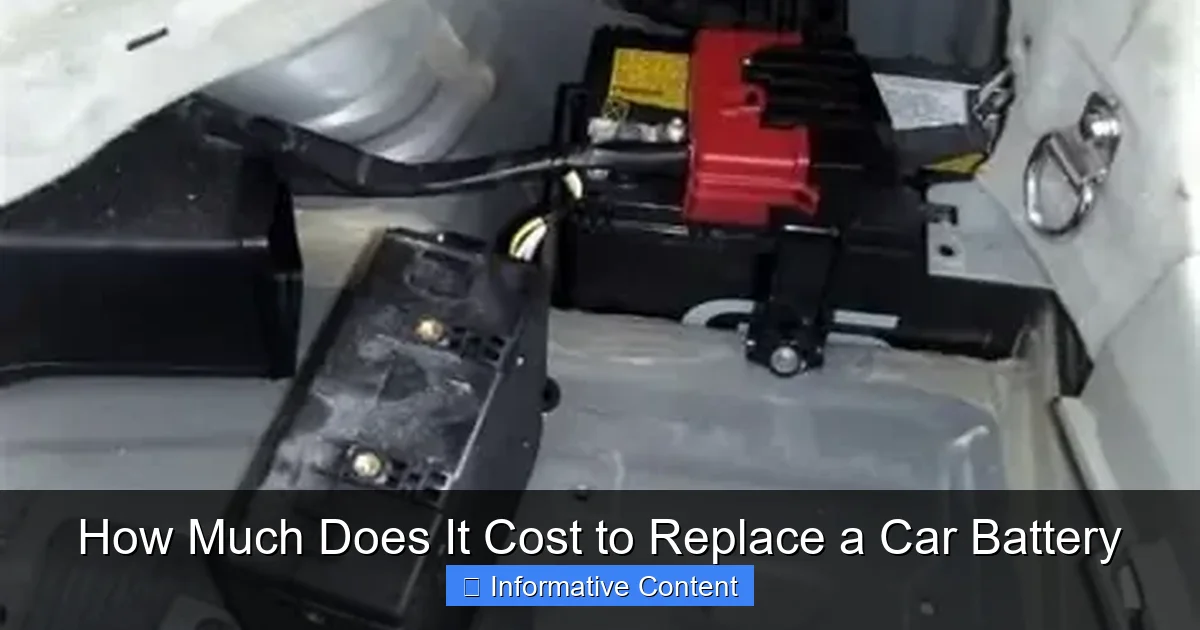
Replacing a car battery can range from under $100 for a basic DIY installation to over $400 for a premium battery professionally installed at a dealership. The total cost largely depends on the battery type, your vehicle’s make and model, whether you opt for DIY or professional service, and your geographic location. Understanding these factors helps you budget effectively and avoid unexpected expenses.
That dreaded click, click, *silence*. Or maybe the slow, groaning crank that barely turns your engine over. Yep, it’s a feeling most car owners eventually experience: a dead car battery. When your vehicle refuses to start, one of the first questions that pops into your head (after a moment of panic, perhaps) is, “How much does it cost to replace a car battery?” It’s a perfectly valid question, and one without a single, simple answer.
Replacing a car battery isn’t usually the most exciting expense, but it’s a critical one for keeping your vehicle reliable. The cost can vary quite a bit, depending on a handful of factors that we’ll dive into. From the type of battery your car needs to where you get it installed, and even your geographic location, many elements play a role in the final bill. Let’s break down everything you need to know about the cost of car battery replacement, so you can make an informed decision and get back on the road with confidence.
The Core Components of Car Battery Replacement Cost
When you’re trying to figure out how much does it cost to replace a car battery, it helps to break the total down into its main parts: the battery itself, the labor to install it, and any extra fees. Understanding these components will give you a clearer picture of where your money is going.
The Battery Itself (Parts Cost)
This is often the biggest chunk of the expense. Car batteries aren’t a one-size-fits-all product; your car’s specific needs dictate the type and size of battery required.
- Standard Flooded Lead-Acid Batteries: These are the most common and generally the most affordable option. They are found in many older vehicles and basic newer models. You can expect to pay anywhere from $75 to $150 for a good quality standard battery.
- AGM (Absorbed Glass Mat) Batteries: AGM batteries are a step up in technology. They are more durable, handle vibrations better, and are designed for vehicles with more demanding electrical systems, especially those with start-stop technology (where the engine shuts off at stoplights). These typically cost more, usually ranging from $150 to $250, but can go higher for larger or specialized applications.
- EFB (Enhanced Flooded Battery) Batteries: Similar to AGM, EFB batteries are also designed for start-stop vehicles, offering improved cyclic durability over standard flooded batteries but generally costing less than AGMs. They usually fall in the $120 to $200 range.
- Lithium-ion Batteries: While still rare in mainstream internal combustion engine vehicles, some high-performance or luxury cars are starting to use lightweight lithium-ion starter batteries. These are significantly more expensive, often starting at $500 and easily exceeding $1,000.
Beyond the type, the brand, warranty, and specific Cold Cranking Amps (CCA) rating also affect the price. Higher CCA ratings mean more starting power in cold weather, which can lead to a slightly higher price tag. A good warranty (e.g., 3-year free replacement, 5-year pro-rated) can also add a little to the initial cost but offers peace of mind.
Labor Cost for Installation
This is where the “professional” part of the replacement comes in. If you’re not doing it yourself, someone needs to remove the old battery and install the new one.
- Simple Access: For many older cars where the battery is easily accessible under the hood, labor costs are minimal. Some auto parts stores even offer free installation when you purchase a battery from them. An independent mechanic might charge $20-$50 for this simple job.
- Challenging Access: Modern vehicles, especially luxury cars or SUVs, might have batteries located under the back seat, in the trunk, or even under a wheel well. Accessing these can require removing seats, trim panels, or other components, significantly increasing labor time.
- Specialized Installation/Programming: Some vehicles, particularly European luxury brands or those with advanced electrical systems, require the new battery to be “registered” or programmed with the car’s computer system. This ensures the charging system works correctly with the new battery and can prevent premature failure. This specialized service obviously adds to the labor cost.
Depending on these factors, labor can range from absolutely free (with purchase at an auto parts store) to $150 or more at a dealership for a complex installation.
Additional Charges and Fees
When you’re asking how much does it cost to replace a car battery, don’t forget these smaller but important charges:
- Battery Core Charge: Almost every new battery purchase includes a “core charge,” which is a deposit (typically $10-$20). You get this back when you return your old battery for recycling. It’s an incentive to ensure proper environmental disposal.
- Environmental Disposal Fee: A small fee, usually just a few dollars, might be added to cover the cost of environmentally responsible battery disposal.
- Diagnostic Fees: If you bring your car in and aren’t sure if it’s the battery or something else, a mechanic might charge a diagnostic fee. This is usually waived if you proceed with the repair.
- Roadside Assistance/Service Call: If your car dies and you need a mobile service to come to you and replace the battery on the spot, you’ll pay a premium for the convenience, in addition to the battery and labor costs.
DIY vs. Professional Installation: A Cost Comparison
The choice between replacing the battery yourself or having a professional do it is one of the biggest determinants of how much does it cost to replace a car battery. Each option has its pros and cons.
The DIY Route: Saving Money (with Caveats)
If you’re comfortable with basic car maintenance, changing a battery yourself can save you a significant amount on labor. For many cars, it’s a relatively straightforward process involving a few wrenches and some safety precautions.
- Cost: You only pay for the battery itself (and the core charge, which you get back). This can keep your total cost under $150 for a standard battery.
- Tools Needed: You’ll typically need a wrench set (often a 10mm or 13mm), a battery terminal cleaner, and potentially a battery terminal puller. A memory saver tool (a small device that plugs into your car’s OBD-II port or cigarette lighter) can be helpful to prevent your car’s computer settings (like radio presets or idle learning) from resetting.
- Safety First: Batteries contain corrosive acid and produce explosive hydrogen gas. Always wear safety glasses and gloves, work in a well-ventilated area, and avoid sparks. Disconnect the negative terminal first, then the positive. Reconnect positive first, then negative.
- When DIY is Suitable: If your battery is easily accessible, and you have the right tools and confidence, DIY is a great way to reduce the cost to replace a car battery.
Cons of DIY: Safety risks, potential for incorrect installation, no professional diagnostic if the battery wasn’t the sole issue, and no labor warranty. For modern cars with complex electrical systems, DIY can be risky if you don’t know how to properly handle battery registration or avoid system resets.
Professional Installation: Peace of Mind (and its Price Tag)
Opting for professional installation means paying for convenience, expertise, and often, a warranty on parts and labor.
- Auto Parts Stores (e.g., AutoZone, Advance Auto Parts, O’Reilly Auto Parts): Many major auto parts chains offer free battery testing and often free installation if you buy the battery from them. This is often the most cost-effective professional option, as you’re primarily paying for the battery. The caveat is they might not handle complex installations.
- Independent Mechanics: A local mechanic can be a good middle ground. They offer expertise and usually charge a fair labor rate ($40-$80) on top of the battery cost. They can also diagnose if there are other underlying issues contributing to battery drain.
- Dealerships: Generally the most expensive option, but they offer factory-trained technicians, original equipment (OE) batteries, and are best equipped to handle complex installations, especially for luxury or specialized vehicles that require battery registration. Expect to pay premium labor rates ($80-$150+) on top of the battery cost, potentially pushing the total cost of car battery replacement to $300-$400 or more.
- Mobile Mechanics: For ultimate convenience, a mobile mechanic will come to you. This service adds a premium for travel and on-site repair, but can be a lifesaver if you’re stranded.
Factors That Influence the Cost of a Car Battery Replacement
Beyond the basic parts and labor, several other factors can significantly impact how much does it cost to replace a car battery.
Vehicle Make and Model
This is a huge factor.
- Luxury vs. Standard: High-end luxury vehicles (BMW, Mercedes-Benz, Audi, etc.) often use more expensive AGM or lithium-ion batteries and typically have batteries located in hard-to-reach places (trunk, under seats). They also often require battery registration, which adds labor time and specialized equipment.
- Start-Stop Technology: Cars with automatic start-stop systems *must* use AGM or EFB batteries, which are more expensive than standard lead-acid ones.
- Battery Location: As mentioned, easier access means lower labor costs. Some trucks or older cars have batteries right on top of the engine, making for a quick swap.
Battery Type and Technology
We covered this in the “Parts Cost” section, but it bears repeating. Choosing the correct battery for your car is paramount. Using a standard battery in a vehicle designed for an AGM could lead to premature failure and more frequent replacements, ultimately increasing your long-term cost of car battery replacement.
Geographic Location
Just like everything else, the cost of services and goods varies by region. Labor rates in a high cost-of-living area like New York City or San Francisco will be higher than in a rural town in the Midwest. This applies to both the hourly rate of mechanics and sometimes even the price of batteries due to shipping and local market dynamics.
Warranty and Brand
Premium battery brands often come with longer warranties (e.g., 3-5 years full replacement) but have a higher upfront cost. Value brands might be cheaper initially but come with shorter warranties, meaning you might face another car battery replacement cost sooner if it fails prematurely. Consider the value of a strong warranty when making your purchase.
Urgency and Roadside Assistance
If your car battery dies unexpectedly and you need immediate service, especially outside of regular business hours or through a roadside assistance program, expect to pay a premium. Convenience comes at a price. Calling a tow truck and then paying for a battery replacement at a shop will almost always be more expensive than proactively replacing a weak battery.
How to Get the Best Deal on Your Car Battery Replacement
Knowing how much does it cost to replace a car battery is one thing; finding ways to minimize that cost is another. Here are some smart strategies:
Shop Around for Batteries
Don’t just buy the first battery you see. Check prices at various auto parts stores, big-box retailers (like Walmart or Costco often have good deals), and even online if you plan to DIY. Compare brands, CCA ratings, and warranties. Look for sales, rebates, or coupons, especially around seasonal changes when battery demand might increase.
Ask About Installation Fees
Before you buy, ask if installation is included or what the labor fee will be. Many auto parts stores will install for free if you buy the battery from them, which can save you $20-$50 immediately. For independent mechanics, get a quote that explicitly breaks down the battery cost and the labor cost.
Maintain Your Battery
The best way to save on car battery replacement cost is to make your current one last as long as possible.
- Keep it Clean: Regularly check for corrosion on the terminals and clean them with a wire brush and a baking soda-water solution.
- Check Connections: Ensure the battery cables are tightly secured.
- Avoid Deep Discharges: Don’t leave lights on or accessories running with the engine off.
- Regular Driving: Short trips don’t allow the alternator enough time to fully recharge the battery. Take longer drives regularly.
- Consider a Battery Tender: If you don’t drive your car often, a smart battery tender can keep it fully charged and extend its lifespan.
Utilize Warranties
If your current battery is relatively new and fails, check its warranty. You might be eligible for a free replacement or a pro-rated discount on a new one, significantly reducing your how much does it cost to replace a car battery concern. Keep your receipt and warranty information handy.
Signs You Need a New Car Battery
Catching a dying battery before it strands you can save you from a more expensive roadside service call. Here are common signs:
- Slow Engine Crank: This is the classic symptom. When you turn the key or push the start button, the engine cranks slowly or struggles to turn over.
- Dim Headlights or Interior Lights: If your lights appear dimmer than usual when the engine is off, or even when idling, it could indicate a weak battery.
- Dashboard Warning Lights: A “battery” or “check engine” light might illuminate, indicating a problem with the charging system or the battery itself.
- Clicking Sound: A rapid clicking sound when you try to start the car, but no engine turnover, usually points to a very low or dead battery.
- Swollen Battery Case or Corroded Terminals: Visible swelling or bulging of the battery case can indicate internal damage. Excessive corrosion around the terminals, even after cleaning, can also be a sign of a failing battery.
- Old Age: Most car batteries last 3-5 years. If yours is in this age range, it’s a good idea to have it tested, especially if you live in an area with extreme temperatures.
Conclusion
So, how much does it cost to replace a car battery? As we’ve seen, there’s no single price. It’s a spectrum that ranges from as little as $75 for a basic DIY replacement to upwards of $400 or more for a premium battery installed in a luxury vehicle at a dealership. The key takeaway is that understanding the factors – the type of battery, your vehicle’s demands, your choice of installer, and even your location – empowers you to anticipate and manage this essential car maintenance expense.
Don’t wait until you’re stranded to think about your battery. Regular checks, proactive replacement when signs appear, and smart shopping can save you money, time, and a lot of frustration. Investing in a good quality battery and proper installation is an investment in your car’s reliability and your peace of mind on the road.
Key Takeaways
- Cost Variability: The total cost to replace a car battery typically ranges from $75 to $400+, influenced by battery type, vehicle, and installation method.
- Battery Types Matter: Standard flooded lead-acid batteries are the cheapest (often $75-$150), while AGM or EFB batteries for modern vehicles with start-stop technology are pricier ($150-$300+).
- DIY vs. Professional: DIY installation saves on labor (costing only the battery), but professional installation offers expertise, safety, and proper disposal, with labor adding $20-$100+ to the total.
- Vehicle Specifics: Luxury cars, vehicles with hard-to-access batteries, or those requiring specialized programming will incur higher labor costs.
- Where You Buy/Install: Auto parts stores often offer free installation with purchase. Independent mechanics provide a good balance of cost and service, while dealerships are generally the most expensive option.
- Hidden Costs: Don’t forget potential core charges, diagnostic fees, and environmental disposal fees, which can add a small amount to the overall expense.
Quick Answers to Common Questions
How long does it take to replace a car battery?
Replacing a car battery typically takes anywhere from 15 minutes to an hour for most vehicles, depending on accessibility and whether any special programming is required. Simple under-the-hood replacements are much faster than those located in the trunk or under seats.
Can I replace a car battery myself?
Yes, many car owners can replace a car battery themselves, especially on older models with easily accessible batteries. However, it requires basic tools, some mechanical comfort, and strict adherence to safety precautions, as batteries contain corrosive acid and produce explosive gases.
Do auto parts stores install batteries for free?
Many major auto parts stores (like AutoZone, Advance Auto Parts, O’Reilly Auto Parts) offer free battery testing and often free installation when you purchase a new battery from them. It’s always best to call ahead and confirm their policy for your specific vehicle.
What happens if I don’t replace a dying car battery?
If you don’t replace a dying car battery, your vehicle will eventually fail to start, potentially stranding you. A weak battery can also put added strain on your alternator and other electrical components, potentially leading to more expensive repairs down the line.
How often should a car battery be replaced?
Most car batteries last between 3 to 5 years, though this can vary based on climate, driving habits, and battery type. Extreme hot or cold weather can shorten a battery’s lifespan. Regular testing can help you determine its health before it completely fails.
🎥 Related Video: When should I replace my Car’s Battery? #cars #carbattery #battery #batteryservice
📺 Mercie J Auto Care, llc
Frequently Asked Questions
What is a “core charge” when buying a new car battery?
A core charge is a refundable deposit added to the price of a new battery, typically ranging from $10-$20. It encourages customers to return their old battery for proper recycling, which helps prevent environmental pollution from hazardous materials.
Is it bad to reset my car’s computer by disconnecting the battery?
Disconnecting your car’s battery will reset certain computer settings, such as radio presets, clock, and potentially erase error codes. For some modern vehicles, especially luxury models, disconnecting the battery can lead to more complex issues or require the new battery to be “registered” with the car’s computer, so it’s best to consult your owner’s manual or a professional.
Can extreme weather affect car battery life and cost?
Yes, extreme hot and cold weather significantly impact battery life. High heat can accelerate internal corrosion, while severe cold reduces a battery’s cranking power and can make it harder to start your car. Vehicles in these climates often experience shorter battery lifespans, potentially leading to more frequent replacements and associated costs.
Do all cars require the same type of battery?
No, cars require different types of batteries based on their make, model, and technology. Modern vehicles with start-stop systems often need AGM or EFB batteries, while older cars might use standard flooded lead-acid batteries. Using the wrong battery type can lead to poor performance and premature failure.
What does CCA mean in battery specifications?
CCA stands for Cold Cranking Amps. It measures the battery’s ability to start an engine in cold temperatures. Specifically, it’s the number of amperes a lead-acid battery can deliver for 30 seconds at 0°F (-18°C) while maintaining a voltage of at least 7.2 volts. Higher CCA numbers indicate better starting power in cold conditions.
Should I test my car battery regularly?
Yes, it’s a good idea to have your car battery tested annually, especially as it approaches the 3-year mark or if you live in an area with extreme temperatures. Many auto parts stores offer free battery testing, which can identify a weak battery before it leaves you stranded and help you plan for a replacement.