A typical 12-volt car battery generally needs to be at least 12.6 volts when fully charged, and around 12.4 volts to reliably start your engine. While it might crank at slightly lower voltages, a healthy battery ensures consistent starting power, especially in cold weather. Understanding these charge levels helps you diagnose issues and maintain your vehicle effectively.
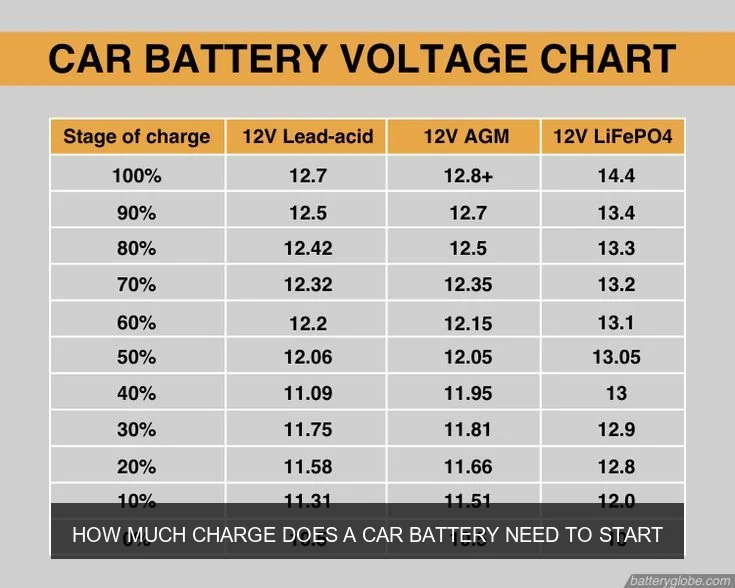
Image source: Pinimg
📋 Table of Contents
- Introduction: The Heart of Your Car’s Start
- What Is the Ideal Charge for Starting?
- Why Does Battery Charge Matter So Much?
- How Does a Car Battery Deliver Starting Power?
- Factors Affecting a Battery’s Ability to Start
- Benefits of an Optimally Charged Battery
- Common Misconceptions About Battery Charge
- Practical Tips for Battery Health
- Real-Life Scenarios: What Different Readings Mean
- Frequently Asked Questions (FAQ)
- Conclusion: Keep Your Battery Ready
Introduction: The Heart of Your Car’s Start
Ever hopped into your car, turned the key, and… nothing? Or maybe just a slow, groaning sound? This frustrating experience often points to a common culprit: your car battery. It’s the unsung hero that provides the initial burst of electricity to get everything going. But exactly how much charge does a car battery need to start your engine reliably?
Understanding the charge level your battery needs isn’t just for mechanics; it’s useful knowledge for any car owner. It helps you recognize early warning signs, perform simple checks, and potentially avoid being stranded. In this article, we’ll dive deep into the ideal charge levels, what they mean for your car, and how you can keep your battery in top shape. We’ll explore the science behind that crucial starting power and clear up common misunderstandings, all to help you maintain a reliable ride.
What Is the Ideal Charge for Starting?
When we talk about a car battery’s “charge,” we’re primarily referring to its voltage. For a standard 12-volt lead-acid car battery, the ideal fully charged state is around 12.6 volts or higher when the engine is off and the battery has rested for a bit. This is often called its “static” or “open-circuit” voltage.
To successfully start your car, your battery generally needs to be at least 12.4 volts. At this level, it has enough power reserves to crank the engine, ignite the fuel, and get the alternator running. If the voltage drops much lower, say to 12.0 volts or below, you might notice a slower crank, or the car might not start at all. Here’s a quick guide to common voltage readings:
| Voltage Reading (Approx.) | Charge Level (%) | Status for Starting |
|---|---|---|
| 12.6V or higher | 100% | Excellent, fully charged |
| 12.4V | 75% | Good, should start reliably |
| 12.2V | 50% | Fair, might struggle in cold, marginal start |
| 12.0V | 25% | Poor, likely won’t start easily or at all |
| 11.8V or lower | 0% | Discharged, will not start |
Remember, these are open-circuit readings. The voltage will dip temporarily when you try to start the car due to the high current draw. A healthy battery should not drop below 9.6-10.0 volts during cranking.
Why Does Battery Charge Matter So Much?
The car battery isn’t just about starting your vehicle; it’s a vital part of the entire electrical ecosystem. Understanding why battery charge is important helps highlight its critical role:
- Engine Cranking Power: The starter motor requires a huge surge of electricity (hundreds of amps) in a very short time to turn the engine over. A well-charged battery can deliver this burst instantly.
- Reliable Performance: A battery that’s consistently at a good charge level means your car will start consistently, reducing the stress and wear on other components like the starter motor.
- Cold Weather Performance: Cold temperatures significantly reduce a battery’s capacity and its ability to deliver current. A strong charge is even more crucial when the mercury drops, as the engine oil thickens and makes starting harder.
- Powering Electronics: While the engine is off, your battery powers everything from your alarm system to your clock and radio memory. A sufficient charge prevents parasitic drains from fully discharging it.
- Battery Lifespan: Keeping a battery adequately charged prevents “deep discharge,” which can permanently damage its internal plates and drastically shorten its overall life.
Essentially, a healthy charge isn’t just about a single event (starting); it’s about the overall health and reliability of your vehicle’s electrical system.
How Does a Car Battery Deliver Starting Power?
The process of a car battery delivering starting power is a fascinating interplay of chemistry and physics. Here’s a simplified breakdown of how a car battery works to get your engine running:
- Chemical Reaction: Inside a typical lead-acid battery, there are lead plates submerged in an electrolyte solution (sulfuric acid and water). When the battery is discharging, a chemical reaction occurs where lead dioxide on the positive plates and lead on the negative plates react with the sulfuric acid.
- Electron Flow: This reaction releases electrons, creating a flow of electrical current. This current travels through the battery terminals and into your car’s electrical system when you turn the ignition.
- Starter Motor Activation: The vast majority of this initial current goes to the starter motor. The starter motor is a powerful electric motor designed specifically to crank the engine. It uses the electrical energy from the battery to turn the engine’s crankshaft.
- Engine Turnover: As the crankshaft turns, it cycles the pistons, drawing in air and fuel. The spark plugs, also powered by the battery (via the ignition system), create a spark that ignites this air-fuel mixture.
- Engine Starts and Alternator Takes Over: Once the engine starts running, the alternator kicks in. The alternator is essentially a generator that is driven by the engine’s belt. It then takes over the job of supplying electricity to the car’s electrical systems and, critically, recharging the battery.
The key here is that initial, massive surge of power. The battery has to deliver a high current (measured in Amperes, or Amps) at a stable voltage for a few seconds. The ability to do this is often rated as “Cold Cranking Amps” (CCA) on the battery label.
Factors Affecting a Battery’s Ability to Start
Even with what seems like a decent charge, sometimes a car just won’t start. This is because several factors can influence how effectively your battery delivers its starting power:
- Temperature: Cold weather is the battery’s worst enemy. Low temperatures slow down the chemical reactions inside the battery, reducing its effective capacity and its ability to deliver current. Thickened engine oil also requires more power to crank.
- Battery Age: As batteries age, their internal components degrade. Sulfation (the buildup of lead sulfate crystals on the plates) and active material shedding reduce the battery’s capacity and its ability to hold a charge.
- Parasitic Drains: Devices that draw small amounts of power when the car is off (e.g., alarm systems, memory for radio/ECU, interior lights left on) can slowly drain the battery over time, especially if the car sits unused for extended periods.
- Alternator Issues: If your alternator isn’t charging the battery properly while you drive, the battery will gradually lose charge, even if it’s otherwise healthy.
- Corrosion: Corroded battery terminals (the posts and clamps) create resistance, hindering the flow of electricity. This can make a fully charged battery act like a dead one.
- Short Drives: Frequent short drives where the engine isn’t running long enough for the alternator to fully recharge the battery can lead to a gradual state of undercharge.
- Battery Type: While most cars use lead-acid, there are different types (e.g., flooded, AGM). AGM batteries generally handle discharge better and offer more consistent performance.
All these elements can individually or collectively impact how much charge a car battery needs to start effectively.
Benefits of an Optimally Charged Battery
Maintaining an optimal charge in your car battery brings a host of advantages beyond just reliable starting:
- Extended Battery Lifespan: Keeping a battery consistently topped up prevents the damaging effects of deep discharge, which can lead to sulfation and premature failure. A well-maintained battery can last significantly longer.
- Consistent Vehicle Performance: A strong battery ensures that all electrical components, from your fuel pump to your infotainment system, receive stable voltage, contributing to smoother overall vehicle operation.
- Reduced Stress on Starter Motor: When your battery delivers strong, quick cranks, the starter motor doesn’t have to work as hard or for as long, extending its own operational life.
- Enhanced Safety Features: Many modern safety systems, like ABS, stability control, and airbags, rely on a stable electrical supply. A healthy battery contributes to their reliable function.
- Better Fuel Economy (Indirectly): While not a direct link, an efficiently running electrical system and a healthy alternator (which isn’t constantly straining to recharge a struggling battery) can indirectly contribute to better overall vehicle efficiency.
- Peace of Mind: Perhaps the most underrated benefit is simply not having to worry about your car starting, especially when you’re in a hurry or in an inconvenient location.
These benefits highlight why understanding and maintaining how much charge a car battery needs to start is an investment in your vehicle’s overall health and your personal convenience.
Common Misconceptions About Battery Charge
There are quite a few myths and misunderstandings floating around about car batteries and their charge. Let’s clear up some of the most common ones:
- “My car starts, so the battery is fine.” Not necessarily. A battery might have just enough juice to start the car, but it could be severely undercharged (e.g., at 12.2V). This shortens its lifespan and leaves you vulnerable in colder weather.
- “Driving for 10 minutes will fully recharge my battery.” For a slightly discharged battery, a short drive helps. But if it’s significantly drained, it can take hours of driving for the alternator to fully restore its charge, especially if you’re using many accessories.
- “The car battery charges faster if I rev the engine.” The alternator charges based on engine RPMs, but after a certain point (usually above idle), the charging rate doesn’t significantly increase with higher RPMs. It’s more about sustained driving.
- “Maintenance-free batteries never need attention.” While they don’t need water added, “maintenance-free” batteries still require proper charging, terminal cleaning, and can still fail due to age or neglect.
- “Cold weather kills batteries.” Cold weather doesn’t kill a healthy battery; it simply exacerbates the weakness of an already failing or undercharged battery. The cold reduces its effective capacity, making a weak battery seem dead.
- “If it’s a 12V battery, it should always read 12V.” A “12-volt” battery refers to its nominal voltage. A fully charged 12V lead-acid battery actually reads around 12.6 to 12.8 volts when resting. Anything close to 12.0V or below indicates a significant discharge.
Dispelling these myths helps you better understand how much charge a car battery needs to start and how to care for it properly.
Practical Tips for Battery Health
Keeping your car battery in top condition isn’t overly complicated. Here are some practical tips to ensure it always has the charge it needs:
- Check Voltage Regularly: Use a simple voltmeter to check your battery’s resting voltage a few times a year, especially before winter. This gives you an early warning if it’s losing charge.
- Keep Terminals Clean: Inspect the battery terminals for corrosion (a fuzzy, white, or blue-green buildup). Clean them with a wire brush and a battery terminal cleaner solution (or a baking soda paste) to ensure good electrical contact.
- Drive Regularly and for Sufficient Durations: If your car sits for long periods, or you only make very short trips, consider taking it for a longer drive (at least 30 minutes) once a week to allow the alternator to fully recharge the battery.
- Use a Trickle Charger/Battery Maintainer: For vehicles stored for extended periods (weeks or months), a smart trickle charger or battery maintainer is invaluable. It keeps the battery topped off without overcharging it.
- Limit Parasitic Drains: Make sure all lights are off when you leave the car. Avoid leaving accessories plugged in if your car is prone to draining the battery.
- Insulate in Extreme Cold: In extremely cold climates, a battery blanket or insulated battery box can help maintain the battery’s temperature, improving its performance.
- Test Battery Load: Periodically, have your battery load tested by a professional. This checks its ability to deliver current under demand, which voltage checks alone can’t fully determine.
By following these tips, you’re actively working to ensure how much charge your car battery needs to start is always there when you need it.
Real-Life Scenarios: What Different Readings Mean
Let’s look at a few common scenarios and what they might tell you about your battery’s charge and health:
Scenario 1: Your Voltmeter Reads 12.6V, but the Car Won’t Start.
- Meaning: This suggests the battery has a good surface charge (voltage) but might lack the necessary Cold Cranking Amps (CCA). This could be due to internal damage, age, or sulfation. It might also point to an issue with the starter motor or other electrical components, not necessarily the battery’s charge.
- Action: Have the battery load tested by a professional. Check starter motor and main cables.
Scenario 2: Your Car Cranks Slowly and Hesitantly, Voltmeter Reads 12.2V.
- Meaning: At 12.2V, your battery is only about 50% charged. It has enough voltage to initiate a crank but struggles to deliver the high current needed efficiently, especially if the engine requires more effort (e.g., in cold weather).
- Action: Recharge the battery fully. Check for parasitic drains or if your alternator is charging correctly.
Scenario 3: You Left Your Lights On Overnight, and the Car is Completely Dead (Reads ~11.8V).
- Meaning: The battery is deeply discharged, likely below 25% capacity. It doesn’t have enough voltage or current to do anything. Deep discharges are very hard on a battery.
- Action: Attempt to jump-start the car. Then, drive for an extended period or use a battery charger to fully recharge it. Consider having it tested afterward, as a deep discharge can cause lasting damage.
Scenario 4: Your Car Starts Fine in Warm Weather, but Struggles in Winter.
- Meaning: This is a classic sign of an aging or marginally charged battery. The cold reduces its effective power, making its weaknesses apparent.
- Action: Check the battery’s resting voltage. If it’s consistently below 12.6V, or if it’s over 3-4 years old, it might be time for a replacement. Consider using a battery maintainer during colder months.
These examples illustrate that knowing how much charge a car battery needs to start isn’t just about a single number, but about interpreting that number in context with your car’s behavior.
Frequently Asked Questions (FAQ)
What is the minimum voltage a car battery needs to start?
A car battery typically needs a minimum of 12.4 volts to reliably start the engine. While some cars might crank at slightly lower voltages, around 12.0-12.2 volts, the starting effort will be noticeably slower and less assured, especially in adverse conditions like cold weather.
Why is my battery reading 12.6V but my car won’t start?
If your battery reads 12.6V (a good charge) but your car won’t start, it could be a few things. The battery might have a good surface charge but be internally weak, unable to deliver the high current (CCA) needed to turn the starter. Other potential issues include a faulty starter motor, loose or corroded battery terminals/cables, or problems with the ignition system.
How long does it take for a car battery to charge enough to start?
It depends on how discharged the battery is and the charging method. A jump start will provide immediate power. If you’re charging with an external charger, a completely dead battery might take 4-8 hours or more to get enough charge to start reliably, using a standard charger. Driving for 20-30 minutes after a jump start often provides enough charge to restart the car, but a full charge from driving can take much longer.
Can a partially charged battery damage my car?
A partially charged battery won’t directly damage your car’s components, but it can put extra strain on the starter motor if it’s struggling to turn the engine. More importantly, keeping a battery in a consistently undercharged state (below 12.4V) leads to sulfation, which permanently reduces the battery’s capacity and significantly shortens its overall lifespan, eventually leading to failure.
Is it bad to jump-start a car frequently?
Yes, frequently jump-starting a car is generally not ideal. It can put a sudden electrical load on both the donor vehicle’s alternator and your car’s electrical system, potentially causing stress or minor damage. More importantly, frequent jump-starts indicate an underlying problem – either a failing battery that needs replacement or an issue with your car’s charging system that needs to be diagnosed and fixed.
Conclusion: Keep Your Battery Ready
The question of how much charge does a car battery need to start boils down to a simple answer: consistently above 12.4 volts, ideally at 12.6 volts or higher when rested. Your car’s battery is more than just a power source; it’s a critical component whose health directly impacts your vehicle’s reliability and your peace of mind.
By understanding the optimal charge levels, the factors that affect battery performance, and implementing simple maintenance tips, you can extend your battery’s life and ensure your car starts dependably every time. Regular checks, clean terminals, and mindful driving habits are small efforts that yield big rewards in avoiding the frustration of a dead battery. So, take a moment to understand your battery – it’s the quiet workhorse that keeps you on the move.