
Charging a standard 12-volt car battery correctly requires understanding the right voltage range. This guide explains why a charging voltage typically between 13.8 and 14.8 volts is crucial to prevent damage and ensure your battery performs its best, covering everything from the science behind it to practical tips for proper maintenance.
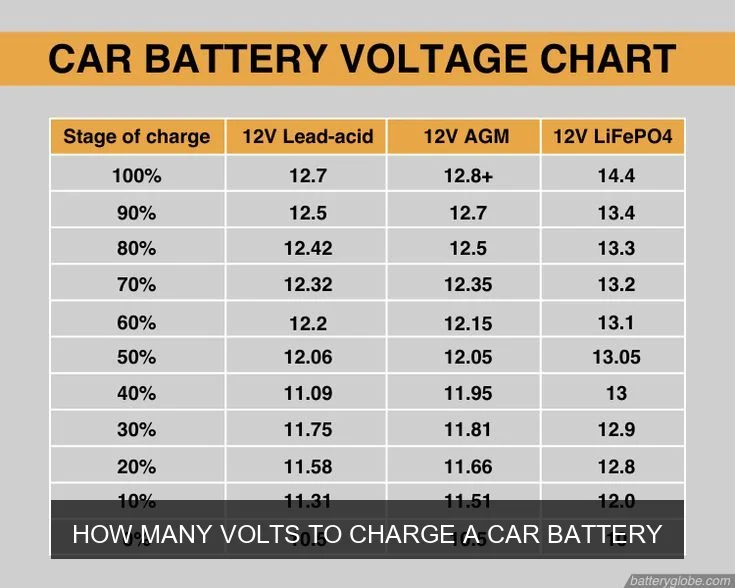
Image source: Pinimg
📋 Table of Contents
- 🔹 Introduction: The Importance of Proper Charging Voltage
- 🔹 How Many Volts to Charge a Car Battery? The Direct Answer
- 🔹 Understanding Car Battery Voltage: Nominal vs. Charging
- 🔹 The Science Behind Why We Need Higher Voltage
- 🔹 The Charging Process: Different Stages and Their Voltages
- 🔹 Factors That Influence Ideal Charging Voltage
- 🔹 Why Getting the Voltage Right is Crucial
- 🔹 Common Mistakes When Charging a Car Battery
- 🔹 Best Practices for Safe and Effective Battery Charging
- 🔹 Frequently Asked Questions About Charging Voltage
- 🔹 Conclusion: Charge Smart, Drive Confident
Introduction: The Importance of Proper Charging Voltage
Ever wondered what’s really happening when you connect a charger to your car battery? It’s more than just pumping electricity in. The specific voltage a charger delivers is incredibly important for the health and lifespan of your battery. Too little voltage, and your battery won’t fully charge, leaving you stranded. Too much, and you risk serious damage or even making the battery dangerous.
This guide will dive into the essential details of how many volts to charge a car battery. We’ll explore the science, explain the ideal ranges, discuss different battery types, and provide practical tips. By the end, you’ll have a clear understanding of why proper charging voltage is key to keeping your car starting reliably every time.
How Many Volts to Charge a Car Battery? The Direct Answer
A standard 12-volt car battery typically requires a charging voltage between 13.8 to 14.8 volts. This range ensures the battery receives enough power to fully replenish its charge without overcharging, which can cause damage. The exact optimal voltage can vary slightly depending on factors like the specific battery type (e.g., flooded, AGM, gel), ambient temperature, and the sophistication of your battery charger.
Understanding Car Battery Voltage: Nominal vs. Charging
When we talk about a “12-volt” car battery, we’re referring to its nominal voltage. This is a common way to label batteries, but it doesn’t mean the battery always operates exactly at 12 volts. In reality, a fully charged 12-volt lead-acid battery will actually measure around 12.6 to 12.8 volts when resting and disconnected from any load.
The charging voltage, then, needs to be higher than this resting voltage. Think of it like filling a balloon. To get air into the balloon, the pressure from your breath needs to be higher than the pressure already inside the balloon. Similarly, to push an electrical current into the battery, the charger’s voltage must be higher than the battery’s current voltage.
This voltage difference is called the “potential difference” or “voltage gradient,” and it’s what drives the charging current into the battery’s cells.
What is the ideal voltage to charge a car battery?
For most conventional 12-volt lead-acid batteries, including flooded (wet cell), AGM (Absorbent Glass Mat), and Gel batteries, the ideal charging voltage falls within the 13.8V to 14.8V range. However, specific battery types might prefer slightly different voltages:
- Flooded Lead-Acid Batteries: Often charged in the 14.2V to 14.6V range.
- AGM Batteries: May prefer a slightly lower peak absorption voltage, typically 14.4V to 14.6V.
- Gel Batteries: These are the most sensitive and often require the lowest charging voltage, usually around 14.1V to 14.4V, to prevent damage.
Always check your battery manufacturer’s specifications for the most accurate charging recommendations.
The Science Behind Why We Need Higher Voltage
Charging a battery isn’t just about forcing electrons in; it’s a chemical process. Inside a lead-acid battery, lead plates and sulfuric acid react to create electricity. When charging, this chemical reaction is reversed.
To reverse the reaction efficiently and fully, the charger needs to supply a voltage that overcomes the battery’s internal resistance and the electromotive force (EMF) generated by the chemical reaction itself. If the charging voltage isn’t high enough, the current won’t flow effectively, and the battery will never reach a full charge, potentially leading to a condition called sulfation, where lead sulfate crystals harden on the plates, reducing capacity.
On the other hand, too high a voltage can cause overcharging. This generates excessive heat and can cause the electrolyte (the acid-water mixture) to “gas” or boil, leading to water loss in flooded batteries and potential damage to all battery types. It also accelerates grid corrosion and reduces battery lifespan.
The Charging Process: Different Stages and Their Voltages
Modern “smart” battery chargers use multi-stage charging programs to optimize the process. These stages typically include:
- Bulk Charge (Constant Current): In this first stage, the charger delivers a constant, maximum safe current to the battery. The voltage gradually rises as the battery accepts the charge. This stage brings the battery up to about 80% of its capacity.
- Absorption Charge (Constant Voltage): Once the battery reaches a predetermined voltage (e.g., 14.4V for a 12V battery), the charger switches to this stage. The voltage is held constant, while the current slowly tapers off as the battery approaches 100% charge. This stage ensures the battery is fully charged without overstressing it.
- Float Charge (Maintenance Voltage): After reaching full charge, the charger drops to a lower “float” voltage, typically around 13.2V to 13.8V. This maintains the battery at full capacity, compensating for self-discharge without overcharging. It’s safe for long-term connection, perfect for maintaining stored vehicles.
Some advanced chargers may include additional stages, such as “desulfation” or “recondition” modes, which use specific voltage and current pulses to break down sulfate crystals in older batteries.
How does a car battery charger manage voltage?
Modern smart chargers are equipped with microprocessors that monitor the battery’s voltage and internal resistance. They automatically adjust the charging voltage and current through the different stages. This intelligent management prevents both undercharging and overcharging, significantly extending battery life and making the charging process safer and more efficient.
Factors That Influence Ideal Charging Voltage
While the 13.8V to 14.8V range is standard, a few factors can subtly shift the optimal charging voltage:
- Battery Type: As mentioned, Gel batteries prefer slightly lower voltages than AGM or flooded types.
- Temperature: Batteries are less efficient in cold temperatures. Many smart chargers have a temperature sensor and will slightly increase the charging voltage in colder conditions and decrease it in hotter conditions to compensate. For example, a battery might require 14.8V at 0°C but only 14.2V at 30°C.
- State of Discharge: A deeply discharged battery might initially accept a higher current, but the voltage needs to be carefully managed as it recovers.
- Charger Technology: Simpler, older chargers might just provide a constant voltage, while sophisticated multi-stage chargers dynamically adjust.
Why Getting the Voltage Right is Crucial
Paying attention to the correct charging voltage isn’t just a technical detail; it directly impacts your battery’s performance and lifespan. Here’s why it’s so important:
- Prevents Undercharging: If the voltage is too low, the battery won’t reach a full charge. This leaves it susceptible to sulfation, especially with lead-acid batteries, which hardens the lead plates and permanently reduces the battery’s capacity and ability to hold a charge. You’ll experience weaker starts and a shorter battery life.
- Avoids Overcharging: Too high a voltage, particularly for extended periods, can cause significant damage. It leads to excessive gassing (boiling of the electrolyte), which means water loss in flooded batteries and increased internal pressure for sealed batteries (AGM/Gel). This can buckle plates, corrode internals, and even cause the battery to bulge or leak, posing safety risks and drastically shortening its life.
- Maximizes Lifespan: A battery charged consistently within its optimal voltage range will last much longer. Consistent, proper charging prevents the damaging effects of both under and overcharging, allowing the battery to perform as designed for years.
- Ensures Reliability: A properly charged battery provides reliable starting power and supports your car’s electrical system effectively. An improperly charged battery can leave you stranded or cause issues with other electrical components.
Common Mistakes When Charging a Car Battery
Even with good intentions, it’s easy to make mistakes that can harm your battery. Knowing what to avoid is as important as knowing what to do:
- Using the Wrong Charger: Not all chargers are created equal. Using a charger meant for a different battery type (e.g., a flooded battery charger for a Gel battery) or an old, unregulated charger can lead to incorrect voltage delivery.
- Ignoring Battery Type: As discussed, AGM and Gel batteries are more sensitive to voltage. Using a standard flooded battery setting on a smart charger for these types can overcharge them.
- Charging in Extreme Temperatures: Charging a battery in extremely cold or hot conditions without temperature compensation can be damaging. Cold batteries need slightly higher voltage, hot ones slightly lower.
- Charging Too Fast (High Amperage): While related to current rather than just voltage, attempting to charge a battery very quickly with a high amperage setting can generate excessive heat and stress the battery, especially if the voltage isn’t properly regulated.
- Leaving a Charger Connected Too Long (for non-smart chargers): An older, non-smart charger that continuously supplies a high voltage can overcharge and damage a battery if left connected indefinitely.
- Not Monitoring Voltage: If you’re using a basic charger, not checking the battery’s voltage periodically with a multimeter means you’re flying blind, risking under or overcharging.
Best Practices for Safe and Effective Battery Charging
To ensure your car battery charges correctly and safely, follow these tips:
- Read Your Manuals: Always consult your battery manufacturer’s charging recommendations and your battery charger’s instruction manual first. They provide the most accurate guidance.
- Use a Smart Multi-Stage Charger: These chargers automatically adjust voltage and current through different stages, ensuring optimal and safe charging for various battery types. Many also have temperature compensation.
- Select the Correct Battery Type Setting: If your smart charger has settings for “Flooded,” “AGM,” or “Gel,” make sure you choose the one that matches your battery.
- Charge in a Well-Ventilated Area: Batteries, especially flooded ones, can produce hydrogen gas during charging, which is flammable. Ensure good airflow to disperse these gases.
- Monitor the Battery: During charging, periodically check the battery for any signs of overheating, swelling, or excessive gassing. If you notice these, stop charging immediately.
- Connect Correctly: Always connect the positive (+) charger clamp to the positive (+) battery terminal and the negative (-) clamp to the negative (-) battery terminal. For safety, connect the negative clamp to a ground point on the vehicle chassis (away from the battery) if the battery is still in the car.
- Check Electrolyte Levels (Flooded Batteries Only): Before charging a flooded battery, ensure the electrolyte level is adequate by topping up with distilled water if needed. Do not overfill.
Frequently Asked Questions About Charging Voltage
What happens if I charge a 12V battery with 16 volts?
Charging a 12-volt car battery with a constant 16 volts would likely cause severe overcharging. This much higher voltage would generate excessive heat, cause rapid gassing (boiling of electrolyte), lead to significant water loss in flooded batteries, and could permanently damage the internal plates. It could also lead to battery bulging, leakage, or even an explosion due to hydrogen gas buildup.
Can I charge a car battery with a lower voltage?
You can apply a lower voltage, but it won’t effectively charge the battery. If the charging voltage is below the battery’s resting voltage (e.g., trying to charge a 12.6V battery with 12V), current won’t flow into the battery. If the voltage is slightly higher but still below the recommended range (e.g., 13.0V), the battery will charge very slowly, incompletely, and is highly susceptible to sulfation, shortening its lifespan.
How long does it take to charge a car battery at the correct voltage?
The charging time depends on several factors: the battery’s current state of discharge, its capacity (Ah rating), and the charger’s amperage output. A deeply discharged 12V battery with a 60Ah capacity, charged by a 10-amp smart charger, might take 6-12 hours to reach full charge using the correct voltage stages. A less discharged battery will take less time. Always let the smart charger complete its cycle.
Is 13.5 volts enough to charge a car battery?
While 13.5 volts is within the “float” or maintenance charge range for a 12-volt battery, it’s generally not enough for a full bulk and absorption charge from a deeply discharged state. A constant 13.5V might slowly bring a slightly discharged battery up, but it won’t provide the necessary higher voltage (14.2-14.8V) needed for efficient, complete charging and desulfation. It’s good for long-term maintenance, but not for initial recharging.
Should I disconnect the battery terminals before charging?
It’s generally recommended to disconnect the battery terminals (negative first, then positive) if you are charging the battery outside of the vehicle. If you are using a modern smart charger and charging the battery while it is still installed in the car, you typically don’t need to disconnect the terminals. However, always refer to your specific car’s owner’s manual and the charger’s instructions. If you’re using an older, unregulated charger, or are unsure, disconnecting is the safer option to protect the vehicle’s electronics from potential voltage spikes.
Conclusion: Charge Smart, Drive Confident
Understanding how many volts to charge a car battery isn’t just for mechanics; it’s essential knowledge for any car owner. The proper charging voltage, typically between 13.8V and 14.8V for a 12-volt battery, is a delicate balance that ensures your battery gets the power it needs without being damaged.
By using a smart, multi-stage charger, paying attention to your battery’s type, and following best practices, you can significantly extend your battery’s life and ensure your vehicle starts reliably every time. Remember, a little knowledge about battery voltage goes a long way in keeping you on the road with confidence.