
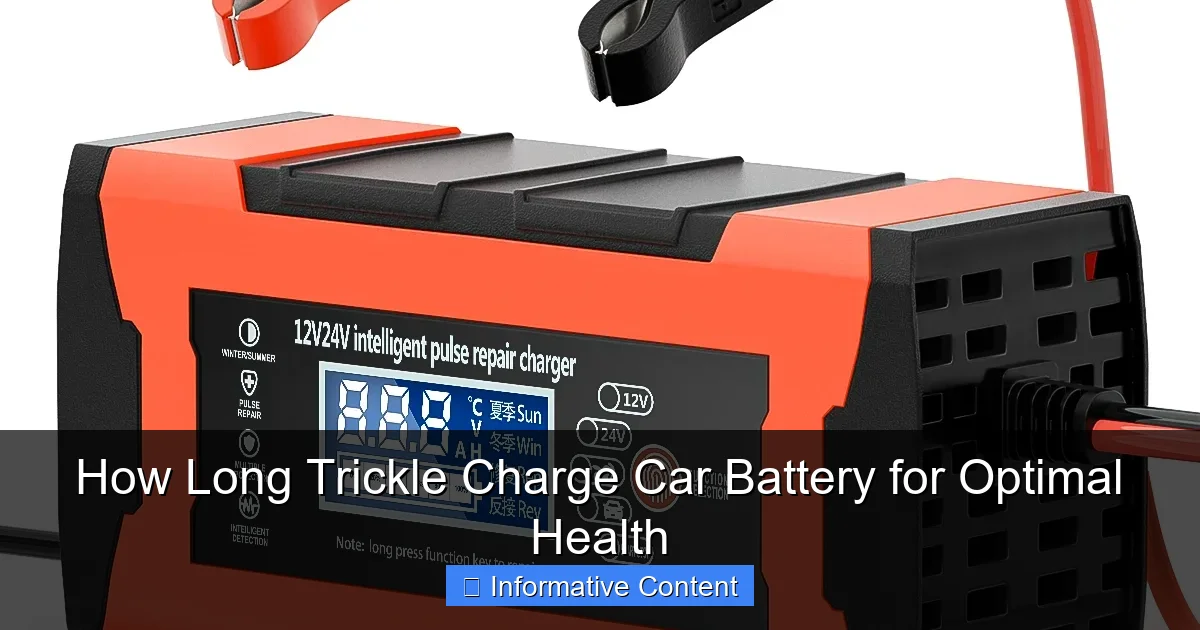
Modern trickle chargers, often called battery maintainers, can be left connected indefinitely to keep your car battery optimally charged. These smart devices prevent overcharging, ensuring your battery is always ready to go and significantly extending its overall lifespan by avoiding the damaging effects of disuse and deep discharge.
How Long Trickle Charge Car Battery for Optimal Health
There’s nothing quite like that sinking feeling in your stomach when you turn the key, and all you hear is a pathetic click, or worse, absolute silence. A dead car battery can derail your day faster than a sudden downpour on a picnic. We’ve all been there, staring blankly at the dashboard, wondering what went wrong. But what if there was a simple way to keep your battery in tip-top shape, extending its life and preventing those unwelcome surprises?
Enter trickle charging – a gentle, consistent way to care for your car’s electrical heart. Many drivers know about jump-starting or replacing a battery, but the art of trickle charging often gets overlooked. It’s not about giving your battery a quick jolt; it’s about maintaining its health over time, especially for vehicles that aren’t driven daily or during long periods of storage. Understanding this process, and specifically, how long trickle charge car battery for the best results, can save you a lot of headaches and money.
In this comprehensive guide, we’re going to dive deep into the world of trickle charging. We’ll explore what it is, how it differs from other charging methods, and the crucial factors that determine the optimal charging duration. Think of me as your friendly car enthusiast, sharing insights to help you keep your ride reliable and ready to go. So, let’s unlock the secrets to a healthier, longer-lasting car battery!
Key Takeaways
- Trickle charge continuously: Maintain optimal battery health indefinitely.
- Use an automatic smart charger: Prevents overcharging and battery damage.
- Connect for long storage: Prevent discharge and extend battery lifespan.
- Monitor battery voltage: Ensure proper charging and health regularly.
- Avoid manual charger overuse: Risk overcharging; use automatic only.
- Regular use prevents need: Drive your car often to keep it charged.
- Ensure good ventilation: Always charge in a well-ventilated area safely.
Quick Answers to Common Questions
How long should I trickle charge a completely dead car battery?
For a completely dead car battery, a full trickle charge car battery can take anywhere from 24 to 48 hours. This slow, steady pace ensures a thorough and safe recharge without causing damage.
Can I leave a trickle charger connected indefinitely?
Yes, if you’re using a modern “smart” trickle charger, it’s generally safe to leave it connected indefinitely. These clever devices monitor your battery’s charge and automatically switch to a maintenance (float) mode once full.
What if my car battery isn’t completely dead, just low? How long then?
If your car battery is just low or partially drained, a trickle charge car battery might only need 12 to 24 hours to fully recover. The exact time depends on the battery’s capacity and how deeply discharged it is.
Is there an ideal time for a routine trickle charge car battery maintenance?
For optimal health, giving your car battery a trickle charge for 12-24 hours once a month, especially if your car sits for extended periods, is a great practice. This helps keep it topped off and extends its lifespan.
How do I know when my car battery is fully charged by a trickle charger?
Most modern trickle charge car battery chargers have indicator lights that change color (e.g., from red to green) when the battery is fully charged and the charger enters maintenance mode. Always check your charger’s manual for specific instructions!
📑 Table of Contents
- 1. Understanding Your Car Battery and Why It Needs Trickle Charging
- 2. The Difference Between Trickle Chargers and Battery Maintainers
- 3. Factors Influencing How Long to Trickle Charge a Car Battery
- 4. Practical Scenarios: How Long to Keep Your Battery on a Trickle Charger
- 5. Step-by-Step Guide to Safely Trickle Charging Your Car Battery
- 6. Maximizing Battery Life: Tips Beyond Trickle Charging
- Battery Type and Maintainer Recommendations
- Conclusion
1. Understanding Your Car Battery and Why It Needs Trickle Charging
Before we discuss how long trickle charge car battery, let’s get a little friendly with the unsung hero under your hood: the car battery. Knowing a bit about what makes it tick helps us appreciate why consistent care is so important.
The Basics of Car Batteries
Most cars on the road today use lead-acid batteries. These powerful boxes of chemistry are designed to deliver a massive jolt of electricity to start your engine, and then handle the electrical load when the engine is off. While your car’s alternator recharges the battery as you drive, batteries naturally lose charge over time, even when the car is off. This phenomenon is due to two main culprits:
- Self-discharge: Batteries inherently lose charge simply by existing. It’s a slow process, but it adds up.
- Parasitic drain: Modern cars have many components that constantly draw a small amount of power even when parked – things like the clock, alarm system, radio presets, and computer memory.
Over time, if your car isn’t driven often enough or for long enough distances, these drains can leave your battery severely depleted, leading to sulfation – a process where lead sulfate crystals build up on the battery plates, hindering its ability to hold a charge. This is where the magic of trickle charging comes in.
What is Trickle Charging?
Simply put, trickle charging is the process of charging a battery at a very low amperage, typically just enough to counteract the self-discharge and parasitic drain, keeping the battery at or near its full charge. Unlike a quick boost from a high-amp charger, trickle charging is a gentle, slow dance that maintains the battery’s health without stressing it. The key benefits are:
- Prevents sulfation: By keeping the battery fully charged, trickle charging stops those harmful sulfate crystals from forming.
- Extends battery life: A well-maintained battery lasts significantly longer than one allowed to frequently dip into low charge states.
- Ensures readiness: Your car will start reliably every time, even after sitting for weeks or months.
When asking how long trickle charge car battery, we’re really asking how to effectively use this gentle method to preserve battery life and readiness.
2. The Difference Between Trickle Chargers and Battery Maintainers
This is where things can get a little confusing, as the terms “trickle charger” and “battery maintainer” are often used interchangeably. While they both provide a low-amp charge, understanding their differences is key to knowing how long trickle charge car battery safely and effectively.
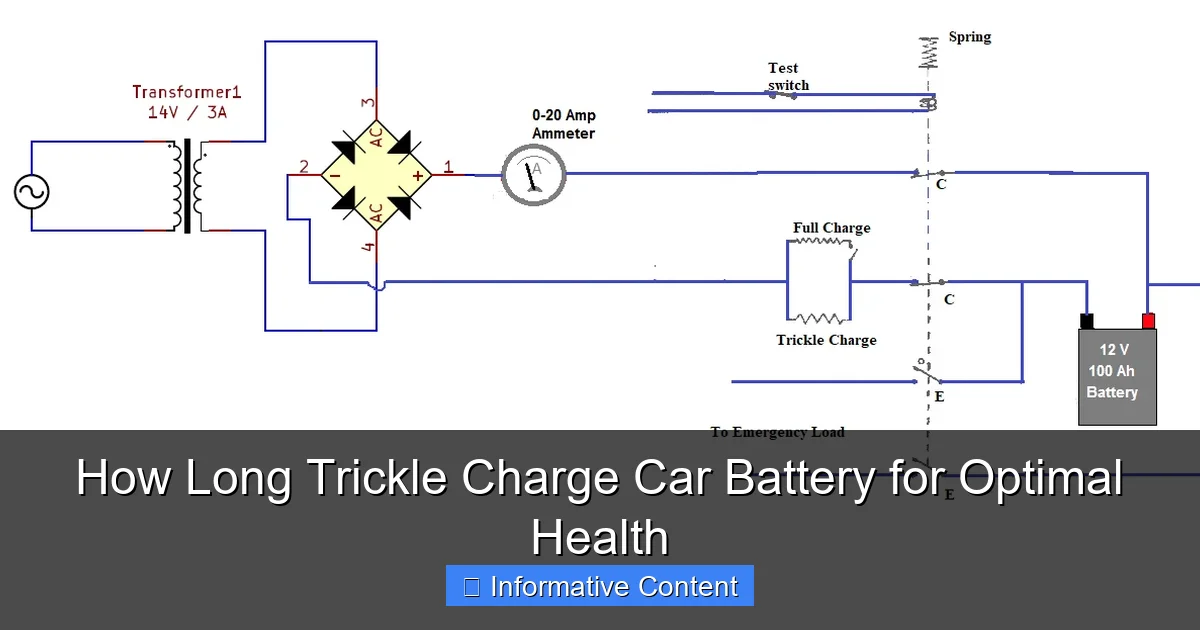
Visual guide about trickle charge car battery
Image source: 1.bp.blogspot.com
Traditional Trickle Chargers
Think of traditional trickle chargers as the “old-school” models. These devices deliver a constant, low current (usually 1-3 amps) to the battery. They are quite basic and don’t have sophisticated internal electronics to monitor the battery’s state of charge. This means:
- They will continue to charge the battery at a set rate, regardless of whether it’s full or not.
- There’s a risk of overcharging if left connected indefinitely, which can damage the battery by boiling off electrolyte (for flooded lead-acid batteries) or causing internal damage.
So, with a traditional trickle charger, you must actively monitor the battery’s voltage and disconnect it once fully charged. This isn’t ideal for long-term, set-it-and-forget-it maintenance.
Smart Chargers and Battery Maintainers
These are the modern heroes of battery care! Smart chargers, often called “battery maintainers,” are equipped with microprocessors that intelligently monitor the battery’s voltage and charge state. They operate in a multi-stage charging process:
- Bulk Charge: Delivers the maximum safe current until the battery reaches about 80% charge.
- Absorption Charge: The voltage is held constant while the current tapers off, bringing the battery to 100%.
- Float/Maintenance Mode: Once the battery is fully charged, the maintainer switches to a very low-voltage “float” mode. It only sends a tiny pulse of current when the voltage drops slightly, ensuring the battery remains at full charge without overcharging.
This “float” or “maintenance” mode is the game-changer. It means you can leave a battery maintainer connected to your car battery indefinitely without fear of overcharging. For the question of how long trickle charge car battery, especially for seasonal vehicles or those stored for extended periods, a smart charger or battery maintainer is the definitive answer – you can leave it connected for months.
3. Factors Influencing How Long to Trickle Charge a Car Battery
The precise answer to how long trickle charge car battery isn’t a single number, as several factors come into play. It’s more about understanding the variables so you can choose the right approach for your specific situation.
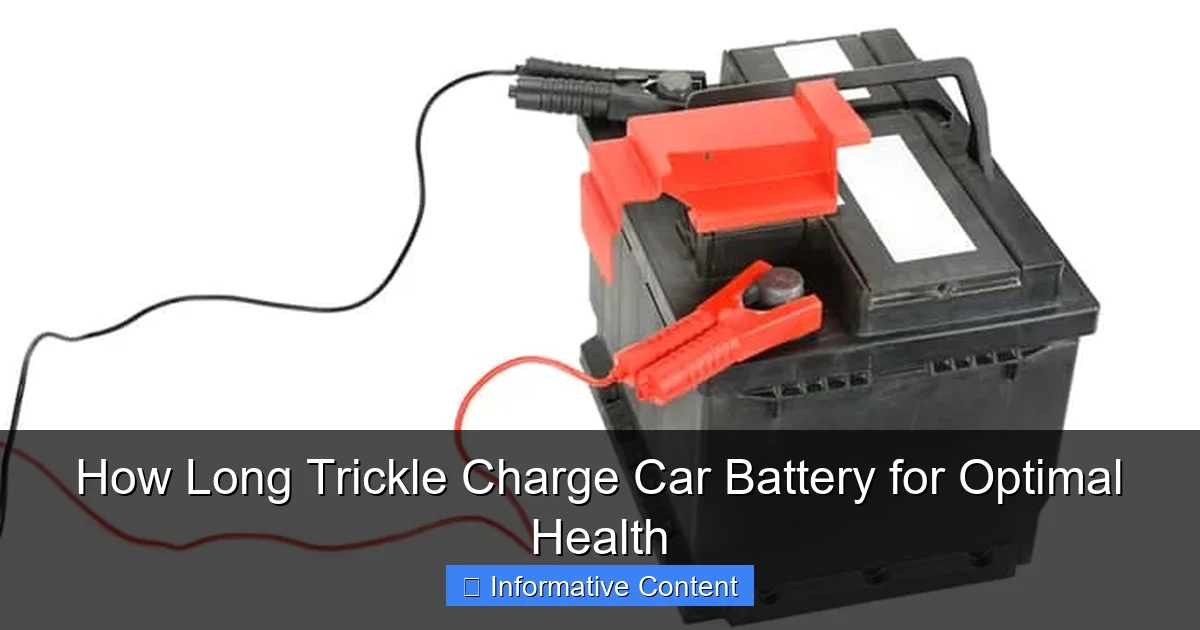
Visual guide about trickle charge car battery
Image source: batterymanguide.com
Battery State of Charge
This is perhaps the most significant factor. If your battery is only slightly discharged – perhaps from sitting for a week – it will take much less time to bring it back to full charge compared to a battery that’s been drained significantly. A battery maintainer can bring a slightly discharged battery back to full within a few hours, then switch to maintenance mode.
- Partially discharged battery: Might take 8-24 hours to reach full charge, depending on the depth of discharge.
- Completely dead battery: A truly “dead” battery (below 10.5 volts) might take days to recover, or it might be beyond recovery entirely. Trickle chargers are not designed for rapid recovery of deeply discharged batteries; they are for maintenance.
Battery Size and Type
Not all batteries are created equal. Larger batteries, like those found in trucks, RVs, or marine applications, have a higher Amp-hour (Ah) rating, meaning they require more energy to charge fully. Consequently, they will take longer to charge with a low-amp trickle charger.
Battery chemistry also matters:
- Flooded Lead-Acid: Most common, compatible with standard trickle charging.
- AGM (Absorbed Glass Mat): Requires a charger with an AGM mode, as these batteries have slightly different charging voltage requirements. They charge faster and deeper than flooded cells.
- Gel Cell: Also requires a specific charger mode, as they are sensitive to overcharging and need lower charging voltages.
- Lithium (LiFePO4): These advanced batteries generally require dedicated LiFePO4 chargers and typically do not use traditional trickle charging methods. They have their own sophisticated battery management systems (BMS).
Charger Amperage Output
As the name suggests, trickle chargers deliver low amperage, usually between 0.75 and 3 amps. The lower the amp output, the longer it will take to bring a battery to full charge from a discharged state. For example, a 1-amp charger will take roughly twice as long as a 2-amp charger for the same battery capacity.
However, for long-term maintenance with a smart charger, the initial charging time becomes less critical as the goal is to keep it perpetually topped up.
Environmental Conditions
Cold weather significantly impacts battery performance and charging efficiency. Batteries are less efficient at accepting a charge in freezing temperatures. If you’re trickle charging in a cold garage or outdoors during winter, expect the charging process to take longer than it would in a warmer environment. Extreme heat can also degrade battery health, so a moderate temperature is always best for charging.
4. Practical Scenarios: How Long to Keep Your Battery on a Trickle Charger
Let’s get practical. Knowing how long trickle charge car battery depends heavily on your specific situation. Here are a few common scenarios:
For a Partially Discharged Battery
Maybe you left your lights on for an hour, or your car sat undriven for a couple of weeks, resulting in a battery that’s not quite dead but also not at full strength. For these situations, a smart charger or battery maintainer is ideal:
- Recommendation: Connect your battery maintainer overnight (8-12 hours). It will quickly bring the battery back to full charge and then switch to maintenance mode, ensuring it’s ready for use.
- Tip: If you’re using an older, non-smart trickle charger, use a multimeter to check the battery voltage. A fully charged 12V lead-acid battery should read around 12.6-12.8 volts. Disconnect the charger once it reaches this range.
For a Battery in Storage (Seasonal Vehicles, Infrequent Use)
This is where battery maintainers truly shine and offer the most straightforward answer to how long trickle charge car battery. If you have a classic car, a motorcycle, an RV, or any vehicle that sits for weeks or months at a time, a battery maintainer is your best friend.
- Recommendation: Connect a smart battery maintainer and leave it attached for the entire duration of storage. It will continuously monitor the battery’s state, charging it gently when needed and maintaining it in a healthy “float” mode without any risk of overcharging. This could be weeks, months, or even years.
- Example: My classic convertible spends winters in the garage. I connect a battery maintainer in November and don’t touch it again until March. The battery is always perfectly charged and ready to go.
For a Completely Dead Battery (Recovery Phase)
If your battery is truly “dead” (below 10.5 volts), a low-amp trickle charger might not be the most effective tool for recovery. Trickle chargers are for maintenance, not resuscitation.
- Recommendation: First, attempt to use a higher-amperage smart charger (e.g., 5-10 amps) that has a “recondition” or “desulfation” mode, if available. This might take 24-48 hours. If the battery accepts a charge and holds it, then you can switch to a trickle charger or maintainer for ongoing health.
- Caveat: A deeply discharged battery may have permanent damage and might not ever recover to its full capacity, no matter how long trickle charge car battery. If it doesn’t hold a charge after a proper attempt, it’s likely time for a replacement.
5. Step-by-Step Guide to Safely Trickle Charging Your Car Battery
Safety is paramount when working with car batteries. They contain corrosive acid and can produce explosive hydrogen gas. Always follow these steps carefully.
Safety First!
- Ventilated Area: Always charge in a well-ventilated space to disperse any hydrogen gas that might be produced.
- Eye Protection and Gloves: Wear safety glasses and chemical-resistant gloves to protect against battery acid.
- No Sparks or Flames: Keep cigarettes, open flames, and sparking tools away from the battery.
Connecting the Charger
- Turn Off Vehicle: Ensure your car’s ignition is off and all accessories are turned off.
- Identify Terminals: Locate the positive (+) (usually red) and negative (-) (usually black) terminals on your battery.
- Connect Red Clamp: Attach the red (positive) clamp from the charger to the positive (+) battery terminal.
- Connect Black Clamp: Attach the black (negative) clamp from the charger to the negative (-) battery terminal, OR to a clean, unpainted metal part of the car’s chassis (away from the battery and fuel lines) if the battery is still connected to the car. This minimizes the risk of a spark near the battery.
- Plug in Charger: ONLY after both clamps are securely attached, plug the charger into a wall outlet.
Monitoring the Process
- Smart Chargers/Maintainers: These will typically have indicator lights showing the charging status (charging, fully charged, maintenance mode). You can generally leave them unattended once connected.
- Traditional Trickle Chargers: You’ll need to monitor the battery voltage with a multimeter. Once the battery reaches around 12.6-12.8 volts, it’s fully charged. Do not leave these connected indefinitely.
Disconnecting Safely
- Unplug Charger: Always unplug the charger from the wall outlet FIRST.
- Remove Black Clamp: Disconnect the black (negative) clamp from the battery or chassis.
- Remove Red Clamp: Disconnect the red (positive) clamp from the battery.
Following these steps will ensure a safe and effective trickle charging experience, no matter how long trickle charge car battery is your plan.
6. Maximizing Battery Life: Tips Beyond Trickle Charging
While understanding how long trickle charge car battery is crucial for battery health, it’s just one piece of the puzzle. Here are additional tips to extend your battery’s lifespan and ensure reliability:
Regular Driving
The best way to keep your battery charged is to drive your car regularly and for sufficient distances. Short trips often don’t allow the alternator enough time to fully recharge the battery after starting the engine, especially if you have a lot of accessories running.
Clean Terminals
Corrosion on battery terminals (the white or bluish powdery substance) is a common issue. It creates resistance, hindering the flow of electricity and making it harder for your battery to charge or deliver power. Regularly inspect your terminals and clean them with a wire brush and a solution of baking soda and water. Rinse with clean water and dry thoroughly.
Checking Battery Fluid Levels (for Flooded Lead-Acid)
If you have a traditional flooded lead-acid battery with removable caps, periodically check the electrolyte levels. If they are low, add distilled water (never tap water!) up to the fill line. AGM and Gel batteries are sealed and do not require fluid checks.
Avoid Deep Discharges
Letting your battery go completely dead repeatedly is one of the quickest ways to shorten its life. Each deep discharge cycle puts stress on the battery’s internal components, leading to irreversible damage. If you frequently find your battery drained, investigate the cause (e.g., parasitic drain, failing alternator) and address it.
Test Your Battery Annually
Even with the best care, batteries degrade over time. Have your battery tested annually by a professional, especially as it approaches its third year. They can perform a load test to determine its true health and predict how much life it has left, allowing you to replace it proactively rather than being stranded.
Battery Type and Maintainer Recommendations
To help clarify charger selection when considering how long trickle charge car battery, here’s a quick overview:
| Battery Type | Common Application | Trickle/Maintainer Recommendation |
|---|---|---|
| Flooded Lead-Acid | Most standard car batteries | Yes, ideal for maintenance. Use a smart maintainer for indefinite connection. |
| AGM (Absorbed Glass Mat) | High-performance, stop-start vehicles | Yes, requires specific AGM charging mode if available. Smart maintainer for indefinite connection. |
| Gel Cell | Deep cycle, marine, RVs | Yes, requires specific Gel charging mode (lower voltage). Smart maintainer for indefinite connection. |
| Lithium (LiFePO4) | Performance vehicles, some RVs | Requires dedicated LiFePO4 charger; traditional trickle charging is not suitable. Maintainers specifically for LiFePO4 exist. |
Conclusion
There you have it – a comprehensive look at the world of trickle charging and its pivotal role in maintaining your car battery’s optimal health. From understanding the nuances of battery chemistry to the critical distinction between traditional trickle chargers and intelligent battery maintainers, you now have the knowledge to keep your vehicle starting reliably, every single time.
The key takeaway when asking how long trickle charge car battery is this: for ongoing maintenance, especially for vehicles stored for extended periods, a modern, smart battery maintainer is your best friend. It can be left connected indefinitely, providing a gentle, intelligent charge that prevents damage and extends battery life, turning a potentially complex question into a simple, worry-free solution.
By incorporating trickle charging into your vehicle maintenance routine, alongside regular driving, clean terminals, and periodic checks, you’re not just preventing frustrating breakdowns; you’re actively investing in the longevity and reliability of your car. So go forth, empower yourself with this knowledge, and enjoy the peace of mind that comes with a perfectly healthy car battery!
🎥 Related Video: Best battery charging hack for dead batteries!!!!
📺 10 Minute Fix
Charging a dead battery is easy. Connect them in parallel then connect the charger to the know good battery. The charger will …
Frequently Asked Questions
How long does it generally take to trickle charge a dead or deeply discharged car battery?
Trickle charging a fully depleted car battery can take a significant amount of time, often ranging from 24 to 48 hours or even longer. This slow, steady charging rate is designed to restore the battery’s charge safely without overheating it, making it ideal for deep discharges.
Can I leave a trickle charger connected to my car battery indefinitely without causing damage?
Modern smart trickle chargers (often called battery maintainers) are designed to be left connected indefinitely as they automatically switch to a float mode once the car battery is fully charged. However, older, basic trickle chargers without automatic shut-off can overcharge a battery if left on too long, potentially causing damage. Always check your charger’s specifications.
For long-term storage, how often should I trickle charge my car battery to maintain its health?
If using a smart battery maintainer, you can leave it connected continuously during long-term storage, and it will automatically keep the car battery topped off. For a basic trickle charger, connect it for 12-24 hours once every 3-4 weeks to compensate for self-discharge, then disconnect it. This routine prevents sulfation and prolongs battery life.
What factors influence how long it takes to trickle charge a car battery?
Several factors affect trickle charge time, including the car battery’s state of discharge, its overall health and age, and the amperage output of your trickle charger. A larger battery or one that is very deeply discharged will naturally require more time to fully charge.
How do I know when my car battery has finished trickle charging?
Most modern trickle chargers have indicator lights (often green or “charged”) that signal when the car battery has reached a full charge or entered maintenance mode. You can also use a voltmeter to check the battery voltage; a fully charged 12V lead-acid battery should read around 12.6 to 12.8 volts (after resting for a few hours).
Is trickle charging always the best method for charging a car battery, or are there alternatives?
Trickle charging is excellent for slow, safe recovery of deeply discharged batteries and for long-term maintenance. However, if you need a quicker charge to start your car soon, a standard or rapid car battery charger might be more appropriate. Always ensure the charger’s output matches the battery type to avoid damage.