
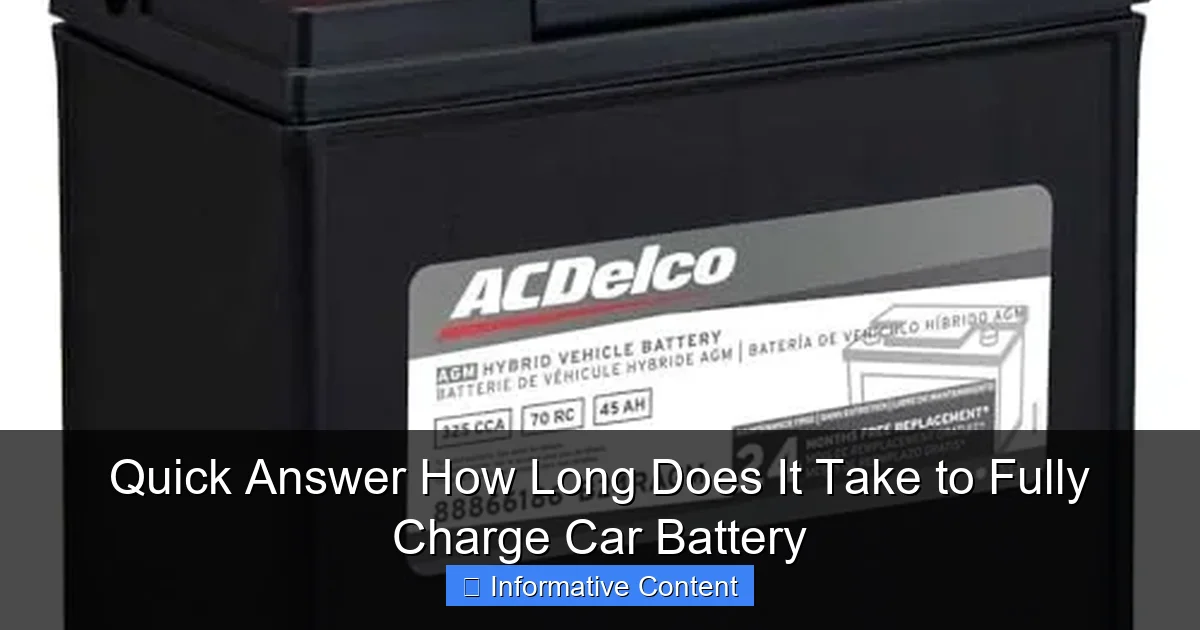
Fully charging a car battery typically takes anywhere from 4 to 24 hours, varying significantly based on its initial state of discharge, the type and power of the charger, and the battery’s size and age. A trickle charger will take much longer than a high-amperage smart charger, especially if the battery is deeply depleted. For optimal health and longevity, always ensure a complete charge, rather than just a quick boost, and refer to your charger’s specific guidelines.
Picture this: you wake up, grab your coffee, head out to your car, turn the key… and nothing. Just a sad, pathetic click, or worse, absolute silence. Your car battery is dead. We’ve all been there, haven’t we? That sinking feeling, the immediate shift in your morning plans, and the big question that pops into your head: “Okay, I’ll charge it, but how long does it take to fully charge a car battery?”
It’s a question that many of us have asked, often in moments of mild panic or frustration. You’re probably looking for a quick, straightforward answer, something like “2 hours!” or “overnight!” But here’s the honest truth, my friend, the answer isn’t quite that simple. Just like baking a cake depends on the oven, the ingredients, and the recipe, charging your car battery involves several variables. And understanding these variables isn’t just about getting your car started again; it’s about proper battery care, extending its life, and ensuring you don’t find yourself in the same predicament too soon.
So, let’s pull back the curtain and dive deep into the world of car battery charging. We’ll explore all the ins and outs, giving you the knowledge and confidence to tackle a dead battery like a pro. Forget the guesswork and the old wives’ tales; we’re going to break down exactly what influences charging time, what tools you need, and how to do it safely and effectively. By the end of this, you won’t just know how long does it take to fully charge a car battery; you’ll understand why.
Key Takeaways
- Charging Time Varies: Depends on battery state, size, and charger type.
- Deeply Discharged Batteries: Expect 12-24 hours with a standard trickle charger.
- Partially Discharged Batteries: Typically charge in 2-6 hours using a good charger.
- Use a Smart Charger: Essential to prevent overcharging and battery damage.
- Higher Amps Charge Faster: Match charger amperage to battery needs safely.
- Monitor Charging Process: Disconnect promptly to prevent damage and ensure safety.
- Alternator Not for Dead Batteries: Use a dedicated charger for deeply depleted batteries.
Quick Answers to Common Questions
How long does it typically take to fully charge a car battery with a standard charger?
If your car battery is completely dead, a standard trickle charger (around 1-2 amps) can take 12 to 24 hours to fully charge it. This slower method is gentle and effective for bringing a very low battery back to life.
What if I use a faster car battery charger?
Using a more powerful charger (10-20 amps) can significantly speed things up, often taking 2 to 10 hours to fully charge a car battery, depending on its size and how deeply discharged it is. Always ensure your charger is compatible with your battery type.
Does jump starting my car fully charge the battery?
No, jump starting only provides enough power to get your engine running; it doesn’t fully charge the car battery. You’ll typically need to drive the car for at least 30 minutes or connect it to a charger afterward to properly replenish the charge.
What factors affect how long it takes to fully charge a car battery?
Several factors influence charging time, including the battery’s current state of charge, its capacity (Ah rating), the amperage of your charger, and the battery’s overall health and age. A larger, emptier, or older battery will generally take longer to fully charge.
Can I leave a charger on too long, or overcharge my car battery?
With modern smart chargers, you generally don’t have to worry about overcharging, as they automatically switch to a “float” mode once your car battery is fully charged. However, older, non-smart chargers can potentially damage a battery if left connected for too long after it’s reached a full charge.
📑 Table of Contents
- The Quick Answer (and Why It’s Not So Simple)
- Key Factors Influencing Car Battery Charging Time
- Decoding Charger Types: Which One is Right for You?
- Step-by-Step: Charging Your Car Battery Safely and Effectively
- Common Mistakes to Avoid When Charging a Car Battery
- Estimating Charging Time: Practical Examples and Tips
- Conclusion
The Quick Answer (and Why It’s Not So Simple)
Alright, let’s address the elephant in the room. If you’re looking for a ballpark figure, a typical car battery, depending on how discharged it is and the type of charger you’re using, can take anywhere from 4 to 24 hours to fully charge. See? Not exactly a one-size-fits-all answer. This wide range exists because there are several critical factors at play, each pulling the charging time in a different direction. It’s like asking how long it takes to bake a cake without knowing if it’s a cupcake or a wedding cake, or if you’re using a convection oven or a campfire!
The core of understanding how long does it take to fully charge a car battery really boils down to balancing the battery’s needs with the charger’s capabilities. You can’t just hook it up and walk away hoping for the best. A little knowledge here goes a long way in ensuring a successful charge and preventing damage to your battery or even yourself. Let’s dig a bit deeper into these influencing factors.
Understanding the ‘It Depends’ Factor
When someone asks how long does it take to fully charge a car battery, the most accurate response often begins with “it depends.” This isn’t meant to be evasive; it’s genuinely the nature of battery charging. The “it depends” factor is governed by a few key variables: the battery’s specific condition, its capacity, the type and power of the charger, and even environmental conditions like temperature. We’ll explore each of these in detail, giving you a clearer picture of what to expect in various scenarios.
Key Factors Influencing Car Battery Charging Time
To truly grasp how long does it take to fully charge a car battery, we need to look at the individual pieces of the puzzle. Think of it like a recipe where each ingredient affects the final outcome. These factors work together, sometimes speeding up the process, and other times slowing it down considerably.
Visual guide about fully charge car battery
Image source: m.media-amazon.com
Battery’s Current State of Discharge
This is probably the most significant factor. Is your battery just slightly drained because you left your headlights on for an hour, or is it completely dead, unable to even flicker a dashboard light? A battery that’s only partially discharged will naturally take much less time to charge than one that’s been deeply discharged. A battery sitting at 75% charge might only need a few hours, while one that’s at 0% or close to it could require a full day or more. Many modern smart chargers will also assess the battery’s state and adjust their output accordingly.
Battery Type and Size (Ah Rating)
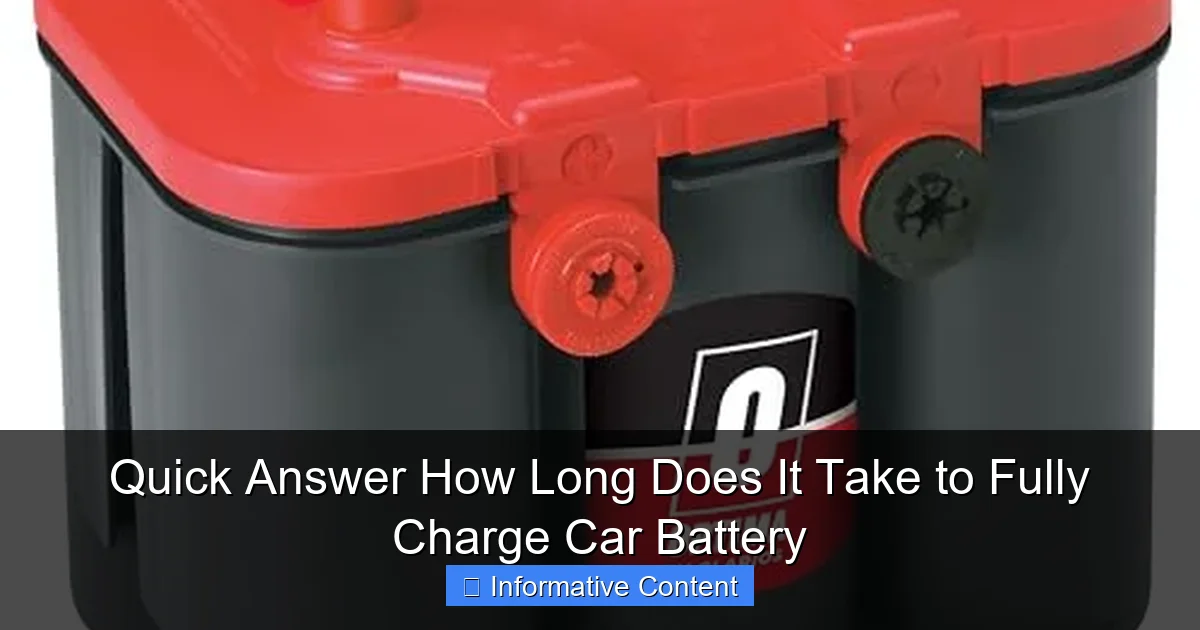
Not all car batteries are created equal. You’ve got your traditional flooded lead-acid batteries, AGM (Absorbent Glass Mat) batteries, and Gel Cell batteries, among others. While most car batteries are lead-acid based, their internal construction can affect charging. More importantly, the battery’s capacity, measured in Amp-hours (Ah), plays a huge role. A small car battery might be 40-50 Ah, while a large truck or SUV battery could be 80-100 Ah or more. A higher Ah rating means the battery can store more energy, and therefore, it will take longer to replenish that energy from empty. For example, a 100 Ah battery will take twice as long to charge with a 10 Amp charger than a 50 Ah battery, assuming both are equally discharged.
Charger Type and Amperage
This is where your choice of charging equipment comes into play. Battery chargers come in various types and power outputs, measured in amperes (Amps). A 2-Amp trickle charger will take significantly longer to charge a battery than a 10-Amp smart charger. Think of it like filling a swimming pool: a garden hose will eventually get the job done, but a fire hose will do it much, much faster. However, using too high an amperage can be detrimental to the battery’s health, which we’ll discuss more later. The charger’s “intelligence” also matters; smart chargers adjust their output based on the battery’s needs, optimizing the charging process.
Battery Age and Condition
Just like us, car batteries get old and tired. An older battery, especially one that hasn’t been properly maintained, might not accept a charge as efficiently as a newer one. It might also have internal damage, like sulfation (a buildup of lead sulfate crystals), which reduces its capacity and ability to hold a charge. In some cases, a very old or damaged battery might never reach a full charge, no matter how long does it take to fully charge a car battery on the charger. Sometimes, an old battery simply needs replacement, not just a charge.
Temperature
Temperature can subtly affect charging time. Cold weather, for instance, slows down chemical reactions within the battery, making it less efficient at accepting a charge. This means it might take longer to fully charge a car battery in freezing temperatures compared to a warm garage. Extreme heat can also be detrimental, but cold is usually the bigger factor when it comes to extended charging times.
Decoding Charger Types: Which One is Right for You?
Choosing the right battery charger is crucial not just for how quickly your battery charges, but also for its overall health and longevity. Using the wrong type of charger can either be incredibly slow or, worse, damage your battery. Let’s look at the common types you’ll encounter.
Visual guide about fully charge car battery
Image source: images.saymedia-content.com
Trickle Chargers (Maintenance Chargers)
These are low-amperage chargers, typically delivering 1-2 Amps. They are designed for long-term maintenance charging, ideal for keeping a battery topped up during extended storage (e.g., for a classic car or motorcycle over winter). They charge very slowly, so if you’re asking how long does it take to fully charge a car battery with a trickle charger, the answer is “a very long time,” often 24 hours or more, or even days for a deeply discharged battery. They are excellent for preventing self-discharge but aren’t suitable for rapidly reviving a dead battery.
Smart Chargers (Automatic Chargers)
Also known as multi-stage or automatic chargers, these are by far the most recommended type for general use. Smart chargers have microprocessors that monitor the battery’s voltage and adjust the charging current and voltage through different stages (e.g., bulk, absorption, float). They prevent overcharging, which is critical for battery health, and automatically switch to a maintenance (float) mode once the battery is full. They come in various amperages, from 4 Amps up to 15 Amps or more. A 10-Amp smart charger is a popular choice for balancing speed and safety. For most users wondering how long does it take to fully charge a car battery, a smart charger is the best tool to get the job done efficiently and safely.
Fast Chargers (Boost Chargers)
These chargers deliver a high amperage, often 20 Amps or more, and sometimes even have a “boost” or “engine start” mode that can deliver hundreds of Amps for a short period. While they can charge a battery much faster, their high output can generate significant heat within the battery, potentially shortening its lifespan if used frequently or for prolonged periods. It’s generally advised to use fast charging sparingly and only when speed is absolutely essential, as a quick boost to get started, rather than a full charge. For a full, healthy charge, a smart charger is preferred. If you do use one, monitor the battery carefully and refer to its specific charging instructions.
Step-by-Step: Charging Your Car Battery Safely and Effectively
Knowing how long does it take to fully charge a car battery is one thing, but knowing how to do it safely is even more important. Car batteries contain corrosive acid and produce flammable hydrogen gas, so caution is key. Here’s a practical guide to charging your car battery:
Safety First!
- Wear Protective Gear: Always wear safety glasses and gloves to protect against battery acid.
- Ensure Ventilation: Charge the battery in a well-ventilated area. Batteries produce hydrogen gas during charging, which is highly flammable. Avoid sparks, flames, or smoking near the battery.
- Remove Jewelry: Metal jewelry can conduct electricity and cause burns or damage if it accidentally touches battery terminals.
- Read Charger Manual: Always follow the specific instructions provided with your battery charger.
Preparing the Battery
- Turn Off Engine and Accessories: Ensure your car’s engine is off and all accessories (lights, radio, etc.) are turned off.
- Disconnect Battery (Optional but Recommended): For maximum safety and to protect your car’s electronics, it’s often recommended to disconnect the battery from the car’s electrical system before charging. Disconnect the negative (black) terminal first, then the positive (red) terminal.
- Clean Terminals: Use a wire brush and a baking soda/water solution (then rinse with plain water) to clean any corrosion from the battery terminals. Clean terminals ensure good electrical contact for efficient charging.
- Check Fluid Levels (if applicable): For traditional flooded lead-acid batteries, check the electrolyte levels in each cell (usually indicated by caps). If low, top up with distilled water ONLY, not tap water. AGM and Gel batteries are sealed and don’t require this.
Connecting the Charger
- Connect Positive First: Attach the red (positive, +) clamp of the charger to the positive (+) terminal of the battery.
- Connect Negative Second: Attach the black (negative, -) clamp of the charger to the negative (-) terminal of the battery. If the battery is still in the car and not disconnected, attach the negative clamp to an unpainted metal part of the car’s frame, away from the battery and fuel lines, to act as a ground. This reduces the risk of sparks near the battery.
- Plug in the Charger: Once the clamps are securely attached, plug the charger into an electrical outlet. Do not plug it in before connecting the clamps.
- Select Settings: If your charger has settings for battery type (e.g., STD, AGM, Gel) or amperage, select the appropriate ones according to your battery and desired charging speed.
Monitoring the Process
Most smart chargers will have indicator lights showing the charging progress (e.g., charging, fully charged, fault). Allow the charger to do its work. Avoid interrupting the charge cycle frequently. The actual time it takes will depend on all the factors we’ve discussed regarding how long does it take to fully charge a car battery. Once the charger indicates “fully charged” or switches to “float” mode, the process is complete.
Disconnecting the Charger
- Unplug Charger First: Unplug the charger from the electrical outlet.
- Disconnect Negative Clamp: Remove the black (negative, -) clamp from the battery (or car frame).
- Disconnect Positive Clamp: Remove the red (positive, +) clamp from the battery.
- Reconnect Battery to Car (if disconnected): Reconnect the positive (+) terminal first, then the negative (-) terminal.
Common Mistakes to Avoid When Charging a Car Battery
While charging a car battery seems straightforward, there are a few pitfalls that can lead to reduced battery life, inefficient charging, or even safety hazards. Avoiding these common mistakes will help you ensure a successful and safe charging experience, and help you get an accurate understanding of how long does it take to fully charge a car battery in a healthy way.
Overcharging
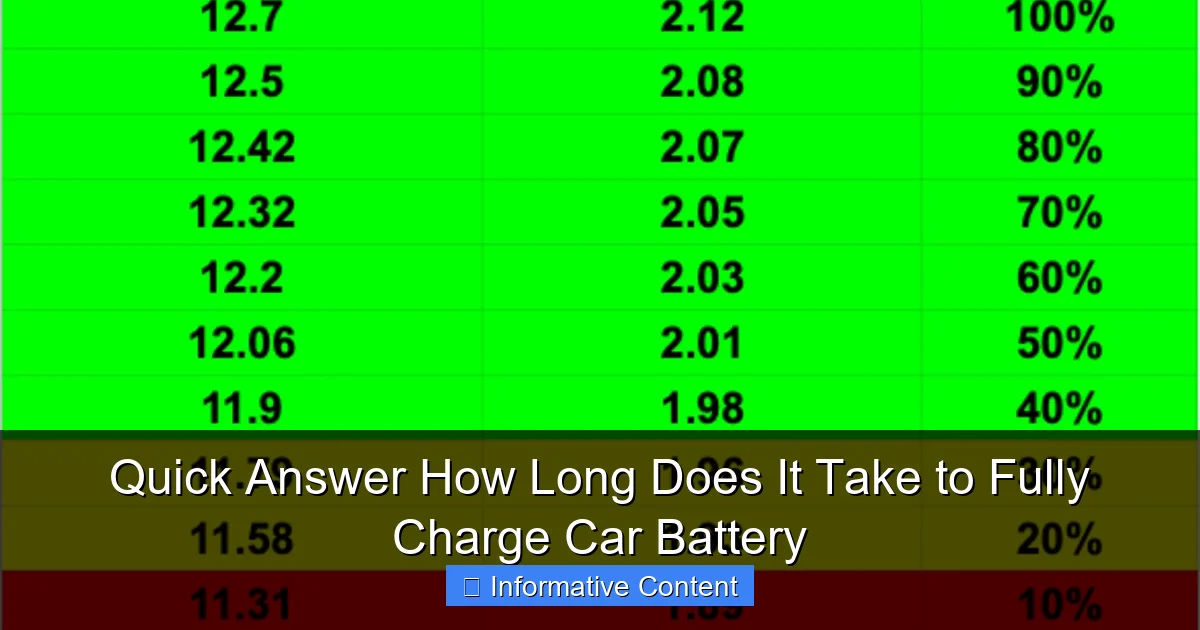
This is a major battery killer, especially with older, non-smart chargers. Overcharging occurs when a battery continues to receive current after it has reached its full capacity. This causes the electrolyte to heat up, boil away (for flooded batteries), and can damage the internal plates. It significantly reduces battery lifespan. Always use a smart charger that automatically switches to a maintenance mode or stops charging once full. If using a manual charger, monitor the voltage with a multimeter and disconnect it once the battery reaches its full voltage (typically 12.6-12.8 volts for a 12-volt battery).
Undercharging
On the flip side, frequently undercharging a battery can also cause problems. If a battery is consistently not fully charged, it can lead to sulfation – a buildup of hard lead sulfate crystals on the plates. This reduces the battery’s capacity and its ability to accept a charge, making it harder to determine how long does it take to fully charge a car battery because it never truly gets there. Ensure you allow enough time for a complete charge, especially after deep discharges.
Ignoring Safety Precautions
As mentioned, battery acid is corrosive, and hydrogen gas is flammable. Failing to wear eye protection and gloves, or charging in an unventilated area, can lead to serious injury. Never smoke or create sparks near a charging battery. These aren’t just recommendations; they are critical safety rules.
Using the Wrong Charger Type
Trying to quickly charge a deeply discharged battery with a 1-Amp trickle charger will be an exercise in futility, taking an unreasonable amount of time. Conversely, constantly hitting a healthy battery with a very high-amperage fast charger can lead to overcharging and heat damage. Match the charger type and amperage to your battery’s needs and the situation.
Not Cleaning Terminals
Corroded or dirty battery terminals create resistance, which impedes the flow of current. This means the charger has to work harder, and the battery won’t charge as efficiently or quickly. Always ensure clean, tight connections for optimal charging. A good connection is essential for the charger to accurately read the battery’s state and deliver power.
Estimating Charging Time: Practical Examples and Tips
Let’s tie everything together with some practical examples to help you estimate how long does it take to fully charge a car battery in real-world scenarios. Remember, these are estimates, and actual times can vary based on your specific battery’s condition and the charger’s efficiency. A good rule of thumb for estimating charging time (in hours) for a deeply discharged battery is: (Battery Ah / Charger Amps) * 1.2 (to account for efficiency losses). Let’s assume a standard 12V automotive battery with a capacity of 60 Ah for these examples.
Example 1: Slightly Discharged Battery with a 10-Amp Smart Charger
- Scenario: You left your interior lights on for a few hours, and your car struggles to start but isn’t completely dead. Your battery is at, say, 70% charge, meaning it needs about 30% of its capacity back.
- Battery Capacity Needed: 60 Ah * 0.30 = 18 Ah
- Charger: 10 Amps (smart charger)
- Estimated Time: (18 Ah / 10 Amps) * 1.2 = 2.16 hours.
- Reality Check: A smart charger will likely complete this in 2-4 hours, as it might start with higher amperage and then taper down. The “full” indication would be your guide.
Example 2: Deeply Discharged Battery with a 5-Amp Smart Charger
- Scenario: Your car has been sitting for weeks, and the battery is completely flat (0% or close to it), unable to even turn on the dashboard lights.
- Battery Capacity Needed: 60 Ah (full capacity)
- Charger: 5 Amps (smart charger)
- Estimated Time: (60 Ah / 5 Amps) * 1.2 = 14.4 hours.
- Reality Check: For a fully dead battery, this is a realistic estimate. A 5-Amp smart charger would likely take 12-18 hours to bring a deeply discharged 60 Ah battery back to full charge, carefully monitoring and adjusting along the way.
Example 3: Maintenance Charging with a 2-Amp Trickle Charger
- Scenario: Your car is stored for the winter, and you want to prevent battery discharge. The battery is already mostly charged (e.g., 90%).
- Battery Capacity Needed: 60 Ah * 0.10 = 6 Ah (to top it off)
- Charger: 2 Amps (trickle/maintenance charger)
- Estimated Time: (6 Ah / 2 Amps) * 1.2 = 3.6 hours.
- Reality Check: While the initial top-up might be quick, a trickle charger is designed for long-term connection. It will constantly monitor and provide a low current to counteract self-discharge, keeping the battery at optimal charge indefinitely. For an initial charge from slightly low, expect 4-8 hours to reach full, then it enters maintenance mode.
Important Tip: Always prioritize the ‘fully charged’ indicator on your smart charger over strict time estimates. These chargers are designed to optimize the charging process and will tell you when the battery is ready. If you don’t have a smart charger, consider investing in one; it’s a small investment for the health of your battery and your peace of mind.
Conclusion
So, how long does it take to fully charge a car battery? As we’ve seen, there’s no single magic number, but rather a dynamic range influenced by several factors. From the battery’s current state and capacity to the type and power of your charger, each element plays a crucial role in determining the charging duration. The key takeaway here is that patience and the right tools are your best friends when it comes to battery maintenance.
While a quick boost might get you back on the road in a pinch, understanding the full charging process ensures the longevity and reliability of your car battery. Investing in a good quality smart charger, observing safety protocols, and avoiding common mistakes will not only save you from future dead battery woes but also help you get the most life out of your battery. So, the next time your car battery gives you trouble, you’ll be well-equipped with the knowledge to charge it correctly, safely, and efficiently, knowing exactly what to expect along the way. Happy driving!
🎥 Related Video: How Long Does It Take To Charge A Car Battery? #Shorts
📺 OptiMate1
How long it takes to charge a car battery? Watch this video to find out the answer. ✓ Subscribe to our channel if you want to know …
Frequently Asked Questions
How long does it typically take to fully charge a car battery?
A standard car battery, if moderately discharged, can take anywhere from 4 to 24 hours to fully charge. This wide range depends on factors like the battery’s size, its current state of discharge, and the type of charger being used.
Does the type of charger affect how long it takes to fully charge a car battery?
Absolutely. A higher-amperage charger can significantly reduce the charging time compared to a low-amperage or trickle charger. For example, a 10-amp charger will fully charge a car battery much faster than a 2-amp trickle charger, which is designed for slow, long-term maintenance.
If my car battery is completely dead, how long will it take to fully charge?
Charging a completely dead car battery will take considerably longer, often requiring 12 to 24 hours or more with a standard charger. It’s recommended to use a smart charger that can safely recondition and bring a deeply discharged battery back to full capacity.
How long does a trickle charger take to fully charge a car battery?
Trickle chargers are designed for slow, long-term maintenance rather than rapid charging. To fully charge a car battery that is moderately discharged using a typical 1-2 amp trickle charger, it can easily take 24 to 48 hours or even longer due to its low output.
Is it possible to overcharge a car battery if I leave it on the charger too long?
With older, non-smart chargers, overcharging was a risk that could damage the battery by causing excessive heat and fluid loss. However, most modern “smart” car battery chargers have built-in safety features that automatically switch to a maintenance mode once the battery is fully charged, preventing overcharging.
What factors influence how long it takes to fully charge a car battery?
Several key factors affect charging time, including the battery’s Amp-hour (Ah) rating, its current state of charge (how deeply discharged it is), and the amperage output of your charger. A larger, more deeply discharged battery will naturally take much longer to reach a full charge.