
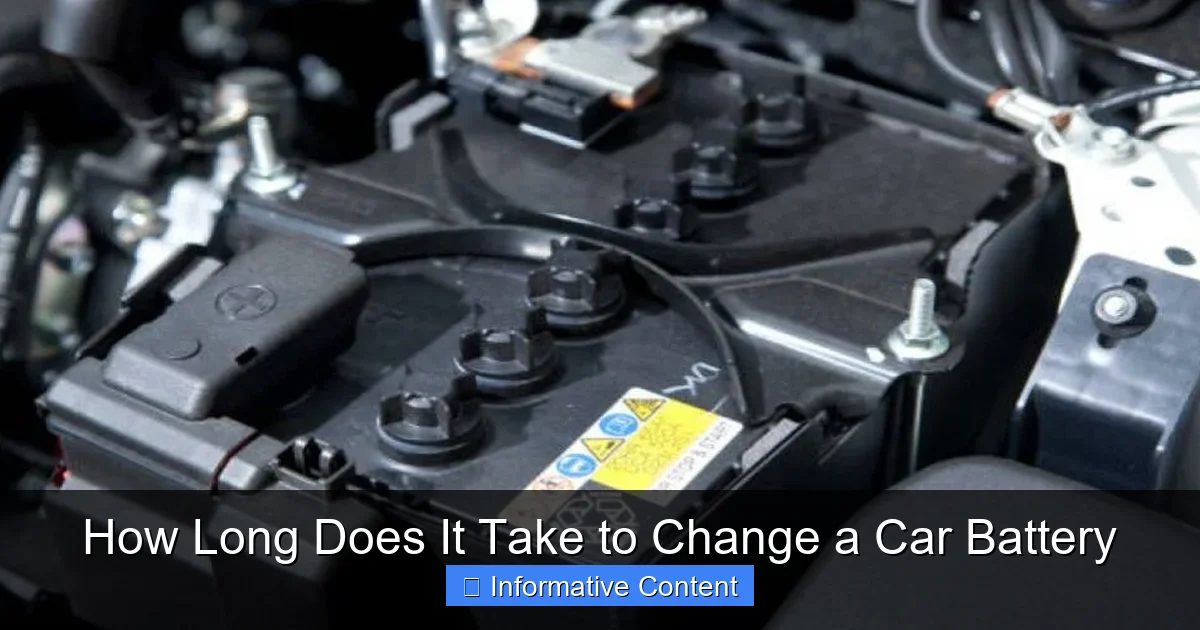
Changing a car battery typically takes anywhere from 15 minutes to an hour for most individuals. This duration varies greatly based on your prior experience, the specific vehicle’s design and battery accessibility, and the tools you have on hand. First-timers should budget more time for safety and proper installation, especially if dealing with corrosion or complex setups.
How Long Does It Take to Change a Car Battery?
Staring at a dead car battery can feel like a punch to the gut. That familiar click-click-click as you turn the key, rather than the satisfying rumble of your engine, signals one thing: it’s time for a replacement. But then a new question pops into your head, often accompanied by a sigh, “How long does it take to change a car battery?” Is it an all-day ordeal that requires a mechanic, or something you can tackle yourself in a spare afternoon?
The good news is that for most people and most vehicles, changing a car battery is a relatively straightforward process that doesn’t demand an entire weekend. It’s a common DIY task that, with the right tools and a little know-how, can save you both time and money. However, the exact duration isn’t a one-size-fits-all answer. Several factors play a significant role, from your mechanical experience to the specific make and model of your vehicle.
This comprehensive guide will break down everything you need to know about replacing a car battery. We’ll explore the typical timeframes, the variables that can speed up or slow down the process, the essential tools you’ll need, and a step-by-step walkthrough to help you confidently get back on the road. So, let’s dive in and demystify the process of how long does it take to change a car battery!
Key Takeaways
- Typical Timeframe: For experienced DIYers, changing a car battery can take as little as 15-30 minutes, while first-timers might need 30-60 minutes. Professional service often takes a similar amount of time from start to finish.
- Key Influencing Factors: Your experience level, the vehicle’s make and model (especially battery location), the presence of corrosion, and having the right tools significantly impact the overall duration.
- Safety First: Always prioritize safety. Wear gloves and eye protection, ensure the vehicle is off, and work in a well-ventilated area. Disconnect the negative terminal first and reconnect it last.
- Tools Are Crucial: Having the correct wrench size, a terminal cleaner, and a battery puller (if needed) can drastically reduce the time and effort involved.
- Corrosion Complicates Things: Severely corroded terminals can add considerable time to the process, requiring careful cleaning and potentially more effort to loosen nuts.
- Consider a Memory Saver: For modern vehicles, using a memory saver can prevent the loss of electronic settings and save time on reprogramming.
- Proper Disposal is Key: Don’t forget to factor in time for safely disposing of your old battery at an appropriate recycling center or auto parts store.
Quick Answers to Common Questions
How long does it take to change a car battery for a beginner?
For a beginner, changing a car battery typically takes between 30 to 60 minutes, allowing ample time for safety checks, careful steps, and potential minor hurdles.
Do I need special tools to change a car battery?
You don’t need highly specialized tools, but a wrench set (typically 10mm and 13mm), safety glasses, gloves, and a battery terminal cleaning brush are essential for a smooth process.
Can I change a car battery myself?
Yes, changing a car battery is a common DIY task that most people can do with basic tools and by following safety guidelines.
What happens if I connect battery terminals in the wrong order?
Connecting battery terminals in the wrong order (positive first, then negative when disconnecting, or negative first, then positive when reconnecting) can cause sparks, electrical shorts, and potentially damage your car’s electrical system or even the battery itself.
Does changing a car battery reset car computer?
Yes, disconnecting the battery can sometimes reset your car’s computer, causing loss of radio presets, clock settings, and requiring an idle re-learn procedure. A memory saver can prevent this in many modern vehicles.
📑 Table of Contents
The Quick Answer: How Long Does It *Really* Take?
When you ask how long does it take to change a car battery, the truth is, it depends. However, we can give you some pretty reliable estimates based on different scenarios.
The DIY Enthusiast: 15-30 Minutes
If you’re someone who’s changed a car battery before, or you’re generally handy with tools and familiar with basic car maintenance, you can likely get the job done quite quickly. With the right tools laid out and a clear plan, an experienced DIYer can often complete a battery swap in as little as 15 to 30 minutes. This assumes easy access to the battery, no major corrosion issues, and the correct replacement battery on hand.
The First-Timer: 30-60 Minutes
For those new to the world of car maintenance, or if this is your first time changing a car battery, it’s wise to budget a bit more time. Expecting 30 to 60 minutes allows you to move cautiously, double-check each step, consult your owner’s manual if needed, and ensure safety measures are properly followed. This extra time is crucial for learning the ropes and ensuring a job well done without feeling rushed. It’s far better to take your time and do it right than to hurry and make a costly mistake.
Professional Service: 30-60 Minutes (Total Time)
If you opt for a professional to change your car battery, the actual wrench time might be similar to an experienced DIYer (15-30 minutes). However, the total “time spent” will likely be 30 to 60 minutes, which includes driving to the shop, checking in, waiting for the service, and checking out. Many auto parts stores offer free installation if you buy a battery from them, which can be a convenient option. They have all the right tools, experience, and can often test your charging system too.
Factors That Influence the Time It Takes
Visual guide about How Long Does It Take to Change a Car Battery
Image source: miro.medium.com
While the quick answer gives you a ballpark, several critical factors directly influence how long does it take to change a car battery. Understanding these can help you better prepare and estimate your own time investment.
Your Experience Level
This is perhaps the biggest factor. Someone who has performed this task multiple times will be much faster and more efficient than a complete novice. Experience means knowing which tools to grab, where the bolts are, how much force to apply, and how to troubleshoot minor hiccups. If you’re new, don’t worry! Everyone starts somewhere, and this guide aims to make your first experience as smooth as possible.
Vehicle Make and Model (Accessibility)
Believe it or not, not all car batteries are located under the hood! Many modern vehicles, especially luxury cars, place the battery in the trunk, under the back seat, or even in the wheel well. These alternative locations often require removing trim panels, seats, or other components, which can significantly add to the time needed. Even under-the-hood batteries can vary in accessibility; some are completely exposed, while others are tucked away under air intake ducts or fuse boxes. Always consult your car’s owner’s manual to locate the battery and understand any special removal instructions.
Tools and Equipment
Having the right tools is paramount. Trying to use the wrong size wrench or improvising with pliers will not only frustrate you but also waste valuable time and potentially damage the battery terminals. A proper socket wrench set, a terminal cleaning brush, and safety gear are non-negotiable. We’ll detail the essential tools shortly.
Condition of the Old Battery and Terminals (Corrosion)
Corrosion is the arch-nemesis of a quick battery change. Those fuzzy, often greenish or whitish deposits around the battery terminals can make it incredibly difficult to loosen the retaining nuts. Severe corrosion can practically weld the terminals to the posts, requiring extra time for cleaning with a wire brush and baking soda solution. If you encounter heavy corrosion, factor in an additional 10-20 minutes for careful cleaning and loosening.
Unexpected Complications
Even the most prepared DIYer can run into a snag. A stripped bolt, a dropped wrench, or a battery that’s much heavier than anticipated can all add to the clock. Sometimes, the battery hold-down clamp can be tricky to release. These unexpected issues are why first-timers should always budget a generous amount of time.
Step-by-Step Guide: What Goes Into the Time?
Let’s break down the actual process of changing a car battery into manageable steps. Each of these contributes to how long does it take to change a car battery.
Preparation and Safety First (5-10 minutes)
This is the most critical phase. Gather your tools, put on your safety gloves and eye protection. Ensure your car is turned off, the parking brake is engaged, and the keys are removed from the ignition. If possible, consider using a memory saver tool (a small device that plugs into your car’s OBD-II port or cigarette lighter) to retain your vehicle’s electronic settings (radio presets, clock, engine control unit data). This can save you time on reprogramming later. Pop the hood (or locate your battery) and identify the positive (+) and negative (-) terminals.
Disconnecting the Old Battery (2-5 minutes)
Always disconnect the negative terminal first. This prevents accidental short circuits that could damage your car’s electrical system or cause sparks. Use the correct size wrench to loosen the nut on the negative terminal clamp. Once loose, wiggle the clamp off the battery post and tuck the cable away from the battery. Repeat this process for the positive terminal.
Removing the Old Battery (2-5 minutes)
Most batteries are held in place by a clamp or strap. Locate and loosen or remove this hold-down mechanism. Once freed, carefully lift the old battery out of its tray. Car batteries are heavy (30-60+ pounds), so use proper lifting techniques to avoid injury. If you have a battery strap or puller, now is the time to use it.
Cleaning the Tray and Terminals (5-10 minutes, more with heavy corrosion)
This step is often overlooked but important for longevity. Use a wire brush to clean the battery tray of any debris or corrosion. If you see white or green powdery residue, you can mix baking soda with water to create a paste, apply it to the corrosion, let it fizz, and then rinse with clean water and dry thoroughly. Clean the terminal clamps you just removed from the old battery until they are shiny metal. A terminal cleaning brush is ideal for this.
Installing the New Battery (2-5 minutes)
Carefully lower the new battery into the cleaned battery tray. Ensure it sits flat and securely. Reattach the battery hold-down clamp or strap, tightening it enough so the battery doesn’t shift, but not so tightly that you crack the battery case.
Reconnecting the Terminals (2-5 minutes)
Always reconnect the positive terminal first. Slide the positive terminal clamp onto the positive post of the new battery and tighten the nut securely. Ensure it’s snug and doesn’t wiggle. Then, do the same for the negative terminal. Give both terminals a final wiggle test to ensure they are firmly attached. You can apply a thin layer of dielectric grease or an anti-corrosion spray to the terminals to help prevent future corrosion.
Final Checks and Disposal (5-10 minutes)
Close the hood, start your car, and check that everything is working. If you used a memory saver, remove it. If you didn’t, you might need to reset your clock, radio presets, or power windows. Finally, and crucially, remember to properly dispose of your old battery. Most auto parts stores will take old batteries for recycling, often providing a core charge refund if you paid one. This is an essential part of the process and contributes to the total time investment.
Essential Tools You’ll Need (and How They Save Time)
Having the right tools on hand before you start will drastically reduce how long does it take to change a car battery and prevent frustration.
Wrench Set (Open-end or Socket)
You’ll need a wrench to loosen and tighten the terminal clamps and the battery hold-down. The most common sizes are 10mm and 13mm, but it can vary by vehicle. A socket set with a ratchet is often faster and more versatile than an open-end wrench.
Battery Terminal Cleaner/Brush
This specialized brush has wire bristles designed to clean both the battery posts and the inside of the terminal clamps. It’s invaluable for removing corrosion quickly and effectively.
Battery Puller/Strap (Optional but helpful)
Car batteries are heavy, and some are located in tight spaces. A battery puller or a sturdy fabric battery strap with handles can make lifting the old battery out and lowering the new one in much safer and easier, saving your back and time.
Safety Gear (Gloves, Eye Protection)
Absolutely essential. Battery acid is corrosive and can cause serious injury. Gloves protect your hands, and safety glasses protect your eyes from splashes or flying debris. Don’t skip these!
Wire Brush and Baking Soda (for corrosion)
If you anticipate or encounter heavy corrosion, a general-purpose wire brush and a mixture of baking soda and water will be your best friend for cleaning.
Memory Saver (Optional)
For modern cars, a memory saver prevents your car’s computer from losing settings (like radio presets, clock, idle learn settings). While not strictly necessary for the change itself, it saves time on reprogramming after the fact.
Common Challenges and How to Overcome Them (Without Wasting Time)
Even with preparation, you might encounter a few hurdles. Knowing how to handle them can save you significant time.
Stuck or Corroded Terminals
If a terminal clamp is severely corroded and won’t budge, apply a mixture of baking soda and water to neutralize the acid. Let it fizz, then use a wire brush to clean it. If it’s still stuck, a penetrant spray (like WD-40, though be careful not to get it on the battery case itself) can sometimes help, but use sparingly. A terminal puller might be necessary in extreme cases. Patience and gentle leverage are key here.
Heavy Battery
As mentioned, car batteries are surprisingly heavy. If you’re struggling, ask for help, or use a battery strap or puller. Don’t try to muscle it out if it feels too heavy, as you could injure yourself or drop the battery, potentially causing damage or acid spills.
Tight Spaces
Some vehicles make battery access a puzzle. If your battery is under a seat, in the trunk, or buried under other engine components, consult your owner’s manual for specific removal instructions. You might need additional tools, such as an extension for your socket wrench, or a smaller ratchet. Take pictures as you disassemble components so you remember how to put them back together.
Resetting Electronics
If you didn’t use a memory saver, your car’s clock, radio presets, and possibly power window “auto-up/down” functions might need to be reset. For power windows, it often involves rolling the window all the way down, holding the button for a few seconds, then rolling it all the way up and holding again. Consult your owner’s manual for specific resetting procedures for your vehicle’s electronics.
Proper Battery Disposal
Don’t just leave the old battery lying around. It’s an environmental hazard and contains lead and sulfuric acid. Most auto parts stores or designated recycling centers will accept old car batteries for free or for a small fee. Many stores even give you a “core charge” refund if you bring your old battery back when purchasing a new one. Factor in the time to transport and dispose of it properly.
Conclusion
So, how long does it take to change a car battery? As you can see, the answer isn’t a single number, but rather a spectrum. For most people, it’s a manageable task that falls within a 15-minute to one-hour window. Your experience level, your vehicle’s design, and the condition of the existing battery and terminals are the primary drivers of this timeframe.
By taking the time to gather the correct tools, prioritize safety, and follow a systematic approach, you can confidently tackle this common automotive maintenance task yourself. Not only will you save money compared to a professional service, but you’ll also gain valuable experience and the satisfaction of knowing you’ve successfully brought your car back to life. Just remember: preparation and patience are your best friends when it comes to getting the job done efficiently and safely. Happy wrenching!
🎥 Related Video: How Long Does A Car Battery Replacement Take VS How Long Does It Take To Replace Car Battery
📺 AutomotiveAsylum
Changing a car battery can feel intimidating, but with the right tools and some know-how, anyone can do it! In this video, we …
Frequently Asked Questions
How much does it cost to change a car battery if I go to a mechanic?
If you take your car to a mechanic or dealership, the cost typically includes the battery itself (which can range from $100-$300+) plus labor fees, which might add another $30-$100. Many auto parts stores offer free installation if you purchase the battery from them, making it a more economical option if you’re not doing it yourself.
Is it safe to change a car battery yourself?
Yes, it is generally safe to change a car battery yourself, provided you follow proper safety precautions. This includes wearing eye protection and gloves, working in a well-ventilated area, ensuring the car is off, and correctly disconnecting and reconnecting the terminals (negative first off, positive first on).
What are the signs that my car battery needs to be changed?
Common signs that your car battery needs changing include slow engine crank (engine struggles to turn over), dim headlights, a “check engine” light, a swollen or corroded battery case, and frequent jump starts. Most batteries last between 3-5 years, so age is also a good indicator.
How often should I change my car battery?
On average, car batteries should be replaced every 3 to 5 years. This lifespan can be influenced by climate (extreme heat and cold shorten life), driving habits (short trips don’t allow full charge), and the demands of your vehicle’s electrical system.
Do I need to charge a new car battery before installing it?
Generally, new car batteries come pre-charged and ready for installation. However, it’s a good practice to test the voltage with a multimeter before installing; if it’s significantly below 12.6 volts, a trickle charge might be beneficial to ensure it’s at optimal capacity from the start.
What should I do with my old car battery?
You should always dispose of your old car battery responsibly, as it contains hazardous materials like lead and sulfuric acid. Most auto parts stores, where you buy a new battery, will accept your old one for recycling, often providing a core charge refund. Many municipal recycling centers also have facilities for battery disposal.