
Understanding how long does it take car battery to charge is crucial for every car owner, as the answer isn’t one-size-fits-all. Charging times vary significantly based on factors like battery size, its current discharge level, and the type of charger used. This can range from a quick 30-minute drive to a full day or more with a slower, gentler charger, highlighting the importance of choosing the right method for your car’s needs.
How Long Does It Take Car Battery to Charge
There’s that moment of dread we’ve all faced: you turn the key, and instead of a powerful roar, you get a weak click, or worse, absolute silence. Your car battery is dead. Frustration sets in, and the immediate thought is often, “How long does it take car battery to charge so I can get back on the road?”
The simple truth is, there’s no single, universal answer to that question. The time it takes to fully charge a car battery can vary wildly, depending on a handful of crucial factors. It’s not like charging your phone, where you just plug it in and wait a couple of hours. With car batteries, you’re dealing with different capacities, states of discharge, and a range of charging methods, each with its own timeline. Understanding these variables is key to not only getting your car started but also maintaining the health and longevity of your battery.
In this comprehensive guide, we’ll dive deep into everything you need to know about charging your car battery. We’ll explore the different types of chargers, the methods available, the factors that influence charging time, and most importantly, how to do it safely and effectively. By the end, you’ll have a clear picture of how long does it take car battery to charge in various scenarios and what’s best for your specific situation.
Key Takeaways
- No Single Answer: How long does it take car battery to charge depends heavily on the battery’s size, its state of discharge, and the type of charger you use.
- Driving is a Slow Charge: Your car’s alternator charges the battery while driving, typically requiring 30-60 minutes of continuous driving for a decent charge after a jump start.
- Trickle Chargers are Slow but Safe: These low-amp chargers can take 12-24 hours or even longer for a deeply discharged battery, but are excellent for long-term maintenance and preventing overcharging.
- Smart Chargers are Efficient: Automatic battery chargers (often 4-10 amps) are the most common and can fully charge a moderately discharged battery in 4-12 hours, safely monitoring the process.
- Battery Condition Matters: An old or damaged battery will charge slower and may not hold a charge efficiently, often indicating it’s time for a replacement rather than just a charge.
- Safety First: Always follow safety guidelines when charging, including good ventilation, wearing protective gear, and connecting cables correctly to prevent sparks or hazards.
Quick Answers to Common Questions
How often should I charge my car battery?
If you drive your car regularly (at least 30 minutes a few times a week), your alternator should keep the battery charged. If your car sits for extended periods (weeks or months), using a trickle or smart charger once a month or leaving it on a maintenance charger is recommended.
Can I overcharge a car battery?
Yes, especially with older, non-smart chargers. Overcharging can damage the battery by causing the electrolyte to boil, leading to water loss and plate corrosion. Modern smart chargers typically have features to prevent overcharging by switching to a maintenance mode.
Can a completely dead car battery be recharged?
Often, yes. However, if a battery has been completely dead for a long time (weeks or months), it may have developed severe sulfation, making it difficult or impossible to fully recharge. Some smart chargers have a “recondition” mode for deeply discharged batteries.
Is it better to charge a car battery slowly or quickly?
Generally, a slower, gentler charge (using a trickle or smart charger with moderate amperage) is better for the long-term health and lifespan of your car battery. Fast charging can generate more heat and stress the battery, potentially shortening its life.
What voltage should a fully charged car battery be?
A fully charged 12-volt car battery should read around 12.6 to 12.8 volts when the engine is off and the battery has rested for a few hours after charging or driving.
📑 Table of Contents
Understanding the Basics of Car Battery Charging
Before we can talk about how long does it take car battery to charge, it’s helpful to understand what a car battery actually does and how it gets charged. A car battery is a rechargeable lead-acid battery that provides the initial surge of electricity needed to start your engine. Once the engine is running, the alternator takes over, powering the car’s electrical systems and recharging the battery.
How Car Batteries Work (Briefly)
Inside your car battery, there are lead plates submerged in an electrolyte solution (a mix of sulfuric acid and water). A chemical reaction occurs, creating electricity. When the battery discharges, this reaction reverses, and when it charges, the reaction reverses again to store energy. This process isn’t perfectly efficient, and over time, a battery’s capacity can diminish.
Types of Battery Chargers
To charge a car battery when the alternator isn’t enough, you’ll typically use an external battery charger. These come in a few main types:
- Trickle Chargers (1-2 Amps): These are very low-amperage chargers, designed for long-term maintenance. They charge slowly and gently, ideal for keeping a battery topped up during long periods of storage, like for classic cars or motorcycles. They minimize the risk of overcharging.
- Smart/Automatic Chargers (4-10 Amps): These are the most common and versatile chargers for home use. They can deliver a moderate charging current and often feature microprocessors that monitor the battery’s condition. They automatically adjust the charging voltage and switch to a “float” or maintenance mode once the battery is full, preventing overcharging.
- Rapid/Boost Chargers (10+ Amps, often with a “Jump Start” function): These provide a higher current for a quicker charge or a very high current (50-200+ Amps) to directly help start a dead engine. While tempting for speed, using them for a full charge can be hard on the battery if not done carefully, and they aren’t meant for long-term charging.
The type of charger you use will be a major factor in how long does it take car battery to charge.
Different Charging Methods and Their Times
Let’s explore the common ways to charge a car battery and how much time each method generally requires.
Driving Your Car (Alternator Charging)
If your battery isn’t completely dead but just a bit low, a good drive can often be enough to bring it back to life. After a jump start, your car’s alternator will begin recharging the battery.
How long does it take? To get a meaningful charge, you’ll typically need to drive for at least 30 minutes to an hour. For best results, try to drive continuously at highway speeds without too many stops or using power-hungry accessories like the AC or headlights (if daylight). While driving will recharge the battery enough to start the car again, it won’t usually bring a deeply discharged battery back to a full, optimal charge. For that, an external charger is usually better.
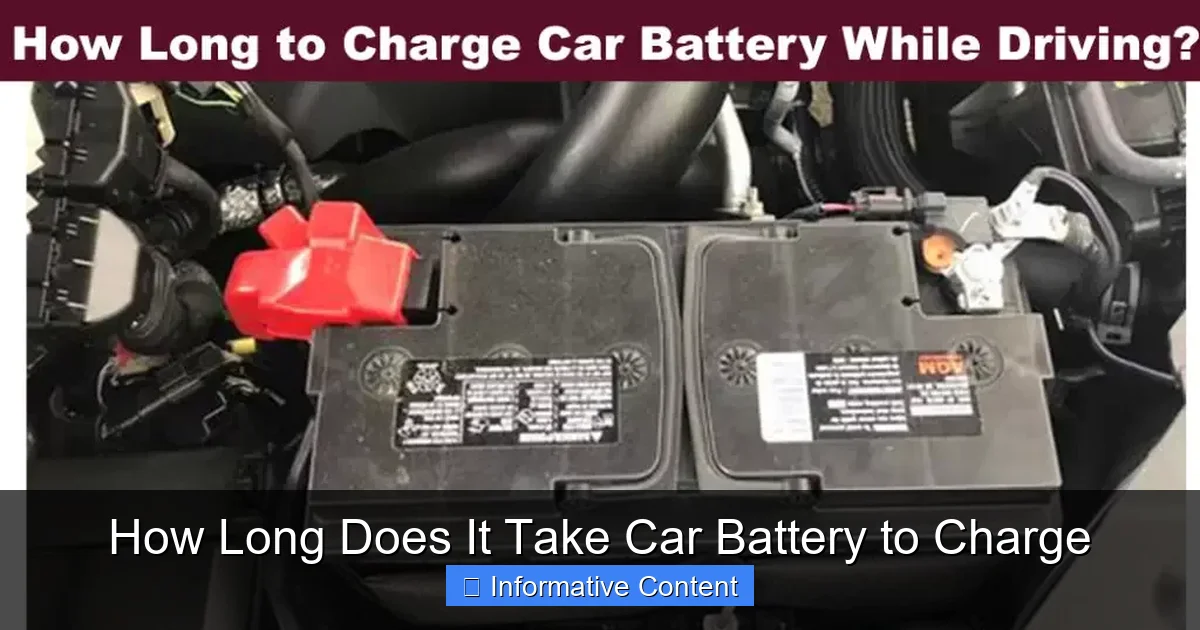
Visual guide about How Long Does It Take Car Battery to Charge
Image source: ehcar.net
Using a Trickle Charger
Trickle chargers are fantastic for maintaining battery health, especially if your car sits unused for extended periods. They deliver a very low, constant current.
How long does it take? This is the slowest method. For a moderately discharged battery, it could take 12-24 hours. For a deeply discharged battery, it might even take a few days. The slow, gentle charge is good for the battery’s long-term health, but it’s not the solution if you need to get back on the road quickly.
Using a Smart/Automatic Charger
These are your go-to chargers for most home charging situations. They offer a balance of speed and safety.
How long does it take? The charging time here can vary significantly based on the charger’s amperage (e.g., 4 amp vs. 10 amp) and the battery’s condition.
- A 4-amp smart charger might take 6-12 hours to fully charge a moderately discharged car battery.
- A 10-amp smart charger could do the job in 4-8 hours for the same battery.
These chargers are designed to stop charging or switch to a maintenance mode once the battery is full, preventing overcharging and making them very safe for unattended charging overnight.
Using a Rapid/Boost Charger
These chargers are primarily designed for emergencies. They can provide a quick boost to get your car started or a very high current for a jump-start function.
How long does it take? If you’re using the “boost” or “jump start” function, it’s instant – just enough power to crank the engine. If you’re using a higher amperage setting (e.g., 20-30 amps) for a faster charge, it might take 1-3 hours to bring a battery to a usable state, but it’s generally not recommended to fully charge a battery this way regularly, as it can generate excessive heat and stress the battery.
Factors Influencing Charging Time
Beyond the charger type, several other critical factors play a role in how long does it take car battery to charge.
Battery’s State of Charge (SoC)
This is perhaps the most significant factor. How dead is the battery?
- Partially Drained: If your battery is just a little low (e.g., you left your lights on for a short time), it will charge much faster.
- Completely Dead: A battery that’s completely flat (below 10.5 volts) will take significantly longer to charge, and some smart chargers might even struggle to detect and charge it initially. It might require a “recondition” mode on some chargers or a jump start before external charging.
Battery Capacity (Ah – Amp-hours)
Car batteries come in different sizes, measured in amp-hours (Ah). This rating tells you how much current a battery can deliver for a certain amount of time.
A larger battery (e.g., 100 Ah) will take longer to charge than a smaller one (e.g., 60 Ah) with the same charger, simply because there’s more “space” to fill with energy. Think of it like filling a larger bucket with the same hose – it just takes more time.
Charger’s Amperage (A)
As mentioned earlier, the output current of your charger directly impacts the charging speed.
A charger with a higher amperage will deliver more power per hour, thus reducing how long does it take car battery to charge. For example, a 10-amp charger will charge a battery roughly twice as fast as a 5-amp charger (assuming all other factors are equal).
Battery Age and Condition
An older battery (typically over 3-5 years) or one that has been deeply discharged multiple times will not charge as efficiently as a new, healthy battery.
- Internal Resistance: Older batteries develop higher internal resistance, which means more energy is wasted as heat during charging, slowing down the process.
- Sulphation: Deep discharges can lead to sulphation, where lead sulfate crystals build up on the plates, reducing the battery’s capacity to accept and hold a charge.
In some cases, an old battery might appear to charge quickly but then die again almost immediately because it can no longer hold a charge effectively.
Temperature
Environmental temperature also plays a role.
Batteries charge more efficiently in moderate temperatures. In very cold weather, the chemical reactions inside the battery slow down, making it take longer to charge. Extreme heat can also be detrimental, potentially leading to overcharging and damage.
Safety First: Essential Charging Tips
Charging a car battery involves electricity and chemicals, so safety is paramount. Always prioritize these steps to avoid accidents.
1. Work in a Well-Ventilated Area
Car batteries produce hydrogen gas during charging, which is highly flammable. Charging in an open garage or outdoors is ideal. Never charge in an enclosed space without proper ventilation.
2. Wear Protective Gear
Always wear safety glasses and gloves. Battery acid is corrosive and can cause severe burns to skin and eyes.
3. Turn Off the Car and Remove the Key
Ensure the car’s ignition is off and the key is removed to prevent accidental starting or electrical surges.
4. Identify Terminals and Connect Correctly
- Positive (+) is usually marked with a plus sign and often has a red cover.
- Negative (-) is marked with a minus sign and often has a black cover.
Connection Order:
- Connect the red (positive) clamp from the charger to the positive (+) terminal of the battery.
- Connect the black (negative) clamp from the charger to a clean, unpainted metal part of the car chassis, away from the battery and fuel lines. This helps prevent sparks near the battery where hydrogen gas might be present. (If directly connecting to the battery, connect the negative clamp to the negative terminal last).
Once connected, plug in the charger. Avoid sparks near the battery.
5. Disconnect Correctly
- Unplug the charger from the power outlet first.
- Remove the black (negative) clamp from the chassis/negative terminal.
- Remove the red (positive) clamp from the positive terminal.
6. Monitor the Charging Process
While smart chargers are designed to be automatic, it’s always a good idea to periodically check the battery and charger. Look for any signs of overheating, swelling, or leaking. If you notice anything unusual, disconnect immediately. Avoid charging for longer than necessary, especially with older, non-smart chargers, to prevent overcharging.
When to Replace Rather Than Charge
Sometimes, no matter how long does it take car battery to charge, it just won’t hold that charge. This is a clear sign that your battery has reached the end of its life and needs to be replaced rather than simply recharged.
Signs of a Failing Battery
- Slow Cranking: The engine turns over slowly or weakly when you try to start it.
- Dim Lights/Weak Accessories: Headlights seem dimmer than usual, or electrical accessories don’t work well when the engine is off.
- Frequent Jumps: You find yourself needing jump-starts more and more often.
- Battery Warning Light: Your car’s dashboard battery light comes on (though this can also indicate an alternator issue).
- Physical Swelling or Leaking: Any visible deformity or fluid leakage from the battery casing is a strong indicator of failure and a safety hazard.
Battery Age
Most car batteries have a lifespan of 3 to 5 years, though this can vary depending on climate and usage. If your battery is approaching or past this age range, even if it charges, its overall capacity and reliability will be diminished. Regular testing at your mechanic can help you stay ahead of potential issues.
Testing Battery Health
A professional battery test can determine its cranking amps (CCA) and overall health. Many auto parts stores offer this service for free. If your battery tests poorly, it’s time for a replacement. Trying to revive a dying battery endlessly can leave you stranded and might even put undue strain on your alternator.
Conclusion: Powering Your Journey Safely and Smartly
So, how long does it take car battery to charge? As we’ve seen, it’s not a simple question with a single answer. The duration is a dynamic interplay of your battery’s specific needs, its level of discharge, and the capabilities of your charging equipment. From a quick 30-minute drive after a jump to a gentle, overnight session with a smart charger, or even a full day with a trickle charger, each method serves a different purpose and comes with its own timeline.
The most important takeaway is to understand these variables and choose the appropriate method for your situation. Prioritize safety above all else, always working in a well-ventilated area, using protective gear, and following the correct connection and disconnection procedures. And remember, sometimes a battery isn’t just dead; it’s truly done. Recognizing the signs of a failing battery can save you frustration and ensure you’re never unexpectedly stranded. By understanding how long does it take car battery to charge and practicing proper battery maintenance, you’re not just recharging a battery; you’re ensuring reliable starts and smoother journeys ahead.
Frequently Asked Questions
How can I tell if my car battery is charging?
Many smart chargers have indicators (LED lights or a digital display) that show the charging status. You can also use a voltmeter to check the battery’s voltage; it should gradually increase during charging and stabilize around 12.6-12.8 volts when full. Additionally, some batteries might show slight bubbling in the electrolyte (if accessible) during charging.
What kind of charger should I use for my car battery?
For most car owners, a “smart” or “automatic” battery charger (typically 4-10 amps) is the best choice. These chargers are safe, efficient, prevent overcharging, and are versatile enough for most situations. Trickle chargers are great for maintenance, while rapid chargers are mostly for emergencies.
Can extreme cold affect car battery charging time?
Yes, extremely cold temperatures significantly slow down the chemical reactions within the battery. This means it will take longer for a car battery to charge in cold weather compared to moderate temperatures, and its overall capacity to accept a charge might be reduced.
Is it safe to leave a car battery charger on overnight?
It is generally safe to leave a modern “smart” or “automatic” car battery charger on overnight, as they are designed to detect when the battery is full and then switch to a maintenance or “float” mode. However, older, non-smart chargers should not be left on overnight as they can overcharge and damage the battery.
What’s the difference between a battery charger and a jump starter?
A battery charger slowly replenishes the energy in a car battery over several hours. A jump starter provides a powerful, instantaneous burst of electricity to crank a dead engine, allowing the alternator to then take over and charge the battery. A jump starter is for immediate starts, not for fully charging a battery.
How long does a new car battery take to charge?
A brand-new car battery from the store should ideally come fully charged. If it needs charging, a new battery will generally charge faster and more efficiently than an old one due to its pristine internal condition. A smart charger could bring it to full in 4-8 hours if it wasn’t quite at 100%.