
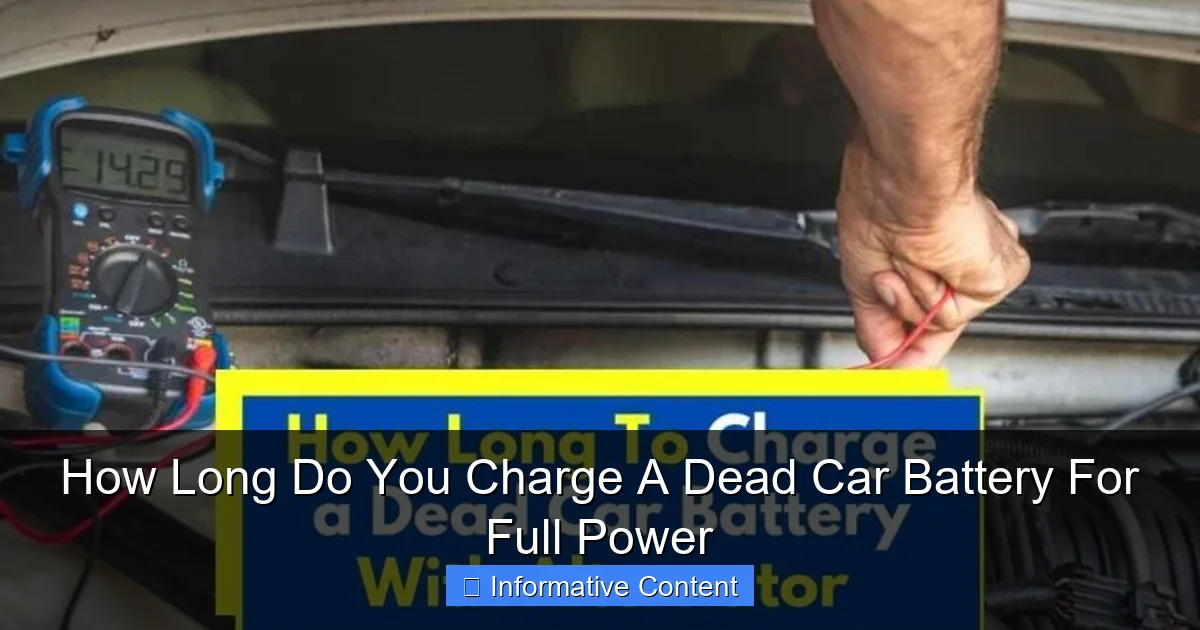
Charging a dead car battery to full power is highly dependent on your charger type and the battery’s condition. While a standard smart charger might take 4-8 hours for a deeply discharged battery, slower trickle chargers can require 12-24 hours or more for a complete, safer charge. Always prioritize using a modern smart charger that automatically prevents overcharging, ensuring battery longevity and readiness.
Imagine this: It’s a chilly morning, you’re running late for an important appointment, and you hop into your car, turn the key, only to be met with a pathetic, groaning sound or, worse, complete silence. Your heart sinks. You instantly know – your car battery is dead. It’s a frustrating, inconvenient, and all too common experience that many of us have faced. The immediate thought is, “Okay, I need to charge it.” But then the next question pops into your head: how long do you charge a dead car battery?
That seemingly simple question can quickly feel like a riddle with no straightforward answer. You might remember someone saying, “Oh, just a few hours,” while another insists, “You really need to leave it overnight.” The truth is, there isn’t a universal “one size fits all” charging time. The duration depends on several key factors, and understanding these can save you a lot of guesswork, prevent potential damage, and ensure your battery gets the care it needs to spring back to life. Think of this as your friendly guide, helping you navigate the sometimes confusing world of car battery charging, so you know exactly how long do you charge a dead car battery for full power.
Getting it right isn’t just about getting your car started again; it’s about prolonging the life of your battery and ensuring its long-term health. Overcharging can damage it, and undercharging means you’ll be back in the same dead-battery predicament sooner than you’d like. So, let’s dive in and demystify the process, turning you into a confident battery-charging pro.
Key Takeaways
- Charging Time Varies: Depends on battery size, charger output, and discharge level.
- Use a Smart Charger: Essential for optimal charging and preventing overcharge damage.
- Check Battery Voltage: Monitor voltage to confirm full charge (12.6V-12.8V).
- Prioritize Safety First: Always wear protective gear and ensure good ventilation.
- Avoid Overcharging: Can damage battery; smart chargers prevent this automatically.
- Consider Battery Age: Older batteries may not hold charge well; consider replacement.
- Trickle Charge Long-Term: Maintain stored or infrequently used batteries effectively.
Quick Answers to Common Questions
What’s the general timeframe for charging a completely dead car battery?
For a typical, completely dead car battery using a standard 10-amp charger, you’re usually looking at around 10-12 hours to bring it back to a full charge. This is a good baseline for **how long do you charge a dead car battery** for optimal results.
Can I just charge it for a short while to get my car started?
While a quick boost or jump start can get your engine turning over, it’s not the same as fully charging your battery. Your car’s alternator will try to top it off, but for battery longevity and reliable starting, a full charge from a dedicated charger is always recommended.
Does the type of charger I use affect how long it takes?
Absolutely! A low-amp “trickle charger” (2-4 amps) might take 24 hours or more, while a faster 10-20 amp charger can significantly reduce **how long do you charge a dead car battery**, potentially getting it done in 4-12 hours. Always match your charger’s output to your battery’s needs.
How do I know when my car battery is actually fully charged?
Most modern battery chargers have an automatic shut-off and an indicator light that will change color or turn off when the battery reaches full capacity, making it easy to know when you’re done. You can also use a multimeter to confirm it’s around 12.6-12.7 volts.
My car battery charges, but then dies quickly again. What’s wrong?
If your car battery isn’t holding a charge after a proper charging cycle, it’s likely nearing the end of its lifespan or has an internal fault. At this point, no amount of charging will fix it, and it’s best to have it tested professionally and likely replaced.
📑 Table of Contents
Understanding Your Car Battery: More Than Just a Box
Before we talk about charging, it helps to understand what you’re actually charging. Your car battery isn’t just a simple power pack; it’s a complex chemical device that plays a crucial role in your vehicle’s operation. Knowing a little about it can really help you figure out how long do you charge a dead car battery effectively.
The Basics of Car Batteries
Most cars on the road today use 12-volt lead-acid batteries. These batteries provide a surge of electricity to start your engine and then supply power to your vehicle’s accessories (like lights, radio, and wipers) when the engine isn’t running. Once the engine is on, the alternator takes over, powering the accessories and recharging the battery.
- Flooded Lead-Acid Batteries: These are the traditional batteries, requiring occasional maintenance (checking and topping up electrolyte levels).
- AGM (Absorbent Glass Mat) Batteries: A more modern sealed design, maintenance-free, and more resistant to vibration.
- Gel Cell Batteries: Similar to AGM but use a gelled electrolyte, also sealed and maintenance-free.
While there are other types like lithium-ion, they are still relatively uncommon in most consumer cars, especially older models. For this guide, we’ll primarily focus on the common lead-acid varieties.
What “Dead” Really Means
When we say a car battery is “dead,” it doesn’t necessarily mean it has zero volts. A healthy, fully charged 12-volt lead-acid battery should read around 12.6 to 12.8 volts when resting. A battery is considered “dead” or deeply discharged when its voltage drops significantly, often below 10.5 volts. At this point, it simply can’t provide enough current to crank your engine.
A deeply discharged battery can also suffer from a condition called sulfation, where lead sulfate crystals build up on the battery plates. This build-up makes it harder for the battery to accept and hold a charge, which directly impacts how long do you charge a dead car battery and if it will even recover.
Why Proper Charging Matters
Charging your battery correctly is vital for its longevity and performance. Improper charging, whether it’s overcharging or undercharging, can significantly shorten your battery’s lifespan. Overcharging can cause the electrolyte to boil off and damage the internal plates, while consistent undercharging can lead to sulfation and a permanent reduction in capacity. Getting it right means your battery lasts longer, and you avoid that dreadful dead-battery feeling more often.
Factors That Influence Charging Time: It’s Not One-Size-Fits-All
Since there’s no magic number, let’s break down the variables that truly dictate how long do you charge a dead car battery. Understanding these will empower you to make an informed decision for your specific situation.

Visual guide about dead car battery charge time
Image source: thumbs.dreamstime.com
How Dead Is “Dead”? The Current State of Charge
This is perhaps the most significant factor. A battery that’s only slightly drained (e.g., you left your dome light on for an hour) will require much less charging time than a battery that’s completely flat (e.g., you left your headlights on overnight and now nothing works).
- Slightly Drained (e.g., 12.0V): Quick recovery.
- Moderately Discharged (e.g., 11.5V): Will take several hours.
- Completely Dead (e.g., 10.5V or lower): Requires extensive charging, potentially 12-24 hours or even more. Sometimes, a very deeply discharged battery cannot be recovered.
The Type of Charger You’re Using
Not all battery chargers are created equal. The amperage (amps) of your charger directly affects how long do you charge a dead car battery.
- Trickle Chargers (Battery Maintainers): These typically charge at a very low amperage (1-2 amps). They are fantastic for maintaining a battery’s charge over long periods (like during winter storage) but are very slow for recharging a dead battery. If you’re wondering how long do you charge a dead car battery with a trickle charger, be prepared for 24-48 hours, or even several days for a truly flat battery.
- Standard Battery Chargers: Most home chargers fall into this category, offering charging rates between 4 and 15 amps. They are a good balance of speed and safety for most recovery situations.
- Fast Chargers/Jump Starters: These provide a high amperage boost (20+ amps, sometimes even 100+ amps for starting assistance). While they can get your car started quickly, they are generally not recommended for fully recharging a dead battery from scratch, as the high current can sometimes stress the battery if used improperly for extended periods.
Your Battery’s Capacity (Ah Rating)
Car batteries are rated in Amp-hours (Ah), which indicates how much current they can deliver over a period of time. A typical car battery might have a capacity of 40-100 Ah. Simply put, a higher Ah rating means a larger battery, which will naturally take longer to charge to full capacity with the same charger amperage.
Quick math: If you have a 60 Ah battery and a 5-amp charger, theoretically it would take 12 hours (60 Ah / 5 A) to charge, but this doesn’t account for inefficiencies, the battery’s current state, or the charger tapering off as the battery gets full. So, always add a buffer.
Battery Age and Health
An older battery, or one that has been deeply discharged multiple times, won’t charge as efficiently or hold a charge as well as a newer, healthier battery. Internal resistance increases with age and wear, making the charging process slower and less effective. If your battery is more than 3-5 years old, its ability to recover might be significantly diminished.
Temperature
Believe it or not, the ambient temperature affects charging efficiency. Cold weather slows down the chemical reactions inside the battery, meaning it will take longer to charge a dead car battery in freezing temperatures. Conversely, extreme heat can also impact the charging process and potentially damage the battery if not managed by a smart charger.
The Charging Process: Step-by-Step for a Dead Battery
Now that you understand the factors, let’s walk through the actual process. Safety is paramount here, so please pay close attention.
Visual guide about dead car battery charge time
Image source: tontio.com
Safety First! Crucial Precautions
Working with car batteries involves electricity and corrosive chemicals. Always prioritize safety!
- Ventilation: Batteries can produce explosive hydrogen gas during charging. Always charge in a well-ventilated area. Never in an enclosed space like a small garage without open windows or doors.
- Eye Protection and Gloves: Battery acid is highly corrosive. Wear safety glasses and gloves to protect your eyes and skin.
- No Sparks: Keep flames, sparks, and smoking materials away from the battery. Connect and disconnect the charger properly to minimize sparking.
- Read Your Charger Manual: Every charger is slightly different. Familiarize yourself with its specific instructions and safety warnings.
Connecting the Charger Correctly
This is straightforward but critical to avoid damage or injury:
- Ensure your car and charger are turned off.
- If the battery is still in the car, make sure all accessories (lights, radio, etc.) are off.
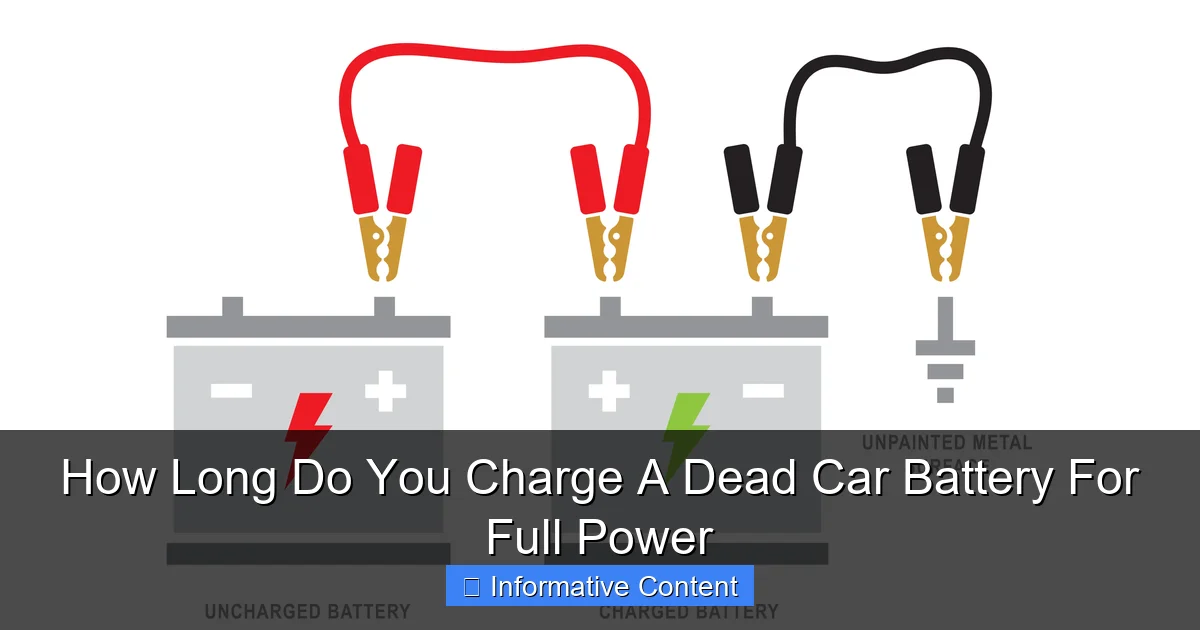
- Connect the red (positive) charger clamp to the positive (+) terminal of the battery.
- Connect the black (negative) charger clamp to a clean, unpainted metal part of your car’s chassis, away from the battery and fuel lines. If you’ve removed the battery from the car, connect the black clamp to the negative (-) terminal of the battery.
- Once connected, then plug in the charger to the wall outlet and turn it on.
Monitoring the Charge: What to Look For
During the charging process, keep an eye on a few things:
- Charger Indicators: Most modern chargers have lights or a digital display to show charging progress (e.g., charging, fully charged, fault).
- Battery Voltage: If you have a multimeter, you can periodically check the battery’s voltage. A healthy, fully charged 12-volt battery should reach around 12.6-12.8 volts.
- Temperature: The battery should not get excessively hot. If it does, there might be a problem, and you should disconnect the charger.
- Gassing (Flooded Batteries): For flooded lead-acid batteries, you might see small bubbles in the electrolyte as it charges. This is normal. Excessive bubbling, however, could indicate overcharging.
Knowing When It’s Fully Charged
Most modern “smart” chargers are designed to automatically switch to a float or maintenance mode once the battery is fully charged. They might display a “fully charged” light or message. If you have an older, manual charger, you’ll need to monitor the voltage with a multimeter. Once the battery voltage stabilizes around 12.6-12.8 volts and holds there for an hour or two while still connected to the charger, it’s likely full.
Practical Charging Times: An Estimation Guide
Okay, let’s get to the brass tacks: how long do you charge a dead car battery in real-world scenarios? Remember, these are estimates, as your specific situation will vary.
General Guidelines for Common Scenarios
- Slightly Drained Battery (e.g., you left an interior light on for a few hours): With a standard 4-10 amp charger, you might only need 2-6 hours. With a trickle charger, plan for 12-24 hours.
- Moderately Discharged Battery (e.g., engine struggles to crank but eventually starts with a jump): A standard 4-10 amp charger will likely take 6-12 hours. A trickle charger could take 24-48 hours.
- Completely Dead Battery (no lights, no sounds, clicks): This is where patience is key. With a standard 4-10 amp charger, expect 12-24 hours. If using a trickle charger, it could easily be 24-48 hours, or even longer, and there’s a higher chance the battery might not fully recover if it’s been dead for a long time.
How Long Do You Charge A Dead Car Battery
With Different Chargers?
Let’s consider specific charger types and approximate times:
- Trickle Charger (1-2 Amps): For a truly dead battery, you’re looking at 24 to 48 hours minimum, potentially longer if it’s a large battery or very deeply discharged. These are best for keeping a healthy battery topped up, not for rapid recovery.
- Standard Charger (4-10 Amps): This is the workhorse for reviving a dead battery. For a typical 60 Ah car battery that’s completely dead (down to 10.5V), a 10-amp charger might take 8-16 hours. A 4-amp charger would take significantly longer, perhaps 15-24 hours.
- High Amperage Charger (20+ Amps): While these can provide a quick boost to get your car starting in 1-3 hours, it’s generally not recommended to fully charge a deeply discharged battery this way. High current can generate excessive heat and stress the battery, potentially shortening its lifespan if used for extended full charges. It’s more for getting you going in a pinch.
Data Table: Estimated Charging Times (For a Moderately Dead 60Ah Battery)
Here’s a simplified table to give you a rough idea of how long do you charge a dead car battery that’s not completely flat but needs a significant charge:
| Charger Amperage | Battery Ah (Typical) | Estimated Time (Moderately Dead) | Estimated Time (Completely Dead) |
|---|---|---|---|
| 2A (Trickle) | 60Ah | 12-24 hours | 24-48+ hours |
| 5A (Standard) | 60Ah | 6-12 hours | 12-24 hours |
| 10A (Standard) | 60Ah | 3-6 hours | 8-16 hours |
| 20A (Fast/Boost) | 60Ah | 1-3 hours (for starting power) | Not recommended for full charge; primarily for boosting |
Note: These are estimates. Actual times will vary based on battery condition, age, temperature, and charger efficiency.
The “Resting Voltage” Test
Once your charger indicates a full charge, it’s a good idea to disconnect it and let the battery rest for a few hours (ideally 4-6 hours, or even overnight). Then, use a multimeter to check the voltage. A healthy, fully charged lead-acid battery should read between 12.6 and 12.8 volts. If it drops significantly below 12.4 volts after resting, it might not be holding a charge well, even if the charger indicated “full.” This is a crucial step in assessing how long do you charge a dead car battery to truly achieve full power.
Beyond Charging: What if Your Battery Won’t Hold a Charge?
Sometimes, even after understanding how long do you charge a dead car battery and following all the steps, your battery just won’t cooperate. This usually means it’s time for a replacement.
Signs of a Dying Battery
Your battery often gives you hints before it completely gives up the ghost:
- Slow Cranking: The engine turns over sluggishly, especially on cold mornings.
- Dim Lights: Headlights and interior lights appear dim when the engine is off.
- Frequent Need for Charging/Jumping: If you find yourself needing to charge or jump-start your car regularly.
- Corrosion: Excessive corrosion around the battery terminals.
- Bloated or Swollen Battery Case: A clear sign of internal damage.
When to Consider Replacement
If your battery is more than 3-5 years old, or if it consistently fails to hold a charge after a proper charging cycle, it’s likely time for a new one. A professional mechanic or auto parts store can perform a “load test” which simulates starting the engine and gives a definitive answer on your battery’s health.
Maintaining Battery Health for the Future
To avoid frequent dead battery situations, consider these tips:
- Regular Driving: Short trips don’t allow your alternator enough time to fully recharge the battery. Take longer drives periodically.
- Clean Terminals: Keep battery terminals free of corrosion.
- Battery Maintainer: If you store your vehicle for extended periods or don’t drive it often, a trickle charger or battery maintainer can keep the battery topped up.
- Avoid Deep Discharges: Try not to let your battery go completely dead. If it happens, recharge it as soon as possible.
So, how long do you charge a dead car battery? As we’ve seen, it’s not a simple answer, but it’s a question you can now tackle with confidence. The exact time depends on how dead it is, the type of charger you’re using, and the battery’s age and capacity. Always prioritize safety, understand your equipment, and patiently monitor the charging process.
A dead car battery can certainly throw a wrench in your day, but with the right knowledge and tools, it doesn’t have to be a major crisis. By understanding the nuances of battery charging, you’re not just getting your car started; you’re actively contributing to the longevity and reliability of your vehicle’s power source. Take your time, charge it right, and enjoy the peace of mind that comes with a healthy, fully powered car battery.
🎥 Related Video: How Long Does It Take to Charge a Battery?
📺 Jack Of All Trades Master of None
An easy way calculate how long it will take to charge a battery.
Frequently Asked Questions
How long does it generally take to charge a dead car battery?
The time it takes to charge a dead car battery varies significantly based on its capacity (Ah), the charger’s output current (Amps), and how deeply discharged it is. With a standard 10-amp charger, a moderately discharged battery might take 4-6 hours, while a completely flat battery could require 12-24 hours or even more.
My car battery is completely dead; how long should I charge it?
If your car battery is completely dead, expect a longer charging duration. It’s often recommended to charge it slowly using a lower amperage charger (e.g., 2-4 amps) for at least 12 to 24 hours to ensure a full and healthy charge. Always monitor the battery’s voltage to confirm it reaches a full charge, typically around 12.6 to 12.8 volts.
Does the type of car battery charger affect how long it takes to charge a dead car battery?
Yes, absolutely. Different types of chargers, such as trickle chargers, smart chargers, and rapid chargers, have varying output currents that directly impact charging time. A smart charger will automatically adjust and typically take longer for a deep discharge but provide a safer, more complete charge than a basic trickle charger, while a rapid charger will be quicker but can be harsher on the battery.
How do I know when my dead car battery is fully charged?
Many modern smart chargers have indicators (LEDs or screens) that show when the battery is fully charged and switch to a maintenance mode. Alternatively, you can use a multimeter to check the voltage; a fully charged 12V car battery should read between 12.6 and 12.8 volts a few hours after charging, with the engine off and no load.
Can you overcharge a dead car battery, and what are the risks?
Yes, you can overcharge a dead car battery, especially with older, non-smart chargers that don’t automatically shut off or switch to maintenance mode. Overcharging can lead to excessive heat, boiling of the electrolyte (causing water loss and potential acid spills), and damage to the battery’s internal plates, significantly shortening its lifespan.
Is it safe to fast charge a dead car battery to save time?
While some chargers offer a “fast charge” option, it is generally not recommended for a completely dead car battery or for regular use. Fast charging can generate excessive heat and stress on the battery, potentially causing internal damage and reducing its overall lifespan. A slower, steady charge is almost always better for the battery’s health and longevity.