
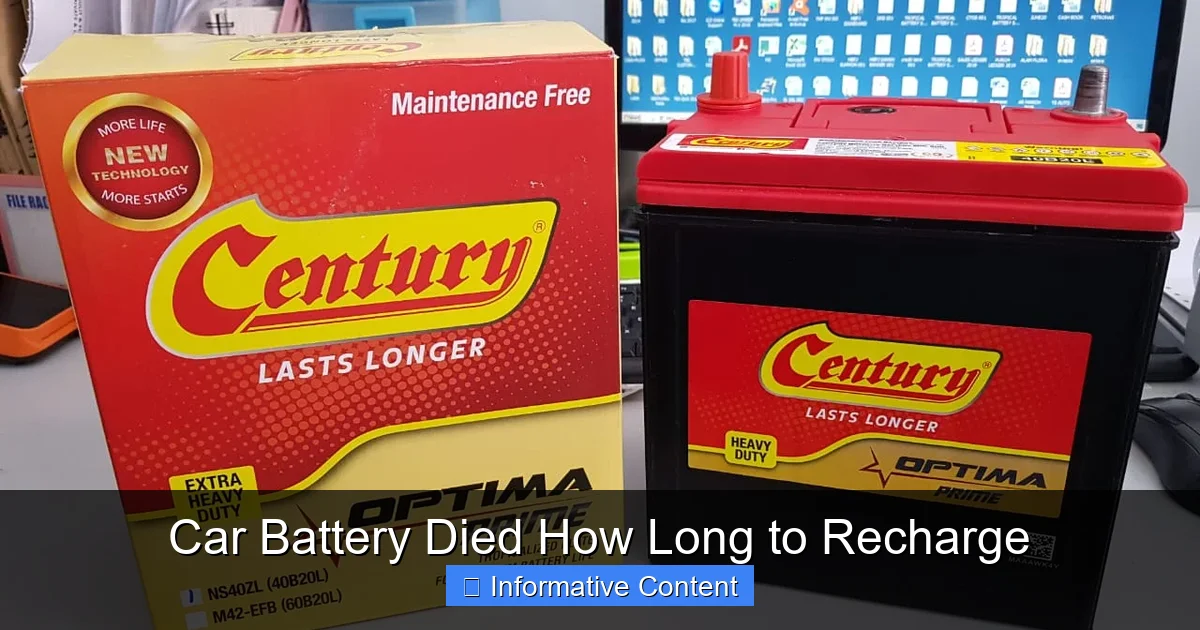
When your car battery died, how long to recharge depends on several factors, including the charging method, the battery’s state, and its capacity. A jump start provides a temporary boost, requiring 30-60 minutes of driving, while a full recharge with a smart charger can take 4-12 hours, or significantly longer with a trickle charger. Understanding these variables ensures you choose the right approach for your vehicle.
Imagine this: You hop into your car, turn the key, and… nothing. Just a sad click, or perhaps complete silence. Your car battery died, and now you’re stuck. It’s a common and incredibly frustrating experience, one that almost every driver encounters at some point. The immediate thought is usually, “Oh no, now what?” followed quickly by, “How long will it take to get my car running again?”
Getting your car battery back to life is often possible, but it’s not always a quick fix. There are different ways to recharge a battery, and each comes with its own timeline and considerations. Understanding these methods, what influences charging time, and how to do it safely can save you a lot of hassle and potentially extend the life of your car’s power source. This article will walk you through everything you need to know when your car battery died, how long to recharge it, and what steps to take.
We’ll cover everything from the quick boost of a jump start to the slow, steady charge of a trickle charger. You’ll learn about the factors that influence charging speed, essential safety tips, and even when it might be time to say goodbye to your old battery. Our goal is to make sure you’re well-equipped with the knowledge to handle a dead battery situation confidently and efficiently.
Key Takeaways
- Recharge Time Varies Greatly: The exact time it takes to recharge a dead car battery depends on the method (jump start, trickle charger, smart charger), the battery’s initial state of discharge, and its capacity (Amp-hours).
- Jump Starting is a Temporary Fix: A jump start gets you going, but your alternator needs at least 30-60 minutes of driving to put a decent surface charge back into the battery. It’s not a full recharge.
- Trickle Chargers are Slow but Safe: These low-amperage chargers are ideal for long-term maintenance or very deeply discharged batteries, often taking 12-24+ hours for a full charge.
- Smart/Automatic Chargers are Efficient: Offering a balance of speed and safety, smart chargers can fully recharge a moderately dead battery in 4-12 hours, thanks to their multi-stage charging cycles.
- Factors Like Capacity and Amperage Matter: A larger battery (more Amp-hours) will take longer to charge than a smaller one, and a higher-amperage charger will generally charge faster than a lower-amperage one.
- Safety First During Recharging: Always follow safety precautions, wear protective gear, and connect charger cables correctly (positive to positive, negative to negative, and the final negative connection to a ground point away from the battery).
- Consider Battery Age for Replacement: If your battery dies frequently or struggles to hold a charge after recharging, it might be nearing the end of its typical 3-5 year lifespan and could require replacement rather than just another recharge.
Quick Answers to Common Questions
How long does it take for an alternator to recharge a dead battery?
An alternator is designed to maintain a charged battery, not fully recharge a dead one. After a jump start, you should drive for at least 30-60 minutes at highway speeds to allow the alternator to put a sufficient surface charge back into the battery. It won’t fully recharge it, though.
Can I leave a trickle charger on my car battery overnight?
Yes, most modern trickle chargers and battery maintainers are designed to be left on indefinitely, as they monitor the battery’s charge and stop charging once full, then switch to a maintenance mode. Older, non-smart trickle chargers might overcharge if left too long, so always check your charger’s manual.
Is it bad to fully discharge a car battery?
Yes, fully discharging a car battery multiple times (deep cycling) is detrimental to its lifespan. Standard car batteries (SLI) are not designed for deep cycling and can suffer damage like sulfation, which reduces their capacity and ability to hold a charge.
What does a smart charger do differently?
A smart charger monitors the battery’s voltage and adjusts its charging process through multiple stages (bulk, absorption, float). It prevents overcharging, charges more efficiently, and can often desulfate a battery, extending its life compared to a basic trickle charger.
How often should I check my car battery’s charge?
It’s a good practice to have your car battery tested annually, especially as it approaches its 3-5 year lifespan. If you frequently take short trips or your car sits idle, checking its voltage with a multimeter every few weeks can help you catch a low charge before it becomes a dead battery.
📑 Table of Contents
Understanding Why Your Car Battery Died
Before we dive into how long to recharge a car battery, it helps to understand why it might have died in the first place. Your car battery is a crucial component; it provides the initial surge of power to start the engine and also powers your car’s electrical systems when the engine is off.
Common Reasons for a Dead Battery
There are several typical culprits behind a drained battery:
- Lights Left On: This is perhaps the most classic reason. Forgetting to turn off your headlights, interior lights, or even a trunk light overnight can completely drain a battery.
- Parasitic Drain: Even when your car is off, some components (like the clock, radio memory, or alarm system) draw a tiny amount of power. If there’s an electrical fault, this “parasitic drain” can be excessive and kill your battery over time.
- Extreme Weather: Both very hot and very cold temperatures can impact battery performance. Cold weather, especially, reduces a battery’s cranking power and makes it harder for the engine to start, exposing a weak battery.
- Infrequent Driving: If your car sits idle for long periods, the battery can slowly discharge. Alternators only charge the battery when the engine is running, so short trips or long periods of inactivity don’t give the battery enough time to replenish itself.
- Alternator Problems: The alternator recharges your battery while you drive. If it’s faulty, your battery won’t get enough charge and will eventually die, even if the battery itself is healthy.
- Old Age: Car batteries don’t last forever. Most have a lifespan of 3 to 5 years. As they age, their ability to hold a charge diminishes, making them more susceptible to dying unexpectedly.
Knowing the cause can sometimes help prevent future occurrences and also guide your decision on whether to just recharge or investigate further.
Recharging Methods: How Long Does Each Take?
When your car battery died, how long to recharge it largely depends on the method you choose. Let’s look at the most common options and their typical timelines.
1. Jump Starting: A Quick Boost, Not a Full Charge
Jump starting is usually the first thought when a car won’t start. It uses power from another vehicle’s battery or a portable jump starter to give your car just enough juice to crank the engine.
- Timeline: A jump start itself takes only a few minutes to connect cables and get the engine running.
- Post-Jump Driving: Once your car is running, your alternator takes over. However, an alternator is designed to maintain a charged battery, not to fully recharge a deeply discharged one. To put a decent surface charge back into the battery, you should drive your car for at least 30 to 60 minutes, preferably on the highway, avoiding turning off the engine or using many electrical accessories. Even then, it won’t be a 100% recharge if the battery was truly dead.
Important Note: A jump start is a temporary solution. If your car battery died due to age or a significant issue, it will likely die again if not properly recharged or replaced.
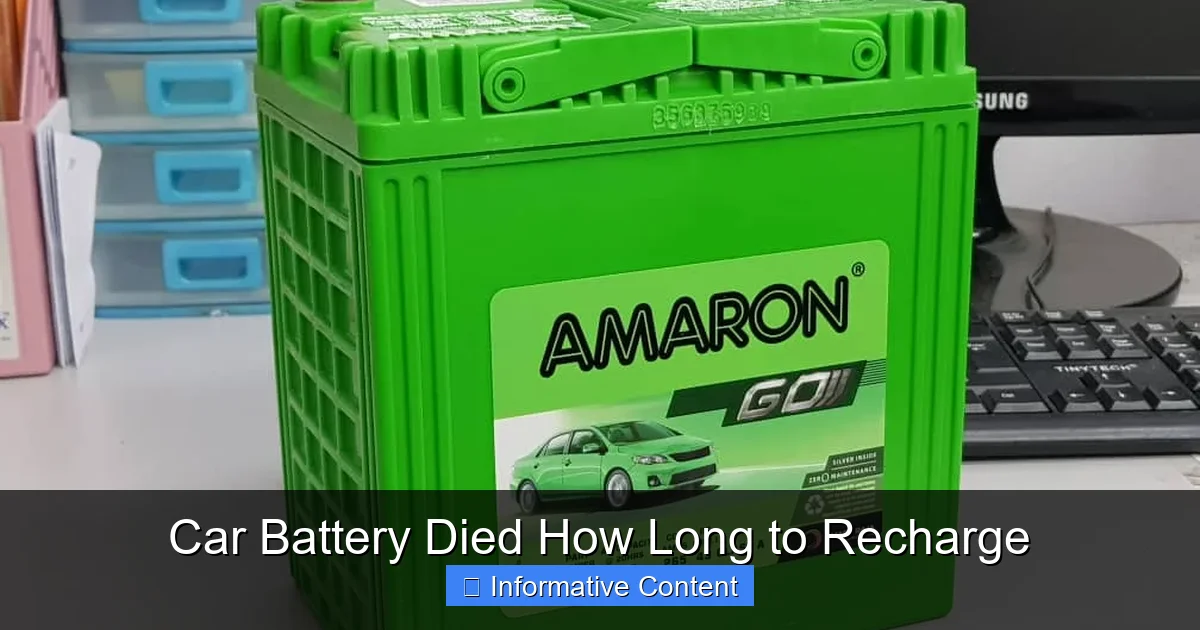
Visual guide about Car Battery Died How Long to Recharge
Image source: blogger.googleusercontent.com
2. Trickle Chargers: Slow, Steady, and Safe
A trickle charger delivers a very low current (typically 1-3 amps) to the battery over an extended period. They are great for maintaining a charge on vehicles stored for long periods or for very deeply discharged batteries.
- Timeline: This is the slowest method. For a moderately discharged battery, it could take 12-24 hours. For a deeply dead battery, it might take 24-48 hours or even longer.
- Best Use: Ideal for long-term maintenance, especially if you have a car, motorcycle, or RV that sits for weeks or months. It prevents sulfation and keeps the battery topped off.
While slow, trickle charging is very gentle on the battery and helps ensure a full, healthy charge. If your car battery died and you’re not in a rush, this is a safe option.
3. Smart/Automatic Chargers: The Balanced Approach
Smart chargers, also known as automatic or multi-stage chargers, are arguably the best option for most drivers. They monitor the battery’s condition and adjust the charging voltage and current accordingly through different stages (e.g., bulk, absorption, float).
- Timeline: For a moderately dead car battery, a smart charger typically takes 4-12 hours for a full recharge. The exact time depends on the charger’s amperage (e.g., a 10-amp charger will be faster than a 4-amp charger) and how dead the battery is.
- Features: Many smart chargers have built-in safety features like overcharge protection, reverse polarity protection, and automatic shut-off. They can often differentiate between different battery types (like AGM or gel) and charge them appropriately.
When asking “car battery died how long to recharge with a smart charger?”, remember it offers a good balance between speed, safety, and battery health.
4. Fast Chargers: Use with Caution
Some chargers offer “fast charge” modes with high amperage (e.g., 20-50 amps). While these can recharge a battery quicker, they should be used with extreme caution.
- Timeline: Can provide a significant charge in 1-3 hours.
- Risks: High amperage can generate excessive heat, potentially damaging the battery plates, boiling off electrolyte, and reducing the battery’s overall lifespan, especially if the battery is deeply discharged or old. It’s generally not recommended for regular use or for bringing a truly dead battery back to life.
Stick to smart chargers or trickle chargers for healthier battery care. If your car battery died and you need a quick boost, a jump start is safer than a fast charge.
Factors Influencing Car Battery Recharge Time
The question “car battery died how long to recharge” doesn’t have a single answer because many variables come into play.
1. Battery’s State of Discharge
This is perhaps the biggest factor. A battery that’s only partially discharged (e.g., 50%) will obviously recharge much faster than one that’s completely dead (0%).
2. Battery Capacity (Amp-Hours)
Batteries are rated in Amp-hours (Ah), which indicates how much current they can deliver for a certain period. A larger capacity battery (e.g., 100 Ah for a truck) will take longer to recharge than a smaller one (e.g., 40 Ah for a compact car), assuming the same charger output.
3. Charger’s Amperage Output
The higher the charger’s output amperage, the faster it can deliver current to the battery.
- A 2-amp trickle charger will be very slow.
- A 10-amp smart charger will be moderately fast.
- A 20-amp or higher charger will be faster but comes with increased risk if not a smart charger.
General Rule of Thumb: To estimate charging time, divide the battery’s Ah rating by the charger’s amperage output. Then add 10-20% for inefficiencies. For example, an 80 Ah battery with a 10-amp charger might take (80/10) * 1.2 = 9.6 hours.
4. Battery Age and Condition
An older battery, or one that has been deeply discharged multiple times, may not accept a charge as efficiently as a newer, healthier battery. Sulfation (a buildup of lead sulfate crystals on the plates) can occur in discharged batteries, hindering their ability to accept and hold a charge.
5. Temperature
Batteries charge more slowly in cold temperatures. If you’re charging in a very cold garage, it might take longer for the battery to warm up and accept a charge efficiently. Aim for charging in a moderately warm environment if possible.
Step-by-Step: Safely Recharging Your Car Battery
Safety should always be your top priority when dealing with car batteries. They contain corrosive acid and produce explosive hydrogen gas during charging.
What You’ll Need:
- Battery charger (trickle or smart charger recommended)
- Safety glasses
- Gloves
- Wrenches (if you need to remove battery terminals)
- Ventilated area
The Process:
- Ensure Ventilation: Charge the battery in a well-ventilated area to dissipate any hydrogen gas produced. Do not smoke or create sparks near the battery.
- Turn Off Engine and Accessories: Make sure your car’s engine is off and all accessories (lights, radio, AC) are completely turned off.
- Locate Battery Terminals: Identify the positive (+) and negative (-) terminals. The positive terminal usually has a red cap or a plus sign; the negative is black or has a minus sign.
- Clean Terminals (if necessary): If there’s corrosion, carefully clean it off with a wire brush and a baking soda/water solution. Ensure terminals are dry before connecting.
- Connect Charger Clamps:
- Connect the red (positive) charger clamp to the positive (+) battery terminal.
- Connect the black (negative) charger clamp to a ground point on the car’s engine block or chassis, away from the battery. If charging the battery outside the car, connect the black clamp to the negative battery terminal. This reduces the risk of sparking near the battery’s gas vents.
- Plug In Charger: Only after the clamps are securely connected, plug the charger into a power outlet.
- Set Charger (if applicable): If your charger has settings (e.g., 6V/12V, battery type), ensure they match your car battery’s specifications. Most car batteries are 12V.
- Monitor Charging: Let the charger do its work. Many smart chargers have indicator lights showing charging progress (e.g., charging, fully charged). Do not leave charging unattended for excessively long periods, especially with older chargers.
- Disconnect Charger Safely: Once fully charged, first unplug the charger from the power outlet. Then, disconnect the black (negative) clamp from the ground point (or battery negative terminal). Finally, disconnect the red (positive) clamp from the positive battery terminal.
- Start Your Car: Once disconnected, attempt to start your car. If it starts, great! If not, the battery might be beyond recharging, or there could be another issue.
Following these steps will help ensure a safe and effective recharge when your car battery died.
Beyond Recharging: When to Consider Replacement
Sometimes, even after understanding “car battery died how long to recharge” and following all the steps, your battery simply won’t hold a charge or dies again quickly. This usually means it’s time for a new one.
Signs Your Battery Needs Replacement:
- Frequent Dying: If your battery dies repeatedly, even after proper recharging, it’s a strong indicator that it can no longer hold a sufficient charge.
- Slow Engine Crank: The engine cranks very slowly, taking longer than usual to start, especially in cold weather.
- Dim Lights or Electrical Issues: Headlights seem dim, or other electrical components (power windows, radio) act sluggishly.
- Battery Light On: The battery warning light on your dashboard illuminates, indicating a charging system problem (which could be the battery or alternator).
- Swollen Battery Case: The battery casing appears bloated or swollen, often due to overcharging or extreme heat.
- Corrosion: Excessive corrosion around the battery terminals, especially if it returns quickly after cleaning, can be a sign of a leaking battery or an internal issue.
- Age: Most car batteries last 3-5 years. If yours is older than this, it’s living on borrowed time and likely less reliable.
Testing Your Battery
You can get your battery tested at most auto parts stores for free. They use a battery tester that measures its cold-cranking amps (CCA) and overall health, providing a definitive answer on whether it needs replacement. This is a good idea if you frequently experience your car battery died scenarios.
Preventive Measures to Extend Battery Life
- Drive Regularly: Short trips don’t fully recharge your battery. Take longer drives (30+ minutes) periodically.
- Turn Off Accessories: Always ensure all lights and accessories are off before leaving your vehicle.
- Clean Terminals: Keep battery terminals clean and free of corrosion.
- Check Battery Fluid (if applicable): For non-sealed batteries, check the electrolyte levels and top up with distilled water if needed.
- Use a Battery Tender: If your car sits idle for weeks, a battery tender (a specialized trickle charger) can keep it optimally charged.
- Insulate in Cold Weather: A battery blanket can help keep your battery warmer in extreme cold.
Conclusion
Having your car battery die can be a major inconvenience, but understanding the options and timelines for recharging can make the situation much less stressful. Whether you opt for a quick jump start to get you to your destination, or a more thorough recharge with a smart or trickle charger, knowing the answer to “car battery died how long to recharge” empowers you to make informed decisions.
Remember that while recharging is often effective, it’s also crucial to pay attention to your battery’s overall health and age. Regular maintenance and being aware of the signs of a failing battery can help you avoid being stranded and ensure your vehicle remains reliable. Always prioritize safety during the charging process, and don’t hesitate to consult a professional if you’re unsure or suspect a deeper issue with your car’s charging system. Keep these tips in mind, and you’ll be well-prepared for any battery-related hiccup on the road.
Frequently Asked Questions
What causes a car battery to die quickly?
A car battery can die quickly due to several reasons, including leaving lights or accessories on, a faulty alternator that isn’t recharging it while driving, or a significant parasitic drain from an electrical component. Extreme cold weather can also rapidly deplete a weak battery’s charge and reduce its cranking power.
Can a fully dead battery be recharged?
Most fully dead car batteries can be recharged, but it depends on how long it was dead and its overall health. If a battery has been completely discharged for an extended period, it might develop severe sulfation, making it difficult or impossible for it to accept and hold a charge effectively.
How do I know when my car battery is fully charged?
Many modern smart chargers have indicator lights that show when the battery is fully charged, often switching from a “charging” to a “charged” or “maintain” light. Alternatively, you can test the battery’s voltage with a multimeter; a fully charged 12V car battery should read around 12.6V to 12.8V or higher.
Is it better to charge a car battery slowly or quickly?
Generally, it is better to charge a car battery slowly, using a trickle or smart charger with lower amperage. Slow charging is gentler on the battery, reduces heat buildup, and allows for a more complete and healthy charge, which can help extend the battery’s overall lifespan.
Can a dead battery ruin an alternator?
While a dead battery doesn’t directly ruin an alternator, a consistently dead battery can put excessive strain on the alternator. The alternator is designed to maintain a charge, not to constantly recharge a deeply discharged battery, so forcing it to work harder can lead to premature wear and failure of the alternator.
How much does it cost to replace a car battery?
The cost to replace a car battery varies widely depending on the vehicle type, battery brand, and installation labor. Generally, you can expect to pay anywhere from $100 to $300 or more for the battery itself, plus any labor charges if you have it installed by a professional.