
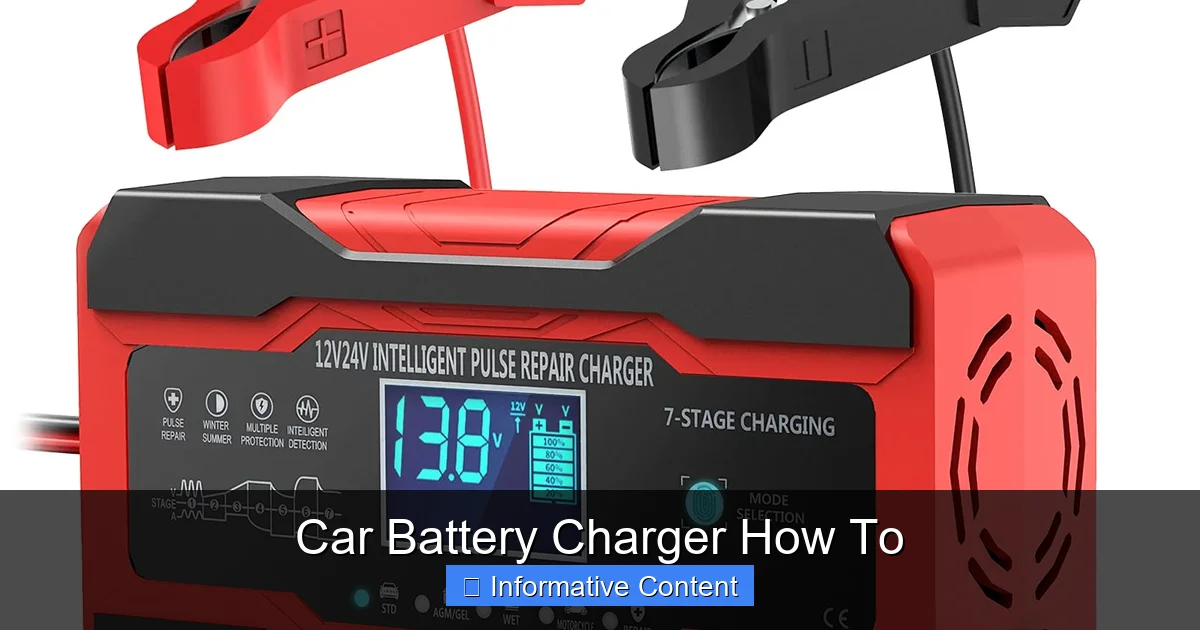
Revive your car battery like a pro with this essential guide on car battery charger how to! Learn the simple, safe steps to use any car battery charger, from connecting the clamps to understanding different charger types. Keep your vehicle running smoothly and extend battery life with our expert tips for effective car battery maintenance and charging.
Key Takeaways
- Safety First: Always prioritize safety by wearing protective gear (gloves, eye protection) and ensuring good ventilation when working with a car battery charger.
- Choose the Right Charger: Select a car battery charger that matches your battery type (e.g., standard lead-acid, AGM, gel) and capacity, opting for smart/automatic chargers for ease and safety.
- Correct Connection Sequence: Always connect the positive (red) clamp to the positive terminal and the negative (black) clamp to the negative terminal (or a grounded chassis point if the battery is in the car) before plugging in the charger.
- Monitor the Process: While smart chargers manage charge cycles automatically, keep an eye on older or basic chargers to prevent overcharging, which can damage the battery.
- Disconnect Safely: Always unplug the car battery charger from the power outlet first, then disconnect the negative clamp, followed by the positive clamp.
- Maintain for Longevity: Regularly clean battery terminals and consider using a battery maintainer for vehicles stored for extended periods to prevent deep discharge and prolong battery life.
- Know When to Replace: If a battery consistently fails to hold a charge even after proper charging, it might be time for a replacement, as charging can only do so much for a worn-out battery.
Quick Answers to Common Questions
How long does it take to charge a completely dead car battery?
The time varies greatly depending on the battery’s size and the charger’s amperage. A completely dead car battery might take anywhere from 4 to 24 hours with a standard 10-amp smart charger.
Can I overcharge my car battery with a smart charger?
No, smart chargers are designed to prevent overcharging. They automatically switch to a “float” or maintenance mode once the battery is full, delivering a small current to keep it topped off without causing damage.
Do I need to disconnect the battery from the car before charging?
Not necessarily. While removing it ensures maximum safety, you can often charge the battery while it’s still in the car, provided you follow the correct connection sequence and ensure good ventilation.
What if my battery charger shows an error or won’t start charging?
First, check all connections to ensure they are clean and secure. Then, verify your battery’s voltage; if it’s extremely low, some smart chargers may not recognize it. Try a jump start to give it a boost, or check your charger’s manual for error codes.
Can I use any car battery charger on any type of car battery?
No, it’s best to use a charger compatible with your battery type (e.g., flooded, AGM, Gel). Many modern smart chargers have selectable settings for different battery chemistries, but always check your charger and battery specifications.
📑 Table of Contents
- The Lifeline of Your Ride: Mastering Your Car Battery Charger
- Understanding Your Tools: Car Batteries and Chargers Explained
- Safety First: Preparing for a Seamless Charge
- The Step-by-Step Guide: Car Battery Charger How To
- Common Hurdles and Smart Solutions
- Beyond Charging: Maintaining Your Battery’s Health
- Conclusion: Power Up Your Confidence
The Lifeline of Your Ride: Mastering Your Car Battery Charger
Ever walked out to your car, turned the key, and heard nothing but a sad click or eerie silence? It’s a frustrating moment we’ve all faced: a dead car battery. But don’t despair! With a reliable car battery charger and a little know-how, you can often bring your vehicle back to life without calling for a tow. Understanding the ins and outs of a car battery charger how to use it safely and effectively isn’t just a handy skill; it’s a critical part of vehicle ownership.
Whether you’re dealing with a battery drained by forgotten headlights, a car sitting idle for too long, or just performing routine maintenance, knowing how to properly charge your car’s battery can save you time, money, and a lot of headaches. This comprehensive guide will walk you through everything you need to know about charging a car battery, from choosing the right equipment to safely performing the task. Let’s power up your confidence and get your car running smoothly again!
Understanding Your Tools: Car Batteries and Chargers Explained
Before you dive into using a car battery charger, it’s helpful to understand what you’re working with. Not all batteries are the same, and neither are all chargers.
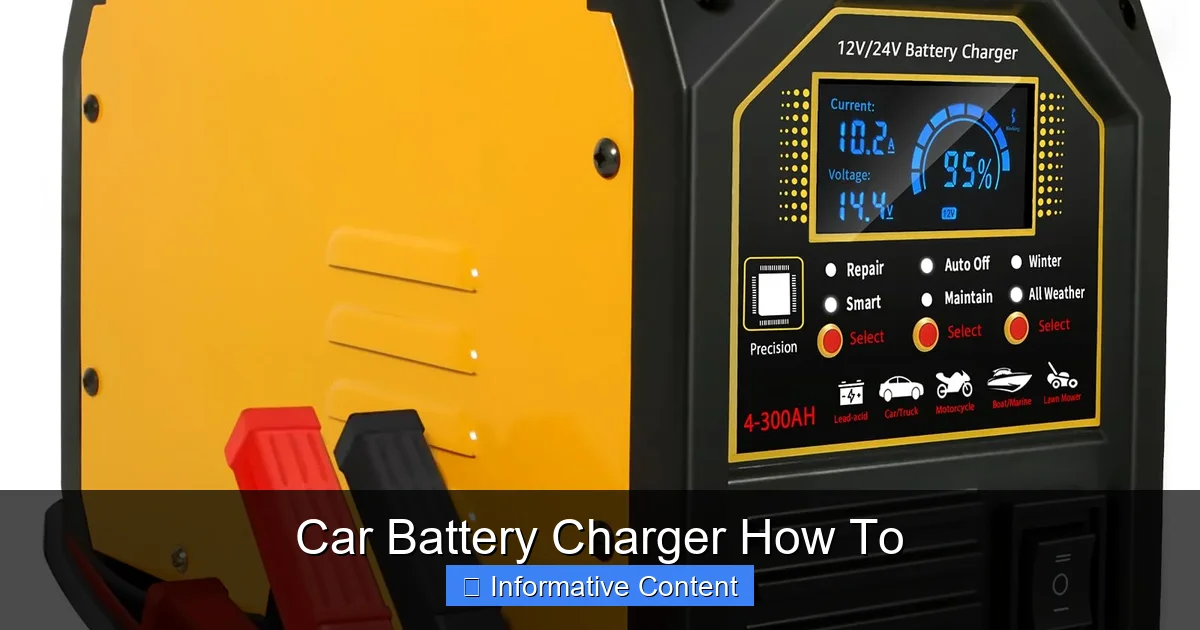
Visual guide about Car Battery Charger How To
Image source: m.media-amazon.com
Types of Car Batteries
Most modern cars use one of a few types of 12-volt lead-acid batteries:
- Standard Flooded (Wet Cell) Batteries: These are the most common type. They contain a liquid electrolyte that covers lead plates. They might require occasional maintenance, like checking and topping off electrolyte levels with distilled water.
- AGM (Absorbed Glass Mat) Batteries: AGM batteries use a special fiberglass mat to absorb the electrolyte, making them spill-proof and more resistant to vibration. They often last longer and perform better in extreme temperatures.
- Gel Cell Batteries: Similar to AGM, gel batteries use a silica gel to suspend the electrolyte. They are also spill-proof but generally charge at a lower voltage and amperage than flooded or AGM batteries.
It’s crucial to know your battery type because some chargers have specific settings for AGM or Gel batteries.
Types of Car Battery Chargers
When you’re looking for a car battery charger, you’ll encounter a few main categories:
- Trickle Chargers: These deliver a low, steady current (usually 1-2 amps) over a long period. They’re ideal for maintaining a battery’s charge on vehicles stored for months, preventing self-discharge. They don’t charge a dead battery quickly.
- Smart/Automatic Chargers: These are the most popular and recommended type. They monitor the battery’s condition and adjust the charging rate as needed, moving through different charging stages (desulfation, bulk, absorption, float). They automatically shut off or switch to a maintenance mode once the battery is full, preventing overcharging. Many have settings for different battery types (AGM, Gel) and battery sizes.
- Manual Chargers: Older models that provide a constant current until manually turned off. These require careful monitoring to prevent overcharging, which can severely damage a battery. They are generally not recommended for beginners.
- Battery Maintainers: Often smart chargers with a low amperage output (typically under 2 amps), specifically designed for long-term battery maintenance rather than rapid charging. They keep a fully charged battery topped off.
- Jump Starters (Portable Power Packs): While not strictly chargers, these portable devices provide a quick burst of power to start a dead car. Some also have charging capabilities or USB ports for devices.
When choosing a car battery charger, consider the voltage (12V for most cars), amperage (higher amps charge faster), and safety features like spark protection and reverse polarity protection. A smart charger is usually the best all-around choice for a comprehensive car battery charger how to guide.
Safety First: Preparing for a Seamless Charge
Working with car batteries involves electricity and corrosive chemicals, so safety is paramount. Never skip these preparation steps when learning car battery charger how to instructions.
Personal Protective Equipment (PPE)
Always wear:
- Safety Glasses: To protect your eyes from battery acid splashes or hydrogen gas explosions.
- Gloves: Acid-resistant gloves are ideal to protect your hands from battery acid.
Location, Location, Location
- Ventilation: Batteries produce hydrogen gas during charging, which is highly flammable and explosive. Always charge a battery in a well-ventilated area, away from sparks, flames, or anything that could ignite the gas. Never charge in an enclosed space like a small garage with the door shut.
- Stable Surface: Place the battery on a stable, non-conductive surface (like wood or plastic) on the ground, not on concrete directly, which can sometimes allow a small charge to leak.
- Away from Heat/Flame: Keep all sources of heat, sparks, or open flames far away from the charging battery.
Inspect the Battery
Before connecting your car battery charger, give the battery a quick once-over:
- Clean Terminals: Ensure the battery terminals are free of corrosion. A wire brush and a mixture of baking soda and water can clean them up. Corrosion can impede the charging process.
- Cracks or Leaks: Check for any cracks, bulges, or leaks on the battery casing. If you see any, do NOT attempt to charge it. A damaged battery could be dangerous and should be replaced.
- Fluid Levels (for flooded batteries): If you have a standard flooded battery with removable caps, check the electrolyte levels. If low, add distilled water (not tap water!) until the plates are covered. Do this before charging, as charging causes the fluid to expand.
By taking these crucial safety and preparation steps, you’re setting yourself up for a successful and risk-free car battery charger how to experience.
The Step-by-Step Guide: Car Battery Charger How To
Here’s the core of our “car battery charger how to” guide. Follow these steps carefully for safe and effective charging.
Step 1: Decide to Remove or Charge In-Car
You have two main options:
- Charging the battery while it’s still in the car: This is generally easier and doesn’t require disconnecting your car’s electrical system. However, ensure good ventilation and that the charger isn’t resting on engine components. Make sure the ignition is off and all accessories are unplugged.
- Removing the battery from the car: This is often recommended for safety, especially if you’re concerned about fumes or want to clean the battery thoroughly. If you remove it, make sure to disconnect the negative (black) terminal first, then the positive (red) terminal. When reinstalling, connect the positive first, then the negative.
For this guide, we’ll focus on charging the battery *in* the car, as it’s the most common scenario.
Step 2: Connecting Your Car Battery Charger Clamps
This is where precision matters. Always ensure the charger is UNPLUGGED from the wall outlet before connecting the clamps!
- Connect Positive (Red) Clamp: Locate the positive (+) terminal on your battery (it’s usually larger and marked with a plus sign, often with a red cover). Connect the red positive clamp from the charger securely to this terminal.
- Connect Negative (Black) Clamp: For a battery still in the car, connect the black negative clamp to a clean, unpainted metal part of the car’s frame or engine block. This acts as a ground and helps to prevent sparks near the battery itself. If you’ve removed the battery, connect the black negative clamp directly to the negative (-) terminal on the battery.
Why the frame for in-car charging? This minimizes the risk of a spark directly over the battery, which could ignite any hydrogen gas that might be escaping.
Step 3: Setting Up Your Car Battery Charger
Now that the clamps are connected, it’s time to power up the charger:
- Plug In the Charger: Once both clamps are securely attached, plug your car battery charger into a standard electrical outlet.
- Select Settings: If your charger has settings (e.g., battery type, charge rate like 2A, 10A, or a “maintain” mode), choose the appropriate ones. For a deeply discharged battery, a higher amp setting (e.g., 10A) will charge it faster, but ensure it’s suitable for your battery size. If unsure, a lower amp setting (e.g., 2A or 4A) is safer and gentler. Many smart chargers automatically detect battery type and condition.
- Start Charging: Turn on the charger. Many smart chargers will display the charging progress.
Step 4: Monitoring the Charging Process
Modern smart chargers do most of the work for you, but it’s good to understand the process:
- Indicators: Look for indicator lights or a display that shows the battery’s charge level or charging stage.
- Charge Time: How long does a car battery charger take? This depends on the battery’s state of discharge and the charger’s amperage. A completely dead battery might take 12-24 hours with a standard 10A charger. A battery maintainer will take much longer, effectively forever, as it maintains the charge. Most smart chargers indicate when the battery is fully charged.
- Ventilation Check: Periodically ensure the charging area remains well-ventilated.
Step 5: Disconnecting Your Car Battery Charger Safely
Once the battery is fully charged (or you’ve given it enough time to get a good start):
- Unplug the Charger: First and foremost, turn off and unplug the car battery charger from the wall outlet.
- Remove Negative (Black) Clamp: Disconnect the black negative clamp from the car’s frame or the battery’s negative terminal.
- Remove Positive (Red) Clamp: Disconnect the red positive clamp from the battery’s positive terminal.
This sequence prevents sparks as you remove the clamps.
Step 6: Reconnecting the Battery (If Removed)
If you removed the battery for charging, reinstall it. Connect the positive (+) cable first, then the negative (-) cable. Ensure connections are tight.
Congratulations! You’ve successfully completed the car battery charger how to process. Your car should now be ready to start!
Common Hurdles and Smart Solutions
Sometimes, simply connecting a car battery charger isn’t the whole story. Here are some common situations you might encounter and how to handle them.
Deeply Discharged Batteries
If your battery is completely dead (below 10.5 volts), some smart chargers might not recognize it initially. They have a safety feature that prevents them from charging a battery they can’t “see.”
- Solution: Try using a jump starter or another vehicle to briefly jump-start the battery. This can give it just enough voltage for your smart car battery charger to recognize it and begin a normal charging cycle. Some advanced chargers have a “repair” or “desulfation” mode for deeply discharged batteries.
Battery Won’t Hold a Charge
You charged the battery, it started the car, but a day later, it’s dead again. This often indicates a failing battery, or a parasitic draw on your car’s electrical system.
- Solution for Failing Battery: After several years of service, batteries simply wear out. If your battery is old (typically 3-5 years) and won’t hold a charge, it’s likely time for a replacement. A battery test at an auto parts store can confirm its health.
- Solution for Parasitic Draw: If the battery is relatively new, something might be draining it. This could be a faulty interior light, an aftermarket alarm system, or a dying alternator. This usually requires professional diagnosis.
Slow Charging or Charger Not Working
If your car battery charger seems to be taking an unusually long time or not charging at all:
- Check Connections: Ensure the clamps are firmly attached to clean terminals. Corrosion or loose connections can severely hinder charging.
- Check Charger Function: Verify the charger is plugged in and turned on, and that its settings are correct for your battery type.
- Battery Damage: A severely damaged internal cell in the battery could prevent it from accepting a charge.
Using a Maintainer vs. a Charger
A maintainer (often called a trickle charger) is fantastic for long-term storage, keeping a healthy battery at optimal charge. However, it’s not designed to revive a dead battery quickly. For a dead battery, you need a full-fledged car battery charger with higher amperage.
Understanding these scenarios will help you confidently navigate various “car battery charger how to” challenges and keep your vehicle’s power source reliable.
Beyond Charging: Maintaining Your Battery’s Health
Knowing “car battery charger how to” is just part of the equation. Regular maintenance can significantly extend your battery’s life and prevent those dreaded dead battery moments.
Keep it Clean
Corrosion on battery terminals (that fuzzy blue or white stuff) can prevent proper charging and starting. Regularly inspect and clean your terminals using a wire brush and a mixture of baking soda and water (1 tablespoon baking soda to 1 cup water). Rinse with plain water and dry thoroughly. Applying a thin layer of dielectric grease or a battery terminal protector can help prevent future corrosion.
Check Fluid Levels (for Flooded Batteries)
If you have a traditional flooded lead-acid battery with removable caps, check the electrolyte levels every few months. If they’re low, add distilled water (never tap water!) until the fluid covers the plates by about a quarter of an inch. Do this before charging, as charging can cause the fluid to expand.
Use a Battery Maintainer for Stored Vehicles
If your car, motorcycle, RV, or boat sits unused for weeks or months, a smart battery maintainer is your best friend. It will keep the battery topped off without overcharging, preventing the natural self-discharge that leads to dead batteries. This is a perfect example of proactive car battery charger how to for longevity.
Avoid Deep Discharges
Letting your battery go completely dead repeatedly is one of the fastest ways to shorten its lifespan. Each deep discharge cycle reduces the battery’s overall capacity. Try to address any starting issues or electrical drains promptly to prevent full discharge.
Test Your Battery Regularly
Most auto parts stores offer free battery testing. This can tell you your battery’s voltage, cold-cranking amps (CCA), and overall health, helping you identify a weakening battery before it leaves you stranded.
Mind the Temperature Extremes
Extreme heat can accelerate fluid evaporation and internal corrosion, while extreme cold reduces a battery’s cranking power. Parking in a garage or under cover can help mitigate these effects. In very cold climates, a battery warmer can be beneficial.
By integrating these simple maintenance habits into your routine, you’ll find yourself needing your car battery charger less often for emergencies and more for preventative care, ensuring your car is always ready to go.
Conclusion: Power Up Your Confidence
Learning “car battery charger how to” is more than just a repair skill; it’s a fundamental part of responsible vehicle ownership. You’ve now gained the knowledge to safely choose, connect, and use a car battery charger, troubleshoot common issues, and implement preventative maintenance strategies. With these insights, you can confidently tackle a dead battery, extend your battery’s life, and ensure your vehicle remains a reliable companion on the road. Drive on, knowing you’ve mastered the power within!
🎥 Related Video: Car Battery Charger 12/24V 400A Heavy Duty Battery Copper Wire Intelligent Full Automatic Pulse Repa
📺 Ferdinand Malapit
Please order tru lazada by clicking here https://c.lazada.com.ph/t/c.YrKsDA New Lazada user are entitled for discount and free …
Frequently Asked Questions
What are the benefits of using a smart car battery charger?
Smart car battery chargers offer several benefits, including automatic charge cycle management, preventing overcharging, and often having modes for different battery types (AGM, Gel). They simplify the charging process and enhance battery longevity by maintaining optimal charge levels.
How often should I charge my car battery if my car is parked for a long time?
If your car is parked for extended periods (weeks or months), it’s highly recommended to connect it to a battery maintainer or a smart car battery charger set to maintenance mode. This will prevent natural self-discharge and keep the battery healthy, ready for when you need it.
What are the signs that my car battery needs charging or replacement?
Common signs include slow engine cranking, dim headlights, flickering dashboard lights, and issues with electrical accessories. If your battery repeatedly dies or struggles to hold a charge even after charging, it’s likely nearing the end of its lifespan and should be tested or replaced.
Is it safe to charge a car battery in cold weather?
Yes, it is generally safe to charge a car battery in cold weather, but it might take longer for the battery to accept a charge at lower temperatures. Ensure the battery itself isn’t frozen, as attempting to charge a frozen battery can be dangerous. Warm the battery slightly if possible before charging.
Can I charge an AGM battery with a regular car battery charger?
You can charge an AGM battery with some regular car battery chargers, but it’s best to use a charger specifically designed for or with an AGM setting. AGM batteries require a slightly different charging voltage profile, and using an incompatible charger could reduce their lifespan or damage them.
What should I do if my car battery starts bubbling or hissing during charging?
A slight bubbling or hissing sound, indicating gas escaping, is normal during the charging process for lead-acid batteries. However, excessive bubbling or a strong rotten-egg smell (sulfur) indicates overcharging or an internal battery fault. Immediately disconnect the car battery charger and assess the battery for damage or replace it.