
10 Best Car Battery Charger Options for Fast, Safe, Reliable Charging

A dead battery rarely picks a convenient time to fail. Cold mornings, a boat left in storage over winter, a motorcycle that sat too long in the garage: all of these can leave a battery too weak to start the engine. The right charger depends on what you’re charging, how often, and whether you need a slow maintenance trickle or a fast jolt to get back on the road. For most drivers, a smart charger with automatic shutoff and multiple battery-type settings, like the NOCO GENIUS10, offers the best mix of safety and convenience. Riders, boat owners, and anyone with a fleet of seasonal vehicles will want to weigh amperage, portability, and battery chemistry compatibility before buying.
Best overall smart charger: NOCO GENIUS10
Best for fast charging on a budget: Schumacher SC1280
Best for battery repair with a digital display: TowerTop Smart Charger
Best for emergency engine starts: Schumacher SC1281
Best for small batteries and motorcycles: NOCO GENIUS5
Best portable jump starter (not a charger): NOCO Boost GB40
Best heavy-duty wheeled starter/charger: Schumacher SC1445
Best simple charger for everyday use: CRAFTSMAN CMXCESM258
Best compact charger for occasional use: Schumacher SP1297
Best low-cost trickle maintainer: MOTOPOWER MP00205A
NOCO GENIUS10

This charger suits owners who want one device that handles lead-acid and lithium batteries across cars, boats, and powersport vehicles.
Pros
- Works with 6V and 12V lead-acid and lithium (LiFePO4) batteries
- Adjusts charging automatically based on temperature
- Safe for indefinite connection as a maintainer
Cons
- 10-amp output charges slower than higher-amp models
- Costs more than basic trickle chargers
- No built-in engine start function
The GENIUS10 stands out for its versatility. It handles deeply discharged batteries down to 1 volt, and its Force Mode can attempt a charge on batteries at zero volts. The thermal sensor adjusts output automatically, which helps prevent overcharging in summer heat or undercharging in cold garages.
Its pulse charging feature targets sulfation, a common cause of early battery failure. Owners with multiple vehicle types, from a Harley to a riding mower, get one charger that fits nearly all of them. Choose this if reliability and battery-type flexibility outweigh charging speed.
Schumacher SC1280

This is a solid pick for drivers who want faster charging than a basic maintainer without paying for premium smart features.
Pros
- 15-amp charging rate is faster than most maintainers
- Reverse clamp protection guards against wiring mistakes
- Includes a built-in battery tester
Cons
- No lithium battery compatibility listed
- Shorter 1-year warranty than some competitors
- Basic digital interface compared to app-connected chargers
The SC1280 targets standard, AGM, gel, and deep-cycle batteries with a 15-amp charge mode and a 3-amp maintain setting. That combination charges a weak battery quickly, then tapers down to protect it from overcharging.
The reverse clamp protection is a practical safety feature: if the clamps get connected backward, the charger simply will not operate. Skip this one if a lithium-compatible charger is a requirement.
TowerTop Smart Charger
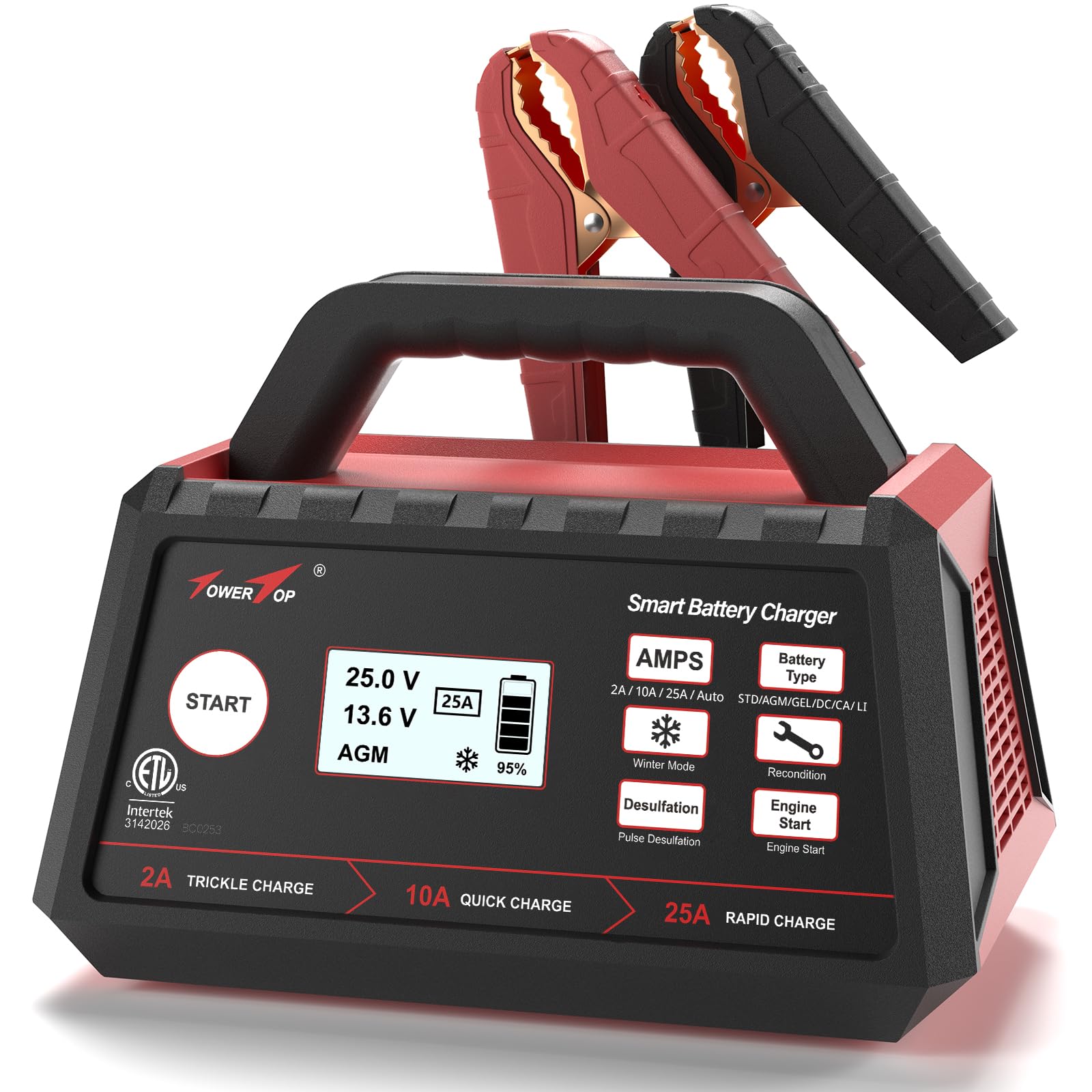
Buyers who want a detailed charging readout and a dedicated repair mode will find this model worth a look.
Pros
- Adjustable 2A/10A/25A current settings for different battery sizes
- HD screen shows real-time charging stage and status
- Includes a 100A engine start feature
Cons
- Only supports 12V batteries, not 6V
- Engine start current is lower than dedicated jump starters
- Bulkier than compact trickle chargers
The TowerTop charger runs an 8-stage charging process that includes desulfurization, analysis, and pulse maintenance. The screen makes it easy to see exactly what stage the charger is in, which takes the guesswork out of long charging sessions.
Its Winter Mode boosts voltage slightly to charge more thoroughly in cold weather. The 25-amp setting charges a 100Ah battery in a few hours, quicker than many similarly priced units. This suits owners who like data over indicator lights.
Schumacher SC1281
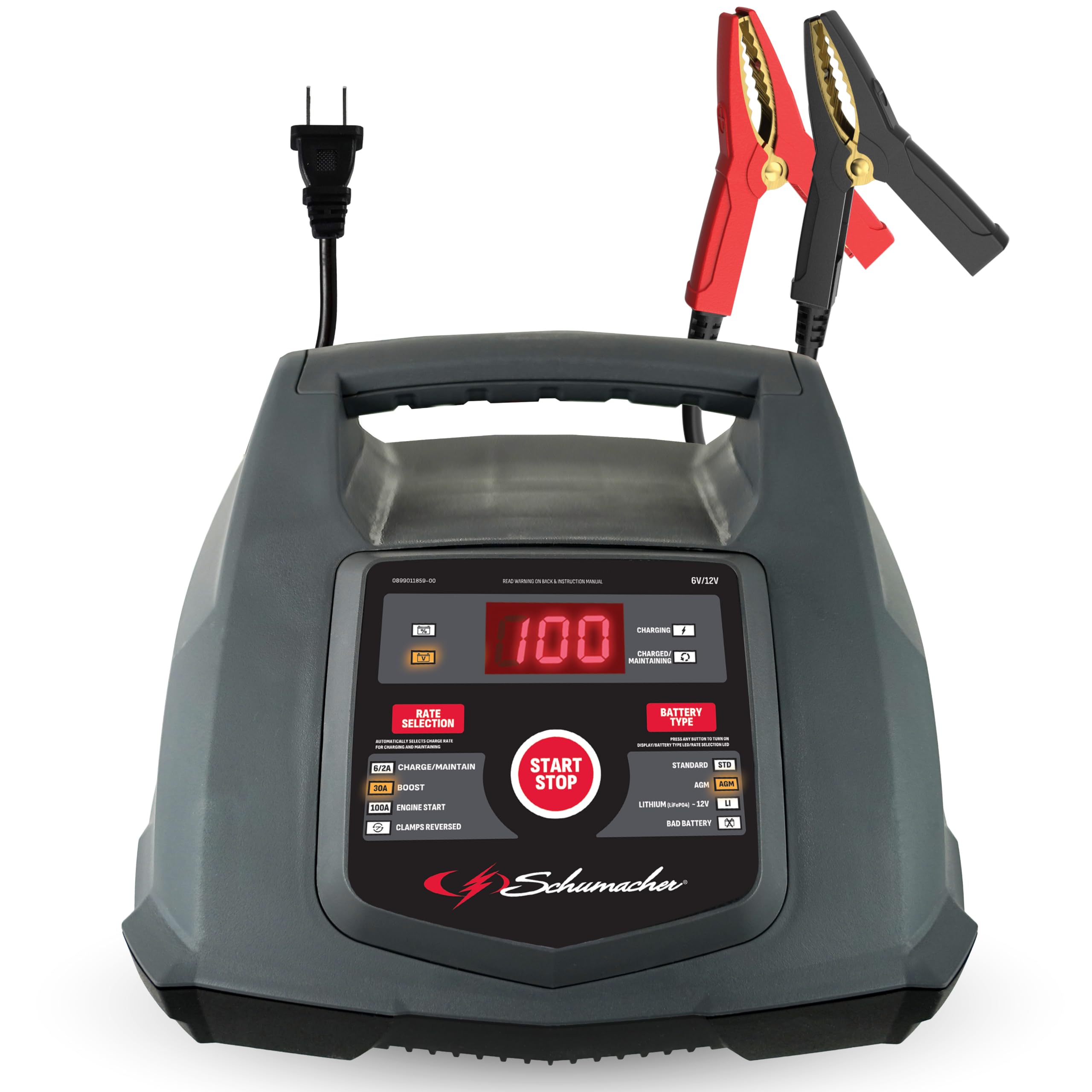
This model works best for owners who occasionally need to jump-start a dead battery, not just charge one slowly overnight.
Pros
- 100-amp engine start helps revive dead batteries fast
- Includes a battery and alternator tester
- Supports 6V, 12V, and lithium batteries
Cons
- Heavier than most chargers on this list at 12.7 pounds
- Some buyers report it starts in boost mode by default
- Only includes a US plug, which limits international use
The SC1281 combines a 100-amp engine starter with a smaller 2A to 6A charging range for maintenance. That mix serves drivers who want a backup starting option along with everyday trickle charging.
The built-in tester checks both battery and alternator health, useful for diagnosing why a battery keeps dying. Read the manual carefully before first use, since the boost function requires selecting the correct mode.
NOCO GENIUS5

This smaller sibling to the GENIUS10 fits owners with motorcycles, ATVs, or a single car who don’t need the higher amperage.
Pros
- Compact and lightweight at 1.6 pounds
- Same thermal compensation and Force Mode as the GENIUS10
- Works with lead-acid and lithium batteries up to 120Ah
Cons
- 5-amp charging takes longer on larger batteries
- Costs more than basic non-smart chargers
- Same single-port design limits it to one battery at a time
The GENIUS5 shares its bigger sibling’s precision charging and desulfation technology in a smaller frame. It suits batteries up to 120 amp-hours, covering most motorcycles, ATVs, and smaller cars.
Its compact size makes it easy to store in a garage or truck bed. Choose this over the GENIUS10 if the batteries being charged are smaller and charging speed matters less than portability.
NOCO Boost GB40

This is a jump starter, not a battery charger, and it belongs in the trunk for emergencies rather than on the garage shelf for maintenance.
Pros
- Delivers up to 20 jump starts per charge
- Doubles as a USB-C power bank and flashlight
- Compact at 2.4 pounds with a rugged, water-resistant design
Cons
- Does not charge or maintain batteries over time
- Rated only for engines up to 6.0L gas or 3.0L diesel
- Requires its own recharging after repeated uses
The GB40 solves a different problem than the chargers above it. It delivers a burst of 1000 amps to start a dead battery instantly, rather than slowly restoring the battery’s charge over hours.
Keep this in a glovebox or trunk for roadside emergencies. Pair it with a maintainer like the GENIUS5 for long-term battery health, since the GB40 will not keep a battery topped off in storage.
Schumacher SC1445
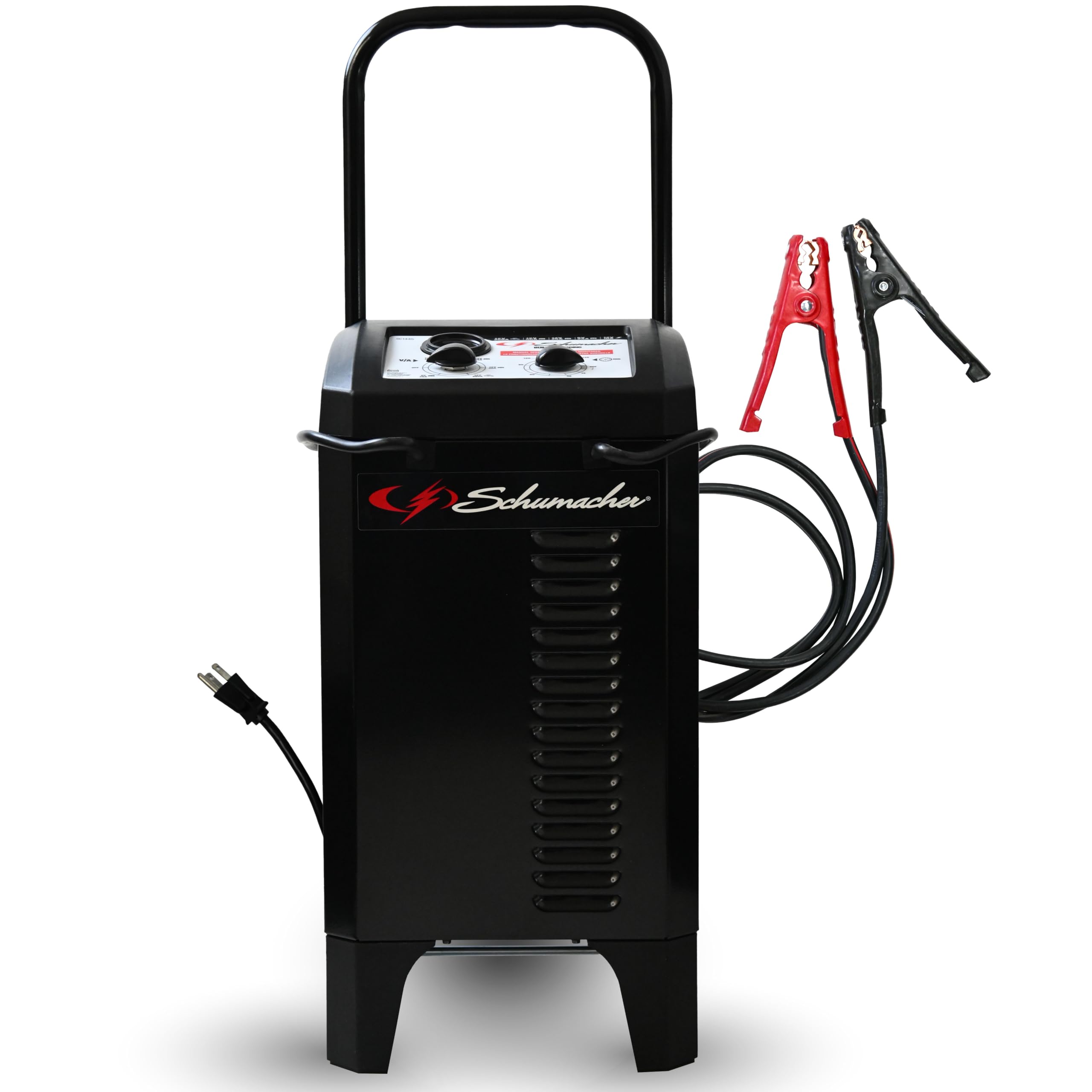
This wheeled unit suits garages and shops that need serious cranking power for trucks, RVs, or farm equipment.
Pros
- 250-amp engine start handles large engines
- Wheeled steel case makes it easy to move around a shop
- Manual timer gives full control over charge duration
Cons
- Manual operation requires more attention than automatic chargers
- Weighs nearly 29 pounds
- No automatic shutoff, so timing must be set correctly
The SC1445 puts control in the user’s hands with a 135-minute manual timer instead of automatic shutoff. That works well for someone who understands their battery’s charge needs, but it also means overcharging is possible if the timer is set wrong.
Its 250-amp start and 50-amp boost charge are built for trucks, RVs, and farm equipment with large batteries. Skip this if a simpler automatic charger fits the job better.
CRAFTSMAN CMXCESM258
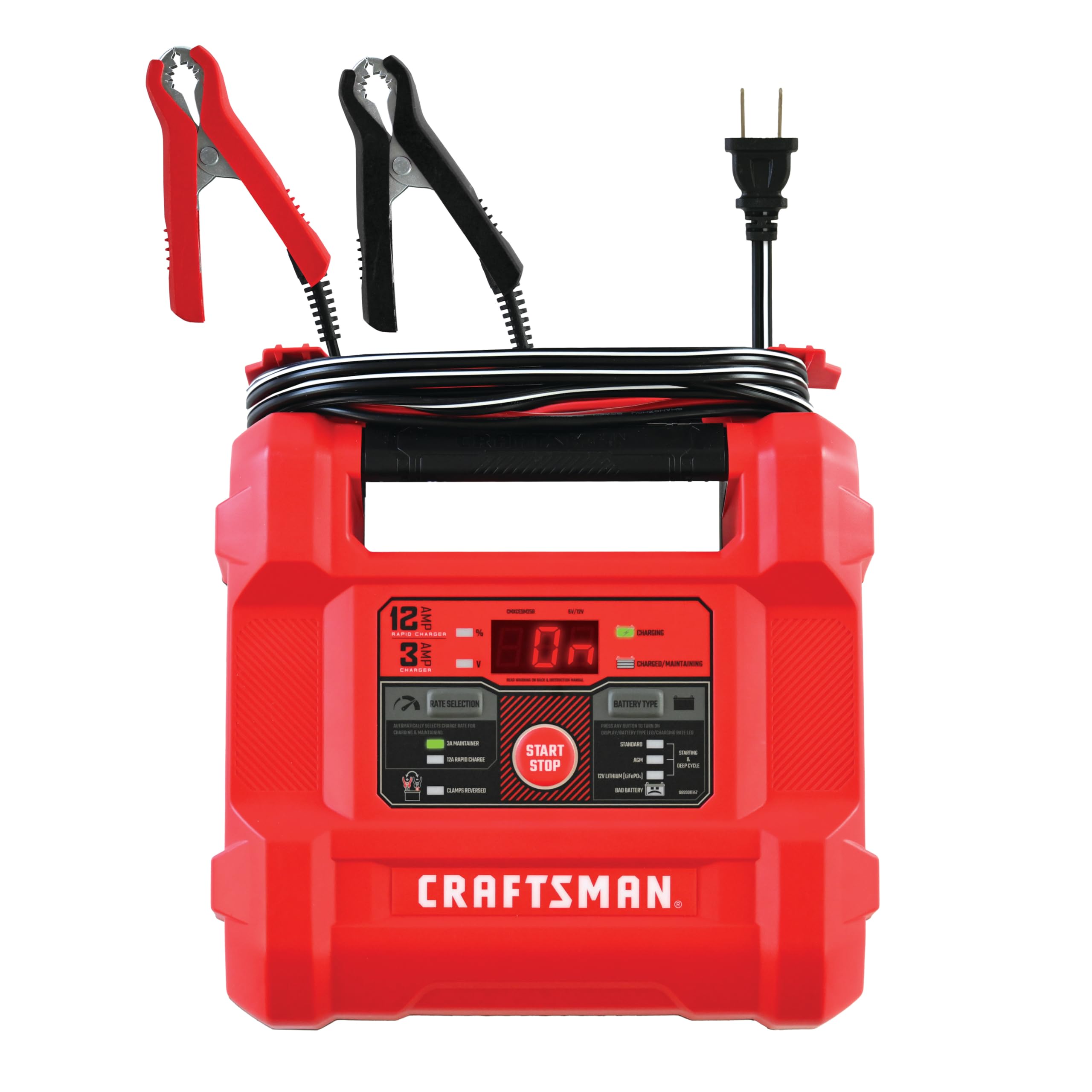
This charger works well for drivers who want a no-frills, fully automatic charger with lithium compatibility at a fair price.
Pros
- Supports standard, AGM, deep-cycle, and lithium batteries
- Digital display with bad battery indication
- Reverse hook-up protection built in
Cons
- 12-amp charging is moderate, not fast
- Shorter warranty than some Schumacher models
- Limited to 6V/12V, no higher-voltage support
The CMXCESM258 automatically detects battery voltage and adjusts its charge rate, making it simple for less experienced users. Its 12-foot combined reach from the power cord and battery cables adds flexibility in tight garage spaces.
The bad battery indicator helps catch a battery that will not hold a charge before wasting hours on it. This suits buyers who want dependable, straightforward operation over advanced features.
Schumacher SP1297

This compact 3-amp charger fits owners who need a dependable maintainer for a single vehicle rather than fast charging power.
Pros
- Compatible with standard, AGM, gel, and lithium batteries
- Folding hook attachment for safe placement during use
- Includes both clamp and ring terminal connections
Cons
- 3-amp output charges slowly on larger batteries
- 12V only, no 6V support
- Best suited for maintenance, not reviving deeply dead batteries
The SP1297 focuses on steady, safe maintenance rather than rapid charging. Its scrolling digital display walks users through setup and flags errors clearly, which helps first-time buyers avoid mistakes.
The ring terminal option lets owners leave a permanent connection point on a battery for quick hookups later. This model works best for seasonal vehicles that need occasional top-offs, not a daily-driver battery that needs a fast recharge.
MOTOPOWER MP00205A

This is the simplest and most affordable option here, built for basic trickle charging and long-term maintenance.
Pros
- Small, lightweight design at under a pound
- Automatic desulfation with pulse current technology
- Spark-proof connection for safer setup
Cons
- Very low 800mA output charges slowly
- Not suited for reviving a deeply drained battery
- Lacks a digital display for charge status
The MP00205A charges at a fraction of the amperage of the other chargers on this list. That low output makes it gentle on batteries left in long-term storage, like a boat or classic car sitting through winter.
Its 24-hour timer switches the unit into maintenance mode once the battery reaches a safe voltage, preventing overcharging. Choose this for light maintenance duty, not as a primary charger for a frequently used vehicle.
Buying Guide
Match Amperage to Your Charging Needs
Amperage determines how fast a charger works. Low-amp chargers (2A to 5A) work well for maintenance and small batteries like motorcycles, but they take much longer to charge a fully dead battery. Higher-amp chargers (10A to 25A) recharge larger batteries faster, which suits daily drivers and trucks.
| Amperage Range | Best Use Case | Approximate Charge Time (Dead 50Ah Battery) |
|---|---|---|
| Under 1A | Long-term trickle maintenance | Several days |
| 2A-5A | Motorcycles, small batteries, maintenance | 10-20 hours |
| 10A-15A | Cars, SUVs, general use | 4-8 hours |
| 25A+ | Larger batteries, faster turnaround | 2-4 hours |
Check Battery Type Compatibility
Not every charger works with every battery chemistry. Lead-acid batteries (flooded, AGM, gel) need different charging profiles than lithium (LiFePO4) batteries. Charging the wrong type with the wrong settings can damage the battery or shorten its life. Confirm the charger explicitly lists support for the battery chemistry in the vehicle before buying.
Decide Between Automatic and Manual Control
Automatic chargers monitor voltage and adjust or shut off charging on their own. They suit most owners because they reduce the risk of overcharging. Manual chargers, often paired with a timer, give experienced users more control but require attention to avoid damaging the battery.
Consider Safety Features
Look for reverse polarity protection, spark-proof clamps, and overcharge protection. These features prevent damage to the charger, the battery, and the person connecting it. A charger that cannot operate when clamps are reversed adds a meaningful layer of safety for less experienced users.
Separate Chargers From Jump Starters
A battery charger restores charge over time. A jump starter delivers a quick burst of power to start an engine immediately, but it does not charge the battery. Owners who need both should plan to buy separately, since few devices do both jobs well.
Factor In Portability and Storage
Wheeled, high-output units serve shops and heavy-duty use but take up more space. Compact chargers fit better in a trunk, closet, or small garage. Match the size and weight to where the charger will actually be stored and used.
FAQs
What size charger do I need for a car battery? A 10A to 15A charger works well for most car batteries. It charges fast enough for daily use without being overkill for a standard 12V battery.
Can I leave a battery charger connected all the time? Smart chargers and maintainers with automatic shutoff are safe to leave connected long-term. Basic manual chargers without shutoff features should not be left unattended for extended periods.
Do I need a special charger for an AGM battery? AGM batteries need a charger that specifically lists AGM compatibility. Many smart chargers, including several in this roundup, support AGM alongside standard flooded and gel batteries.
Can a regular charger work on a lithium (LiFePO4) battery? Only chargers that explicitly list lithium or LiFePO4 compatibility should be used on these batteries. Charging lithium batteries with a lead-acid-only charger can cause damage.
How long does it take to charge a dead car battery? Charging time depends on amperage and battery size. A 10A charger typically takes several hours to fully charge a dead 12V car battery, while lower-amp trickle chargers can take a day or more.
Is a jump starter the same as a battery charger? No. A jump starter provides an instant burst of power to start the engine. A battery charger slowly restores the battery’s stored charge over time. Both serve different purposes.
What does a desulfator do? A desulfator uses pulse charging to break down sulfation buildup on battery plates. This can restore some lost performance in older or neglected batteries, though it cannot repair batteries that are severely damaged.
Can I use a car battery charger on a motorcycle or boat battery? Yes, as long as the charger supports the battery’s voltage (6V or 12V) and chemistry. Many chargers on this list are rated for cars, motorcycles, boats, and other powersport batteries.
Conclusion
Picking the right charger comes down to matching amperage, battery chemistry, and features to the vehicles being maintained. Drivers with a single car and a battery that mostly needs occasional maintenance do well with a compact smart charger like the NOCO GENIUS5 or the Schumacher SP1297. Owners juggling multiple vehicle types, especially with lithium batteries in the mix, benefit from a flexible unit like the NOCO GENIUS10.
Anyone who needs a fast emergency start, rather than a slow overnight charge, should look at a jump starter like the NOCO Boost GB40 instead of a standard charger. Shops and heavy-duty users with large trucks or farm equipment get more value from a high-output wheeled unit like the Schumacher SC1445. Check the battery type, voltage, and amp rating on the vehicle’s existing battery before buying to avoid mismatched equipment.
