A NOCO Boost Plus jump starter isn’t designed to “charge” a car battery in the traditional sense; rather, it provides a powerful, quick burst of energy to jump-start a dead battery, allowing your car’s alternator to then recharge it. The time needed for this jump-start is usually just a few minutes, making it a fast solution for getting your vehicle running again.
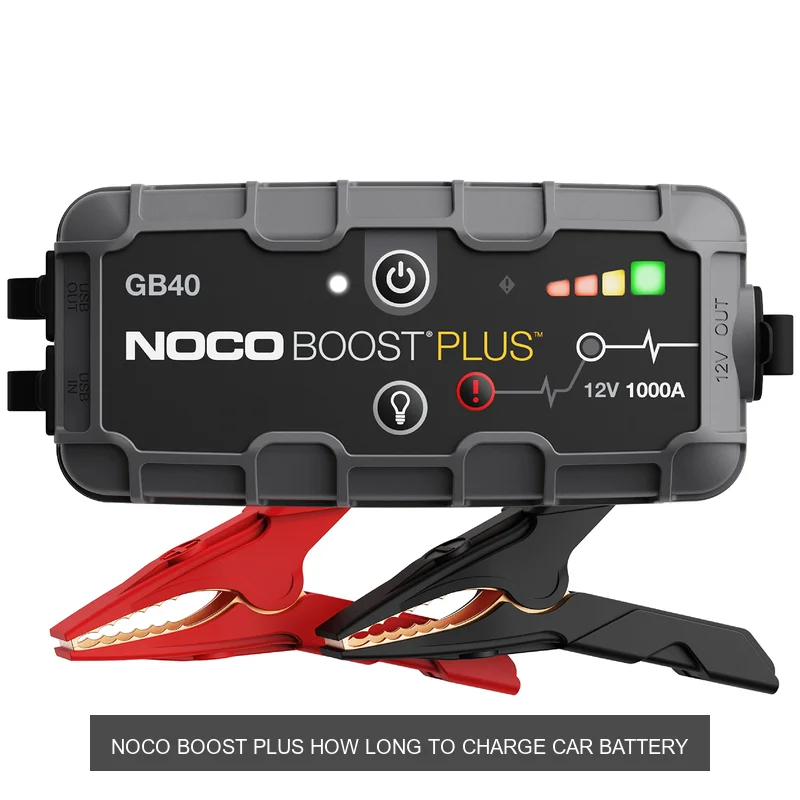
Image source: Ssl-images-amazon
📋 Table of Contents
- 🔹 Understanding the NOCO Boost Plus and Car Battery Charging
- 🔹 What is NOCO Boost Plus and How Does it Work?
- 🔹 Why is Jump-Starting Different from Charging?
- 🔹 How Long Does it Take to Jump-Start with a NOCO Boost Plus?
- 🔹 What Happens After the Boost? (Recharging Your Car Battery)
- 🔹 Benefits of Using a Portable Jump Starter
- 🔹 Common Mistakes to Avoid When Jump-Starting
- 🔹 Practical Tips for Using Your NOCO Boost Plus
- 🔹 Frequently Asked Questions (FAQ)
- 🔹 Conclusion
Understanding the NOCO Boost Plus and Car Battery Charging
When your car battery dies, it’s a real hassle. You might immediately think about “charging” it, but there’s a key difference between jump-starting and fully recharging. The NOCO Boost Plus is a very popular tool for dealing with a dead car battery, but its main job isn’t to fully charge it over a long period. Instead, it’s a powerful jump starter designed to give your car’s battery enough juice for one crucial task: starting your engine.
This article will explain exactly what a NOCO Boost Plus does, how it works, and how long you should expect to use it to get your car running. We’ll also cover what happens after the jump-start and how your car’s electrical system actually recharges the battery.
What is NOCO Boost Plus and How Does it Work?
A NOCO Boost Plus is a portable, compact, and powerful lithium-ion jump starter. Think of it as a super-sized power bank specifically designed for vehicles. It’s meant to deliver a high burst of current, often hundreds or even thousands of amps, in a very short amount of time. This intense jolt is what’s needed to kick-start a completely dead car battery.
Here’s a simplified breakdown of how it works:
- Internal Battery: The Boost Plus itself has a strong internal lithium-ion battery that stores a lot of energy. You charge this internal battery from a wall outlet or car charger beforehand.
- Connection: You connect the clamps of the Boost Plus to your car’s battery terminals – positive to positive, negative to negative.
- Power Delivery: When activated, the Boost Plus safely delivers a massive surge of power to your car’s drained battery.
- Engine Start: This surge provides the necessary power to turn the starter motor, allowing your engine to crank and come to life.
It’s important to remember that this process is about providing enough power to start the engine, not about refilling the car battery’s entire capacity.
Why is Jump-Starting Different from Charging?
This is a crucial distinction. Let’s break it down:
- Jump-Starting: This is a rapid, temporary solution. Its sole purpose is to provide enough power to crank the engine and get it running. It doesn’t put a significant charge back into your car’s battery. Think of it like giving someone a quick push to get them started, not giving them a full meal.
- Charging: This is a slower, more prolonged process. A dedicated battery charger uses a lower, steady current to gradually replenish the car battery’s stored energy over several hours. This method is designed to restore the battery to a full or near-full charge.
A NOCO Boost Plus is firmly in the “jump-starting” category. It’s built for speed and immediate results, not for long-term battery restoration.
How Long Does it Take to Jump-Start with a NOCO Boost Plus?
The beauty of the NOCO Boost Plus is its speed. When dealing with a dead car battery, the actual time you’ll spend using the Boost Plus to get your car started is typically very short.
Here’s what to expect regarding noco boost plus how long to charge car battery for a jump-start:
- Preparation Time: It takes a minute or two to safely connect the clamps to your car battery terminals.
- Initial Connection Time: Once connected, you might wait a few seconds (perhaps 15-30 seconds) for the Boost Plus to “analyze” the battery and prepare for the boost. Some models have a “boost” button you press.
- Cranking Time: When you turn the ignition, the engine should crank. If it starts, great! If not, you might try a second or third crank. Each crank attempt only lasts a few seconds.
- Successful Start: Once the engine starts, you should disconnect the Boost Plus immediately, starting with the negative clamp, then the positive.
So, from connecting the clamps to disconnecting after a successful start, the entire process usually takes anywhere from 1 to 5 minutes. You definitely don’t leave the NOCO Boost Plus connected for extended periods like you would a traditional battery charger.
If your car doesn’t start after 3-5 attempts or a few minutes of trying, it’s likely there’s a bigger issue than just a dead battery, and keeping the Boost Plus connected won’t help.
What Happens After the Boost? (Recharging Your Car Battery)
Once your engine is running thanks to the NOCO Boost Plus, the next step is to let your car’s own charging system take over. Your car’s alternator is responsible for generating electricity to power the vehicle’s electrical systems and, crucially, to recharge the car battery while the engine is running.
Here’s how to ensure your battery gets properly recharged:
- Drive for a While: After jump-starting, drive your car for at least 30 minutes, and ideally for an hour or more, at a moderate speed. This gives the alternator enough time and consistent operation to put a meaningful charge back into the battery.
- Avoid Short Trips: Short drives might not be enough to fully replenish the battery, especially if it was deeply discharged.
- Limit Accessories: For the first part of your drive, try to minimize the use of heavy electrical accessories like the air conditioner, heated seats, or high-beam headlights. This allows more power to be directed to recharging the battery.
- Check Battery Health: If your battery dies again soon after, it might indicate an aging battery that needs replacing or an issue with your car’s charging system (like a failing alternator).
The NOCO Boost Plus simply gives your car the kick it needs to begin this self-recharging cycle.
Benefits of Using a Portable Jump Starter
Understanding noco boost plus how long to charge car battery use means appreciating its distinct advantages:
- Convenience: You don’t need another car or jumper cables. You can jump-start your vehicle by yourself.
- Portability: These devices are compact and easy to store in your trunk, glove compartment, or even a large bag.
- Speed: As discussed, the jump-starting process is incredibly fast, getting you back on the road quickly.
- Safety Features: Modern jump starters like the Boost Plus often come with built-in safety features such as spark-proof technology, reverse polarity protection, and overcharge protection, making them safer to use than traditional jumper cables.
- Versatility: Many models also double as power banks for charging phones, tablets, or other USB devices, adding extra utility.
Common Mistakes to Avoid When Jump-Starting
Even with advanced safety features, it’s good to be aware of potential pitfalls:
- Connecting Incorrectly: Always ensure you connect positive (+) to positive (+) and negative (-) to negative (-). Reverse polarity can cause damage to your vehicle’s electronics or the jump starter.
- Not Charging the Boost Plus: A jump starter is only useful if its own internal battery is charged. Always keep it charged and ready.
- Leaving it Connected Too Long: As we’ve established, a NOCO Boost Plus isn’t a charger. Leaving it connected for an extended period won’t “charge” your car battery and could potentially overstress the unit.
- Ignoring Underlying Issues: If your battery keeps dying, a jump starter is just a temporary fix. It’s crucial to address the root cause, whether it’s an old battery, a parasitic drain, or an alternator problem.
- Using it on Severely Damaged Batteries: If your car battery is visibly damaged, leaking, or extremely old and sulphated, a jump start might not work or could be risky.
Practical Tips for Using Your NOCO Boost Plus
To get the most out of your NOCO Boost Plus and ensure its longevity, here are some practical tips:
- Read the Manual: Each Boost Plus model might have slightly different features or instructions. Always consult your specific model’s manual first.
- Keep it Charged: Regularly check the charge level of your Boost Plus. It’s a good habit to recharge it every few months, even if you haven’t used it. This ensures it’s ready when you need it.
- Store Properly: Store the unit in a cool, dry place. Extreme temperatures can affect battery life.
- Clean Terminals: Before connecting, if you notice corrosion on your car battery terminals, try to clean them gently with a wire brush for a better connection.
- Ensure a Good Connection: Make sure the clamps have a firm, direct connection to the battery terminals. A loose connection can reduce effectiveness.
- Allow for Cool Down: If you attempt multiple jump starts and the unit gets warm, give it a few minutes to cool down between attempts.
Frequently Asked Questions (FAQ)
Can a NOCO Boost Plus fully charge a car battery?
No, a NOCO Boost Plus cannot fully charge a car battery. It’s designed to provide a quick, high-current burst to jump-start a dead battery, not to slowly and fully recharge it. Your car’s alternator will recharge the battery once the engine is running.
How long should I leave my car running after a jump start?
After a successful jump start, you should drive your car for at least 30 minutes, and ideally an hour or more, to give the alternator enough time to put a significant charge back into the car battery. Avoid turning the engine off immediately after starting.
What if my car doesn’t start after using the NOCO Boost Plus?
If your car doesn’t start after 3-5 attempts with the NOCO Boost Plus, there might be a more serious issue than just a dead battery. It could be a faulty starter motor, a problem with the alternator, or a severely damaged car battery that needs replacement. In this case, it’s best to seek professional mechanical assistance.
Is it safe to leave a NOCO Boost Plus connected while driving?
Absolutely not. The NOCO Boost Plus should be disconnected from the car battery immediately after the engine starts. It is not designed to be left connected or to charge the battery while the car is running.
How often should I charge my NOCO Boost Plus itself?
It’s a good practice to charge your NOCO Boost Plus every 2-3 months, even if it hasn’t been used. This ensures its internal battery remains healthy and ready to deliver power when you need it most. Always refer to your specific model’s user manual for precise recommendations.
Conclusion
Understanding noco boost plus how long to charge car battery is key to using this handy device effectively. Remember, the NOCO Boost Plus is a jump starter, not a long-term battery charger. Its job is to provide a quick, powerful burst of energy to get your engine cranking, typically within 1 to 5 minutes of connection. Once your car is running, your vehicle’s alternator takes over the task of recharging the battery over the course of your drive.
By using the NOCO Boost Plus correctly and understanding its purpose, you can quickly overcome the frustration of a dead battery and ensure you’re back on the road safely and efficiently. Always keep your Boost Plus charged, connect it properly, and let your car’s system do the rest of the charging work.