
To tell when a car battery is fully charged, you generally need to check its voltage with a multimeter or its specific gravity with a hydrometer. A healthy, fully charged 12-volt lead-acid battery will typically show a voltage of 12.6 to 12.8 volts when at rest and have a specific gravity of around 1.265 to 1.299 in each cell.
Ever wonder if your car battery is truly topped up and ready for anything? Understanding how to accurately determine a car battery’s full charge is crucial for its longevity and your vehicle’s reliability. This guide will walk you through the key methods, helping you confidently assess your battery’s state and keep your car running smoothly.
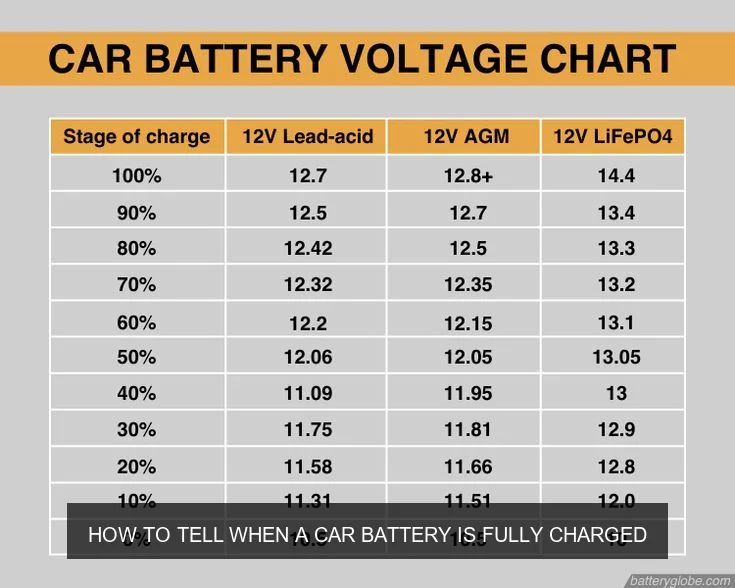
Image source: Pinimg
📋 Table of Contents
- 🔹 Getting Started: Why Knowing Your Battery’s Charge Matters
- 🔹 What Does “Fully Charged” Even Mean for a Car Battery?
- 🔹 How to Tell When a Car Battery is Fully Charged: The Key Methods
- 🔹 Understanding Battery Charge Levels: A Quick Reference
- 🔹 Why Ensuring a Full Charge Is So Important
- 🔹 Common Mistakes to Avoid When Checking Your Car Battery
- 🔹 Practical Tips for Maintaining Optimal Battery Charge
- 🔹 Frequently Asked Questions (FAQ)
- 🔹 Conclusion: Keep Your Battery Ready
Getting Started: Why Knowing Your Battery’s Charge Matters
Your car’s battery is its heart, supplying the necessary power to start the engine and run all the electrical components when the engine isn’t running. But how can you really know if it’s operating at its best? This article is your straightforward guide to understanding how to tell when a car battery is fully charged. We’ll explore practical methods and helpful indicators so you can feel confident about your vehicle’s readiness.
Having a fully charged battery isn’t just about avoiding a dreaded no-start situation. It’s also about extending your battery’s life and ensuring your car’s electrical system runs smoothly. Let’s dive in and demystify the process.
What Does “Fully Charged” Even Mean for a Car Battery?
When we talk about a car battery being “fully charged,” we’re generally referring to a 12-volt lead-acid battery that has reached its maximum electrical potential and can deliver its rated capacity. This isn’t just about getting the car to start; it’s about the battery being in a healthy state where it can hold a consistent charge.
- Voltage: For a 12-volt lead-acid battery (the most common type in cars), a full charge typically means a resting voltage between 12.6 to 12.8 volts. This reading should be taken after the battery has rested for several hours (ideally overnight) without any charging or discharging activity.
- Specific Gravity: For batteries with removable caps, another key indicator is the specific gravity of the electrolyte (the acid-water mixture inside). A fully charged battery will have a specific gravity of around 1.265 to 1.299 across all cells. This indicates a high concentration of sulfuric acid, which is essential for the chemical reaction that produces electricity.
Understanding these two core measurements is fundamental to accurately assessing your battery’s charge level.
How to Tell When a Car Battery is Fully Charged: The Key Methods
There are a few reliable ways to check your car battery’s charge, ranging from simple to more precise. Let’s look at the most common and effective methods.
Method 1: Using a Voltmeter or Multimeter
This is probably the easiest and most common way to check your battery’s state of charge. A voltmeter (or a multimeter set to DC voltage) measures the electrical potential across the battery terminals.
How it works:
- Ensure the battery has rested: For an accurate reading, the battery needs to be at rest. This means the car should be turned off, and ideally, have been off for at least a few hours (or overnight). This allows the “surface charge” to dissipate, giving you a true reading of the battery’s internal chemical state.
- Safety first: Always wear appropriate safety gear, like gloves and eye protection.
- Connect the voltmeter: Touch the red (positive) probe to the positive (+) battery terminal and the black (negative) probe to the negative (-) battery terminal. Make sure you get a good, solid connection.
- Read the display: The voltmeter will show a reading in volts.
What the reading means:
- 12.6 to 12.8 volts: This indicates a healthy, fully charged battery.
- 12.4 volts: Approximately 75% charged.
- 12.2 volts: Approximately 50% charged.
- Below 12.0 volts: The battery is significantly discharged and needs immediate attention.
Method 2: Checking Specific Gravity with a Hydrometer
This method gives you the most accurate picture of your battery’s state of charge, as it measures the density of the electrolyte in each cell. However, it only works for conventional “flooded” lead-acid batteries that have removable cell caps, not sealed or maintenance-free types.
How it works:
- Safety is paramount: Wear eye protection, gloves, and old clothes. Battery acid is corrosive.
- Access the cells: Carefully remove the cell caps on top of the battery.
- Draw a sample: Squeeze the hydrometer bulb, insert its tube into a cell, and release the bulb to draw enough electrolyte to make the float rise.
- Read the float: The level at which the float settles indicates the specific gravity. Note this reading.
- Return the electrolyte: Carefully squeeze the bulb again to return the electrolyte to the cell.
- Repeat for all cells: Do this for each cell of the battery.
What the reading means:
- 1.265 to 1.299: This range, often referred to as 1.270 or 1.275, means the cell is fully charged.
- Differences between cells: All cells should be within 0.050 of each other. A significant difference (more than 0.050) between cells can indicate a weak or failing battery cell, even if the overall voltage seems okay.
Important Note: Specific gravity readings are affected by temperature. Hydrometers often come with temperature correction charts or built-in thermometers. Always adjust your reading based on the actual electrolyte temperature for the most accurate result.
Method 3: Advanced Battery Testers
Modern battery testers, often called “conductance testers,” provide a quick and comprehensive analysis of your battery’s health, including its state of charge. These devices can often measure not just voltage but also cold cranking amps (CCA) and overall battery health without needing to remove cell caps.
How they work:
- You connect the tester to the battery terminals.
- The tester sends a small AC signal through the battery and measures its response.
- It then provides a digital readout of voltage, estimated charge percentage, and sometimes a “good/bad” or “replace” indicator.
These testers are very convenient and give a good overall picture, but for the absolute most precise charge level in a flooded battery, a hydrometer is still king.
Method 4: Visual Cues and Common Sense
While not precise, some visual checks can give you general clues about your battery’s state and health:
- Starting power: Does your car crank strongly and start quickly? If it hesitates or cranks slowly, your battery might not be fully charged or could be weakening.
- Lights and electronics: Are your headlights bright and consistent? Is the interior lighting strong? Dim lights or flickering electronics can be a sign of a low battery.
- Battery condition: Look for any physical damage, bulging, excessive corrosion on terminals, or low fluid levels (if visible) inside the battery casing. These are signs of issues that might prevent a full charge or indicate a failing battery.
Remember, these visual cues are just indicators, not definitive proof of a full charge. Always back them up with a proper measurement using a voltmeter or hydrometer for accuracy.
Understanding Battery Charge Levels: A Quick Reference
This table provides a helpful overview of how voltage and specific gravity correlate to a typical 12-volt car battery’s state of charge.
| State of Charge | Resting Voltage (12V Battery) | Specific Gravity (Per Cell) |
|---|---|---|
| 100% (Fully Charged) | 12.6 – 12.8V | 1.265 – 1.299 |
| 75% | 12.4V | 1.230 |
| 50% | 12.2V | 1.190 |
| 25% | 12.0V | 1.150 |
| Discharged | Below 12.0V | Below 1.120 |
Why Ensuring a Full Charge Is So Important
Knowing how to tell when a car battery is fully charged and then keeping it that way offers several significant benefits for both your car and your wallet:
- Reliable Starting: This is the most obvious benefit. A fully charged battery delivers optimal cranking power, ensuring your engine starts reliably every time, even in cold weather.
- Extended Battery Lifespan: Constantly running with a partially discharged battery can lead to sulfation, a process where lead sulfate crystals build up on the battery plates. This reduces the battery’s capacity and shortens its overall life. Keeping it fully charged helps prevent this.
- Optimal Electrical System Performance: Your battery doesn’t just start the car; it also acts as a voltage stabilizer for the entire electrical system. A weak battery can cause stress on other components, like the alternator, which has to work harder to compensate.
- Prevents Unexpected Breakdowns: A discharged battery is a common cause of roadside assistance calls. Regular checks and maintaining a full charge can save you time, money, and hassle.
- Better Fuel Efficiency (Indirectly): While not a direct impact, a struggling alternator trying to charge a depleted battery can put an extra load on the engine, subtly affecting fuel economy.
Common Mistakes to Avoid When Checking Your Car Battery
Even with the right tools, it’s easy to get an inaccurate reading or make a mistake. Here are some common pitfalls to steer clear of:
- Checking Immediately After Driving or Charging: As mentioned, surface charge can give a misleadingly high voltage reading. Always let the battery rest for at least 3-4 hours (and ideally 12-24 hours) after driving or charging before taking a measurement.
- Not Wearing Safety Gear: Battery acid is dangerous. Always protect your eyes and hands, especially when using a hydrometer.
- Incorrect Voltmeter Connection: Ensure you connect the positive probe to the positive terminal and the negative probe to the negative terminal. Reversing polarity won’t damage the battery, but it will give you a negative reading or no reading at all.
- Assuming a Good Voltage Means a Good Battery: A battery can show a decent resting voltage but still be weak or incapable of delivering enough cranking amps. This is where advanced testers or a load test become useful.
- Ignoring Differences in Specific Gravity: If one cell shows a significantly lower specific gravity than others, it indicates an internal problem with that cell, even if the overall voltage is high.
- Not Accounting for Temperature: Specific gravity readings are temperature-dependent. Without temperature correction, your hydrometer reading might not be accurate.
Practical Tips for Maintaining Optimal Battery Charge
Beyond knowing how to check your battery’s charge, here’s how to help it stay fully charged and healthy:
- Drive Regularly: Short trips might not allow your alternator enough time to fully recharge the battery. If you mostly do short drives, consider taking a longer drive (at least 30 minutes) regularly.
- Use a Smart Charger for Stored Vehicles: If you store your car for extended periods, a “trickle” or “smart” charger can maintain an optimal charge without overcharging.
- Keep Terminals Clean: Corroded terminals increase resistance, making it harder for the battery to charge and discharge efficiently. Clean them regularly with a wire brush and a baking soda solution.
- Check Fluid Levels (if applicable): For flooded batteries, periodically check that the electrolyte covers the plates in each cell. If low, top up with distilled water (never tap water or acid).
- Minimize Parasitic Drain: Make sure lights are off, doors are closed, and accessories aren’t draining power when the car is off.
- Perform Regular Checks: Make battery voltage checks part of your routine maintenance, perhaps once a month or every few months.
Frequently Asked Questions (FAQ)
How long does it take to fully charge a car battery?
The time it takes to fully charge a car battery depends on several factors: the charger’s amperage, the battery’s current state of discharge, and its capacity. A deeply discharged battery on a standard charger (e.g., 10 amps) could take anywhere from 4 to 12 hours or even longer. Slower, lower-amperage charging is generally better for battery health.
Can a car battery be overcharged?
Yes, a car battery can definitely be overcharged. Overcharging can lead to excessive gassing, loss of electrolyte (water evaporation), and even damage to the battery’s internal plates due to heat. Modern “smart” battery chargers have built-in mechanisms to prevent overcharging by switching to a float or maintenance mode once the battery is full.
What’s the difference between a fully charged battery and a healthy battery?
A battery can be “fully charged” (meaning it has reached its optimal voltage and specific gravity) but still not be “healthy.” A healthy battery can hold that charge for an extended period and deliver its rated cranking amps when needed. An old or damaged battery might take a full charge but lose it quickly or fail to provide enough power to start the engine, indicating it has lost its capacity or internal resistance is too high.
Do all car batteries charge to the same voltage?
Most standard 12-volt lead-acid car batteries, whether flooded, AGM, or Gel, aim for a similar fully charged resting voltage range of 12.6 to 12.8 volts. However, their charging profiles and optimal charging voltages can differ slightly. For instance, AGM batteries often prefer a slightly higher charging voltage than flooded batteries to achieve a full charge, but their resting full-charge voltage is in a similar range.
Conclusion: Keep Your Battery Ready
Knowing how to tell when a car battery is fully charged is a simple yet powerful skill that contributes significantly to your vehicle’s reliability and the lifespan of your battery. By regularly checking voltage with a multimeter or specific gravity with a hydrometer, and by practicing good maintenance habits, you can avoid unexpected breakdowns and ensure your car is always ready to go.
Remember, a healthy, fully charged battery isn’t just a convenience; it’s a vital part of your car’s overall health. Make these checks a routine, and you’ll thank yourself down the road!