
The actual electricity cost to charge a car battery at home is typically very low, often less than a dollar, because a car battery requires only a small amount of energy compared to household appliances. Factors like local electricity rates and the battery’s state of discharge can influence this minimal expense, making it a negligible part of car ownership.
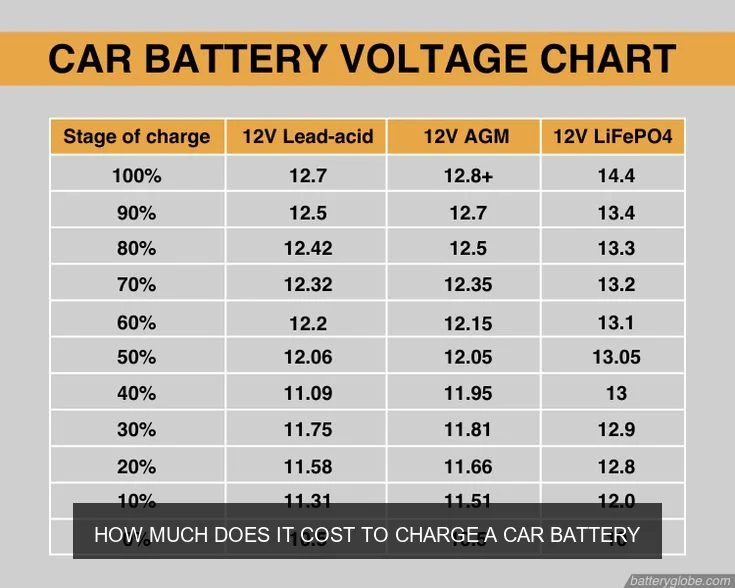
Image source: Pinimg
📋 Table of Contents
- 🔹 Understanding the Cost to Charge a Car Battery
- 🔹 The Basics of Electricity and Car Batteries
- 🔹 Key Factors That Influence Charging Cost
- 🔹 How to Estimate the Cost of Charging Your Car Battery
- 🔹 Why Charging Your Car Battery Matters
- 🔹 How Does Charging a Car Battery Work?
- 🔹 Benefits of Keeping Your Car Battery Charged
- 🔹 Common Mistakes When Charging a Car Battery
- 🔹 Practical Tips for Battery Charging
- 🔹 Frequently Asked Questions (FAQ)
- 🔹 Conclusion
Understanding the Cost to Charge a Car Battery
Ever wondered what it truly costs to give your car battery a full charge? Many people are surprised to learn that the actual electricity expense is quite minimal. When we talk about how much does it cost to charge a car battery, we’re really looking at the amount of electricity used, measured in kilowatt-hours (kWh), multiplied by your local electricity rate.
Think of it like this: a typical car battery holds a relatively small amount of energy compared to what powers your entire home. While the idea of a dead battery can be stressful, the financial impact of recharging it at home is usually very small. This article will break down all the details, helping you understand the factors involved and how to estimate the cost yourself, turning a common car concern into something simple and clear.
The Basics of Electricity and Car Batteries
To understand the cost, let’s first touch on some basic electrical concepts. Your car battery, usually a 12-volt lead-acid battery, stores electrical energy through a chemical reaction. When you start your car or use accessories, this energy is drawn out.
- Voltage (V): This is the “pressure” of electricity, usually 12V for car batteries.
- Amperes (A): This is the “flow” of electricity. Battery capacity is often measured in Ampere-hours (Ah), which tells you how many amps the battery can deliver over one hour.
- Watts (W): This is the “power” or rate at which electricity is used or produced (Volts x Amps = Watts).
- Kilowatt-hour (kWh): This is the standard unit electricity companies use to bill you. It’s 1,000 watts used for one hour.
A typical car battery might have a capacity of 40-70 Ampere-hours (Ah). This means it can deliver, say, 60 amps for one hour, or 1 amp for 60 hours. To convert this to kWh, you’d multiply the Ah by the voltage (12V) and then divide by 1,000. So, a 60 Ah battery at 12V is 720 Watt-hours (Wh) or 0.72 kWh.
However, charging isn’t 100% efficient. Some energy is lost as heat, so it might take a bit more than 0.72 kWh to fully charge that battery from completely flat.
Key Factors That Influence Charging Cost
When asking “how much does it cost to charge a car battery?”, several elements play a role, even if the overall cost remains low. Understanding these helps paint a complete picture.
Electricity Rates
Your local electricity rate is the biggest variable. This rate, often expressed in cents per kilowatt-hour (kWh), can differ significantly based on your utility provider, location, and even the time of day you charge.
- Regional Differences: Rates vary by state, county, and even city.
- Time-of-Use (TOU) Plans: Some utility companies charge different rates during peak (high demand) and off-peak (low demand) hours. Charging during off-peak times can be slightly cheaper.
- Tiered Rates: Your rate might change after you use a certain amount of electricity in a billing cycle.
Battery Capacity and State of Discharge
The size of your car battery and how deeply discharged it is directly impacts how much energy it needs. A larger battery naturally requires more energy to fill up, and a battery that’s completely dead will need a lot more juice than one that’s only slightly depleted.
- Ampere-hours (Ah): A battery with a higher Ah rating needs more energy.
- Depth of Discharge: Charging a battery from 50% will use roughly half the electricity compared to charging it from 0%.
Charger Efficiency
Not all battery chargers are created equal. Some are more efficient than others. A charger’s efficiency refers to how much of the electricity drawn from the wall actually makes it into the battery as usable energy, versus how much is lost as heat during the conversion process. While modern chargers are generally quite good, there’s always some minor loss.
For example, if a charger is 80% efficient, it means for every 1 kWh drawn from the wall, only 0.8 kWh ends up stored in the battery.
How to Estimate the Cost of Charging Your Car Battery
Let’s walk through a simple calculation to help you estimate how much does it cost to charge a car battery. It’s easier than you might think!
- Find Your Battery’s Capacity: Look for the Ampere-hour (Ah) rating on your car battery. Let’s assume it’s 60 Ah for this example.
- Determine Total Watt-hours (Wh): Multiply the Ah by the battery’s voltage (usually 12V).
- 60 Ah * 12V = 720 Wh
- Convert to Kilowatt-hours (kWh): Divide the Wh by 1,000.
- 720 Wh / 1,000 = 0.72 kWh
- Account for Charging Efficiency: Since chargers aren’t 100% efficient, assume some loss. A good estimate is to divide by an efficiency factor, say 85% (0.85).
- 0.72 kWh / 0.85 = Approximately 0.85 kWh (This is the total electricity you’d draw from the wall for a full charge from completely dead.)
- Find Your Electricity Rate: Check your electricity bill or your utility provider’s website for your rate in dollars or cents per kWh. Let’s say it’s $0.15 per kWh.
- Calculate the Total Cost: Multiply the total kWh needed by your electricity rate.
- 0.85 kWh * $0.15/kWh = $0.1275 (about 13 cents!)
As you can see, even a full charge from a completely dead battery typically costs less than a quarter. This demonstrates why the “how much does it cost to charge a car battery” question almost always yields a surprisingly low answer in terms of pure electricity usage.
Why Charging Your Car Battery Matters
Beyond the minimal cost, understanding why you might need to charge your car battery is important. A car battery isn’t just for starting the engine; it powers all the vehicle’s electrical components when the engine is off and helps stabilize the electrical system when the engine is running.
- Starting Power: The primary role is to deliver a large burst of power to start the engine. A low battery struggles with this.
- Powering Accessories: When the engine isn’t running, the battery supplies power for things like lights, radio, power windows, and central locking.
- Longer Battery Life: Regularly allowing a battery to become deeply discharged can shorten its overall lifespan. Keeping it properly charged helps maintain its health.
- Preventing Damage: A deeply discharged battery, especially in cold weather, is more susceptible to freezing and internal damage.
So, while the electricity cost is low, the benefits of a well-maintained, charged battery are significant for your car’s reliability and the battery’s longevity.
How Does Charging a Car Battery Work?
Charging a car battery is a straightforward process, but it’s helpful to understand what’s happening. When you connect a charger, it supplies direct current (DC) electricity to the battery, reversing the chemical reaction that occurs during discharge.
Steps of a Typical Smart Charger
Modern “smart” or “automatic” chargers often go through several stages to ensure a safe and effective charge:
- Desulfation (Optional): If the charger detects sulfation (crystal buildup on battery plates from discharge), it might apply high-frequency pulses to break it down.
- Bulk Charge: This is the main charging phase where the charger delivers maximum current to bring the battery up to about 80% charge.
- Absorption Charge: As the battery approaches full charge, the voltage is held constant, and the current gradually decreases. This prevents overcharging and allows the battery to reach full capacity.
- Float Charge (Maintenance): Once fully charged, the charger reduces the voltage and current to a very low level. This “float” charge maintains the battery’s voltage and prevents self-discharge, keeping it topped off without overcharging, which is ideal for long-term connection.
It’s important to use a charger specifically designed for automotive lead-acid batteries and to follow the manufacturer’s instructions carefully.
Benefits of Keeping Your Car Battery Charged
Maintaining a properly charged car battery offers several advantages that contribute to your vehicle’s overall health and your peace of mind.
- Reliable Starts: A fully charged battery ensures your engine turns over quickly and consistently, especially in cold weather when batteries perform less efficiently.
- Extended Battery Lifespan: Regular, proper charging prevents deep discharge cycles, which can significantly shorten a battery’s life. Keeping the battery topped off slows down internal degradation.
- Optimal Electrical System Performance: A healthy battery supports the alternator, reducing strain on your car’s charging system and ensuring all electrical components (lights, radio, sensors) receive stable power.
- Prevention of Sulfation: When a lead-acid battery is left discharged for too long, lead sulfate crystals can build up on the plates, a process called sulfation. This reduces the battery’s capacity and ability to accept a charge. Regular charging helps prevent this.
- Avoidance of Inconvenience: There’s nothing worse than getting stuck with a dead battery when you’re in a hurry. Proactive charging avoids these frustrating and time-consuming situations.
These benefits far outweigh the negligible cost associated with the electricity needed for charging.
Common Mistakes When Charging a Car Battery
While the actual cost to charge a car battery is low, making mistakes during the process can lead to bigger expenses or even safety hazards. Be aware of these common pitfalls:
- Overcharging: Continuously charging a battery past its full capacity, especially with older, non-smart chargers, can boil off the electrolyte, warp plates, and significantly damage the battery. Modern smart chargers mitigate this risk with float modes.
- Undercharging: Not fully charging the battery, or frequently leaving it in a partially discharged state, can lead to sulfation and a reduction in capacity over time.
- Incorrect Voltage: Using a charger designed for a different voltage (e.g., a 6V charger on a 12V battery) can damage both the charger and the battery.
- Reversed Polarity: Connecting the positive (+) charger clamp to the negative (-) battery terminal, and vice-versa, can cause sparks, damage the battery, or harm the charger. Always double-check your connections.
- Charging a Frozen Battery: Attempting to charge a frozen battery can be extremely dangerous. The frozen electrolyte can expand, potentially cracking the battery case and spilling corrosive acid. Always allow a frozen battery to thaw completely first.
- Ignoring Safety Precautions: Batteries can produce flammable hydrogen gas during charging. Always charge in a well-ventilated area, wear safety glasses, and avoid sparks or open flames nearby.
By avoiding these mistakes, you ensure a safe and effective charge, preserving your battery’s life and avoiding unnecessary hassle.
Practical Tips for Battery Charging
To make the most of your car battery charging routine and ensure its longevity, here are some practical tips:
- Use a Smart Charger: Invest in an automatic, multi-stage “smart” charger. These chargers can detect the battery’s condition, charge it efficiently, and then switch to a maintenance (float) mode to prevent overcharging.
- Regular Maintenance Charging: If your car sits idle for extended periods (weeks or months), consider using a trickle charger or battery maintainer. These low-amperage chargers keep the battery topped off and prevent self-discharge.
- Clean Terminals: Before charging, make sure the battery terminals are clean and free of corrosion. A wire brush can help remove any buildup, ensuring a good connection.
- Read Your Charger’s Manual: Every charger is a bit different. Always read and follow the specific instructions and safety warnings provided by the manufacturer.
- Check Electrolyte Levels (if applicable): For serviceable lead-acid batteries, ensure the electrolyte levels are between the upper and lower marks before charging. Add distilled water if needed, but only after charging is complete.
- Ventilate the Area: Always charge your battery in a well-ventilated area to allow any hydrogen gas produced to dissipate safely.
- Connect Correctly: Always connect the positive (+) charger lead to the positive (+) battery terminal, and the negative (-) charger lead to the negative (-) battery terminal (or a good ground point on the chassis away from the battery).
Following these tips will help you charge your car battery effectively and safely, contributing to a healthier battery and reliable vehicle performance.
Frequently Asked Questions (FAQ)
What is the typical cost to charge a car battery?
The typical cost to charge a car battery at home is usually very low, often ranging from just a few cents to less than a dollar for a full charge. This is because car batteries have a relatively small energy capacity compared to household appliances, and electricity rates are measured in kilowatt-hours.
Why is charging a car battery important for its lifespan?
Charging a car battery is crucial for its lifespan because it prevents deep discharge, which is a major cause of sulfation – the buildup of lead sulfate crystals on the battery plates. Regular and proper charging helps maintain the battery’s capacity, reduces strain, and ensures the chemical reactions within the battery remain healthy, thereby extending its overall service life.
How long does it take to charge a car battery?
The time it takes to charge a car battery varies widely depending on several factors, including the battery’s state of discharge, its capacity, and the output current (amperage) of the charger. A deeply discharged battery with a high capacity on a low-amperage charger could take 12-24 hours, while a slightly discharged battery on a higher-amperage smart charger might take only a few hours.
Can I overcharge a car battery?
Yes, you can overcharge a car battery, especially with older, non-smart chargers. Overcharging can lead to excessive heat, boiling off the electrolyte (water and acid solution), and can permanently damage the battery plates. Modern “smart” chargers are designed to prevent overcharging by switching to a “float” or “maintenance” mode once the battery is full.
When should I charge my car battery?
You should charge your car battery if your vehicle has been sitting idle for an extended period (e.g., several weeks), if you’ve frequently made short trips that don’t allow the alternator to fully recharge the battery, or if you notice signs of a weak battery, such as slow engine cranking. Regular maintenance charging is also beneficial if your car isn’t driven daily.
Conclusion
Understanding how much does it cost to charge a car battery reveals a surprisingly low figure, often just a few cents for a full charge at home. The actual monetary expense for electricity is minimal, overshadowed by the significant benefits of a properly maintained battery. Keeping your car battery charged ensures reliable vehicle starts, extends the battery’s lifespan, and prevents frustrating breakdowns.
By using an appropriate charger, following safety guidelines, and understanding the factors that influence charging, you can easily incorporate battery maintenance into your routine without worrying about a hefty electricity bill. It’s a small investment of time and a negligible cost that yields substantial rewards in terms of vehicle reliability and peace of mind.