The “best” car battery charger isn’t a single product but rather the one that perfectly matches your vehicle’s battery type and size, your specific charging needs (maintenance, fast charge, jump start), and your technical comfort level. Understanding different charger functionalities is key to choosing the right solution for your situation.
This article explores the core purpose of car battery chargers, delves into various types available, and explains how they work to keep your vehicle running smoothly. You’ll learn about key features, practical tips, and common mistakes to avoid, empowering you to understand the best approach for maintaining your car’s battery health.
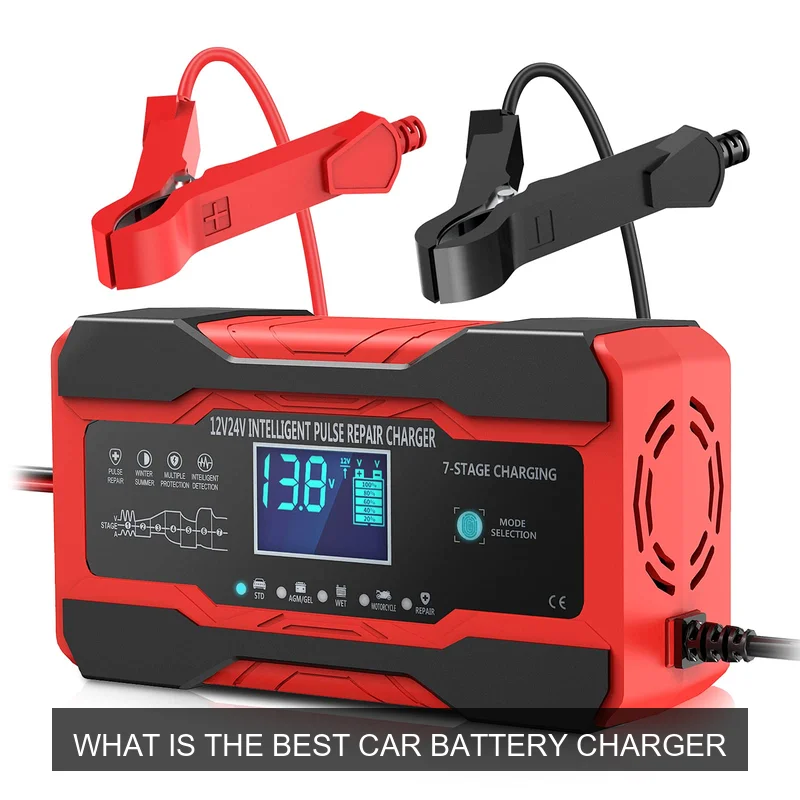
Image source: Media-amazon
📋 Table of Contents
- 🔹 Introduction: Why Battery Health Matters
- 🔹 What is a Car Battery Charger?
- 🔹 Why is a Car Battery Charger Important?
- 🔹 How Does a Car Battery Charger Work?
- 🔹 Exploring Different Types of Car Battery Chargers
- 🔹 Key Features to Understand
- 🔹 When Should a Car Battery Charger Be Used?
- 🔹 Benefits of Using a Car Battery Charger
- 🔹 Common Mistakes to Avoid When Using a Charger
- 🔹 Practical Tips and Best Practices
- 🔹 Real-Life Charging Scenarios
- 🔹 Frequently Asked Questions (FAQ)
- 🔹 Conclusion
Introduction: Why Battery Health Matters
Imagine this: You’re running late, you hop in your car, turn the key, and… nothing. Just a sad click or maybe complete silence. We’ve all been there, or at least know someone who has. A dead car battery is a truly frustrating experience, often striking at the most inconvenient times.
Your car’s battery is its heart, providing the necessary electrical current to start the engine and power all your accessories. Like any heart, it needs care. Over time, or with disuse, batteries can lose their charge. That’s where a car battery charger becomes your trusty sidekick.
But with so many options out there, how do you even begin to understand what is the best car battery charger for you? Well, that’s exactly what we’re going to explore. This guide will walk you through everything you need to know about these essential devices, helping you keep your vehicle reliable and ready to go.
What is a Car Battery Charger?
At its core, a car battery charger is an electrical device that replenishes the charge in a vehicle’s battery. Think of it like plugging in your phone when its battery runs low, but for your car. It takes standard AC (alternating current) electricity from a wall outlet and converts it into DC (direct current) electricity, which is what your car battery needs to recharge.
Its main purpose is to restore a depleted battery to its full capacity or to maintain a battery’s charge over long periods of inactivity. This helps ensure your car starts reliably and extends the overall life of the battery.
Why is a Car Battery Charger Important?
Is a car battery charger truly necessary? For many drivers, it’s an incredibly valuable tool. Here’s why:
- Prevents Being Stranded: No one wants to be stuck with a car that won’t start. A charger helps prevent this by ensuring your battery always has enough juice.
- Extends Battery Life: Batteries prefer to stay fully charged. Letting them sit discharged for long periods can shorten their lifespan. Regular charging, especially for vehicles not driven often, can significantly extend how long your battery lasts.
- Cost Savings: Replacing a car battery can be expensive. By maintaining your current battery’s health with a charger, you can potentially save money by delaying replacement.
- Reliability: A healthy battery means your car is always ready when you are. This is especially true in extreme temperatures, as cold weather can severely impact battery performance.
How Does a Car Battery Charger Work?
The process of charging a car battery is quite clever, especially with modern “smart” chargers. Here’s a simplified breakdown of how it works:
- Power Conversion: The charger plugs into a standard wall outlet (AC power). Inside, it converts this AC power into DC power, which is the type of current a car battery uses.
- Voltage Regulation: It then regulates this DC power to deliver it at a specific voltage (typically 12 volts for most cars) and amperage (current) to the battery.
- Multi-Stage Charging: Many modern chargers use a multi-stage charging process to optimize charging and protect the battery.
Understanding Multi-Stage Charging
Most advanced chargers don’t just pump electricity into your battery; they follow a carefully designed process:
- Bulk Stage: This is the initial, most aggressive stage. The charger delivers its maximum current to bring the battery’s voltage up quickly. It’s like filling a cup fast when it’s nearly empty.
- Absorption Stage: As the battery reaches about 80% charge, the charger reduces the current but maintains a constant voltage. This allows the battery to absorb the remaining charge more slowly and safely, preventing overcharging.
- Float Stage: Once the battery is fully charged, the charger switches to a “float” or maintenance mode. It delivers a very low, constant voltage to simply maintain the battery’s charge, topping it off as needed without ever overcharging. This is perfect for long-term connection.
This intelligent, multi-stage approach ensures the battery is charged efficiently, safely, and to its maximum capacity, promoting longevity.
Exploring Different Types of Car Battery Chargers
When you’re trying to figure out what is the best car battery charger, you’ll quickly realize there isn’t just one kind. Each type serves a slightly different purpose:
Trickle Chargers
- What they are: These are simple chargers that deliver a very low, constant current (often 1-2 amps) to a battery.
- Best for: Long-term maintenance of batteries in vehicles stored for extended periods, like classic cars, motorcycles, or lawnmowers.
- Consideration: Older trickle chargers might not have advanced overcharge protection, so they sometimes need to be monitored.
Battery Maintainers
- What they are: An evolution of the trickle charger, often referred to as “smart” trickle chargers. They include advanced circuitry to monitor battery voltage and automatically switch between charging and maintenance modes.
- Best for: Vehicles stored for weeks or months, ensuring the battery stays at a full charge without any risk of overcharging. They are ideal for preventing sulfation, a common cause of battery failure.
Smart/Automatic Chargers
- What they are: These are the most common and versatile chargers. They feature microprocessors that diagnose the battery’s condition and adjust the charging rate and stages accordingly. They typically have multiple charging modes (e.g., for different battery types, cold weather).
- Best for: Most general charging needs, from bringing a moderately discharged battery back to life to long-term maintenance. They are very user-friendly due to their automation and safety features.
Boost Chargers / Engine Start Chargers
- What they are: These chargers have a powerful “engine start” or “boost” mode that delivers a very high amperage (e.g., 50-200 amps) for a short burst. This is enough to help a completely dead battery crank the engine.
- Best for: Emergency situations where your battery is too dead to start the car, and you need an immediate jump-start without another vehicle. They often include regular charging modes too.
Portable Jump Starters (Battery Packs)
- What they are: These are self-contained battery packs designed to provide a quick burst of power to start a dead car battery. They are compact and don’t require an external power source for their primary function.
- Best for: On-the-go emergencies, especially if you travel a lot or don’t want to rely on another vehicle for a jump. Many also include USB ports for charging phones.
Key Features to Understand
To really determine what is the best car battery charger for you, it helps to understand some key specifications:
| Feature | Explanation |
|---|---|
| Amperage (Charging Rate) | This indicates how much current the charger can deliver. Higher amperage (e.g., 10-15 amps) means faster charging for a depleted battery, while lower amperage (e.g., 1-4 amps) is ideal for maintenance. |
| Voltage Compatibility | Most car batteries are 12-volt. Some larger vehicles or specific applications might use 24-volt batteries. Ensure the charger matches your battery’s voltage. |
| Battery Type Compatibility | Different battery chemistries (like traditional flooded lead-acid, AGM, Gel, or even lithium) require different charging profiles. Many smart chargers offer modes for various battery types. |
| Safety Features | Look for features like spark-proof connections, reverse polarity protection (prevents damage if you connect cables incorrectly), and overcharge protection. |
| Desulfation Mode | Some advanced chargers have a mode that can break down sulfate crystals that build up on battery plates, potentially extending the life of older, neglected lead-acid batteries. |
| Engine Start Assist | As mentioned, this feature provides a high-current burst to help start an otherwise dead engine. |
When Should a Car Battery Charger Be Used?
Knowing when to use a car battery charger is just as important as knowing what it is. Here are common scenarios:
- After a Battery Dies: This is the most obvious use. If your car won’t start due to a dead battery, a charger can bring it back to life.
- For Stored Vehicles: If you have a car, motorcycle, RV, or boat that sits for weeks or months, a battery maintainer is invaluable. It keeps the battery topped off, preventing deep discharge and sulfation.
- Seldom-Used Vehicles: Even if you drive a vehicle occasionally, short trips might not fully recharge the battery. A periodic charge can keep it healthy.
- Before Cold Weather: Cold significantly reduces battery efficiency. Charging your battery to full before winter sets in can improve its cold-cranking performance.
- To Condition a New Battery: While not always necessary, some recommend giving a new battery a full charge before its first use to ensure it starts at 100% capacity.
- After Leaving Lights On: Accidentally leaving interior lights or headlights on can drain a battery quickly. A charger can restore it.
Benefits of Using a Car Battery Charger
The advantages of having a car battery charger go beyond just getting your car started:
- Increased Battery Lifespan: Keeping a battery consistently charged within its optimal range prevents degradation and extends its overall service life.
- Enhanced Reliability: You reduce the risk of unexpected breakdowns or being stranded with a dead battery.
- Improved Performance: A fully charged battery provides optimal power for starting, especially in challenging conditions like extreme cold.
- Convenience: You can charge your battery at home, on your schedule, without needing another vehicle for a jump start.
- Peace of Mind: Knowing your vehicle’s battery is maintained and ready to go offers significant peace of mind.
Common Mistakes to Avoid When Using a Charger
Even with advanced smart chargers, it’s good to be aware of potential pitfalls:
- Using the Wrong Charger for Your Battery Type: Charging an AGM battery with a charger designed only for flooded lead-acid, or vice-versa, can damage the battery. Always check compatibility.
- Charging in a Poorly Ventilated Area: Batteries can produce hydrogen gas when charging, which is flammable. Always ensure good airflow to disperse these gases.
- Connecting Cables Incorrectly: Reversing the positive and negative terminals can damage both the battery and the charger. While many modern chargers have reverse polarity protection, it’s best to always connect correctly.
- Ignoring Safety Instructions: Always read the manual for your specific charger. It contains crucial safety information.
- Overcharging (less common with smart chargers): Leaving an old, non-smart charger on for too long can boil the battery’s electrolyte and cause damage. Smart chargers prevent this.
- Charging a Frozen Battery: Never attempt to charge a frozen battery, as it could explode. Allow it to thaw first.
Practical Tips and Best Practices
To get the most out of your car battery charger and ensure safety, follow these tips:
- Read Your Charger’s Manual: This is the most important step. Every charger has unique features and specific instructions.
- Charge in a Well-Ventilated Area: Always work in an open space to avoid the buildup of potentially explosive gases.
- Ensure Proper Connection: Connect the positive (red) clamp to the positive (+) battery terminal first, then the negative (black) clamp to a good chassis ground point away from the battery. When disconnecting, remove the negative first, then the positive.
- Clean Battery Terminals: Corroded terminals can impede charging. Clean them with a wire brush before connecting the charger.
- Monitor the Charging Process: Even with smart chargers, it’s wise to periodically check the battery and charger, especially during the initial stages.
- Match Charger to Battery Size: While a low-amp charger can charge any 12V battery, a very large battery will take a very long time. A higher-amp charger (within recommended limits) is more efficient for larger batteries.
Real-Life Charging Scenarios
Let’s look at a few common situations where a car battery charger comes in handy:
The Vacationer: You’re going away for a month. Instead of coming home to a dead car, you connect a battery maintainer to your vehicle. It keeps the battery topped off, so your car starts perfectly upon your return.
The Seldom-Driver: You mostly work from home, and your car sits for days. Short errands don’t fully recharge the battery. Using a smart automatic charger once a month for a few hours ensures your battery remains healthy and fully charged, extending its life significantly.
The Classic Car Enthusiast: Your prized classic car is stored for the winter. A dedicated battery maintainer or a trickle charger with overcharge protection is essential to prevent the battery from dying and undergoing sulfation during its long slumber.
The Emergency Start: You left your lights on overnight, and the battery is completely flat. A boost charger with engine start assist quickly provides enough power to crank the engine, getting you on your way. You then let your alternator fully recharge it or continue with a standard charge cycle.
Frequently Asked Questions (FAQ)
Can a car battery charger overcharge a battery?
Modern “smart” or “automatic” chargers are designed with advanced circuitry that prevents overcharging. They sense when the battery is full and switch to a maintenance (float) mode, delivering only enough power to keep it topped off. Older, simpler trickle chargers without smart features could overcharge if left connected indefinitely, so it’s always best to use a charger with overcharge protection.
How long does it take to charge a car battery?
The charging time varies widely based on several factors: the battery’s current state of discharge, its capacity (size in Ah), and the charger’s amperage output. A completely dead standard car battery might take anywhere from 4 to 24 hours with a typical smart charger (e.g., 5-10 amps). Battery maintainers will take much longer to bring a very low battery back up but are excellent for maintaining a nearly full one.
Are all car battery chargers compatible with all battery types?
No, not all chargers are compatible with all battery types. While many general-purpose chargers work with flooded lead-acid and AGM batteries, specific battery chemistries like Gel or Lithium (LiFePO4) require chargers with dedicated modes or different charging profiles. Always check your battery type and ensure your charger has the appropriate setting or compatibility.
What safety precautions should I take when charging a battery?
Always wear safety glasses and gloves. Ensure you’re in a well-ventilated area to prevent hydrogen gas buildup. Connect the positive (+) clamp first, then the negative (-) clamp to a ground point away from the battery. Unplug the charger from the AC outlet before disconnecting clamps. Never charge a frozen or damaged battery.
Conclusion
Understanding what is the best car battery charger really boils down to understanding your own needs. It’s not about finding a single, universally “best” product, but rather the right tool for your specific situation. Whether you need a simple maintainer for a seldom-used vehicle, a robust smart charger for general use, or a powerful boost charger for emergencies, there’s a solution out there.
By investing a little time to learn about the different types, key features, and best practices, you can ensure your car’s battery stays healthy, reliable, and ready to power your journeys. Maintaining your battery properly is a smart move that saves you time, money, and a whole lot of frustration down the road.